
Local service guide
Lighting Installation in Salem, OR: Plan Your Job
For Lighting Installation in Salem, OR, describe whether you want to replace a damaged fixture, upgrade a light or add wiring before requesting quotes. Oregon's guidance for detached one- or two-family dwellings requires permits for new or upgraded fixtures and wiring changes, while exempting like replacement of broken or damaged fixtures. Use the Local Building Department Directory available through Oregon's residential permits page to identify the responsible jurisdiction for your address. Have your contractor confirm the permit route, fixture supply and repair responsibilities before you approve the job. [1]
Define the installation before requesting quotes
For detached one- or two-family dwellings, Oregon lists new or upgraded light fixtures and additional wiring as permit work. Its repair exemption covers like replacement of broken or damaged fixtures. Describe the actual change rather than calling the entire project a fixture swap. For a condominium or another building type, obtain project-specific guidance from the responsible building department. [1]
Prepare a room-by-room list of fixture locations. Send photographs of the existing lights and switches, along with product sheets for your proposed fixtures. Include ceiling height, fixture weight and your preferred pendant position. Request an assessment of the existing electrical box and support before committing to a heavy fixture.
Explain where you want more light and which lights you want to control together. Mark furniture and work surfaces on a simple sketch. Agree on fixture positions and switch locations before the installer cuts openings or you buy the full set of products.
Identify the jurisdiction and permit route
Use the Local Building Department Directory available through the Oregon residential permits source to locate the jurisdiction responsible for your address. Oregon directs project-specific code questions to the local building department. Give that department your address, building type and proposed wiring changes; confirm who handles the project before scheduling work. [1]
Oregon assigns responsibility for necessary permits to the person performing the work, whether homeowner or contractor, and allows work to begin after permit issuance. Put permit handling and inspection arrangements in the written scope. Request the applicable documentation at handover. [1]
Eligible contractors can use Oregon's Electrical Minor Label Program for certain installations within their licensed scope. The program excludes underground installations, installations requiring a cover inspection, work requiring plan review and complete service or panel replacement. For outdoor lighting with a buried cable, have the contractor identify another applicable permit route. For concealed ceiling wiring, ask whether the project requires a cover inspection rather than assuming it qualifies for a minor label. [2]
Compare written quotes and credentials
Request a written quote for your fixture count, wiring changes, access needs and surface repairs. Have each bidder use the same locations and products. Specify who supplies fixtures and bulbs, removes old lights, patches openings and paints repaired surfaces. Agree on how you will approve added work before the contractor proceeds.
For minor-label work, Oregon requires a valid CCB license and the appropriate electrical contractor license. The individual installer must hold the appropriate electrical license, with a provision for apprentices who hold a work alone card and work within their licensing and training scope. Request the business credentials and the name and authorization of the person doing the installation. [2]
Confirm the appointment window, planned power interruption and any return visit. Request a separate explanation of permit charges and inspection arrangements. Keep the quote, approved changes and installation documents together so you can compare the completed work with your agreement.
Choose bulbs and controls before buying
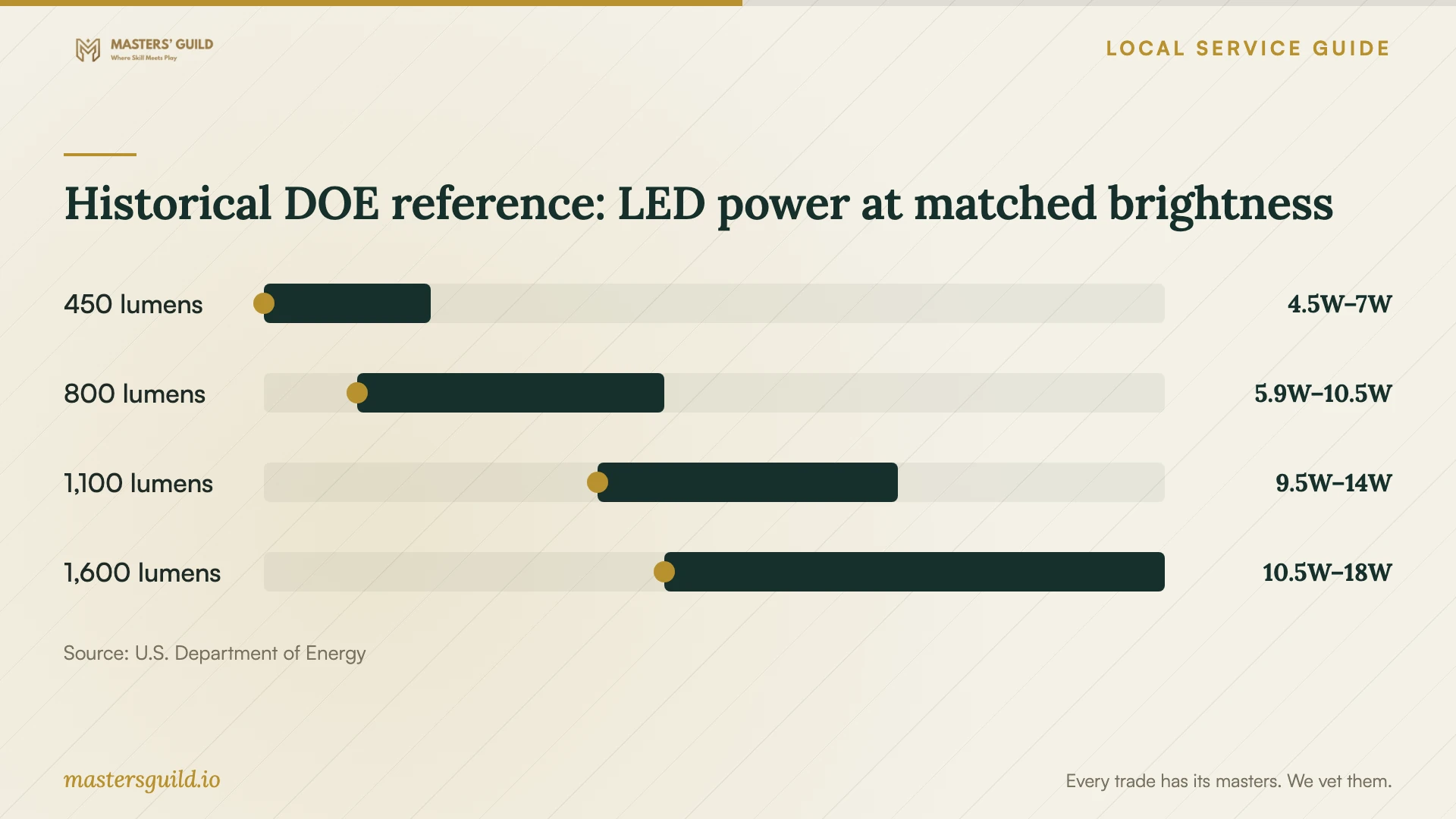
The Department of Energy explains that lumens measure visible light output and watts measure power input. Its historical reference table pairs 800 lumens with a 60-watt incandescent bulb and LEDs using 5.9 to 10.5 watts. Use the chart as a brightness-and-power reference when discussing products with your installer. [3]
DOE's guidance identifies 2,700 K as warm and 3,000 K as soft, with homes among the applications for both. Try your preferred light appearance in the room before buying bulbs for the whole project. Compare the appearance of fixtures you plan to use together. [3]
DOE advises buyers to check packaging or technical specifications before using an LED bulb in an enclosed fixture because trapped heat can affect performance and life. For dimming, check both the bulb's dimming capability and its compatibility with the dimming system. Send the fixture, bulb and dimmer details to the installer for review before purchasing. [3]
Prepare the room and check the finished work
Clear space beneath each work area and arrange access for the installer. Keep fixture packaging and instructions available. Discuss how the contractor will protect nearby furniture and where they will place removed fixtures and waste.
At handover, operate each light and control with the installer. Check fixture positions, pendant heights and dimming behavior against your agreement. Collect product instructions and applicable permit or minor-label documentation. Confirm who arranges any inspection and how you will receive the result.
Historical DOE reference: LED power at matched brightness
Local details that affect your job
Oregon's damaged-fixture exemption affects your scope
For a detached one- or two-family dwelling in Salem, Oregon's guidance exempts like replacement of a broken or damaged light fixture. It lists new or upgraded fixtures and permanent wiring changes as permit work. Describe damage, upgrades and relocation separately when contacting the jurisdiction identified through the state's Local Building Department Directory. [1]
Buried outdoor-lighting wiring cannot use a minor label
Oregon excludes underground electrical installations from its minor-label program. It also excludes installations requiring a cover inspection. For a buried outdoor-lighting run, request the applicable permit arrangement before accepting the quote. For concealed ceiling work, have the contractor establish whether a cover inspection applies before planning to close the openings. [2]
Match your lighting project to the next step
| Project | Applicable Oregon guidance | Next step |
|---|---|---|
| Broken or damaged fixture, like replacement | For detached one- or two-family dwellings, Oregon lists this repair as permit-exempt. | Confirm the repair classification with the responsible jurisdiction if uncertain. |
| New or upgraded fixture | For detached one- or two-family dwellings, Oregon lists this as permit work. | Have the contractor identify the applicable permit route. |
| Additional permanent wiring | For detached one- or two-family dwellings, Oregon requires a permit. | Confirm wiring access and inspection arrangements before work. |
| Underground outdoor-lighting installation | Oregon excludes underground installations from electrical minor labels. | Request the applicable permit arrangement. |
| Installation requiring a cover inspection | Oregon excludes this work from electrical minor labels. | Agree on inspection timing before concealing the installation. |
Your hiring checklist
- Record your building type and describe each replacement, upgrade, relocation or addition.
- Locate the responsible jurisdiction through the directory on Oregon's residential permits page.
- Send room photographs, ceiling heights and proposed fixture product sheets.
- Request assessment of fixture support, wiring scope and access needs.
- Agree on permit handling, inspection arrangements and installation documentation.
- Compare written quotes using the same fixture count, products and surface-repair scope.
- Review bulb brightness, light appearance and dimmer compatibility before purchasing.
- Operate the lights with the installer and collect the agreed handover documents.
Frequently Asked Questions
Does replacing a ceiling light require a permit?
For detached one- or two-family dwellings, Oregon exempts like replacement of a broken or damaged fixture and lists new or upgraded fixtures as permit work. Describe your proposed change to the responsible building department if the classification is uncertain. Other building types need project-specific guidance. [1]
How do I find the right permitting department?
Use the Local Building Department Directory available through Oregon's residential permits page. Confirm responsibility for your address and discuss your building type and lighting scope with that jurisdiction before scheduling work. [1]
Can the electrician use a minor label?
An eligible contractor may use one for qualifying work within the contractor's licensed scope. Oregon excludes underground installations, installations requiring a cover inspection and work requiring plan review. Have the contractor explain how your project fits the rules. [2]
What should I include when requesting quotes?
Provide fixture count, locations, product details, ceiling heights and desired controls. Request written allowances for wiring, access, permit handling and surface repairs. Agree on fixture supply, removal of old lights and approval of additional charges.
Sources and scope
This guide combines the sources below with practical planning guidance. Figures apply to the stated geography and period; request a written quote for your property.