
Local service guide
Plan lawn mowing in Salem and Compare Quotes
For lawn mowing in Salem, request a written quote covering cutting height, visit frequency, trimming, cleanup and clipping disposal. Base the schedule on grass growth: Oregon State University Extension recommends removing no more than one-third of the blade per cut, with at least weekly mowing during peak growth. Agree on how the provider will handle slower growth, soft ground and an overgrown first visit before booking recurring service. [1]
Define the work before comparing prices
Send each provider the same description: approximate lawn area, current photos, gate width, slopes, obstacles and the yards you want included. Ask whether each visit includes trimming around fences and trees, edging along pavement and clearing clippings from paths.
Separate first-visit cleanup from recurring maintenance. For tall grass, ask how the provider will reduce the height while respecting OSU’s one-third rule. Require approval before extra passes, bagging or hauling add to the bill. [1]
Compare the complete scope and payment terms. Request a price per visit, itemized optional work, cancellation terms and a policy for postponed appointments. Ask for proof of liability insurance and identify whom to contact if equipment damages a sprinkler head, fence or other property.
Choose a cutting height for your grass
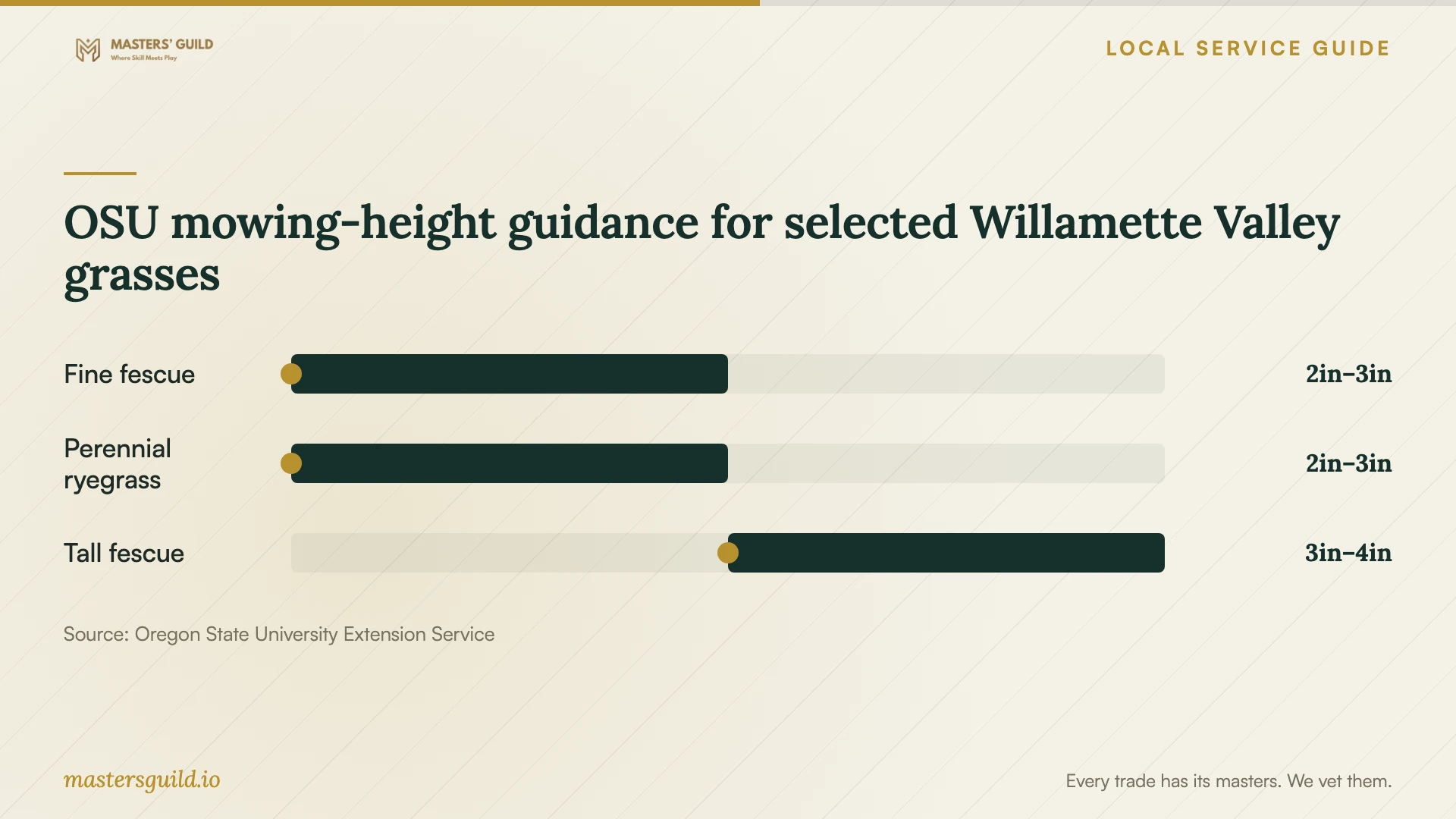
Have the provider inspect the lawn before setting the mower. In its western Oregon mowing discussion, OSU says fine fescue and perennial ryegrass do well at 2 to 3 inches, while tall fescue calls for 3 to 4 inches. It gives a shorter height of 1 inch for bentgrasses. Ask which recommendation fits your lawn. [1]
Write the agreed height into the service scope. OSU says a lawn maintained at 2 inches should receive a cut before it exceeds 3 inches. Ask the provider to review the schedule if the grass reaches that threshold before the next appointment. [1]
Point out uneven ground during the walkthrough. OSU warns that low-set rotary mowers can scalp uneven or rutted surfaces. Ask how the provider will mow those areas and whether they recommend a separate assessment before changing the lawn. [1]
Agree on a schedule that can change
During peak growing conditions, OSU recommends weekly mowing at a minimum to follow the one-third rule. Its western Oregon guidance explains that lawns without summer irrigation can become dormant and resume growth when fall rains return. Ask for a service agreement that allows frequency changes as growth changes. [1]
For autumn service, specify whether you want leaf cleanup included. Ask the provider to assess ground firmness before bringing equipment onto soft areas, and agree on a postponement policy.
Tell the provider if you have newly established turf. OSU’s establishment guide advises stopping irrigation a day or two before mowing so the soil surface can firm and the mower does not create ruts. Discuss the first cut as part of the establishment plan. [5]
Evaluate replacement seeding as a separate autumn proposal. OSU identifies August 15 to September 15 as the optimum fall seeding period in the Willamette Valley and warns of thin, weedy results from late planting. For an October proposal, ask the provider to explain the timing risks, watering plan and first mowing. [5]
Decide where the clippings will go
Consider returning clippings to the lawn. OSU describes mulch mowing as a way to return nutrients and says it contributes little to thatch buildup. Ask how the provider will handle excess clippings during heavy growth and whether bagging requires your approval. [1]
For collected clippings, specify whether the provider may use your yard-debris cart or must haul material away. Marion County lists grass clippings as yard debris and describes mixed-organics collection for residents within Salem city limits. Confirm service at your address with your hauler before authorizing cart use. [2]
Request a separate hauling amount for off-site disposal. Brown’s Island Compost Facility in Salem accepts grass clippings but excludes sod and dirt. The county publishes a minimum yard-debris rate of $15 per cubic yard, with a $15 minimum charge. Ask the provider to itemize loading, transport and disposal in the hauling quote. [3]
Review credentials for construction add-ons
Treat sprinkler repair, drainage installation and lawn installation as separate work when reviewing a mowing offer. Oregon’s Landscape Contractors Board identifies these activities as landscape construction and says an LCB license is generally required for paid landscape construction. Its guidance also describes permissions for CCB contractors and limited exceptions; irrigation-system repair requires a valid LCB license. [4]
Ask who will perform each add-on and request the relevant license information before agreeing. For an unclear scope, confirm the requirement with the Landscape Contractors Board. Keep mowing, hauling and construction itemized so you can choose which work to authorize.
OSU mowing-height guidance for selected Willamette Valley grasses
Local details that affect your job
Confirm your curbside clipping option
Marion County lists grass clippings among accepted yard-debris materials and names Salem city-limit residents in its mixed-organics guidance. The county asks residents to check service availability with their hauler. Before booking bagged mowing, confirm collection at your address and tell the provider whether they may use your cart. [2]
Separate clippings from sod-removal waste
Brown’s Island Compost Facility at 2895 Faragate St S accepts grass clippings and other yard debris but excludes sod and dirt. Its published yard-debris rate is a minimum of $15 per cubic yard, with a $15 minimum charge. If the job includes stripping turf, request a separate disposal destination and hauling quote. [3]
Review October seeding proposals
OSU identifies August 15 to September 15 as the optimum fall seeding period in the Willamette Valley. If a provider proposes reseeding during October mowing service, ask them to explain late-planting risks and follow-up care. Consider that proposal separately from the recurring mowing agreement. [5]
Choose the mowing arrangement
| Your situation | Arrangement to discuss | Reason or question |
|---|---|---|
| Grass grows fast between visits | Weekly service, with a growth review | OSU recommends at least weekly mowing during peak growth to follow the one-third rule. |
| Grass grows little between visits | Review frequency before the next cut | Ask the provider to base the next appointment on growth and the agreed height. |
| You want to return clippings | Mulch mowing | OSU says returning clippings supplies nutrients and contributes little to thatch buildup. |
| You want bagged clippings removed | Cart collection or a separate hauling quote | Confirm curbside availability; Brown’s Island Compost Facility accepts clippings but excludes sod and dirt. |
| The offer includes sprinkler repair | Separate licensed repair scope | Oregon LCB guidance requires a valid LCB license for irrigation-system repair. |
Your hiring checklist
- Send photos, approximate lawn area and a list of the yards to include.
- Measure gate openings and identify slopes, sprinkler heads and obstacles.
- Agree on cutting height and how you will review visit frequency.
- Itemize first-visit cleanup, trimming, edging and pavement cleanup.
- Choose clipping return, cart collection or off-site hauling.
- Confirm collection service with your hauler before authorizing cart use.
- Request insurance information and relevant credentials for construction add-ons.
- Record postponement, extra-charge approval and cancellation terms.
Frequently Asked Questions
Should I book weekly or biweekly mowing?
Choose the interval that keeps each cut within one-third of the grass blade. OSU recommends at least weekly mowing during peak growth. Ask for a frequency review during slower growth before committing to the same interval throughout the year. [1]
How much should I budget for a mowing visit?
Get a property-specific written quote before setting your recurring budget. Compare offers for the same lawn area, cutting scope, clipping handling and first-visit condition. Ask providers to separate recurring charges from cleanup, hauling and other extras.
Can the provider put grass clippings in my cart?
Marion County lists grass clippings as accepted yard debris and describes mixed-organics service for Salem city-limit residents. Confirm collection at your address with your hauler, then authorize the provider’s cart use in the agreement. [2]
Can my mowing provider also repair sprinklers?
Request the repair contractor’s LCB license information. Oregon’s Landscape Contractors Board states that irrigation-system repair requires a valid LCB license. Review the repair scope and price separately from routine mowing. [4]
Sources and scope
This guide combines the sources below with practical planning guidance. Figures apply to the stated geography and period; request a written quote for your property.