
Local service guide
Furniture assembly in Salem, OR: plan and hire
Furniture assembly in Salem starts with a quote for your exact models, room placement, attachment instructions, and cleanup needs. Send each provider the manuals and access photos before booking. Ask them to separate assembly, carrying boxes, wall work, packaging removal, and old-furniture haul-away so you can compare offers for the same job.
Request a quote for the exact items
Send the brand, model, quantity, and instruction manual for each piece. Include photos of any partly assembled furniture and describe dismantling or rebuilding work you want. Ask the provider to list the items covered by the quote and whether the price includes moving them into their final positions.
For hourly work, ask about the minimum charge, expected time, number of workers, and approval process for extra hours. For a fixed price, ask which changes could increase it. Describe stairs, parking, narrow doorways, and box carrying before accepting an offer.
Agree what happens if the provider finds missing hardware or a damaged panel. Ask whether they will stop and photograph the problem, what you must obtain from the seller, and how they charge for a return visit. Obtain item-specific quotes rather than treating disposal fees as evidence of assembly labor prices.
Confirm the attachment and installation scope
Share the manufacturer's attachment instructions before hiring. Ask who supplies the hardware and who completes each attachment step. For rented premises, obtain the owner's approval for proposed wall work. Describe any built-in shelving, wall alterations, or fitted cabinetry as part of the job.
The Oregon Construction Contractors Board generally requires a license for compensated construction involving improvements to real property. It lists carpentry and handyman work as examples. Its guidance does not explicitly classify ordinary furniture assembly or every anti-tip attachment. Ask the CCB about your exact scope when installation or attachment work leaves the licensing requirement uncertain. [2]
For work requiring a contractor license, verify the provider's license and appropriate endorsement. Ask for insurance documentation and a written correction agreement. The CCB explains that general liability insurance does not reimburse consumers for poor work or construction defects, although it may cover damage caused by faulty work. [2]
Prepare the room and review completion
Measure the intended position and photograph the route from the boxes to the room. Show the provider tight turns and stairs. Ask where they want the boxes and whether they prefer you to leave them unopened. Clear the assembly area and agree how they will protect floors and nearby furniture.
Keep manuals, labels, and hardware together. Retain packaging while you check the parts for damage. Ask the provider to follow the manufacturer's assembly instructions and identify any step they cannot complete before continuing.
Review the furniture together before the provider leaves. Check drawer movement, door alignment, visible damage, placement, and completion of the agreed attachments. Keep spare hardware and instructions. Record unfinished steps and any return-work agreement in writing.
Specify packaging cleanup and haul-away
Define cleanup in the quote: gathering packaging, sorting it, carrying it to your bins, or transporting it away. List old furniture as a separate task. Ask for the transport charge, disposal allowance, and intended destination if you want haul-away.
Marion County lists mixed paper and cardboard as free recycling at the Salem-Keizer Recycling & Transfer Station. It charges mixed loads at the garbage rate. Ask the provider to separate accepted cardboard from garbage before loading and confirm acceptance of unusual materials with the station. [1]
Marion County excludes plastic bags, Styrofoam, and greasy or waxed cardboard from curbside recycling. Sort those materials out of the recycling bundle and confirm collection arrangements with your own hauler, especially when you share bins. [3]
Use station fees to check disposal allowances
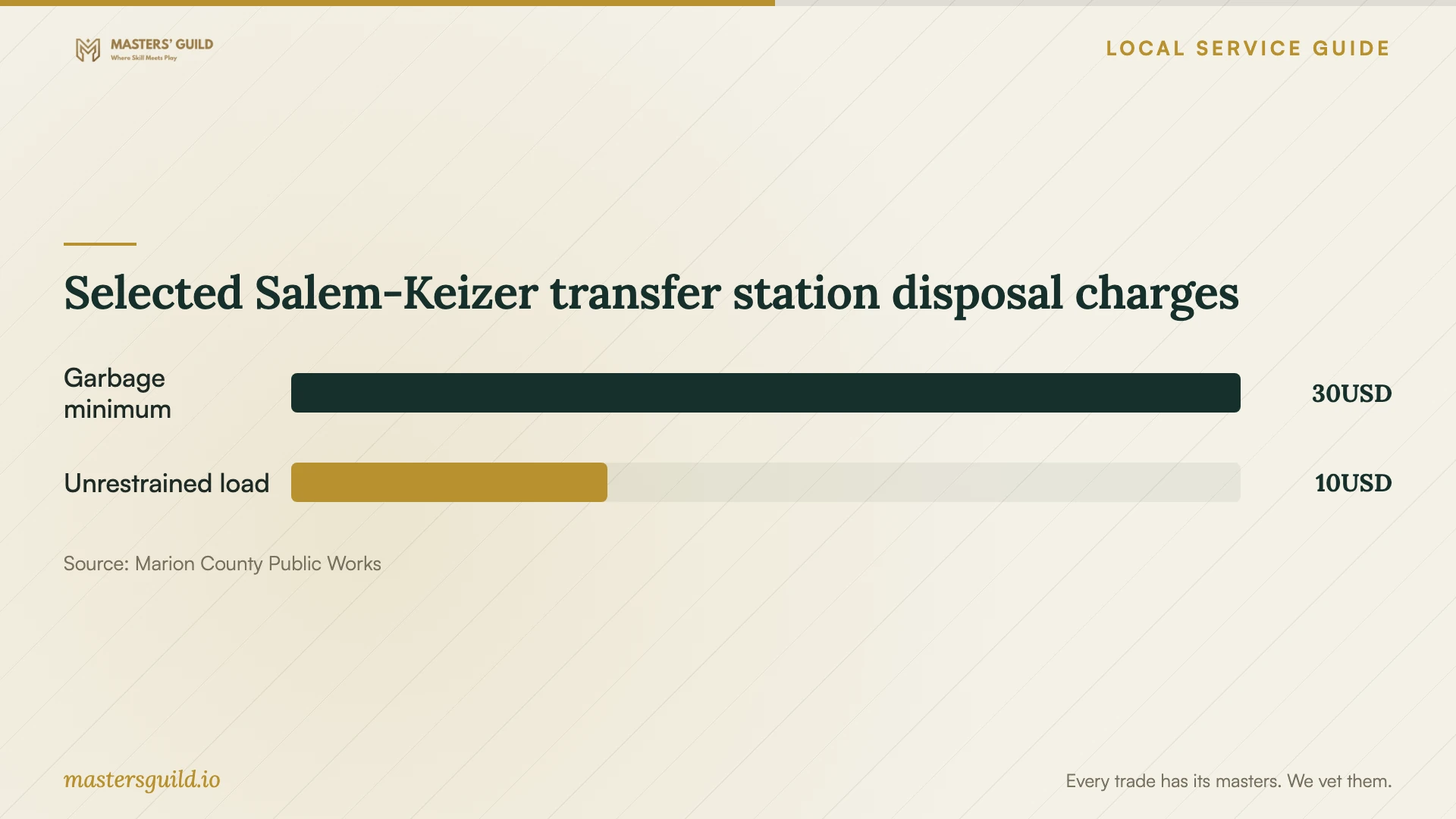
The Salem-Keizer transfer station lists a $30 garbage minimum and an additional $10 fee for an unrestrained load. It charges garbage at $130 per ton. These station charges do not establish an assembler's labor, transport, or total haul-away price. [1]
Ask the provider to explain any disposal allowance and how they will document charges above it. If you transport waste yourself, secure the load and confirm operating hours before leaving. Compare offers using the same furniture list, attachment scope, and cleanup arrangement.
Selected Salem-Keizer transfer station disposal charges
Local details that affect your job
Sorted cardboard has a local drop-off option
The Salem-Keizer Recycling & Transfer Station operates at 3250 Deer Park Dr. SE, Salem. Marion County lists hours of 8 a.m. to 5 p.m., seven days a week, except specified holidays. It accepts mixed paper and cardboard for free and charges mixed loads at the garbage rate. Decide whether you will take sorted packaging there or include transport in the provider's quote. Confirm holiday hours and material acceptance at 503-588-5169. [1]
Curbside exclusions change the cleanup plan
Marion County tells residents to keep plastic bags, Styrofoam, and greasy or waxed cardboard out of curbside recycling. Before booking, agree where the assembler will leave those materials and who will dispose of them. Confirm your address-specific hauler's instructions rather than asking the provider to put all packaging into a shared recycling cart. [3]
Check Oregon requirements for installation work
Oregon CCB guidance covers compensated construction involving real-property improvements, including carpentry and handyman work. It does not explicitly determine the licensing status of furniture assembly or all anti-tip attachments. Describe built-in installation and uncertain wall work to the CCB before choosing the provider, then verify any required license and endorsement. [2]
Choose the scope before choosing the provider
| Your project | Before booking | Request in writing |
|---|---|---|
| Freestanding furniture | Send exact models, manuals, and access photos | Assembly, final placement, and completion checks |
| Furniture with attachment instructions | Share the instructions; ask the CCB about uncertain licensing scope | Hardware responsibility and completion of attachment steps |
| Built-ins or wall alterations | Check CCB requirements for real-property improvement work | Required license verification, endorsement, and installation scope |
| Assembly with packaging removal | Separate cardboard; the station accepts it for free, while county curbside guidance excludes plastic bags and Styrofoam | Sorting, transport, and disposal responsibilities |
| Assembly with old-furniture haul-away | Confirm acceptance and destination; the station charges mixed loads at the garbage rate | Separate transport and disposal charges |
Your hiring checklist
- Send model names, quantities, manuals, and photos of partly assembled pieces.
- Describe stairs, parking, narrow doorways, and final placement.
- Confirm the pricing basis, minimum charge, and approval for extra work.
- Agree who supplies attachment hardware and completes wall work.
- Ask for insurance documentation and a correction agreement.
- Confirm missing-part procedures and return-visit charges.
- Separate packaging sorting, transport, and old-furniture removal in the quote.
- Inspect completion together and record any remaining work.
Frequently Asked Questions
How should I budget for furniture assembly?
Request a quote for your exact items and access conditions. Ask for separate charges for carrying, attachments, cleanup, and haul-away. Confirm minimum charges and the approval process for extra time. This guide provides disposal fees, not a verified local assembly labor range.
Does the assembler need an Oregon contractor license?
The CCB generally requires licensing for compensated construction involving real-property improvements. Its guidance does not explicitly classify ordinary furniture assembly or every anti-tip attachment. Ask the CCB about uncertain installation work and verify the credentials it requires for your scope. [2]
Can I put all flat-pack packaging in recycling?
Marion County excludes plastic bags, Styrofoam, and greasy or waxed cardboard from curbside recycling. The Salem-Keizer transfer station accepts mixed paper and cardboard for free. Separate materials and confirm your hauler's requirements before using your cart. [1] [3]
Does cleanup include removing old furniture?
Ask the provider to list both tasks in the quote. Confirm what they will carry away and the transport and disposal charges. The transfer station's $30 garbage minimum is a station fee; it does not establish a provider's total haul-away price. [1]
Sources and scope
This guide combines the sources below with practical planning guidance. Figures apply to the stated geography and period; request a written quote for your property.