
Local service guide
Appliance Installation in Salem, OR: Plan the Job
For Appliance Installation in Salem, choose an installer after you establish whether the job uses existing connections or needs new wiring, plumbing, gas piping, or exhaust work. Ask the installer to identify those changes before you schedule delivery. Oregon requires permits for specified trade alterations, while its residential guidance exempts some appliance replacements. For a natural gas conversion through NW Natural, coordinate the contractor, inspection, and service activation before planning to use the appliance. [1] [2]
Define the work before choosing an installer
Send the appliance model number, installation instructions, and photos of the current connections when requesting a quote. Include the cabinet opening, delivery route, and whether the old appliance remains in place. Ask the installer to confirm compatibility with the manufacturer's requirements before accepting the job.
Separate placement and connection from changes to the house. Oregon requires an electrical permit for installing or altering permanent wiring and for a new or upgraded outlet. Its plumbing guidance requires permits for new installations and for changes to piping inside walls, ceilings, or under floors. Have the contractor identify any such work in the quote. [1]
Ask who will perform each part of the job and who will handle any permit or inspection. If the installer excludes electrical, plumbing, or gas alterations, arrange those tasks before committing to a delivery appointment that assumes the connections are ready.
Check permit scope at your address
Use Oregon's residential guidance as a starting point for a detached one- or two-family home. The Building Codes Division directs project-specific questions to the building department responsible for the address. If you live in a condominium or another building type, do not assume the detached-home exemptions apply. [1]
For a replacement dishwasher, Oregon lists an electrical permit exemption for an existing dishwasher or similar appliance of 30 amps or less. Review the plumbing scope too. A contractor adding piping for a first installation must assess the plumbing permit requirement rather than relying on the electrical exemption. [1]
For a dryer or range, ask whether the contractor will change the exhaust route or gas piping. Oregon requires mechanical permits for installing dryer exhausts and kitchen range exhausts, and for installing, altering, or repairing gas piping between the meter or LPG tank and an appliance. The state also lists portable cooking appliances and clothes dryers among mechanical exemptions, so describe the entire job when asking the building department for guidance. [1]
Coordinate a conversion to natural gas
Before buying a gas appliance for a home without gas service, check availability at the address. NW Natural's conversion process separates its outdoor service-line work from the contractor's indoor equipment installation. The utility handles outdoor service-line permits; the contractor manages permits for indoor work involving gas lines. [2]
NW Natural requires the contractor to obtain a permit and pressure-test the new house line before meter activation. After a passing green tag and complete installation of at least one piece of gas equipment, the customer can arrange activation. Some jurisdictions also require a final equipment inspection. Ask your contractor to include these milestones in the installation schedule. [2]
Ask who will attend the inspection, arrange activation, and return if the inspector requests corrections. Keep delivery and usable-service dates separate in your plan. Apply this conversion sequence to new service through NW Natural, rather than treating it as a requirement for every existing-line appliance replacement. [2]
Get a quote you can compare
Request separate amounts for installation labor, connection parts, house alterations, permit handling, removal, and haul-away. Ask whether the installer includes a return visit if delivery problems prevent completion. These questions give you a defined scope even when a provider offers a single package price.
Measure the opening and the narrowest point on the delivery route. Photograph shutoff valves, receptacles, and exhaust connections without dismantling them. Tell the installer about stairs, parking restrictions, or a stacked laundry setup, and ask who supplies hoses, cords, and other model-specific parts.
Agree on completion checks before work starts. Ask the installer to follow the manufacturer's setup instructions, demonstrate operation, check water connections during a test cycle, and explain any unfinished work. Keep the invoice, model details, and any permit or inspection documents together.
Compare dishwasher efficiency separately from installation
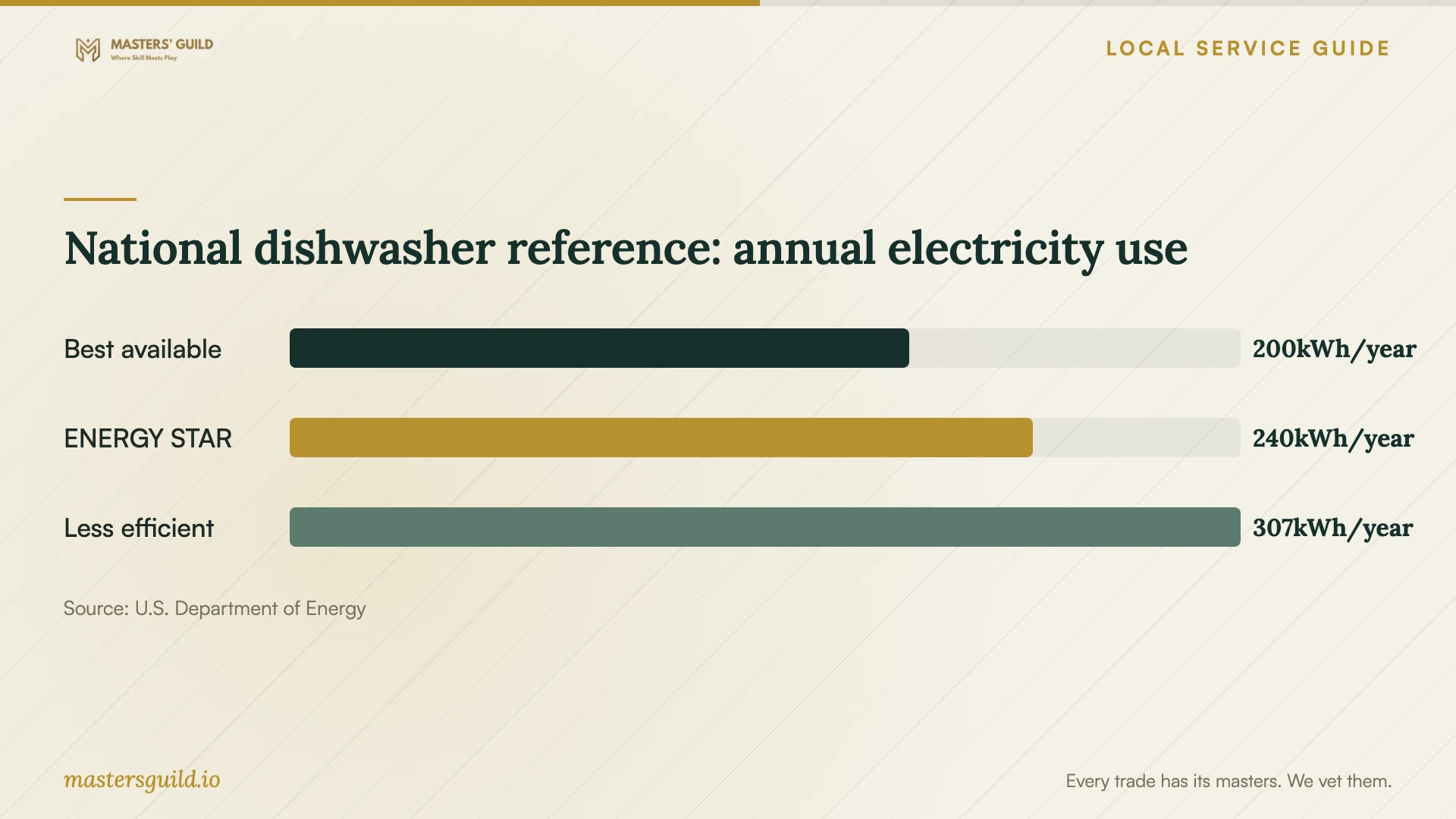
The Department of Energy's October 2023 federal purchasing comparison lists annual electricity use of 200 kWh for its best available dishwasher example, 240 kWh for its ENERGY STAR example, and 307 kWh for its less efficient example. Use this national reference to frame questions about product efficiency, then compare the specifications of the models you intend to buy. [3]
The comparison uses standardized assumptions, including hot water from an electric resistance water heater. It does not measure Salem household bills or installation charges. Keep product operating costs separate from the contractor's quote for fitting and connecting the appliance. [3]
National dishwasher reference: annual electricity use
Local details that affect your job
Oregon permit guidance changes the replacement decision
For a detached one- or two-family home in Salem, assess electrical, plumbing, and mechanical work separately. Oregon exempts certain existing appliance replacements from electrical permits but requires permits for new wiring, new plumbing installations, gas-piping alterations, and specified exhaust work. Give the building department responsible for your address the model and proposed alterations before work begins; a general building-permit exemption does not settle the trade-permit question. [1]
NW Natural conversion requires an activation plan
If you intend to add natural gas service through NW Natural, check address availability before ordering a gas range or dryer. The utility handles outdoor service-line permits, while your contractor handles indoor gas-line permits and equipment installation. Plan for the new house-line pressure test and passing inspection before activation, and ask about any final equipment inspection required by your jurisdiction. [2]
Match the installation scope to the next step
| Proposed work | Permit or planning distinction | Next step |
|---|---|---|
| Replace an existing dishwasher | Oregon lists an electrical exemption for existing dishwashers or similar appliances of 30 amps or less. | Confirm the rating and assess plumbing changes separately. |
| Add or upgrade an electrical outlet | Oregon requires an electrical permit. | Arrange the electrical scope and permit before appliance connection. |
| Add plumbing for a first installation | Oregon requires a permit for plumbing in new installations. | Ask the contractor to identify piping work and permit handling. |
| Install a dryer exhaust or range exhaust | Oregon lists this work among mechanical permit requirements. | Confirm the proposed exhaust work with the responsible building department. |
| Convert a home to NW Natural gas service | New service involves contractor permitting, pressure testing, inspection, and utility activation. | Check availability and coordinate the conversion before planning appliance use. |
Your hiring checklist
- Send the model number and manufacturer's installation instructions with your quote request.
- Photograph existing water, electrical, gas, and exhaust connections without disconnecting them.
- Measure the appliance opening, door clearance, and delivery route.
- Ask the installer to list house alterations and confirm permit responsibility.
- Confirm who supplies connection parts and removes the old appliance.
- Coordinate delivery with any preparatory trade work and inspection appointments.
- Agree on an operating demonstration and documentation before final completion.
Frequently Asked Questions
Does every appliance replacement need a permit?
Oregon lists exemptions for some replacements and portable appliances. It also requires permits for specified wiring, plumbing, gas-piping, and exhaust work. Ask about the full scope at your address rather than treating the appliance name as the deciding factor. [1]
Can I schedule gas conversion and appliance delivery together?
Coordinate them with the contractor and utility before choosing dates. NW Natural requires a permitted, pressure-tested new house line and passing green tag before activation, plus complete installation of at least one gas appliance. Ask the contractor to explain the sequence and any final inspection. [2]
What should I ask before accepting an installation quote?
Ask which connections the installer will use, which house alterations the price includes, who supplies parts, and who handles permits and inspections. Confirm testing, haul-away, and charges for a return visit. Request those answers in writing.
Does the dishwasher chart predict my electricity bill?
No. It reproduces a national federal purchasing comparison from October 2023 using standardized product and test assumptions. Your model, use, water heating, and utility rates need separate consideration. The chart contains no installation prices. [3]
Sources and scope
This guide combines the sources below with practical planning guidance. Figures apply to the stated geography and period; request a written quote for your property.