
Local service guide
Saint Paul pressure washing: hiring and planning
Arrange pressure washing in Saint Paul by comparing written quotes that identify each surface, the cleaning method, wash-water handling, and the total with applicable tax. Minnesota lists pressure washing a building as taxable. Before booking, agree on a test area, stain-treatment exclusions, water access, and weather postponement terms. [3]
Describe the surfaces and the result you want
Send photos of the driveway, steps, patio, siding, or deck you want cleaned. Name the material if you know it and mark the stains that concern you. Separate routine cleaning from preparation for painting or repairs. Ask the provider to inspect materials or finishes you cannot identify before committing to a method.
Have the contractor explain the pressure, cleaning products, and application method they propose for each surface. Request a small test area and agree on who will approve it before the crew continues. Identify loose paint, damaged joints, window gaps, and existing cracks. Put excluded areas and unresolved defects in the written scope.
For roofs or upper-storey work, ask how the crew will reach the area and protect the property. Request liability insurance information and ask about worker coverage. Discuss who will handle a damage report, how you should document a concern, and whether the provider includes a follow-up inspection.
Resolve runoff and collected-water disposal
In its stormwater education page last edited July 27, 2017, the city describes Como-area storm drains carrying runoff to Como Lake and ultimately the Mississippi River, without treatment before the river. The city names oil, salt, and chemicals among pollutants in runoff. Use this explanation to start a drainage discussion; it does not identify your property's current drainage route or establish washing-discharge rules. [1]
Walk the work area with the provider. Point out street inlets, gutters, slopes, and drains, then ask how the crew will identify where water travels. Request a written plan for intercepting dirty water, collecting debris, and taking collected water to a confirmed destination. Include any collection or disposal charge in the quote.
MPCA's business guidance tells a facility disposing of waste down a drain to obtain approval from its local wastewater treatment facility. It identifies Metropolitan Council Environmental Services as the usual Twin Cities authority. For proposed sanitary-sewer disposal, ask the contractor to confirm the receiving authority and its requirements for this wash water. The facility guidance does not establish a universal residential job-site approval requirement or authorize storm-drain discharge. [2]
Compare itemized quotes and tax
Minnesota's Department of Revenue lists pressure washing a building as taxable cleaning and covers residential and commercial buildings in its guidance. It distinguishes building cleaning from repairs. Request the service charge, applicable tax, and final total so you can compare offers for the same work. [3]
For contracts combining taxable and nontaxable services, the department says the full amount is taxable unless the provider separately states the nontaxable services. Its nontaxable list includes painting and repairs to real property. If you bundle those tasks with washing, request separate charges. Ask the provider to explain the tax treatment of driveway or patio work rather than extending the building-washing classification to every outdoor surface. [3]
Compare the areas included, stain treatment, access, water supply, runoff collection, disposal, and cleanup. Ask which stains the contractor excludes from any promised result and what an additional treatment would cost. Agree on payment timing and a walkthrough before accepting the final invoice.
Set weather terms and prepare the property
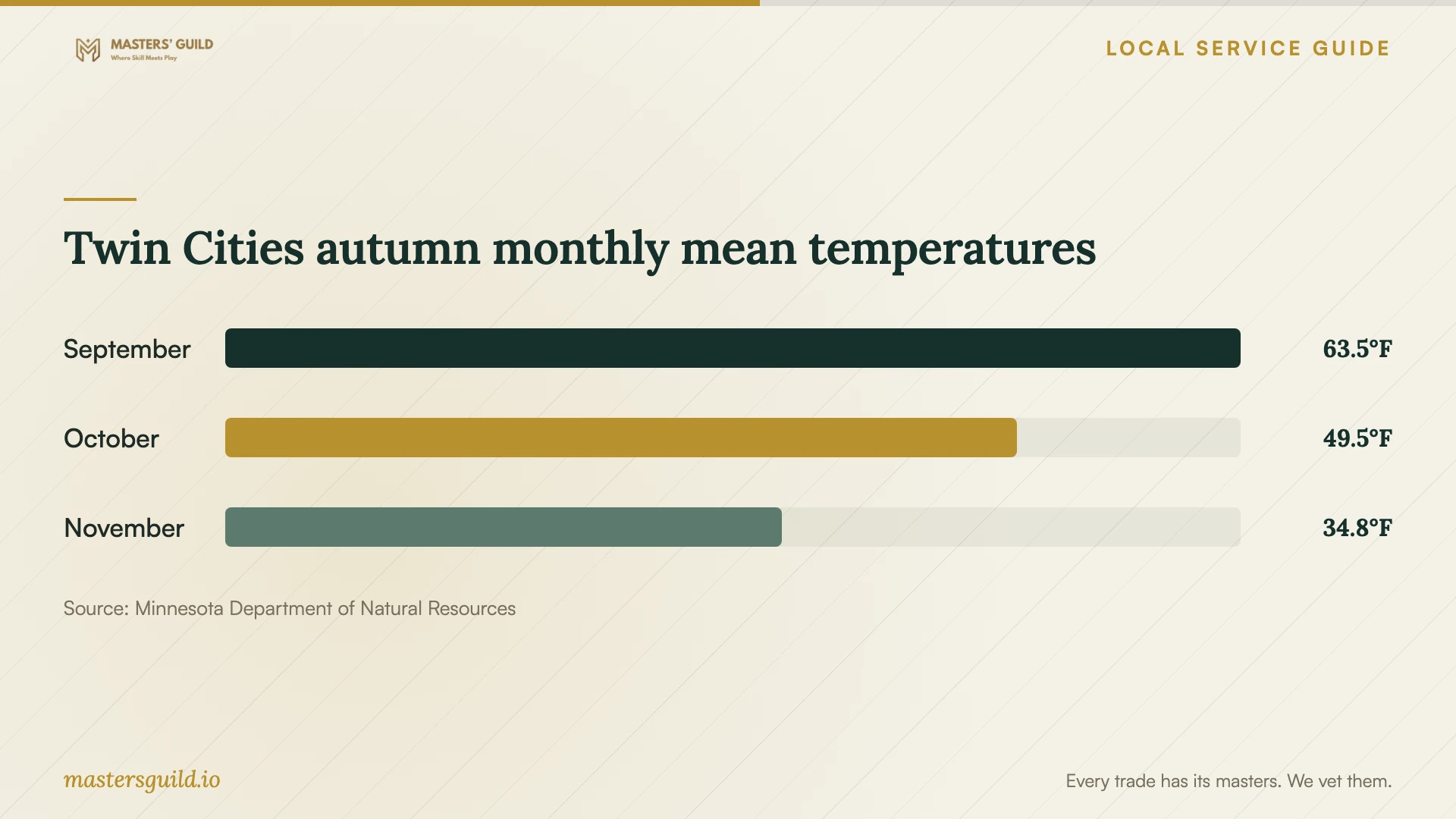
Minnesota DNR publishes Twin Cities monthly mean temperatures of 63.5°F for September, 49.5°F for October, and 34.8°F for November in the 1991–2020 climate normals. These regional historical averages give context for autumn scheduling. They do not establish conditions at your home on the appointment date. [4]
Ask the contractor which forecast conditions will cause them to proceed, postpone, or stop. Agree on notice, rescheduling, and any associated charge. Discuss standing water and when you may use the steps, deck, or driveway again. If painting or sealing follows, confirm that contractor's drying requirements before arranging both appointments.
Before arrival, clear the agreed work area, close windows, and identify the water connection. Point out outlets, plants, and belongings that need protection. Take photos of existing defects. After cleaning, walk the area with the provider and compare the result with the approved test area and written scope.
Twin Cities autumn monthly mean temperatures
Local details that affect your job
Confirm the drainage route near Como
The city's 2017 education page describes Como-area storm drains carrying runoff to Como Lake and ultimately the Mississippi River without treatment before the river. For work near an inlet, ask the provider to confirm your site's drainage and include collection measures in the quote. Treat the page as an explanation of the area's drainage, not a current property-specific map or discharge authorization. [1]
Identify the receiving wastewater authority
MPCA names Metropolitan Council Environmental Services as the usual Twin Cities wastewater authority in its guidance for facilities disposing of waste down drains. If your contractor proposes sanitary-sewer disposal, ask them to confirm the receiving authority's requirements for the proposed water and destination. This facility guidance does not settle the requirements for every mobile washing job. [2]
Separate cleaning and repair charges
Minnesota treats building pressure washing as taxable. Its Department of Revenue says mixed taxable and nontaxable contracts attract tax on the full amount unless the provider separately states the nontaxable services. Request those line items when combining cleaning with painting or repairs, then compare the final totals. [3]
Questions to resolve before booking
| Situation | Question to ask | Next step |
|---|---|---|
| Work area slopes toward a street inlet | How will you identify the drainage route and collect dirty water? | Include containment, collection, and disposal in the written scope. |
| Contractor proposes sanitary-sewer disposal | Which receiving authority will you consult about this wash water? | Ask the contractor to confirm that authority's requirements; MPCA's cited approval guidance concerns facilities. |
| Building washing bundled with painting or repairs | Can you separately state the nontaxable work? | Request separate charges; Minnesota taxes mixed contracts in full without them. |
| Uncertain material or damaged finish | Can you inspect the surface and demonstrate the method? | Approve a test area and document exclusions before proceeding. |
| Autumn appointment | Which forecast conditions will trigger postponement? | Agree on notice, rescheduling, and use of the cleaned area. |
Your hiring checklist
- Send photos and list each surface, material, and stain you want addressed.
- Request the proposed cleaning method and approval of a test area.
- Photograph existing defects and document exclusions.
- Identify drains and request a written runoff collection and disposal plan.
- Ask the contractor to confirm requirements for any proposed sanitary-sewer destination.
- Compare itemized totals covering treatment, access, cleanup, and applicable tax.
- Request insurance information and a contact for damage concerns.
- Agree on weather postponement, payment timing, and the final walkthrough.
Frequently Asked Questions
How should I budget for pressure washing?
Request property-specific, itemized quotes using the same photos and surface list. Compare the total for stain treatment, access, wash-water handling, cleanup, and applicable tax. Ask providers to price optional treatments separately and explain any charge for a return visit.
Does Minnesota tax house pressure washing?
Minnesota's Department of Revenue lists pressure washing a building as taxable. Request the tax and final total in writing. If the contract includes nontaxable work, ask the provider to separately state those charges to avoid taxing the mixed contract in full. [3]
Can the contractor dispose of collected water through a sanitary sewer?
Ask the contractor to confirm the receiving authority's requirements for the proposed wash water and disposal location. MPCA tells facilities disposing of waste down drains to obtain wastewater-treatment approval and names Metropolitan Council Environmental Services as the usual Twin Cities authority. That facility guidance does not establish permission for your job or for storm-drain disposal. [2]
Can I book an October appointment?
Discuss the workday forecast and the provider's operating conditions before booking. DNR reports an October monthly mean of 49.5°F for the Twin Cities during 1991–2020, but that historical average does not establish a suitable washing day. Agree on postponement and drying arrangements. [4]
Sources and scope
This guide combines the sources below with practical planning guidance. Figures apply to the stated geography and period; request a written quote for your property.