
Local service guide
Network setup in Sacramento: plan the right job
For network setup in Sacramento, hire around a written scope: identify the rooms and devices you need connected, ask for diagnosis before approving equipment, and separate router configuration from installed cabling. Check provider availability through California’s broadband map, then confirm service at your address with the provider. For a rental or condominium, ask the property manager about access and installation approval before booking work. Sacramento staff have documented property-access barriers in the city’s broadband expansion project. [2] [3]
Define the problem before buying equipment
Write down the problem in terms a technician can reproduce: a video call drops in the back bedroom, a television disconnects, or a computer cannot reach the printer. Include the affected device, room, time, and whether other devices have the same problem. Ask the technician to compare a wired connection with Wi-Fi and explain the findings before recommending a purchase.
Gather your internet plan details, modem and router model names, and a sketch of the rooms you want covered. Identify the provider’s equipment and any equipment you own. Ask the technician to include equipment compatibility checks in the scope and to explain whether they need your provider’s help before making changes.
The California Public Utilities Commission collects broadband availability data each year. Its interactive map lets residents look up providers and speeds in their area; the fetched program page identifies end-of-year 2024 data as the map’s current dataset. Treat that lookup as a starting point and ask each provider to confirm what it can install at your exact address. [3]
Separate configuration from construction
Ask for separate quote lines for diagnosis, router configuration, equipment, and installed cable work. For a configuration visit, specify the rooms and devices the technician should test. For cabling, identify each outlet location, the proposed route, wall openings, patching responsibilities, and the test results you expect at handover.
CSLB defines the C-7 Low Voltage Systems Contractor classification as covering installation, service, and maintenance of energy-limited communications and low-voltage systems that do not exceed 91 volts. The classification excludes low-voltage fire alarm systems. For fixed communications wiring, ask the contractor to identify the classification that covers the proposed work and provide their license details for verification. [1]
The classification description alone does not establish whether your particular project requires a license or permit. Ask the installer to explain those requirements for the written scope before accepting a bid. Keep new power outlets, alarm work, and communications cabling as distinct scope items so you can establish who will perform each part. [1]
Resolve building access before booking
For a rental or condominium, send the property manager a proposed equipment location and cable route. Ask who can authorize drilling, shared-space access, and changes near the provider’s building entry point. Request written approval and arrange any keys or supervised access before the installer arrives.
Sacramento’s staff report for the October 13, 2026 council agenda explains that many proposed Last Mile Connectivity Project locations sit within multi-tenant properties. Staff report that construction on private property requires owner approval and access agreements. Existing ISP agreements and missing owner authorization prevented work at some proposed locations. [2]
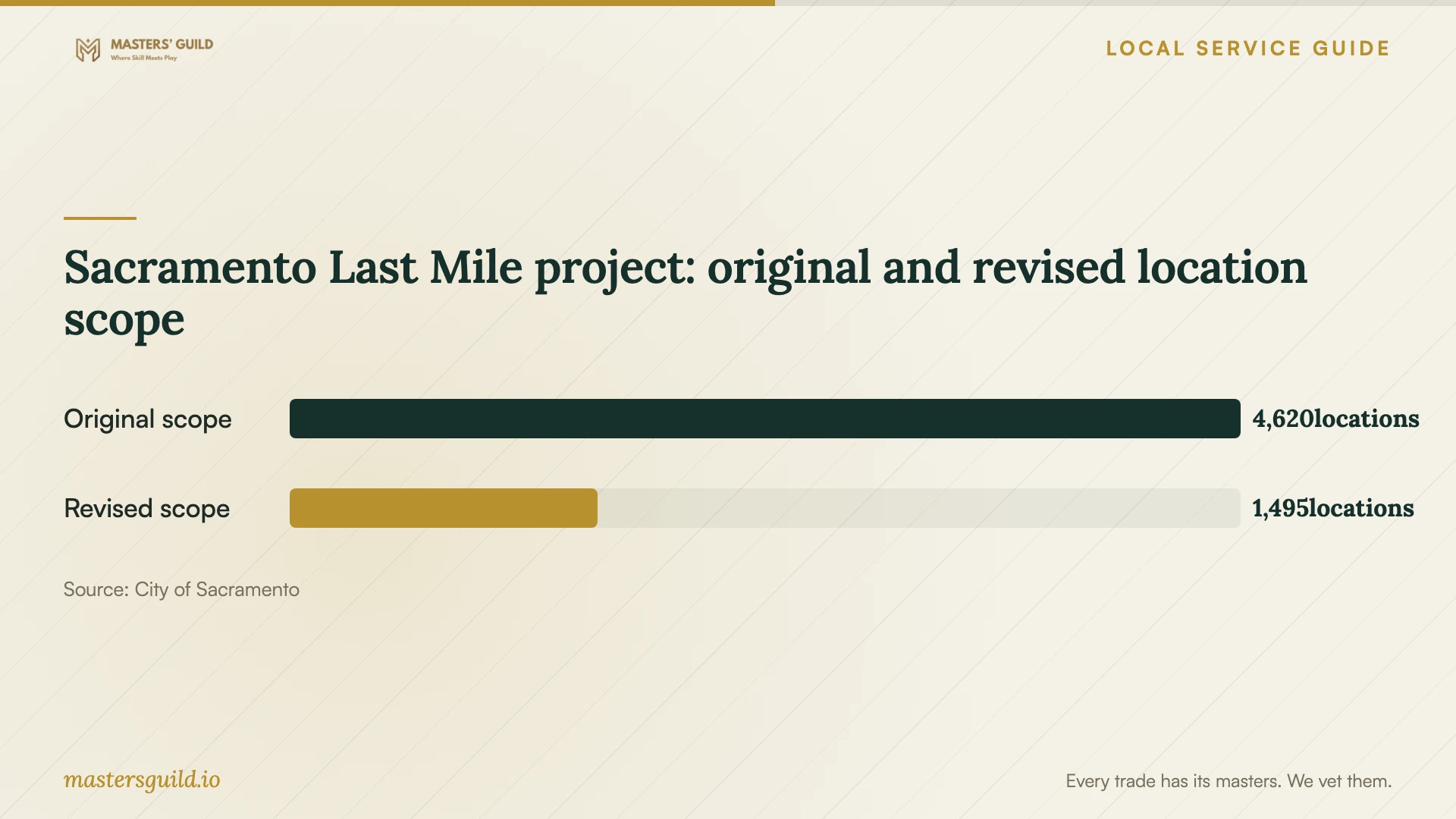
As of October 11, the council item remained Agenda Ready, with no final action listed. Staff reported CPUC-approved amendments reducing the project scope from 4,620 to 1,495 locations. Those figures describe the infrastructure project’s scope, not a list of homes with active service. Ask the provider and property manager about your building before scheduling household network work around a future connection. [2]
Compare quotes and agree on the handover
Give each bidder the same room list, device list, and access information. Request an itemized quote that names equipment models, labor, cable work, wall repairs, and any follow-up support. Ask who handles provider activation and who pays for another visit if access or activation remains unresolved. Agree on approval for extra work before the visit.
Set acceptance checks around how you use the home. Ask the technician to demonstrate a video call at your desk, reconnect the printer, and test the rooms you named in the quote. For installed outlets, request labels and recorded cable-test results. Keep a copy of the final layout and equipment list.
Keep ownership of the router account and recovery information. Enter passwords yourself where practical, agree on any temporary technician access, and ask how to remove that access after the job. Request a written description of support coverage, including which problems require another paid visit.
Sacramento Last Mile project: original and revised location scope
Local details that affect your job
California provider lookup has a data lag
The CPUC map available through its Broadband Mapping Program uses end-of-year 2024 availability and adoption data. Use it to identify providers to contact for your Sacramento address, then confirm installation availability and offered speeds before ordering network hardware or canceling an existing plan. [3]
Sacramento documented property-access barriers
City staff report that existing ISP agreements and owner-authorization problems limited access to multi-tenant properties in the Last Mile Connectivity Project. For a rented home or condominium, ask the manager which provider can enter the property and who approves cable routes. The related October 13, 2026 council item was pending on October 11. [2]
Choose the next step for your network job
| Your situation | First step | Ask the provider or installer |
|---|---|---|
| Problems in particular rooms | Book diagnosis before approving equipment | Will you compare wired and Wi-Fi results and test the affected rooms? |
| Considering a different internet provider | Research providers through the CPUC map and confirm current service | Can you install at this exact address, and what remains to arrange? |
| Need fixed communications cabling | Request a cable-route proposal and qualification details | Which license classification covers the work, and who handles wall repairs? |
| Rental or condominium installation | Get property-manager answers about approval and access | Do existing ISP agreements affect entry, equipment placement, or construction? |
Your hiring checklist
- Record the affected rooms, devices, and symptoms before requesting a quote.
- Gather your internet plan details and modem and router model names.
- Use the CPUC map to shortlist providers, then confirm service with each provider.
- Ask the property manager to approve proposed cable routes and arrange shared-space access.
- Request separate prices for diagnosis, configuration, equipment, cabling, and wall repairs.
- Ask the installer to explain qualifications and permit requirements for the proposed scope.
- Agree on room tests, cable labels, account ownership, and support terms before work starts.
Frequently Asked Questions
Should I buy a mesh system before booking support?
Ask for diagnosis first. Give the technician your room list, equipment models, and symptoms, and request a recommendation tied to test results. Ask for a separate equipment quote so you can review the proposed purchase before authorizing it.
Which California classification covers low-voltage communications work?
CSLB’s C-7 classification covers energy-limited communications and low-voltage systems that do not exceed 91 volts, with a specific exclusion for low-voltage fire alarms. Ask the contractor to explain how their qualifications apply to your cabling scope; the classification page alone does not determine every licensing or permit requirement. [1]
Does Sacramento’s Last Mile project mean I can order fiber now?
Confirm service at your address with the provider. The city staff report describes a revised infrastructure scope of 1,495 locations and property-access constraints. It does not establish active service at your home. The related council item was pending as of October 11, 2026. [2]
What should I receive when the job ends?
Request the equipment list, room-test results, cable labels and test records where applicable, and account recovery instructions. Ask the technician to demonstrate your priority devices and explain the follow-up support terms before you accept the work.
Sources and scope
This guide combines the sources below with practical planning guidance. Figures apply to the stated geography and period; request a written quote for your property.