
Local service guide
Plan wall painting in Rochester, NY
For wall painting in Rochester, NY, ask painters to inspect your walls and provide a written scope covering repairs, preparation, paint, room protection, and cleanup. Compare offers for the same work. For a home built before 1978, ask about EPA firm certification before approving preparation that disturbs existing paint. EPA includes painting preparation within its renovation rule, subject to specified exceptions. Agree on room access and leftover-paint disposal before booking. [1]
Define the work before comparing estimates
Walk through each room with the painter. Point out peeling areas, holes, cracks, and stains. Ask for a preparation plan for each problem and identify repairs that need a separate estimate. For damp areas or recurring stains, arrange an assessment of the cause before approving a cosmetic repaint.
Request the paint manufacturer, product, color, sheen, primer, and proposed coat count in writing. Ask whether the price covers furniture moving, floor protection, switch-plate removal, patching, and cleanup. List ceilings, doors, baseboards, and window trim as separate surfaces so you can compare wall-only offers.
Get site-specific written estimates to establish your budget. Compare identical scopes and ask each painter to separate materials, preparation, repairs, and tax. Require your approval for additional work, including repairs discovered after preparation starts. Ask whether the painter charges a fixed amount or uses another pricing method.
Resolve older-paint questions before sanding
EPA's Renovation, Repair and Painting rule covers paint-disturbing work in housing and child-occupied facilities built before 1978. Painting preparation falls within that scope. EPA generally requires firms, including sole proprietors, to hold firm certification for covered paid work. Ask for the firm's certification and identify the certified renovator responsible for your project. [1]
Ask the painter to explain any claimed exception. EPA describes a minor-repair exception for work disturbing six square feet or less of paint per interior room. Window replacement and demolition of painted surfaces remain covered regardless of area, and prohibited activities remain prohibited regardless of square footage. Ask about the full preparation area before accepting an exemption claim. [1]
EPA does not require paint testing under the rule. Without documentation that affected paint is not lead-based, applicable RRP requirements apply. If you choose testing, use an appropriately qualified professional to test the affected surfaces. Request results before work starts and ask the painter to explain containment, cleanup, occupant access, and project documentation. [1]
Arrange room access and the final walkthrough
Agree on work hours, furniture moving, room access, and equipment storage. Tell the painter about pets, children, and rooms you need to keep available. Request product-specific ventilation and reentry instructions, along with the manufacturer's drying, recoating, and curing guidance. Ask for a schedule covering preparation, coating, cleanup, and inspection.
Approve a color and sheen sample in the room before authorizing the full job. At the walkthrough, inspect the agreed surfaces in daylight and under your usual lighting. Look for missed areas, uneven edges, paint on adjacent surfaces, and unfinished repairs. Record touch-ups with the painter and agree on their completion date.
Account for tax, purchase fees, and leftovers
New York's Department of Taxation and Finance identifies repainting existing interior spaces as taxable real-property repair or maintenance work. Ask the painter to include applicable tax in the estimate. If painting forms part of a larger renovation and the contractor claims capital-improvement treatment, request the basis; the state's guidance distinguishes maintenance from qualifying capital improvements. [4]
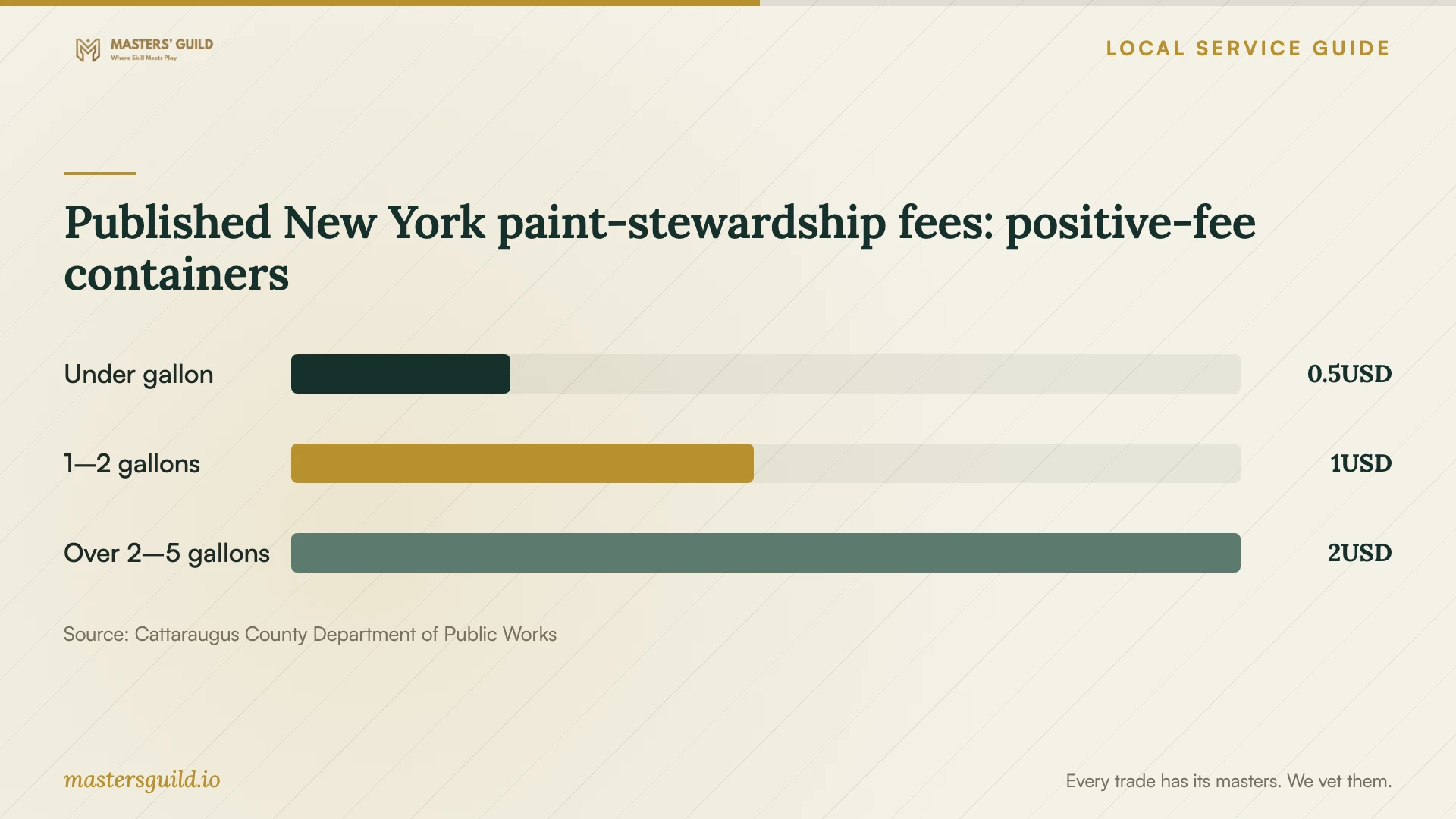
Cattaraugus County publishes a statewide New York paint-stewardship fee schedule based on container size, effective May 1, 2022. The chart shows its three positive-fee categories as retrieved on October 11, 2026. The same schedule lists no fee for containers of half a pint or less. Confirm the applicable purchase charge with your supplier. [5]
Ask the painter to leave agreed touch-up paint in its labeled container and record the product, color, and sheen. Separate usable paint you want to keep from unwanted leftovers. Specify who will transport discarded paint and whether the quote includes that task.
Published New York paint-stewardship fees: positive-fee containers
Local details that affect your job
Choose the Monroe County disposal route before cleanup
Monroe County directs residents to make a household hazardous waste appointment for paints and stains. For one-third of a can or less of latex paint, the county says ecopark will not accept it. Its instructions are to discard the lid, mix in kitty litter, let the paint dry, and place it in the trash. Keep that instruction separate from other paint types. The county also describes PaintCare drop-off without appointments, accepting up to five gallons per customer per visit in original labeled containers no larger than five gallons. Confirm the selected site's instructions before transporting leftovers and specify the disposal route in your agreement. [2]
Share a county lead-hazard notice before requesting a repaint
If you have a Monroe County Notice and Demand concerning lead hazards, give it to the contractor before agreeing on cosmetic work. The county requires people conducting lead-hazard control work under that notice to be EPA-certified renovators. It reinspects for compliance and requires each affected unit to pass lead-dust clearance. Ask the county program which obligations apply to your property, then assign responsibility for the required work and clearance in the agreement. The program lists 585 753-5087 as its contact number. [3]
Choose the next step for your walls
| Situation | Next step | Include in the agreement |
|---|---|---|
| Sound walls and a color change | Request a wall-only estimate after inspection. | Paint product, preparation, coat count, and excluded surfaces. |
| Pre-1978 home with paint-disturbing preparation | Ask about EPA firm certification and any claimed exception. | Responsible renovator, containment, cleanup, and testing decision. |
| Recurring stains or damp areas | Arrange an assessment of the cause before approving painting. | Responsibility for repairs and when painting may proceed. |
| Monroe County lead-hazard Notice and Demand | Share the notice and clarify obligations with the county program. | Required hazard-control work, certified personnel, and clearance responsibilities. |
| Unwanted paint after completion | Check the county collection instructions or PaintCare route. | Who transports leftovers and which usable paint you retain. |
Your hiring checklist
- List rooms and surfaces, separating walls from ceilings, doors, and trim.
- Show damaged areas and request written preparation and repair terms.
- Share the construction date, paint-test reports, and any county lead-hazard notice.
- Ask the painter to explain the certification and lead-safe preparation applicable to your scope.
- Approve the paint product, color, sheen, primer, and coat count.
- Agree on room access, protection, cleanup, and product-specific reentry instructions.
- Compare totals including tax and require approval for added work.
- Schedule the walkthrough and decide who keeps or disposes of leftover paint.
Frequently Asked Questions
Does a painter need EPA certification for my older home?
EPA generally requires firm certification for paid work that disturbs paint in housing built before 1978. Painting preparation counts, though specified exceptions exist. Ask the painter to explain the planned disturbance and any claimed exception before approving work. [1]
Must I test the walls for lead before hiring?
EPA does not require testing under the RRP rule. Without documentation that affected paint is not lead-based, applicable requirements apply. If you choose testing, use an appropriately qualified professional and share the results with the painter. [1]
Should the estimate include sales tax?
Ask for applicable tax in the total. New York identifies repainting existing interior spaces as taxable repair or maintenance work. A contractor claiming capital-improvement treatment for a larger renovation should explain the basis. [4]
Can I take leftover paint to ecopark?
Monroe County accepts paints and stains through household hazardous waste collections by appointment. It excludes one-third of a can or less of latex paint and provides drying-and-trash instructions for that quantity. The county also describes PaintCare drop-off options. Check the selected site's instructions before visiting. [2]
Sources and scope
This guide combines the sources below with practical planning guidance. Figures apply to the stated geography and period; request a written quote for your property.