
Local service guide
Carpet Cleaning in Rochester, NY: Hiring Guide
Arrange Carpet Cleaning in Rochester, NY by asking cleaners to quote the same rooms, stairs, stain treatments and furniture-moving scope, then agree on drying instructions before booking. Tell them about basement water damage before requesting routine cleaning. For sewage-contaminated carpet, EPA recommends a professional with experience cleaning and repairing buildings damaged by contaminated water. [4]
Get a quote for the carpet you want cleaned
Send each cleaner the same room list, approximate dimensions, stair count and photographs of problem areas. Say whether you want open walking areas cleaned or want furniture moved to reach the carpet underneath. Ask how the cleaner defines a room and handles oversized spaces, landings and hallways.
Request separate prices for base cleaning and any proposed stain, odor or protective treatment. Describe pet accidents and products you used. Ask the cleaner to explain the treatment, the result they expect and what happens if the stain or odor remains. Get that scope in writing before approving the treatment.
Compare the scope and final total rather than a room-price headline. Ask about a minimum visit charge, travel, parking, stairs and furniture handling without assuming the company charges for them. Obtain a quote for your carpet and access conditions before setting your budget.
Choose a cleaning plan and agree on drying
Tell the cleaner what you know about the carpet fiber, manufacturer and care instructions. If you have a warranty, send its cleaning requirements before booking. Ask the cleaner to explain the proposed method and confirm that it fits those instructions. For a valuable rug or an item you are unsure how to clean, consider a rug specialist and check references for comparable work.
Get both the appointment length and the expected time before normal room use. Request instructions for walking on the carpet, returning furniture and keeping pets away from the work area. Explain whether you need the room that evening or have limited options for ventilation. Agree on whom to contact if the carpet remains damp beyond the cleaner's estimate.
EPA recommends keeping indoor relative humidity below 60 percent, ideally between 30 and 50 percent, as part of residential moisture control. Discuss fans or a dehumidifier with the cleaner if you cannot open windows. Follow the cleaner's instructions for your job; EPA's humidity recommendation does not establish how many hours your carpet will take to dry. [4]
Prepare access and protect your schedule
Before the appointment, agree on a parking or unloading location and the route to each room. Mention a shared entrance, narrow staircase or upstairs apartment. Ask whether the cleaner needs water or electricity and whether equipment will pass through doors you need to keep secure.
Remove small belongings and fragile items from the agreed work area. Confirm who moves heavy furniture and who puts it back. Photograph existing damage and identify loose seams or previous repairs during the walkthrough. Plan a usable route through the home while the cleaner works and the carpet dries.
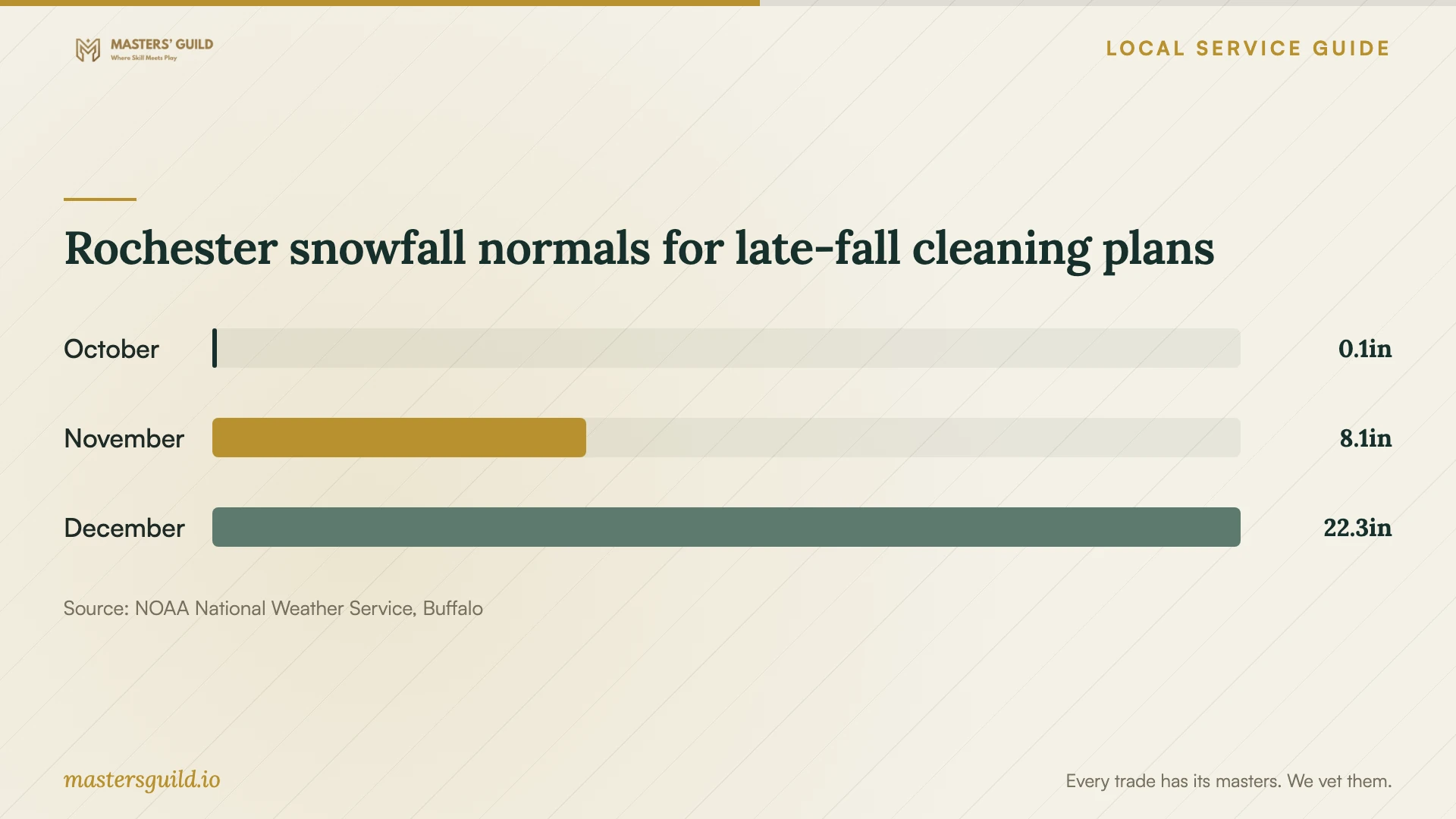
The National Weather Service publishes Rochester's 1991–2020 snowfall normals of 8.1 inches in November and 22.3 inches in December. For an entrance-cleaning appointment before winter, consider including the adjoining hall or stairs in the quote and choose a place for boots and wet outerwear. These historical averages do not forecast conditions on your appointment day. [2]
Separate basement damage from routine cleaning
Tell the provider whether basement carpet became wet from a leak, stormwater or sewage. Monroe County explains that Rochester has combined storm and sanitary sewers and that open floor drains and basement plumbing fixtures can provide routes for backups during storms. Ask a plumber about the underlying problem before arranging the carpet work. [1]
For sewage or other contaminated-water damage, EPA recommends hiring a professional with relevant cleanup and building-repair experience. EPA warns that moldy porous materials, including carpet, may require disposal because complete mold removal can be difficult or impossible. Ask the specialist to address the carpet, pad and moisture source before agreeing to cleaning alone. [4]
New York's Department of Labor defines a mold project as assessment, remediation or abatement of an area greater than ten square feet undertaken for that purpose. It excludes routine cleaning. For a covered hired project, verify the applicable licenses and obtain the assessment plan before remediation. The same licensee cannot perform both assessment and remediation on that project. [5]
Rochester snowfall normals for late-fall cleaning plans
Local details that affect your job
Use the correct sewer-backup response route
In the City of Rochester, Gates, Chili and Ogden, Monroe County Pure Waters accepts sewer-backup calls at 753-7600, option 1, and dispatches a maintenance crew. Elsewhere in Monroe County, contact your town or village about main-sewer issues. The county says internal plumbing problems remain the property owner's responsibility. If your basement is flooded, the county advises staying out and calling the fire department because of electrocution risk. [1]
Check a tax charge against the cleaning scope
New York's tax department includes carpet, rug, drapery and upholstery cleaning in its generally exempt services table and lists no required exemption document for that category. Ask the provider to explain a sales-tax line on a cleaning quote. If the job includes repairs or other work, request separate descriptions rather than assuming the same tax treatment covers the entire invoice. [3]
Check New York credentials for a mold project
If you hire professionals for a covered mold project, use the Department of Labor's contractor and individual license search tools described in its FAQ. Request the licensed assessor's remediation plan and the remediator's work plan. The department says a homeowner waiver does not let a licensed remediator bypass the required assessment, and one licensee cannot assess and remediate the same project. [5]
Choose the next step for your carpet
| Situation | Next step | What to confirm |
|---|---|---|
| Dry carpet with tracked-in dirt | Request a routine cleaning quote | Rooms, stairs, furniture moving, method and total |
| Pet stains or persistent odor | Request an inspection and a treatment proposal | Treatment scope, expected result and follow-up terms |
| Carpet wet after a leak | Address the leak and arrange drying | EPA advises drying water-damaged items within 24–48 hours |
| Sewage-contaminated basement carpet | Hire a professional experienced with contaminated-water damage | Underlying sewer problem, cleanup scope and affected materials |
| Suspected mold requiring a covered New York mold project | Verify licensed assessment and remediation arrangements | Assessment plan and different licensees for assessment and remediation |
Your hiring checklist
- Send each cleaner the same rooms, dimensions, stairs and photographs.
- Describe stains, pet accidents, previous treatments and any water damage.
- Request a written total with optional treatments and access charges separated.
- Confirm the method against available carpet care or warranty instructions.
- Agree on furniture moving, parking, entry and equipment access.
- Get drying instructions, room-use timing and a follow-up contact.
- Walk through the finished work and keep the invoice and care instructions.
Frequently Asked Questions
How much should I budget for carpet cleaning?
Get written quotes for your rooms and stairs, including any treatment and furniture moving you want. Ask each provider to state the minimum charge, exclusions and final total. Use those quotes to set your budget rather than assuming an advertised room price covers the whole job.
Should a carpet cleaner charge New York sales tax?
New York lists carpet and rug cleaning among services generally exempt from sales tax. Ask the provider to identify the service behind any tax charge, especially when the invoice combines cleaning with repairs or other work. [3]
How long will my carpet take to dry?
Request a drying estimate for the proposed method and your home's conditions, plus instructions for returning furniture and using the room. EPA's 24–48-hour guidance concerns drying water-damaged materials after leaks or spills; it is not a routine cleaning dry-time guarantee. [4]
Can routine cleaning fix moldy basement carpet?
EPA says moldy carpet may need disposal because mold can be difficult or impossible to remove from porous materials. Address the moisture source and consult an experienced professional. If the hired work constitutes a covered New York mold project, verify the required assessment and remediation arrangements. [4] [5]
Sources and scope
This guide combines the sources below with practical planning guidance. Figures apply to the stated geography and period; request a written quote for your property.