
Local service guide
Pest Control Services in Richmond, BC
Choose Pest Control Services in Richmond, BC by asking for pest identification, a written treatment plan and a quote that separates treatment, prevention work and follow-up visits. For pesticide work, ask which provincial authorization covers the job and who holds the relevant applicator certificate. Richmond restricts cosmetic lawn and garden pesticide use, so describe whether your problem involves indoor pests, rodents or outdoor landscaping before agreeing to treatment. [1] [3]
Give the inspector a clear description
Send photographs, the locations of sightings and the dates you noticed activity. Describe affected rooms, outdoor areas and any treatment you have tried. Ask the provider to identify the pest and explain the evidence for that identification before proposing a treatment package.
Tell the provider about children, pets and anyone who needs help leaving the home during treatment. Request written preparation, access and return instructions for the proposed method. For a strata property, ask your manager who can authorize work in shared areas and arrange access before booking.
Check credentials for the proposed work
B.C. issues pesticide certificates to individual applicators and licences, confirmations or permits to businesses with certified applicators. The Province says the required authorization depends on the situation. A business applying for a pesticide licence must have someone on staff with a valid certificate in the appropriate category. [3]
Ask for the business authorization details, the applicator's certificate category and proof of liability insurance. Ask the provider to explain how those credentials cover your proposed treatment. If the answer remains unclear, the provincial Integrated Pest Management Program lists 250-387-9502 for legislation and regulation questions. [3]
Request the proposed product name, active ingredient and treatment locations in writing. For trapping or entry-point repairs, ask who installs the equipment, checks it and completes the repairs. Keep those responsibilities in the quote.
Compare the complete job cost
Request a written total for the same scope from each provider. Separate the inspection fee, initial treatment, included return visits, monitoring and repair work. Ask whether the provider credits an inspection fee toward treatment and whether the total includes taxes.
For rodents, ask whether the quote includes an entry-point assessment, sealing work, trap checks and disposal. For indoor insects, ask which rooms the provider will inspect and what triggers another visit. Request the follow-up schedule and any guarantee conditions before paying.
Get property-specific quotes to set your budget. Compare a one-time visit with a recurring contract by asking for the total commitment, cancellation terms and charges for visits outside the agreement.
Request a rodent plan that fits a home
B.C. restricts second-generation anticoagulant rodenticides, or SGARs, to essential services and licensed pest-control companies working for those services. The listed active ingredients are brodifacoum, bromadiolone and difethialone. Hiring a licensed company does not make an ordinary residence eligible for their use. [4]
The Province recommends integrated pest management: identifying rodents, monitoring activity, preventing access and using alternative controls such as traps. Ask your provider to turn those steps into a property-specific plan with named responsibilities and a review date. [4]
Before accepting any bait proposal, ask for the active ingredient and the reason the provider considers it appropriate. The provincial restrictions described here concern SGARs; ask the provider to explain the rules and precautions for any other proposed product. [4]
Plan outdoor work around identification and water
For suspected European fire ants, arrange identification before treatment and avoid sharing plants, soil or compost carrying ants. Richmond advises coordination with neighbours because colonies can invade from adjacent properties. Ask a provider how they will identify the species, limit spread and assess results. [2]
For mosquito concerns, check containers, gutters, rain barrels and other places that collect water. Richmond recommends removing standing water, maintaining drainage and screening openings. The City also runs a nuisance-mosquito program with a regional reporting hotline, so ask about that route before commissioning treatment for a wider outdoor problem. [2]
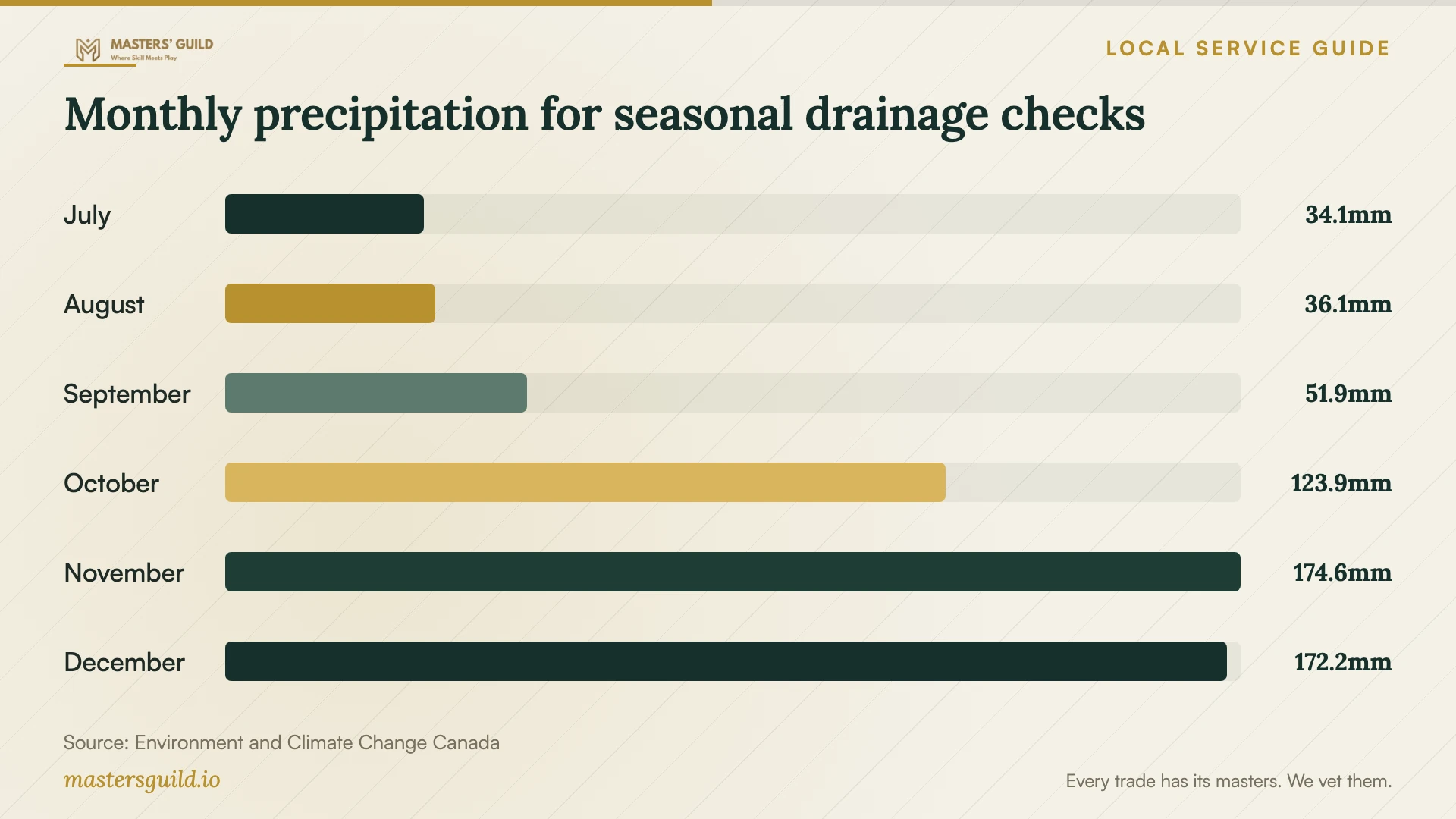
Use the airport climate chart as a seasonal reminder to inspect drainage: published monthly precipitation normals rise from 51.9 mm in September to 174.6 mm in November. Follow the City's standing-water guidance when inspecting your property. These historical averages do not measure mosquito activity or predict treatment needs at your home. [2] [5]
Monthly precipitation for seasonal drainage checks
Local details that affect your job
Residential garden treatments face local restrictions
Richmond's Pesticide Use Control Bylaw restricts non-essential cosmetic pesticide use on residential and City-owned land, including conventional herbicides for pavement cracks. The City permits specified pesticides and biological controls. Residents and strata councils must ensure contractors follow the restrictions. For a lawn or garden quote, ask the contractor to name the active ingredient and explain its permitted use; call 604-276-4398 with bylaw questions. [1]
October chafer damage needs a seasonal plan
Richmond says European chafer damage appears from fall to early spring and recommends nematode application from mid to late July, when larvae are small. The City states that its bylaw allows no insecticides for chafer control. For damaged turf this October, request grub identification, lawn-restoration advice and a plan for the next treatment window before paying for a chemical application. [2]
Report nuisance mosquitoes through the local program
Richmond contracts a nuisance-mosquito program that targets larvae in high-density areas. Report where and when you experience concerns to 604-432-6228. Pair that report with checks for standing water on your property, and ask a private provider which breeding sites their proposed work would address. [2]
Choose the next step for your pest problem
| Problem | First step | Question before booking |
|---|---|---|
| Rats or mice at a home | Request identification, prevention work and alternative controls. | Which entry points will you assess, and who handles trap checks and repairs? |
| Indoor insect activity | Request an inspection and a written scope for affected rooms. | Which method do you propose, and what preparation and follow-up does the quote include? |
| Red ants outdoors | Confirm the species; Richmond warns against assuming red ants are European fire ants. | How will you confirm identification and coordinate control with adjacent properties? |
| Damaged lawn in autumn | Check for chafer grubs and discuss restoration; Richmond recommends a July nematode window. | What can you do now, and which treatment should wait for the recommended window? |
| Outdoor mosquito nuisance | Remove standing water and report concerns to the local mosquito program. | Which breeding sites would private treatment address? |
Your hiring checklist
- Photograph activity and record affected locations, sighting dates and previous treatments.
- Request identification and a written explanation of the proposed control method.
- Ask for authorization and applicator-certificate details for pesticide work.
- Obtain a quote separating treatment, monitoring, repairs and return visits.
- Request written preparation and return instructions covering children and pets.
- Confirm who checks traps, removes equipment and completes agreed repairs.
- Agree on a follow-up date and the evidence the provider will use to assess results.
Frequently Asked Questions
Does Richmond ban all pest-control pesticides?
The City restricts cosmetic lawn and garden use on residential and City-owned land. It says that restriction does not apply to indoor pests, rodents or mosquito control. Ask the provider which provincial pesticide requirements cover the job. Richmond also identifies notification and signage requirements under its Public Health Bylaw. [1] [3]
Can a licensed company use SGAR bait at my house?
An ordinary residence does not qualify through hiring a licensed company. B.C. permits SGAR use only by eligible essential services or licensed pest-control companies working for them. Ask for the active ingredient and request a home-appropriate prevention, monitoring and control plan. [4]
Should I book treatment as soon as I see red ants?
Arrange identification first. Richmond notes that native ants can also be red and that European fire ants can be difficult to identify. Avoid moving ant-infested garden materials, and ask how the provider will prevent spread and involve neighbours where needed. [2]
What should a pest-control quote include?
Ask for the identified pest, treatment areas, method, preparation instructions, total price and included follow-up. For rodents, specify monitoring, entry-point repairs and disposal responsibilities. Request separate prices for optional work and written conditions for any guarantee.
Sources and scope
This guide combines the sources below with practical planning guidance. Figures apply to the stated geography and period; request a written quote for your property.