
Local service guide
Mold Removal in Red Deer: Hiring and Repair Planning
Arrange Mold Removal in Red Deer by requesting a property assessment and comparing written proposals for cleanup, moisture-source repairs and rebuilding. Before authorizing demolition, resolve permit questions and older-material precautions. Alberta Health Services recommends environmental-consultant testing before renovations disturb potentially asbestos-containing materials in buildings built before the early 1990s. Choose a contractor who explains the proposed work, its limits and how you will approve changes. [3]
Prepare for the assessment
Give the assessor photographs, a description of the affected rooms and a timeline of leaks, backups or previous cleanup. Take photographs without moving or breaking suspect materials. Explain whether you noticed the problem after rain, a plumbing incident or another event. Treat those observations as starting points for investigation rather than a diagnosis.
Ask the assessor to identify which areas they inspected and which concealed areas remain uncertain. Have them explain any proposed opening of walls or sampling: what question would it answer, who would perform it and how would the findings change the work? Request recommendations that distinguish the observed problem from assumptions that need further investigation.
Choose a contractor and compare the whole job
Send each bidder the same room descriptions and assessment information. Request itemized amounts for assessment, cleaning or removal, equipment, disposal, moisture-source repairs and reconstruction. Ask whether taxes, testing and return visits are included. If one proposal excludes rebuilding, obtain that price before comparing totals.
Ask who will supervise the job and who will perform each stage. Request evidence of relevant remediation training and insurance, then ask the contractor to explain how their training applies to your proposed work. Discuss protection of occupied rooms, access routes for removed materials and whether you should arrange alternative use of the affected space.
Agree on a written change-approval process for concealed damage. Ask for a staged schedule and define the records you want at handover, such as photographs, source-repair details and any measurements used to support reconstruction decisions. Have the contractor explain their proposed completion checks and whether a separate assessor will participate.
Resolve asbestos precautions before demolition
Alberta Health Services identifies drywall mud, ceiling tiles, insulation, floor tiles and textured finishes among building materials that may contain asbestos when used before 1990. For buildings built before the early 1990s, it recommends hiring an environmental consultant to test before renovations disturb suspect materials. Apply that provincial guidance before approving demolition during mould work. [3]
Share construction and renovation dates with the consultant and identify the materials workers propose to disturb. Alberta Health Services advises hiring a qualified contractor to remove asbestos. After fire or flood damage, insured homeowners can ask their insurance company to help find an environmental consultant. Resolve that assessment before agreeing to a demolition start date. [3]
Check reconstruction permits and inspection stages
Red Deer's residential guidance requires a building permit for basement finishing and identifies building-permit requirements for interior renovations, including adding, moving or removing walls. It lists painting, replacing flooring and replacing countertops among exemptions. Give City Inspections the actual removal and rebuilding plan so staff can determine which requirements apply. [1]
The City identifies additional permits for electrical, heating, gas and plumbing installations. Depending on the permit, inspections may include a rough-in inspection before workers conceal the work and a final inspection after completion. Check the issued permit's inspection requirements before scheduling replacement finishes. Contractors applying for permits require a valid City of Red Deer Business Licence. [1]
Include backup prevention in the repair discussion
After a sanitary or stormwater backup, ask a plumber about the property's connections and whether backflow valves belong in the repair plan. Red Deer's utility guidance describes plumber-installed valves that close when the mains are surcharged, reducing the risk of water entering from those mains. While closed, they also prevent water from leaving the house through the protected line. [2]
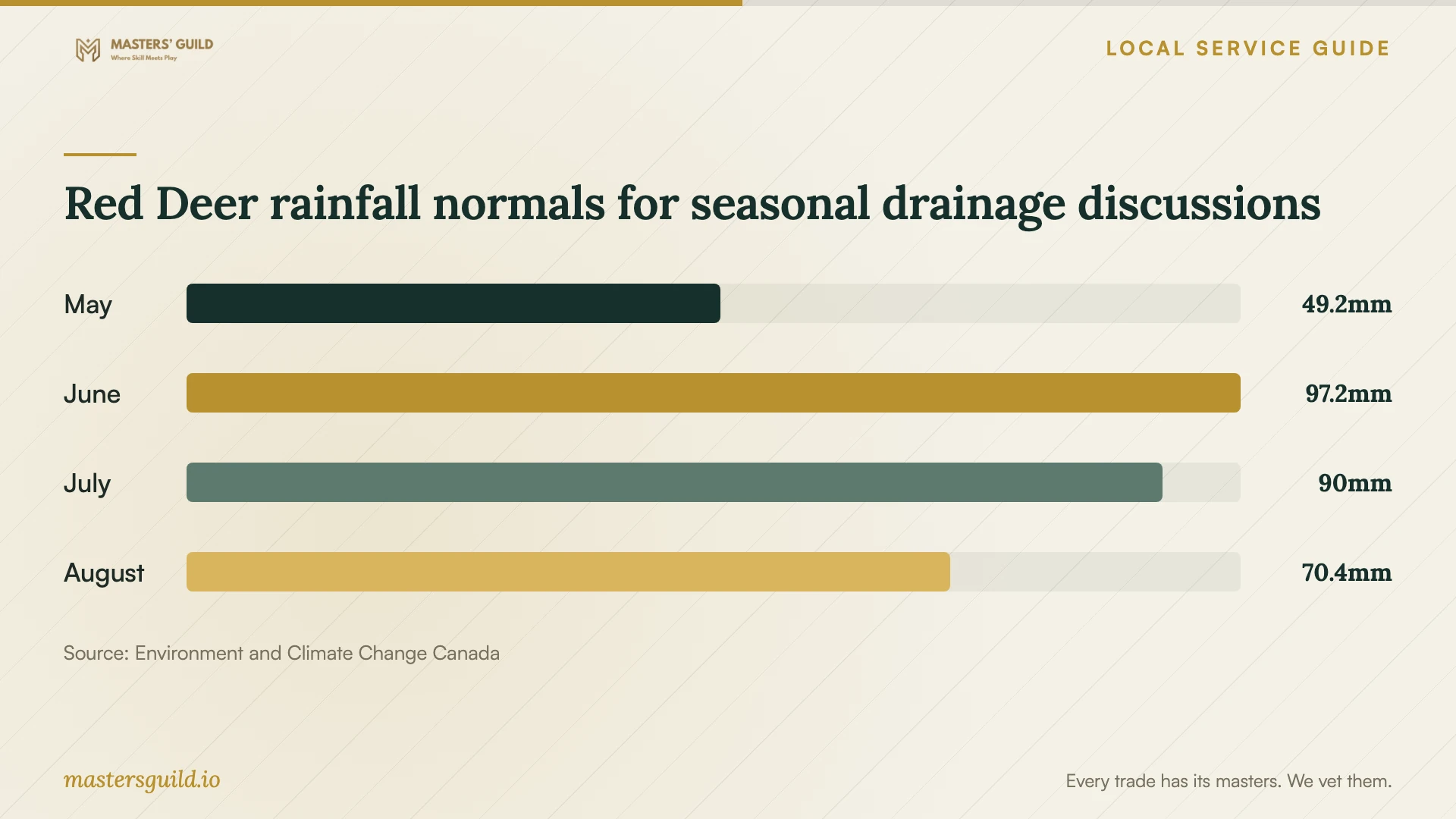
Give the plumber the backup history and ask for operating instructions, including how to manage household water use during closure. For rain-related concerns, compare your incident dates with your own observations of leaks and drainage. The rainfall chart provides historical seasonal context; use a property assessment to investigate the source of the water.
Red Deer rainfall normals for seasonal drainage discussions
Local details that affect your job
Use Red Deer's permit application process
Submit required residential permit applications through MyPermits. The City then emails instructions for uploading plans and documents to ProjectDox, and each permit requires a separate submission. For an uncertain removal or reconstruction scope, contact City Inspections at 403-342-8190. Assign application responsibility before booking reconstruction. [1]
Apply Alberta's older-material precautions here
For a Red Deer home built before the early 1990s, follow Alberta Health Services' provincial advice to obtain environmental-consultant testing before renovations disturb potentially asbestos-containing materials. Ask the consultant to review the proposed demolition areas, rather than assuming the home's age establishes whether a particular material contains asbestos. [3]
Discuss outgoing water during valve closure
Red Deer's backflow guidance explains that closed valves also stop water from leaving the house until the mains are no longer surcharged. If a plumber proposes valve installation, ask how that restriction applies to your protected lines and household fixtures. Include those instructions in your repair handover. [2]
Resolve these questions before authorizing work
| Situation | Next step | Question to ask |
|---|---|---|
| Demolition may disturb suspect materials in a home built before the early 1990s | Arrange environmental-consultant testing | Which proposed removal areas need testing before work starts? |
| The project includes basement finishing or interior wall alterations | Confirm requirements with City Inspections | Which permits apply to this removal and reconstruction plan? |
| The repair includes electrical or plumbing installations | Check subtrade permits and required inspections | At what stage must we request inspection before concealing work? |
| The basement experienced a sanitary or stormwater backup | Discuss backflow protection with a plumber | How should we manage water use while a valve is closed? |
| Contractors quote different work | Request comparable itemized proposals | Which assessment, repair and rebuilding tasks does each price include? |
Your hiring checklist
- Prepare photographs and a timeline of water incidents, odours and previous repairs.
- Share construction and renovation dates before anyone disturbs building materials.
- Ask the assessor to document inspected areas and uncertainty about concealed spaces.
- Compare itemized proposals using the same work description and exclusions.
- Request relevant training and insurance information for the people doing the work.
- Resolve consultant testing, permit responsibility and inspection timing before demolition or rebuilding.
- Agree on change approval, access arrangements and completion records before signing.
Frequently Asked Questions
How should I budget for mould removal?
Obtain a property assessment and itemized quotes. Include moisture-source repairs and reconstruction in your budget, and ask how the contractor will price concealed damage. Resolve exclusions before choosing a proposal.
Does mould removal require a permit?
Ask City Inspections about the exact removal and reconstruction scope. Red Deer requires a building permit for basement finishing and identifies interior renovation requirements, while exempting some finish replacements. A description of cleanup alone may leave out the work you plan to undertake. [1]
Should I arrange asbestos testing before workers open walls?
Alberta Health Services recommends environmental-consultant testing before renovations disturb potentially asbestos-containing materials in buildings built before the early 1990s. Tell the consultant which materials workers intend to disturb and provide any construction or renovation records. [3]
Will a backflow valve stop another basement backup?
Red Deer's guidance describes risk reduction for water entering from surcharged sanitary or stormwater mains. Discuss your connections and the limits of the proposed protection with a plumber. A closed valve also prevents household water from leaving through the protected line. [2]
Sources and scope
This guide combines the sources below with practical planning guidance. Figures apply to the stated geography and period; request a written quote for your property.