
Local service guide
Tile Setting in Raleigh: Planning and Comparing Quotes
For Tile Setting in Raleigh, choose an installer who inspects the work area and provides a written scope covering preparation, tile installation, cleanup and tax. Compare quotes for the same materials and layout, and agree on how you will approve added work. For a shower, include a waterproofing plan and written return-to-use instructions before booking.
Define the work before comparing installers
Describe the room, surfaces and finish you want. Send photographs of doorways, exposed edges, drains and damaged areas, along with your measurements. Have each installer confirm dimensions during a visit before you accept a final price. Identify whether the quote should include removal of existing tile.
Provide the tile product information and your preferred layout. Include grout color, exposed-edge treatment and transitions to adjoining floors. For a backsplash, mark where the tile should stop. For a bathroom, name the person responsible for removing and reinstalling fixtures. Keep these details consistent across quotes.
Describe the surrounding project as well as the tile work. NCDOR lists complete and partial flooring replacement as generally taxable services, subject to its exceptions and the transaction’s facts. It also identifies an exception for services performed as part of new construction, reconstruction or remodeling. Give the contractor enough context to explain the proposed classification. [1]
Make preparation and shower work reviewable
Have the installer inspect the surface and describe removal, patching, flattening and backing materials in the agreement. Point out loose tiles, recurring cracks or moisture concerns. Before accepting a repair proposal, get a written explanation of what the installer plans to investigate and the boundary of the repair.
For a shower, obtain the name of the proposed waterproofing system and its product instructions. Discuss the drain connection, corners, seams and penetrations, along with any proposed checks before tile installation. Identify who handles plumbing-related work and who coordinates it with the tile installer.
Separate the technical preparation plan from the contractor’s tax explanation. NCDOR lists wall waterproofing and ceramic-tile repairs as generally taxable, but chart-wide exceptions and the particular transaction can change treatment. A shower quote should describe the actual work and explain its classification rather than relying on a broad project label. [1]
Compare the full amount you will pay
Obtain an itemized total for tile supply, setting materials, labor, preparation, removal, disposal and applicable tax. Record who buys the tile, checks deliveries and pays for additional material. Review exclusions and allowances beside the price, and identify any work you would need to arrange separately.
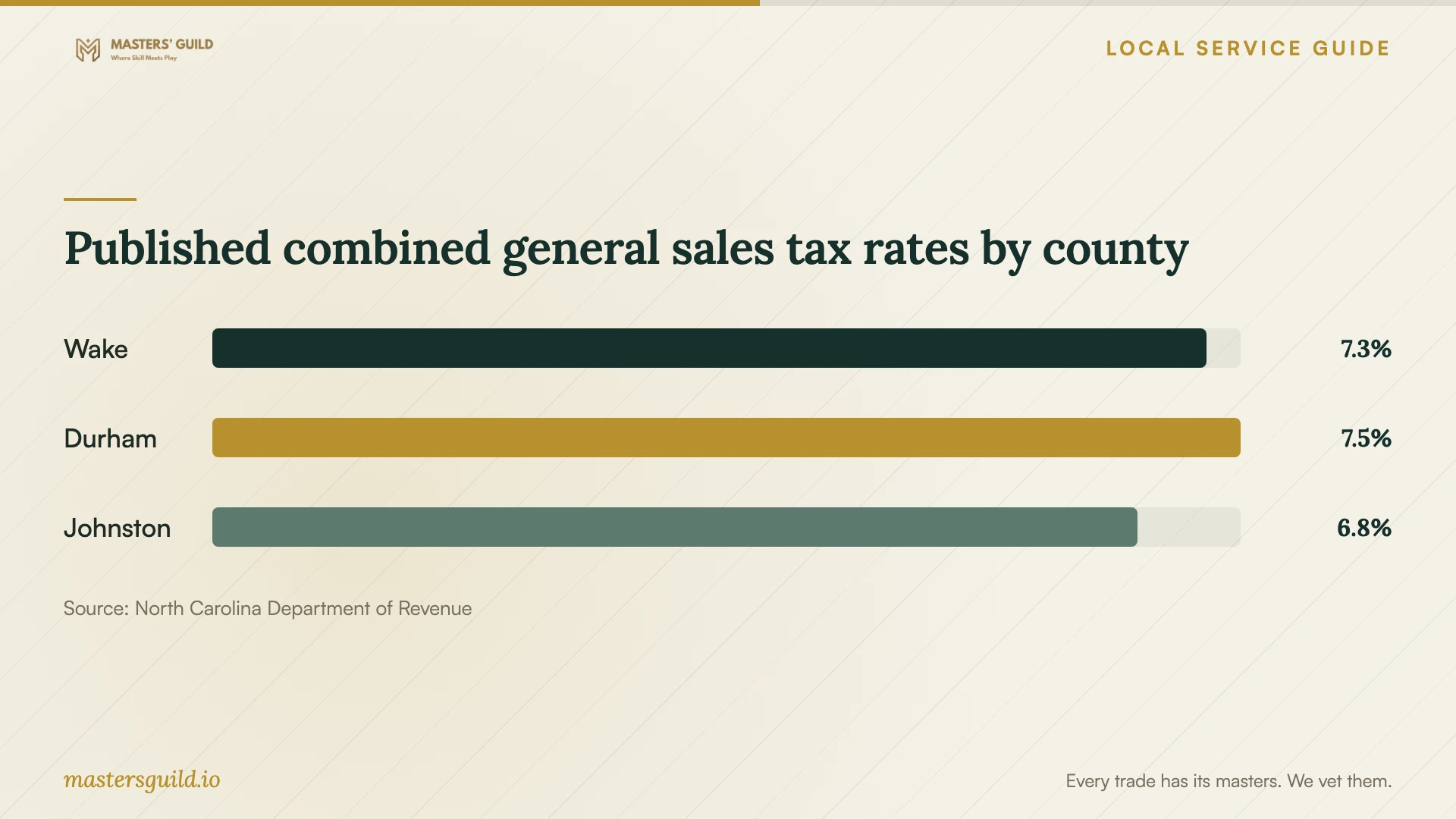
NCDOR’s county table publishes combined general rates that include state tax plus applicable local and transit taxes. Confirm the rate applicable to your transaction with the contractor. Use the county comparison below to review the tax line; it does not establish what an installer should charge. [3]
For any capital-improvement classification, have the contractor identify the supporting substantiation. NCDOR requires that documentation for qualification and says the facts and circumstances can change tax treatment. Keep the explanation with the written scope so you can review the total without guessing which portion the contractor treated as taxable. [1]
Agree on changes, scheduling and completion
Set milestones for removal, preparation, tile installation, grouting and return to use. Have the installer explain waiting periods using the selected products’ instructions. If the project affects your only bathroom or kitchen access, agree on which facilities you can use during each stage.
Require photographs and a priced proposal before approving repairs discovered after demolition. Identify how changes will affect the schedule and total. NCDOR notes that mixed-transaction contracts have their own tax rules; if an expanded scope changes the contractor’s classification, obtain an updated tax explanation with the revised quote. [1]
Before signing, review photographs of comparable work, contact references and obtain proof of insurance. Put payment milestones and cleanup responsibilities in writing. Arrange a walkthrough covering edges, grout appearance, transitions and unfinished items, then record any agreed corrections and their completion date.
Published combined general sales tax rates by county
Local details that affect your job
Review Wake County’s tax components
NCDOR publishes Wake’s combined general rate as 4.75% state, 2.00% local and 0.50% transit, totaling 7.25%. For taxable work at a Wake County property, have the contractor identify the applicable rate and taxable amount in the quote. Confirm the project county and the rate’s application before accepting the total. [2]
Document tile work within a broader remodel
North Carolina’s tax guidance distinguishes generally taxable standalone flooring replacement and tile maintenance from services that qualify for a project-based exception. If your tile work forms part of a bathroom remodel, identify who will document the contract’s classification and any capital-improvement substantiation. For a standalone refresh, obtain an explanation of any proposed exception. This statewide distinction applies to quote review here. [1]
Questions for your project scope
| Project | Resolve before hiring | Tax point to confirm |
|---|---|---|
| Standalone floor replacement | Confirm removal, preparation and transitions in the price. | NCDOR lists complete and partial flooring replacement as generally taxable, subject to the chart’s exceptions and the transaction’s facts. |
| Regrouting or damaged-tile repair | Define the repair boundary after inspection. | NCDOR lists regrouting and damaged ceramic-tile repair as generally taxable, subject to the chart’s exceptions and the transaction’s facts. |
| Tile within a broader remodel | Identify who coordinates the tile scope with other work. | Confirm any qualifying project exception and required capital-improvement substantiation. |
| Shower installation | Obtain a waterproofing plan and return-to-use instructions. | Have the contractor explain treatment for the actual contract scope. |
Your hiring checklist
- Provide photographs, measurements and tile product information before the site visit.
- Confirm layout, grout color, edge finish and floor transitions.
- Get a written preparation scope and shower waterproofing plan where applicable.
- Assign responsibility for fixtures, outlets, deliveries and disposal.
- Compare itemized totals, exclusions, allowances and applicable tax.
- Require written approval of added work and schedule changes.
- Record product-based return-to-use instructions and walkthrough arrangements.
Frequently Asked Questions
How should I set a tile installation budget?
Obtain an inspected, itemized quote for your selected tile and layout. Include preparation, removal, installation materials, disposal and applicable tax. Keep allowances separate from priced work, and compare another quote using the same scope before choosing your budget.
What should I do if installers quote different scopes?
List the differences and have each installer explain them. Resolve preparation, material supply, fixture handling and cleanup before comparing totals. If an installer leaves a task out, establish who will perform it and obtain its price.
Can I use the installer’s office county to check tax?
Have the contractor confirm the rate applicable to your transaction rather than choosing it from the office address. NCDOR publishes county-specific combined rates; the chart below compares Wake, Durham and Johnston without determining the rate for your individual contract. [3]
What should I approve before shower work starts?
Approve the preparation and waterproofing scope, responsibility for plumbing-related work, proposed checks and written return-to-use instructions. Agree on how the installer will photograph, price and seek approval for damage found after removal.
Sources and scope
This guide combines the sources below with practical planning guidance. Figures apply to the stated geography and period; request a written quote for your property.