
Local service guide
Gardening in Raleigh: Hiring and Fall Planning
Arrange Gardening in Raleigh by giving gardeners a written list of beds to weed, plants to keep, planting work, and debris to remove. Compare separate labor and material charges, assign watering between visits, and check pesticide credentials before authorizing chemical treatment. North Carolina requires a pesticide license for commercial applicators applying pesticides for compensation. [3]
Define the work before requesting offers
Photograph each bed and measure its approximate length and width. Mark plants you want to keep and describe the result you want: cleared planting space, maintained flowers, a vegetable plot, or seasonal care. Specify hand weeding if that is your preference, and require approval before the gardener substitutes chemical treatment.
Ask each provider to describe the first visit and any proposed follow-up work. Include gate access, material delivery space, water access, and debris handling. Decide whether the gardener will bag waste, leave suitable material for your compost pile, or haul it away. Request evidence of liability insurance and ask who will perform the work.
Include soil sampling in the work plan
Assign responsibility for sampling, submission, and reviewing results before approving lime or fertilizer purchases. For vegetable beds, NC State Extension recommends using soil-test results to guide these applications and repeating testing every two to three years. Ask the gardener to explain the recommendations for your growing area. [2]
For the free resident soil test in 2026, NCDA&CS must receive your sample at 4300 Reedy Creek Road by November 30 at 5 p.m. Samples arriving on or after December 1 incur a $5 peak-season fee per sample. Ask whether the gardener's quote includes sampling and delivery; the laboratory fee does not establish those service charges. [1]
Confirm the laboratory arrival date if you use county Extension transport. Dropping samples at an Extension office before the deadline does not establish arrival at the laboratory. NCDA&CS also warns that USPS does not deliver to its physical location, so allow transfer time when using the department's mailing address. [1]
Choose an October plan for vegetable beds
For an unused bed, discuss a cover crop and the work required before spring planting. NC State Extension recommends seeding fall cover crops between September 15 and October 20 in the Piedmont. Use that regional window to schedule an assessment during October, while having the gardener check whether the choice suits your bed. [2]
Ask the gardener to distinguish tending established fall vegetables from starting a new crop. Extension identifies August as the main fall planting period and advises adjusting dates to the crop's maturity time and local frost date. Request a named crop and variety with a timing explanation before paying for new plants. [2]
Check a proposed vegetable site before ordering materials. Extension recommends at least six hours of direct sunlight per day, with eight to ten hours ideal, and advises observing the yard after rain for pooling. It also notes that raised beds need more frequent irrigation than traditional in-ground beds. Discuss watering responsibility during the site visit. [2]
Separate pesticide treatment from routine care
North Carolina requires a pesticide license for commercial applicators applying any type of pesticide for compensation, including applications within landscaping or lawn care. NCDA&CS explains that license categories depend on the application site. Ask for the proposed applicator's license details and category before accepting a treatment offer. [3]
Ask the gardener to identify the weed or pest and explain the proposed response. For vegetable gardens, Extension describes integrated pest management using cultural, mechanical, biological, and chemical methods. Request the product name and applicable label instructions, including harvest restrictions, before authorizing chemical treatment. [2]
Compare quotes and assign follow-up care
Request separate charges for labor, plants, compost or soil, mulch, delivery, and debris removal. Ask whether the provider charges by the hour, by the visit, or for completed work. Compare offers against your measured beds and agreed tasks. Set a spending limit and require approval for purchases or work outside the original scope.
Agree who will check moisture and inspect plants between visits. Extension recommends an average of one inch of water per week for vegetable gardens, supplying the portion rainfall does not provide. Ask the gardener to account for rain, soil, and plant needs rather than leaving you with a timer setting and no checking routine. [2]
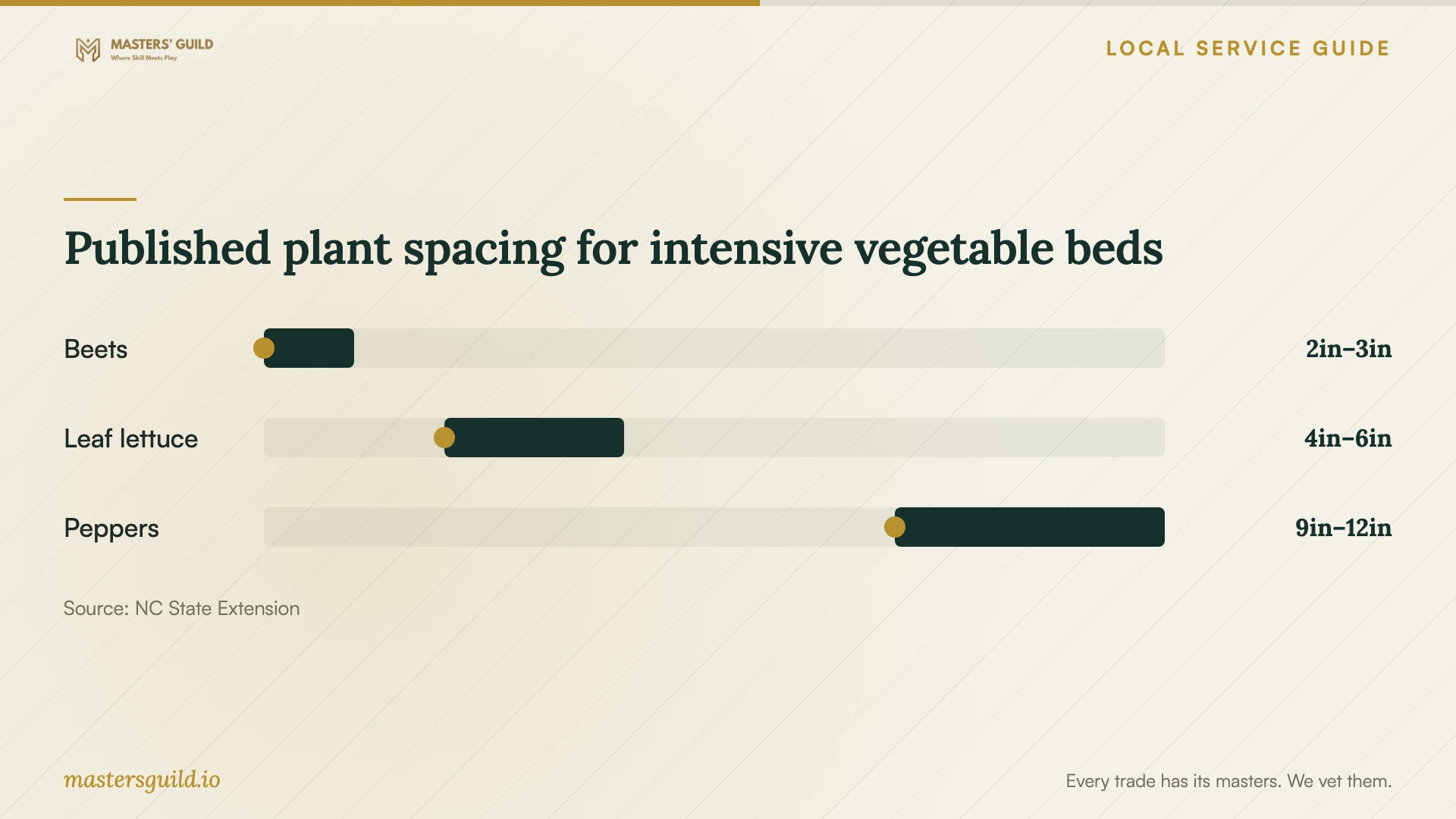
Published plant spacing for intensive vegetable beds
Local details that affect your job
Plan delivery to the Reedy Creek Road laboratory
For free resident testing before the 2026 peak season, get samples to 4300 Reedy Creek Road by November 30 at 5 p.m. NCDA&CS accepts samples Monday through Friday from 6 a.m. to 5 p.m., excluding state holidays. Arrive by 4 p.m. if you need assistance. Confirm who will deliver your samples before booking sampling alone. [1]
Use the Piedmont cover-crop window for fall scheduling
Extension's September 15 through October 20 fall cover-crop seeding recommendation applies to the Piedmont region. For an unused vegetable bed here, include the assessment in your October gardening request. Ask the gardener to explain the crop choice and spring removal or incorporation plan. The regional window does not guarantee success at your site. [2]
Check credentials before adding paid spraying
North Carolina's pesticide licensing requirement covers compensated applications within landscaping and lawn care. Adding spraying to a gardening visit therefore requires a credential check. Ask who will apply the product and which license category covers the application site before agreeing to that part of the job. [3]
Choose the scope for your gardening request
| Your situation | Request | Confirm before booking |
|---|---|---|
| Overgrown beds with plants to keep | A defined cleanup | Marked removal boundaries, weeding method, and debris handling |
| An unused vegetable bed in October | A cover-crop assessment | Fit with the Piedmont September 15 through October 20 seeding window and spring plans |
| Vegetable beds needing amendments | Sampling and a report-based plan | Sample delivery before the November 30, 2026, 5 p.m. free-test deadline |
| Chemical weed or pest treatment | A named applicator and proposed treatment | Pesticide license and category appropriate to the site |
| A proposed raised vegetable bed | Site and watering assessment | Sun, drainage, and responsibility for more frequent irrigation than in-ground beds |
Your hiring checklist
- Photograph and measure the beds.
- Mark plants to keep and areas excluded from work.
- Describe gate access, water access, and delivery space.
- Request separate labor, material, delivery, and removal charges.
- Assign soil sampling, delivery, and report review.
- Check applicator credentials before authorizing pesticide treatment.
- Agree who will water and inspect plants between visits.
- Set a spending limit and an approval process for extra work.
Frequently Asked Questions
How should I compare gardening prices?
Give each provider the same bed measurements, photographs, and task list. Request separate labor and material charges, the charging method, and any delivery or removal costs. Ask how the provider will price extra work before you accept an offer.
Can I get a free soil test before winter?
North Carolina residents qualify before the 2026 peak season if samples reach the NCDA&CS laboratory at 4300 Reedy Creek Road by November 30 at 5 p.m. Samples arriving on or after December 1 incur a $5 fee per sample. Confirm laboratory arrival rather than relying on an Extension drop-off date. [1]
Does paid weed spraying require a license?
North Carolina requires a pesticide license for commercial applicators applying any type of pesticide for compensation. Ask for the applicator's license and the category appropriate to your application site before authorizing the treatment. [3]
Should I put a cover crop in an empty vegetable bed?
Ask the gardener to assess the bed and your spring plans. Extension recommends September 15 through October 20 for fall cover-crop seeding in the Piedmont. Include the later work needed to manage that crop in the proposed scope. [2]
Sources and scope
This guide combines the sources below with practical planning guidance. Figures apply to the stated geography and period; request a written quote for your property.