
Local service guide
Moving services in Quebec City: plan access and hire
Moving services in Quebec City should start with a written estimate and a workable truck-access plan at both addresses. Compare two or three companies, describe stairs and elevators, and check insurance before booking. Confirm where the truck can park under city signs and time limits, then agree with the mover on who will resolve any special street-access arrangements. [1] [3]
Get comparable estimates before choosing a mover
Send each company the same furniture inventory, approximate box count, pickup and delivery addresses, floor numbers, and elevator arrangements. Include photos of stair turns, entrances and the proposed truck location. Quebec's Office de la protection du consommateur advises giving detailed information about the premises, stairs and elevators to obtain a more accurate total. [3]
Ask each mover to separate the crew and truck charge, travel time, packing materials, furniture disassembly, specialty handling and any storage. For an hourly quote, ask when billing starts and ends, whether a minimum applies, and how the mover bills elevator delays or a longer walk from the truck. Request the total with applicable taxes and exclusions stated.
The consumer protection office notes that customers often pay travel time between the warehouse and their home. For a move to another city, it recommends a home visit by a representative and a written cost assessment. Ask who will deliver your belongings and how the company handles a change in the delivery date. [3]
Build your budget from written quotes for your inventory, addresses and moving date. Ask the mover to identify which changes to the inventory or access plan would change the price, and how you would approve those charges.
Verify insurance and put the agreement in writing
Ask for the company's full name, address and insurance documents. The provincial consumer protection office recommends checking insurance for the goods, civil liability coverage of at least $1 million, and registration in the Commission des transports du Québec heavy-vehicle register when the company uses a heavy vehicle. [3]
Ask the mover to explain coverage limits, deductibles, exclusions for items you pack, and the claims procedure. Describe valuable or fragile items before accepting the quote. Keep copies of the answers with your agreement.
Request a written contract even when you book in person. For an agreement concluded by telephone or Internet, the consumer protection office says the mover must send a written contract within 15 days. Include the promised arrival time, inventory, price basis, payment terms and services in that document. [3]
The office recommends avoiding an advance deposit where possible, or limiting it to a small amount. It also warns that customers do not have a general 10-day period to change their minds about hiring a mover. Read cancellation terms before signing. [3]
Resolve truck access before confirming the schedule
Walk the loading route at both addresses and send the mover photographs of the curb signs. The city allows trucks to park on streets where signs do not prohibit parking, subject to the permitted periods and duration. Ask the mover for the planned vehicle's dimensions before relying on a particular space. [1]
For a plan involving reserved public space, temporary signs or an obstruction, call 311 and describe the address, footprint and duration. The city's street-occupation guidance covers construction and renovation arrangements. Ask the city which authorization, if any, applies to your moving-day loading plan. [4]
Agree on a fallback location and ask the mover to price the extra carrying distance before moving day. Reserve the building elevator and confirm its available hours with the building manager. Keep those hours consistent with the mover's arrival window.
Prepare the loading route and document delivery
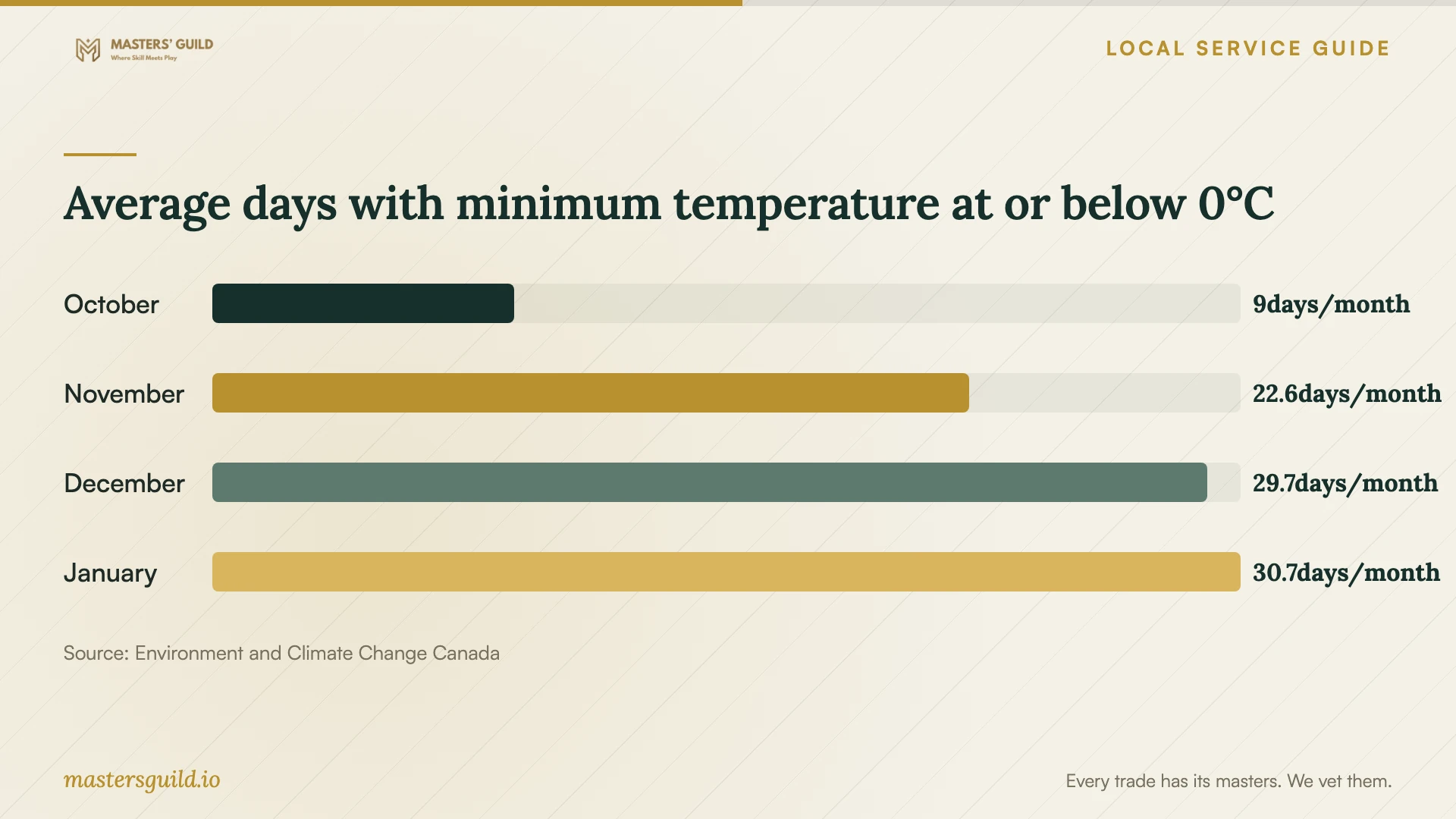
Plan for cold-weather access even during an autumn move. At Québec Jean Lesage Airport, the 1991–2020 normals show an average of 9 October days with a minimum temperature at or below freezing. Check the forecast before the move, arrange snow and ice clearing, and agree on protection for floors and belongings. [5]
Recheck snow-removal parking restrictions before the truck arrives. The city lists different hours by arrondissement and street, including restrictions triggered by flashing orange lights. Give the driver an alternative legal stopping location rather than relying on an overnight parking arrangement. [2]
Photograph furniture and appliances before loading, carry valuables and important documents yourself, and arrange for someone to attend both addresses. The consumer protection office recommends these preparations, along with confirming moving hours and truck parking. [3]
Inspect belongings on delivery and record any damage with photographs. If a dispute arises, the office recommends first trying to reach an agreement with the mover, then considering a formal demand if negotiation fails. For damaged furniture, it advises obtaining a professional's written repair-cost assessment. [3]
Average days with minimum temperature at or below 0°C
Local details that affect your job
Check the truck against vignette eligibility
In Quebec City's vignette zones, the city cannot issue a parking permit for a vehicle exceeding a maximum gross vehicle weight rating of 4,500 kg or a maximum length of 7 metres. Ask the mover for both specifications. If the planned truck exceeds either limit, confirm another access arrangement instead of assuming your residential permit will cover it. [1]
Allow time for special street-occupation requests
If 311 confirms that your loading arrangement requires a street-occupation permit, allow up to 10 business days. The city asks for the location, type of public space, area, parking spaces and duration, and a technician confirms the authorized date. Put responsibility for the application, fees and required signage in your agreement with the mover. [4]
Check daytime snow removal in La Cité-Limoilou
The city prohibits parking from 8 a.m. to 4 p.m. when orange lights flash in specified sectors: north of rue Soumande, north of 24e Rue between boulevard Henri-Bourassa and rue Monseigneur-Gosselin, and northeastern Lairet from boulevard des Alliés and 23e Rue. For an address in these sectors, check the lights before committing to daytime curb loading. [2]
Match the arrangement to your move
| Your situation | Next step | Confirm before booking |
|---|---|---|
| Stairs or a shared elevator | Send access photos and reserve the elevator. | Crew size, arrival window and charges for waiting or carrying distance. |
| Truck access in a vignette zone | Compare the truck's weight rating and length with city eligibility limits. | An alternative legal location if the truck exceeds 4,500 kg or 7 metres. |
| Temporary signs or public-space obstruction | Ask 311 whether the proposed arrangement requires authorization. | Applicant, fees, signage and lead time if a permit applies. |
| Move to another city | Request a representative's home assessment and written estimate. | Delivery arrangements, storage terms and responsibility for your shipment. |
| Winter curb loading | Check street-specific snow-removal restrictions. | A fallback truck location and responsibility for clearing the loading route. |
Your hiring checklist
- Prepare one inventory and access description to send to each mover.
- Photograph entrances, stair turns, curb signs and the proposed truck location.
- Request an itemized estimate and written arrival and delivery arrangements.
- Obtain insurance documents and written answers about damage coverage.
- Confirm the truck's size and ask 311 about any special public-space arrangement.
- Reserve elevators and agree on a fallback loading location.
- Arrange clear walking paths, floor protection and a weather contingency.
- Photograph belongings and keep the contract, invoice and delivery notes together.
Frequently Asked Questions
Does every moving truck need a street-occupation permit?
Trucks must follow parking signs, permitted periods and duration. The city's street-occupation guidance covers construction and renovation obstructions; it does not establish a permit requirement for every ordinary moving truck. For reserved space, temporary signage or an obstruction, describe your loading plan to 311 and confirm which authorization applies. [1] [4]
What insurance should I ask a mover about?
Quebec's consumer protection office recommends checking insurance for the belongings and civil liability coverage of at least $1 million. Ask the mover to explain limits, deductibles and exclusions in writing, including how coverage applies to items you pack yourself. [3]
Do I need a written contract for a phone booking?
Yes. The consumer protection office says a mover must transmit a written contract within 15 days of an agreement concluded by telephone or Internet. Ask the company to include its promises about price, timing and services, and read the cancellation terms before committing. [3]
How should I compare hourly moving quotes?
Give each mover the same inventory and access information. Ask when billing starts and ends, what travel time costs, and whether minimum hours, waiting, packing or specialty handling add charges. The consumer protection office notes that warehouse-to-home travel time often forms part of the bill. [3]
Sources and scope
This guide combines the sources below with practical planning guidance. Figures apply to the stated geography and period; request a written quote for your property.