
Local service guide
Event Planning and Setup in Quebec City
Hire Event Planning and Setup in Quebec City by defining who will manage suppliers, arrange the site, supervise the event and handle takedown. For a shop celebration, staff gathering or public launch, ask for a written scope tied to your venue and guest count. Before paying deposits, assign responsibility for site permission, food service and alcohol arrangements, then confirm the applicable requirements with the venue and authorities.
Choose the work you want to hand over
Start with your own task list. If you have chosen the venue and suppliers, request coordination and setup: supplier arrival checks, furniture placement, décor installation, guest-flow checks and takedown. If you need help selecting suppliers or preparing the schedule, add those planning tasks to the brief.
Ask each candidate to describe the handoff from planning to event day. Request the name of the onsite lead, the staff they will bring, their arrival and departure times, and the process for approving changes. For a business event, specify whether your employees must remain available to customers during installation.
Check the site before committing to suppliers
Walk the proposed setup route with the venue manager. Record delivery access, stairs, storage space, available power and the area guests will use. Ask who can unlock the site, where suppliers may unload and who will inspect the space after takedown. Give the same information to each planner so you can compare their proposals.
The City's Volet 2 neighbourhood-event route serves eligible nonprofits and educational institutions, with further conditions for the event itself. It excludes private individuals, private businesses and commercial promotional events. A shop launch should therefore prompt a separate discussion with the City about the proposed site and activity, rather than an assumption that this program applies. [1]
Make tent safety part of the rental brief
The City requires flame-retardant treatment for tent, marquee and inflatable-structure fabrics. Its guidance also requires safe electrical installations, keeps electrical equipment out of public reach, and calls for buried cables or protective covers for non-overhead cables in public-access areas. Ask the rental supplier how it will meet these requirements. [2]
The City's guidance prohibits cooking equipment or combustion appliances inside a tent or inflatable structure accessible to the public. It also prohibits smoking and open-flame devices. Discuss food preparation and heating arrangements before approving the floor plan; contact 311 for requirements specific to your installation. [2]
Confirm food-truck arrangements before paying
For special events open to the public, the City lists no permit requirement for the mobile food unit under this procedure, but requires an agreement with the operator and zoning validation through the arrondissement via 311. For an event on public land, organizers must also validate sales on the public domain with the City. This guidance does not establish approval for the whole event. [3]
The City permits operation from 7 a.m. to 11 p.m. and limits use to seven consecutive days and a maximum of four times for the same event. It prohibits these units in sectors with restaurant-use quotas, including avenue Cartier. Ask your planner to confirm the proposed address and operating schedule before you accept a food-truck deposit. [3]
Compare quotes and keep permit fees separate
Request separate amounts for planning, onsite coordination, setup staff, takedown, rentals and delivery. Ask suppliers to state taxes, overtime terms, cancellation charges and exclusions. Agree on who can authorize extra spending during the event and how that person will record approval.
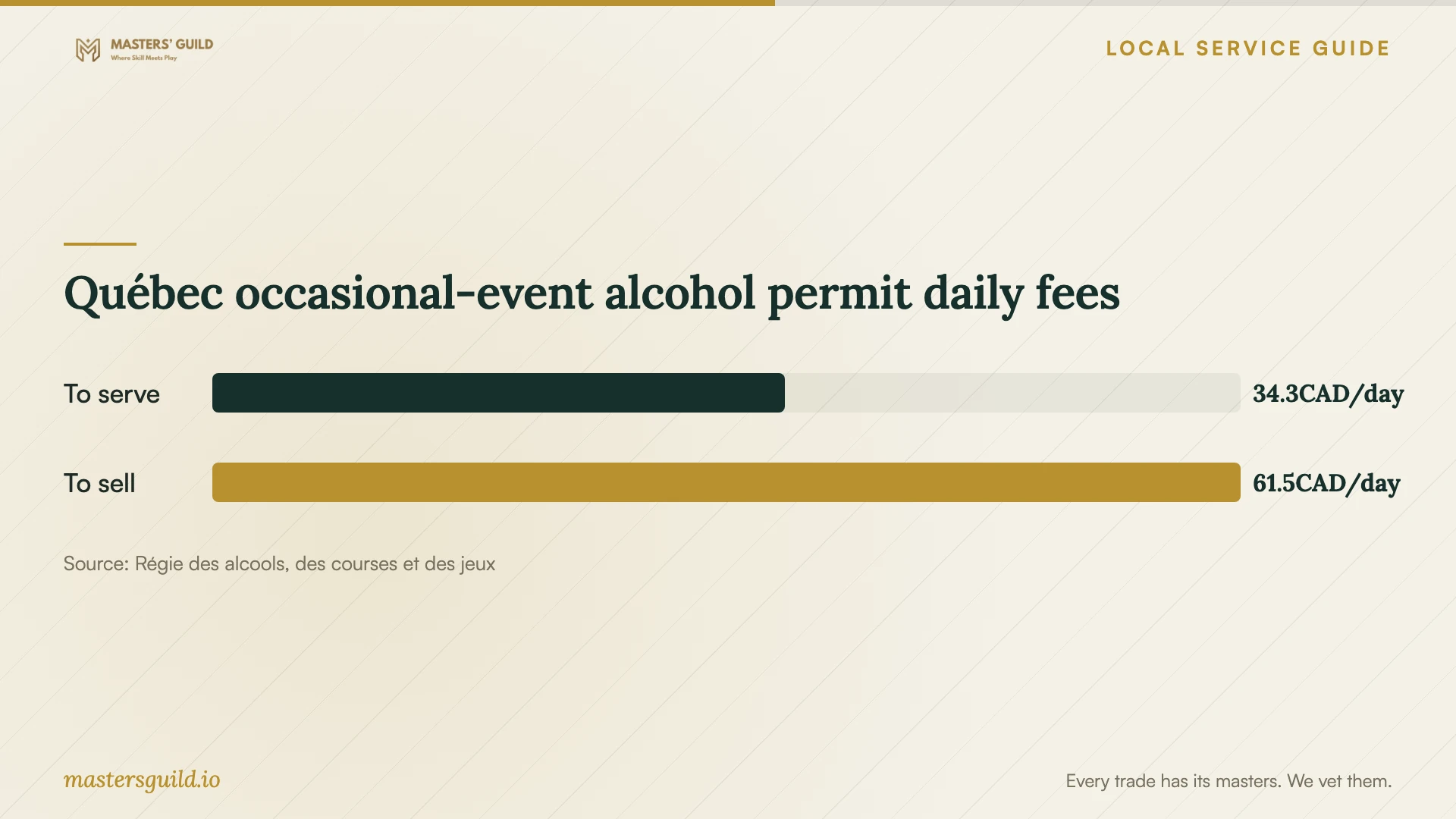
Québec's alcohol regulator publishes occasional-event permit fees of CAD 34.25 per day for a permit to serve, with a CAD 205.50 maximum, and CAD 61.50 per day for a permit to sell, with a CAD 307.50 maximum. These are provincial permit charges, not planner, bartender or venue prices. Confirm the applicable authorization with the venue and regulator before budgeting a fee. [4]
Québec occasional-event alcohol permit daily fees
Local details that affect your job
Public neighbourhood events have a distinct application route
For eligible events under Volet 2, the City requires submission at least three months before the event and written agreement from the site owner or manager before the authorization request. Required documents include a site plan and liability coverage of at least CAD 2 million with the City as an additional insured. Events of 100 people or more require an emergency plan. If you are arranging work for an eligible nonprofit, name the applicant and document coordinator in the planner's contract; private business events do not qualify under this route. [1]
Avenue Cartier can change your catering choice
The City's public special-event food-truck guidance prohibits mobile food units in areas with restaurant-use quotas and names avenue Cartier as an example. Before selecting that location with a food truck in mind, call 311 for arrondissement zoning validation. Ask the planner to obtain confirmation for the address before you commit to the caterer. [3]
Tent separation depends on the risk
The City specifies a minimum three-metre separation between a tent or marquee presenting a particular risk and another physical element. Do not treat this as a complete layout approval. Give the rental supplier the proposed site plan and ask 311 about the specific installation before finalizing furniture and catering positions. [2]
Match the planner's scope to your event
| Your situation | Scope to request | Confirm before signing |
|---|---|---|
| Staff gathering in a booked venue | Supplier coordination, setup and takedown | Venue responsibilities, access times and cleanup handoff |
| Public shop launch with a food truck | Coordination plus catering-location checks | Arrondissement zoning validation through 311; restrictions include avenue Cartier |
| Event with a public-access tent | Rental coordination and a reviewed catering layout | Flame-retardant fabric, cable protection and no cooking or combustion appliances inside |
| Eligible nonprofit neighbourhood event | Application-document coordination alongside event logistics | Volet 2 eligibility and the minimum three-month submission deadline |
| Event involving alcohol | A named person to confirm authorization and manage service arrangements | Applicable permit category with the venue and RACJ; separate permit fees from supplier charges |
Your hiring checklist
- Write a brief with the event purpose, venue, guest estimate, public or private access, and tasks you want to delegate.
- Confirm site access and permission with the owner or manager before making supplier commitments.
- Ask candidates for a proposed schedule, onsite lead, staffing plan and written exclusions.
- Agree with the venue and authorities on who will check food, alcohol and temporary-installation requirements.
- Request a layout showing guest routes, catering positions, electrical cables and rental placement.
- Compare itemized quotes using the same scope, including setup, takedown and rental returns.
- Record cancellation terms, weather alternatives and who can approve extra spending.
- Arrange a final walkthrough and identify who will accept the site after cleanup.
Frequently Asked Questions
How much should I budget for a planner?
Request quotes for your defined scope. The supplied official sources do not establish local planner rates. Give candidates the same venue, guest estimate, supplier list and setup requirements, then compare labour, coordination, rentals and exclusions.
Can my business use the City's neighbourhood-event program?
Volet 2 excludes private businesses and commercial promotional events. Ask the City which process applies to your proposed business event and site before hiring someone to prepare a Volet 2 application. [1]
Can a caterer cook inside a public-access tent?
The City's guidance prohibits cooking equipment and combustion appliances inside tents or inflatable structures accessible to the public. Have the caterer and rental supplier agree on a suitable arrangement and confirm installation-specific requirements through 311. [2]
Does the listed alcohol fee mean my event needs that permit?
The fee table gives charges for permit categories; it does not determine your event's eligibility or authorization needs. Confirm your venue and alcohol-service arrangement with the RACJ before choosing a category or paying a fee. [4]
Sources and scope
This guide combines the sources below with practical planning guidance. Figures apply to the stated geography and period; request a written quote for your property.