
Local service guide
Pressure Washing in Providence: Plan Before Booking
Arrange Pressure Washing in Providence by asking each bidder for a surface-by-surface cleaning plan, a written price and a wash-water containment plan. Check historic-overlay status before committing to exterior work on a designated property. Providence warns that storm drains lead to waterways without treatment, and its Historic District Commission reviews exterior changes within its jurisdiction. Resolve drainage and any review questions before setting the work date. [1] [2]
Request a quote for the surfaces you want cleaned
Send bidders photographs and a list of the surfaces you want cleaned. Separate the driveway, steps, patio, siding and any other areas instead of asking for a general exterior wash. Describe the result you want, such as removing visible dirt from the front steps or cleaning a patio before putting furniture back. Ask the provider to inspect uncertain surfaces before you accept a final scope.
Request a proposed method for each surface, including equipment, cleaning products, a test area and protection of adjacent features. Ask the bidder to explain how they will assess existing damage and what would make them stop work. For painted surfaces or masonry, request an inspection rather than choosing a method yourself. Keep repair work separate from the cleaning quote so you can decide whether to authorize it.
Compare the total written price alongside inclusions and exclusions. Ask whether the quote includes setup, protection, water collection and cleanup. Specify who supplies water and who moves furniture. Ask for proof of liability insurance and clarify the process for reporting damage. Resolve any verbal promise about stain removal in writing before booking.
Settle the wash-water plan before work begins
Providence tells residents not to dump anything near storm drains or drainage ditches. The city explains that these drainage areas have no water treatment and lead to rivers and streams. For a washing job, ask the provider to walk the site with you and identify where water could travel before they set up equipment. [1]
Request a plan that names the collection area, proposed containment equipment and intended disposal route. Ask who will monitor runoff during the job and what the crew will do if water escapes toward a drain. Have the provider confirm any requirements that apply to the proposed discharge with the responsible authority before work starts.
The city's stormwater page offers general pollution-prevention guidance. It does not identify an approved disposal route for pressure-washing wastewater. Use that guidance to frame your questions about drainage, then ask for confirmation of the disposal method proposed for your property. [1]
Check historic-property questions before paying a deposit
Confirm the property's local historic-overlay status through the city's GIS mapper. The Providence Historic District Commission regulates exterior work in designated local historic districts. The city also explains that a Providence Preservation Society house marker does not establish whether a property falls within the commission's jurisdiction. [2]
For a designated property, describe the proposed cleaning method, surface and intended result to commission staff. Ask whether the scope needs review and what information staff want from your provider. The city guidance does not establish a blanket approval requirement for every routine wash, so resolve your particular scope before committing to a work date. [2]
The commission states that it will not approve sandblasting because of damage to wood and brick. Ask staff about the method your bidder proposes rather than treating this restriction as permission for another method. If review applies, obtain the written decision before authorizing that work; the commission makes no verbal approvals. [2]
Agree on scheduling and the completion check
Ask the provider to state the weather conditions under which they will postpone your job and when they will contact you. Agree on how rescheduling affects a deposit, access arrangements and your availability. Keep the appointment flexible until the provider confirms conditions for the proposed products and method.
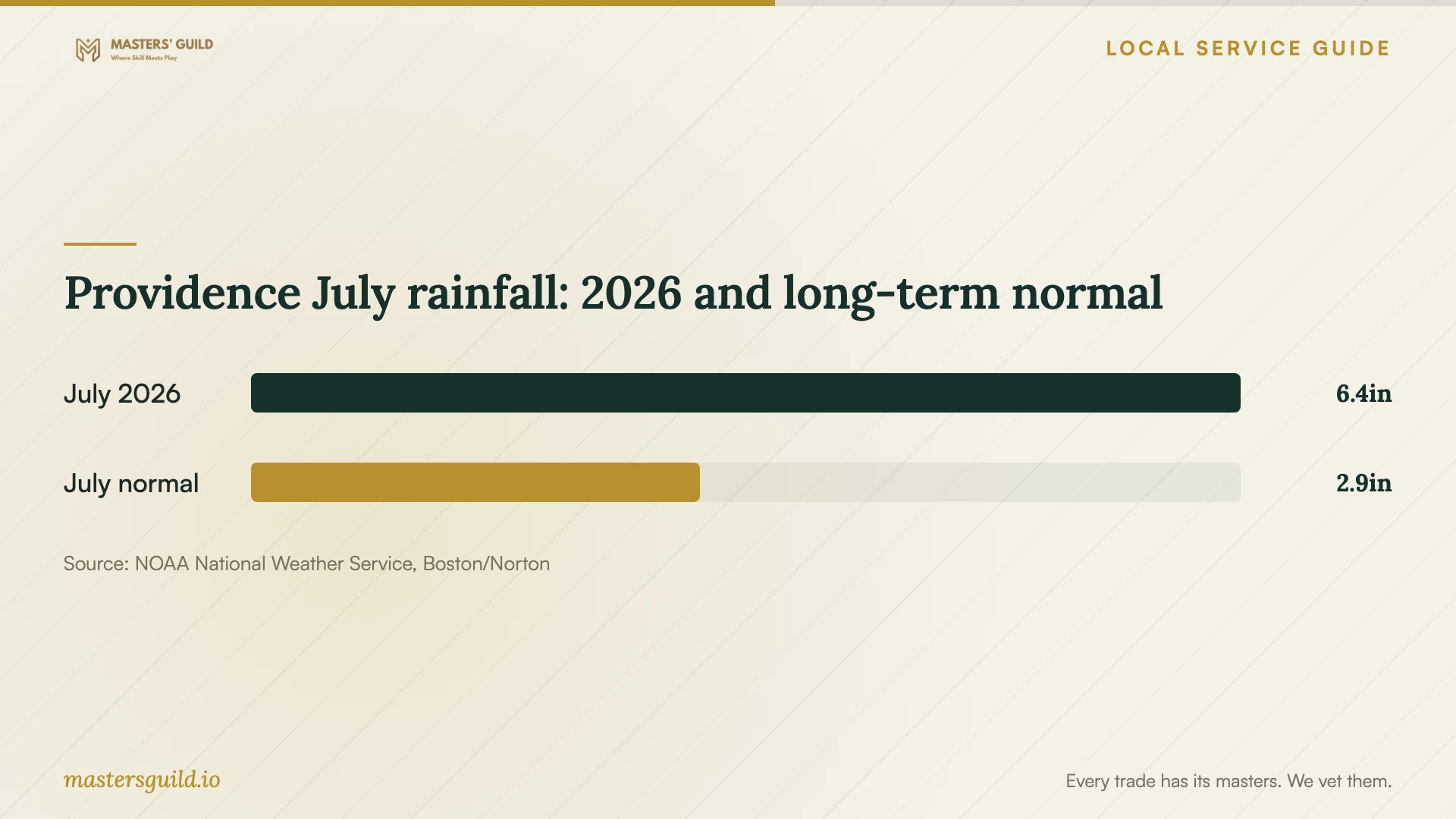
The National Weather Service's Providence report records 6.42 inches of precipitation in July 2026, compared with a July normal of 2.91 inches for 1991–2020. Use these figures as context for discussing a weather contingency. They do not predict October conditions or identify how many days were suitable for exterior cleaning. [3]
Before the crew arrives, photograph the agreed work areas and point out existing defects. Close windows, move belongings from the work zone and agree on safe access for household members. At completion, walk through the included surfaces with the provider, check cleanup and record any unresolved items against the written scope before settling the final invoice.
Providence July rainfall: 2026 and long-term normal
Local details that affect your job
Untreated storm-drain connections
Providence's stormwater guidance identifies storm drains and drainage ditches as untreated routes to rivers and streams. Before accepting a bid, ask the provider to identify nearby drainage points and document how they will contain wash water. Resolve the proposed disposal route separately; the city page does not supply a pressure-washing disposal procedure. [1]
Historic-overlay lookup and scope inquiry
Check the city's GIS mapper for local historic-district designation, then contact PHDC preservation planner Jason Martin at 401.680.8517 about the proposed exterior-cleaning scope. The city identifies him as the staff contact and states that commission approvals come in writing. Ask whether review applies before agreeing to a deposit or start date. [2]
Questions to resolve before booking
| Your situation | Next step | Booking condition |
|---|---|---|
| Runoff could reach a street drain | Ask for containment and a confirmed disposal route | Accept a documented plan before work begins |
| Property lies in a local historic district | Ask PHDC staff whether the proposed scope needs review | Obtain a written decision if approval applies |
| House has a historic plaque | Check local overlay status through the city GIS mapper | Resolve jurisdiction before relying on the plaque |
| Bidders include different surfaces | Request revised quotes with matching scope | Compare total price and exclusions together |
| Appointment depends on weather | Agree on postponement and deposit terms | Confirm the provider's conditions before the visit |
Your hiring checklist
- Send photographs and list each surface you want included.
- Request a method, test area and stop-work conditions for each surface.
- Compare written prices with the same scope and cleanup responsibilities.
- Identify storm drains and request a containment and disposal plan.
- Check historic-overlay status and resolve any review requirement.
- Confirm insurance, access, water supply and weather postponement terms.
- Photograph existing defects and arrange a completion walkthrough.
Frequently Asked Questions
Does routine pressure washing require historic-district approval?
The city page does not establish that every routine wash requires approval. PHDC regulates exterior work within designated local historic districts. Check your property's status and ask staff about the proposed surface, method and scope before booking. [2]
Can the provider send wash water into a street drain?
Providence warns against dumping near storm drains and drainage ditches because they lead to waterways without treatment. Ask the provider for a containment plan and confirmation of the intended disposal route. The city's general guidance does not specify an approved pressure-washing wastewater disposal method. [1]
How should I compare pressure-washing quotes?
Ask each bidder to quote the same surfaces and state the proposed methods, protection, cleanup and exclusions. Confirm water supply, access and weather terms. Compare the total written price after resolving differences in scope.
Does the rainfall chart identify the best time to book?
No. It compares one observed July total with the long-term July normal in the NWS report. Use an agreed weather postponement policy and conditions for your actual appointment rather than treating historical rainfall as a forecast. [3]
Sources and scope
This guide combines the sources below with practical planning guidance. Figures apply to the stated geography and period; request a written quote for your property.