
Local service guide
Interior Design in Providence, RI: Hiring and Planning
Arrange Interior Design in Providence by defining whether you want furniture and finish selections or a renovation with construction coordination. Ask each designer to quote the same rooms, deliverables, purchasing responsibilities, and revision allowance. Before approving a layout that changes windows or exterior doors, check historic-district review: the city excludes interior alterations from that review but includes interior changes with exterior impacts. [1]
Choose the scope before choosing the designer
Write a brief that names the rooms, what you want to keep, and the problems you want to solve. Include photographs, rough measurements, and a spending ceiling for the complete project. Describe how you use the space: working at a dining table, storing children's equipment, hosting guests, or moving around furniture with a mobility aid.
For a consultation, ask what you will receive afterward, such as written recommendations or a marked-up furniture plan. For remote design, establish who measures the room and checks product fit. For a renovation, ask the designer to identify who will handle construction drawings, approval questions, trade coordination, and site visits. Require those responsibilities in the proposal.
Ask to see a completed project with a similar scope. Have the designer explain the decisions, the client's purchasing responsibilities, and how they handled changes. Use that conversation to assess whether their working process fits yours, alongside their visual style.
Check historic review before changing openings
Providence's Historic District Commission reviews exterior work within designated local historic districts. The city says interior alterations do not require PHDC review, but identifies closing an existing window or cutting a new door as interior changes with exterior impacts. For a kitchen redesign that would eliminate a window, ask about historic approval before authorizing the final cabinet layout. [1]
Use the parcel-mapping resource on the commission's page or contact PHDC staff to establish whether your address falls within its jurisdiction. The city warns that a Providence Preservation Society house marker does not determine that status. Ask a prospective designer how they would document any proposed exterior change and who would submit the application. [1]
The commission gives decisions in writing and does not grant verbal approvals. Keep the written decision with your project documents, and ask the designer to identify which purchases depend on that approval before you place orders. [1]
Separate finish selections from construction approvals
The city's permit FAQ lists painting, papering, tiling, carpeting, cabinets, countertops, and similar finish work among building-permit exemptions. It also states that an exemption does not authorize work that violates other codes or ordinances. Because the page references older code editions, confirm the requirements for your proposed scope with Inspection and Standards before treating that list as current permission to proceed. [2]
Providence directs applicants to submit plans for city departments involved in building-permit review through the Department of Inspection and Standards. Ask your designer to name the person responsible for that submission and for answering review comments. Put approval milestones into the schedule before arranging demolition, installation, or furniture deliveries. [2]
For a project that includes moving a wall, relocating plumbing, or changing fixed lighting, send the department a plain description of the intended work and ask what documentation it needs. Request a proposal that separates design services from the work of any construction professionals. Avoid signing a scope that leaves responsibility for approval questions unnamed.
Compare the total commitment in each proposal
Ask each designer to separate design fees from furniture, materials, delivery, installation, and construction. Request the payment schedule and the method for approving extra work. For an hourly proposal, ask for an initial hour allowance and a point at which the designer must seek your approval before continuing.
For purchasing services, ask whether the designer charges a markup or purchasing fee, how they handle discounts, and who owns the order if you end the engagement. Agree on responsibility for returns, damaged deliveries, storage, and substitutions. Request written approval before the designer orders an item you cannot return.
Request project-specific proposals and compare fees, included work, and your purchasing responsibilities. Give each designer the same spending ceiling and ask them to identify decisions you would need to make or purchases you would need to arrange yourself.
Specify lighting before approving colors and fabrics
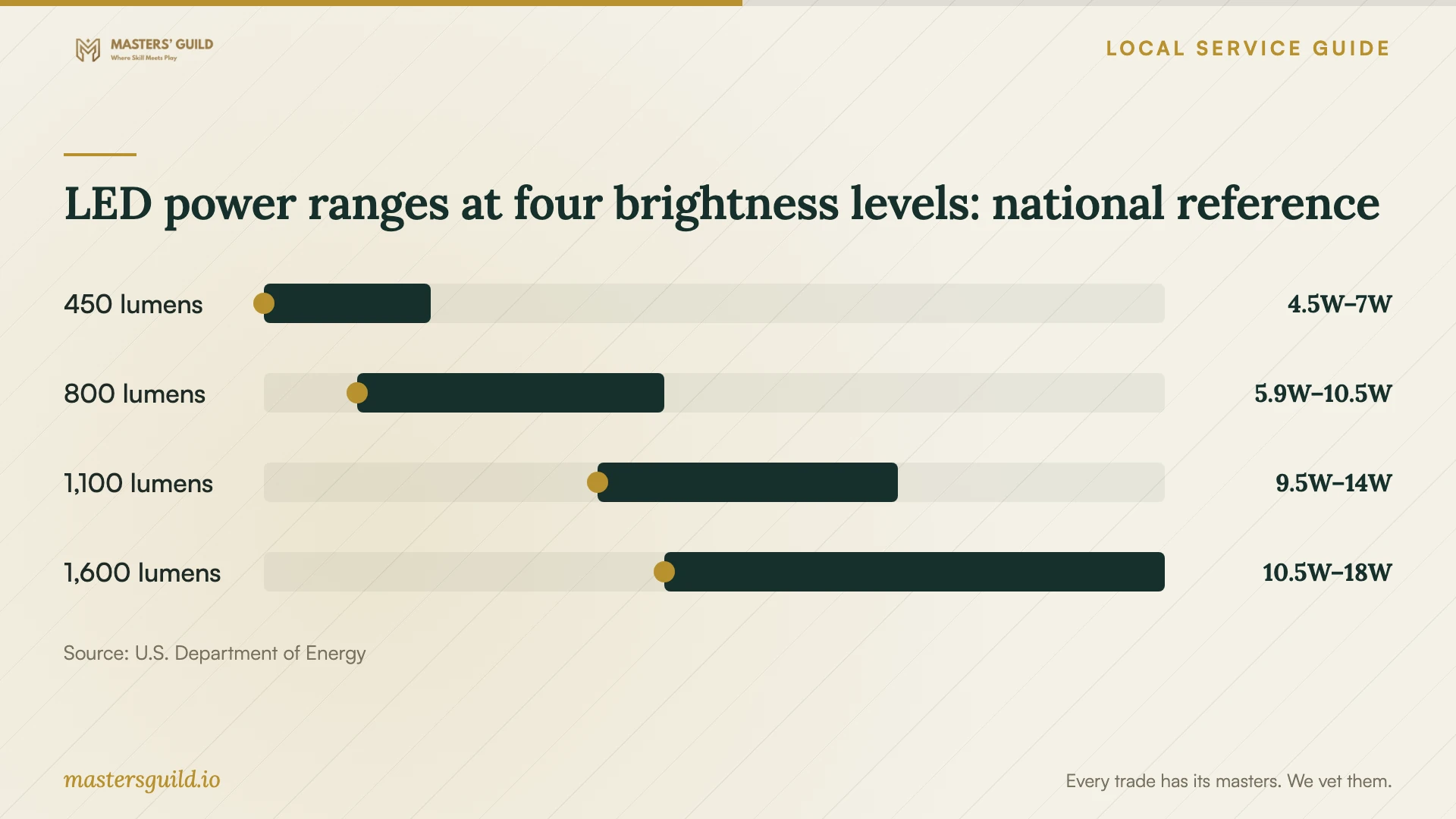
The Department of Energy advises comparing bulbs by lumens, which measure visible light output; watts measure power input. Its reference table shows different LED wattage ranges for the same brightness. Use the chart to discuss brightness with your designer, then check the specifications of the actual bulb you intend to buy. [3]
DOE explains that color temperature affects the appearance of a room and that changing it can cause occupant dissatisfaction. Ask your designer to review paint and fabric samples under the proposed lighting. For enclosed fixtures, check that the manufacturer permits that use. For dimmed lighting, check both the bulb's dimming capability and its compatibility with the dimmer. [3]
LED power ranges at four brightness levels: national reference
Local details that affect your job
A window change can add historic review
PHDC excludes interior alterations from review but includes changes with exterior impacts, such as closing a window. Check the address through the city's parcel-mapping resource or PHDC staff before selecting a layout that changes an opening. Do not use a house plaque as proof of jurisdiction. [1]
Name the person handling city plan submission
Providence directs building-permit plans for reviewing city departments to Inspection and Standards. Ask the designer's proposal to identify who submits plans and responds to comments. Confirm current requirements with the department because its published FAQ references older code editions. [2]
Match the design brief to your project
| Your project | Scope to request | Resolve before committing |
|---|---|---|
| Advice on an existing room | Consultation with written recommendations | Deliverables, preparation, and follow-up questions |
| Furniture and finish selections | Measured layout and product schedule | Measurement responsibility, purchasing fees, and returns |
| Renovation with construction | Design and named construction coordination | Who confirms requirements and submits plans to Inspection and Standards |
| Window or exterior-door changes in a local historic district | Design with historic-review coordination | PHDC review and written approval before dependent purchases |
Your hiring checklist
- Photograph each room and list furniture, finishes, and fixtures you intend to keep.
- Prepare measurements and ask who will verify them before ordering.
- Set separate spending limits for design services, purchases, and construction.
- Identify any proposed changes to windows, exterior doors, walls, plumbing, or fixed lighting.
- Ask the designer to name the person handling approval questions and plan submissions.
- Compare revisions, purchasing charges, site visits, and installation support in writing.
- Agree on order approvals, substitutions, returns, and damaged-delivery responsibilities.
Frequently Asked Questions
Does an interior redesign need historic approval?
Providence's PHDC does not review interior alterations, but it reviews interior changes with exterior impacts in its local historic districts. Closing a window or cutting a new door are examples. Check the address and proposed changes before approving the layout. [1]
Can I rely on a house plaque to identify historic restrictions?
The city says a Providence Preservation Society marker does not establish PHDC jurisdiction. Use the city's parcel-mapping resource or contact PHDC staff to confirm whether the property lies within a city-designated historic overlay zone. [1]
How should I compare designer quotes?
Give designers the same brief and ask for separate design, purchasing, and construction amounts. Compare deliverables, revision allowances, payment milestones, and responsibility for orders. Ask each designer to explain what you would need to arrange yourself.
What lighting information should the designer provide?
Request brightness in lumens, color temperature, and the intended fixture and dimmer. DOE advises checking enclosed-fixture suitability and dimming compatibility. Review finish samples under the proposed lighting before approving your selections. [3]
Sources and scope
This guide combines the sources below with practical planning guidance. Figures apply to the stated geography and period; request a written quote for your property.