
Local service guide
Heavy lifting in Providence: plan access and hire help
Arrange heavy lifting in Providence by defining where each item must end up: another room, a vehicle, a new address, or the curb for collection. Send the crew photos, dimensions, stair details, and an access plan before accepting a written quote. For disposal, check city collection eligibility first; Providence requires residents to bring bulky items to the curb and does not send collectors inside buildings or yards. [2]
Choose the help that matches the destination
Write a short inventory and assign each item a destination. For a sofa moving upstairs, ask for an in-home lifting quote. For a rental truck, specify loading or unloading and who supplies the vehicle. For delivery to another address, request transport and placement in the destination room. For disposal, state whether you want curb placement or hauling away.
Ask the provider to confirm the crew size, equipment, and handling plan after reviewing your photos. Flag a piano, safe, stone tabletop, or item with an unknown weight before booking. Ask whether the crew accepts that item and whether it needs an inspection. Arrange appliance disconnection and reconnection as separate tasks unless the provider confirms that scope.
Settle truck access before the arrival time
Providence offers different permissions for different curb needs. Temporary Parking Privileges let contractors and others working in the city exceed daytime parking time restrictions, but they do not reserve a space or override other parking rules. To reserve space for a moving van, apply for a Traffic Permit and select Emergency No Parking Tow Zone posting. For a moving pod on the street, use the Dumpster/Pod Permit process. [1]
Walk the route from the proposed truck position to the item. Photograph steps, doorways, tight turns, and the narrowest landing. Measure the item and openings, and ask the crew to assess the route. If you share an entrance or use an elevator, agree on access with the property manager before confirming the appointment. Keep pedestrians' access clear throughout the job.
Use city collection when you only need help to the curb
Residents receiving city residential curbside service in buildings with six or fewer units can schedule free bulky-item pickup, excluding mattresses, through Waste Management. The city allows up to three items per unit for a scheduled collection. Residents in larger buildings should contact the property owner or manager for arrangements. [2]
Book the collection before booking curb-placement labor. Providence tells residents to set items out between 4 p.m. the evening before collection and 4 a.m. on collection day, without blocking the sidewalk. The city does not remove items from inside a building or yard. Ask your lifting crew to quote the trip from the item's present location to the agreed curb position. [2]
Treat a mattress as a separate disposal job. The city offers paid curbside mattress collection through Waste Management and requires a clean mattress or box spring in a clear bag sealed at both ends. It excludes damaged, dirty, frozen, infested, unbagged, or wet items from collection. Confirm acceptance before paying someone to carry a mattress outside. [2]
Compare the written scope and damage protection
Request an itemized quote with crew size, booked hours, minimum charge, travel, equipment, stairs, disassembly, and any disposal charge. Ask when billing starts and ends, how the provider charges extra time, and what happens if the item cannot fit. Compare quotes for the same inventory and route, and ask the provider to record any agreed changes before work starts.
Rhode Island's motor-carrier regulation addresses paid property transport by motor vehicle within the state. For covered common-carrier shipments, shipping documents must identify the charging basis, rate, freight charges, and additional charges. Household-goods bills of lading must include a Truth in Coverage statement offering depreciated actual-value and released-value options. The released-value option limits mover liability to no more than 60 cents per pound per article. [3]
Ask a transport provider for its certificate or permit number, applicable rates, and coverage documents. The rule requires certificated common carriers to file liability and cargo insurance evidence. Keep this transport framework separate from room-to-room lifting: ask a labor-only provider for written damage terms and insurance information rather than assuming the motor-carrier provisions cover the job. [3]
Prepare the route and agree on weather changes
Ask the crew who supplies floor protection, blankets, straps, and suitable moving equipment. Clear loose objects from the route and photograph existing damage to the item and surrounding surfaces. Give the crew a contact person who can approve placement and any change in scope. Agree on a stop point if the crew finds an unsafe route or cannot complete the move as quoted.
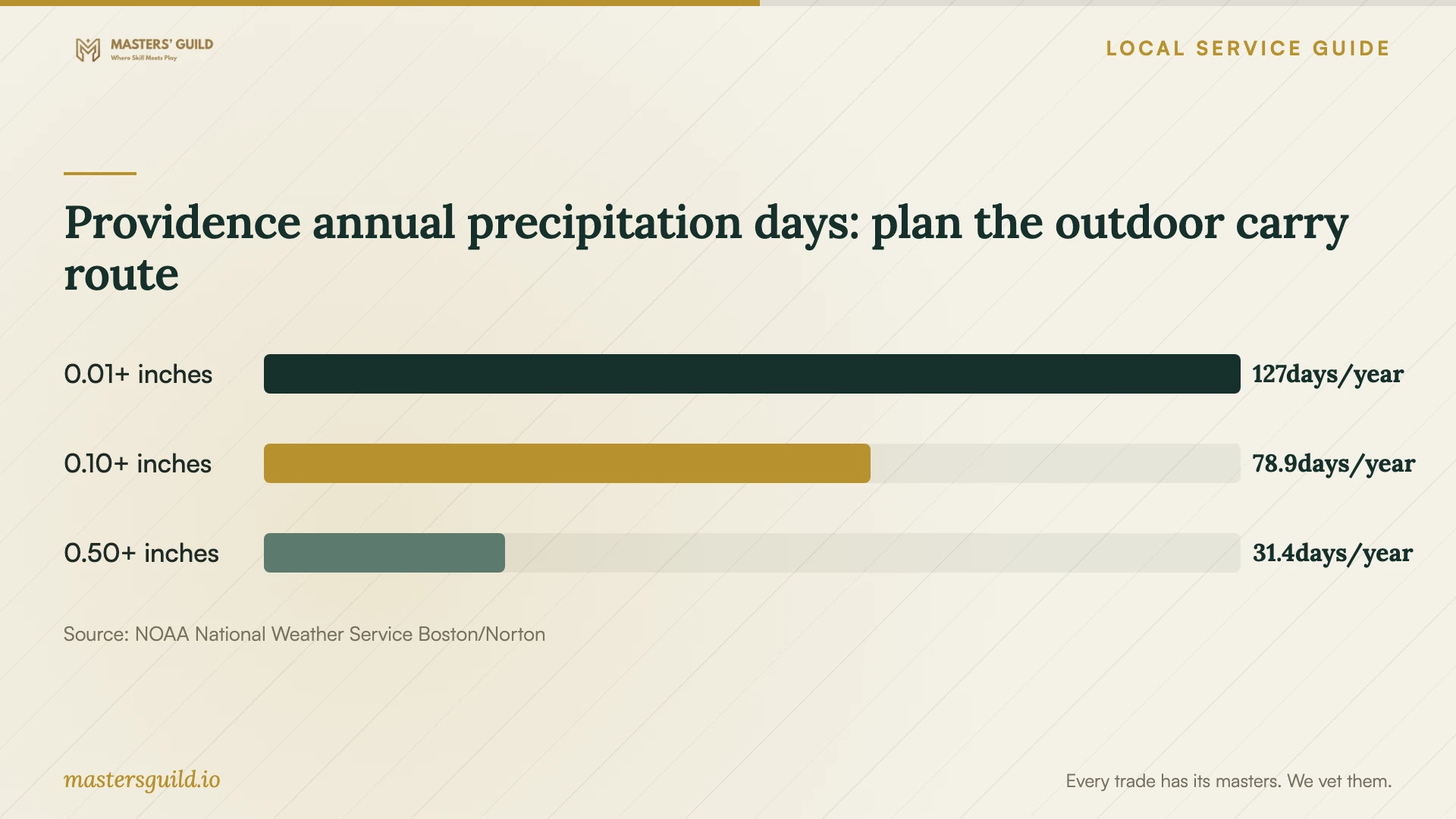
The National Weather Service's Providence climate report lists 1991–2020 averages of 127 days a year with at least 0.01 inch of precipitation and 31.4 days with at least 0.50 inch. Use that background to plan covered staging and ask about wet-weather rescheduling. Check conditions for your appointment rather than treating a climate average as a forecast. [4]
Providence annual precipitation days: plan the outdoor carry route
Local details that affect your job
A daytime parking permit does not reserve the truck's space
Providence lists Temporary Parking Privileges at $16.25 per day per space. These permissions cover daytime time restrictions without guaranteeing a particular space. If your plan depends on parking a moving van beside the entrance, use the city's online Traffic Permit application and select Emergency No Parking Tow Zone posting. Ask the city about scheduling before committing to the crew's arrival. [1]
Collection eligibility changes the removal quote
For buildings with six or fewer dwellings receiving city residential collection, Providence offers scheduled free bulky pickup except for mattresses. Buildings with more than six units must arrange collection through their owner or manager. Confirm your building's service before choosing between indoor-to-curb lifting and a quote that includes hauling and disposal. [2]
Choose a scope before requesting quotes
| Your job | Scope to request | Confirm before booking |
|---|---|---|
| Move furniture within the home | In-home lifting and placement | Route assessment, equipment, and written damage terms |
| Load your rental truck | Loading labor | Who supplies protection and secures the load |
| Move goods to another Rhode Island address | Transport, unloading, and room placement | Applicable carrier documents, rates, and damage-coverage choice |
| Discard eligible bulky furniture | Indoor-to-curb lifting plus scheduled city collection | City service eligibility, collection date, and sidewalk clearance |
| Remove a mattress | Lifting plus an accepted disposal arrangement | Paid city pickup requires a clean item in a sealed clear bag; listed condition exclusions apply |
Your hiring checklist
- List each item, its dimensions, approximate weight if known, and final destination.
- Send photos of the item, stair landings, doorways, and truck-to-door route.
- Confirm who supplies the vehicle, lifting equipment, and surface protection.
- Resolve building access and curb arrangements before accepting the arrival time.
- Obtain a written scope, minimum charge, extra-time rate, and cancellation terms.
- Read the damage terms and ask who handles a claim.
- Confirm any collection appointment and accepted item condition before curb placement.
- Agree on weather changes and the procedure for an item that cannot fit.
Frequently Asked Questions
Can I reserve a curb space for a moving van?
Providence directs residents needing a specific moving-van space to apply for a Traffic Permit and select Emergency No Parking Tow Zone posting. Temporary Parking Privileges allow daytime parking beyond time restrictions but do not reserve a space. [1]
Will city collectors carry a sofa out of my apartment?
No. Providence requires bulky items at the curb and does not collect from inside buildings or yards. Arrange indoor-to-curb lifting and coordinate it with your scheduled collection. [2]
Does the mover's damage coverage pay the replacement cost?
Read the selected coverage terms before signing. Rhode Island's rule for covered household-goods shipments requires depreciated actual-value and released-value choices. Released value limits mover liability to no more than 60 cents per pound per article. Ask the provider to explain how your chosen option applies to your item. [3]
What should I send to get a useful quote?
Send an inventory, dimensions, photos, stair and elevator details, both endpoints, and the proposed parking location. State whether you need transport, disassembly, reassembly, or disposal. Ask the provider to confirm its handling plan and exclusions in writing.
Sources and scope
This guide combines the sources below with practical planning guidance. Figures apply to the stated geography and period; request a written quote for your property.