
Local service guide
Flooring installation and repair in Providence, RI
Flooring installation and repair in Providence starts with an inspection of the existing floor and a written scope covering preparation, materials, removal and disposal. Ask each bidder to separate surface replacement from repairs beneath the floor. Before booking, check the contractor’s registration details and ask Providence Inspection and Standards about permit requirements if the scope extends beyond finish work. [1] [3]
Choose the scope before choosing the floor
Tell the installer what you want to resolve: damaged boards, loose tiles, worn surfaces, uneven areas or a complete room replacement. Photograph the affected areas and mark their locations on a room sketch. Ask the contractor to inspect them before recommending a repair or replacement. For a patch, request a sample comparison and agree on the appearance you will accept.
For replacement, ask the installer to identify the existing layers and explain what they intend to remove or retain. Request a preparation plan for the surface beneath the new flooring. Have the contractor explain how they will assess moisture, flatness and any damaged areas against the chosen product’s installation instructions. Avoid approving an installation date until you understand what still needs inspection.
Compare complete written quotes
Give each bidder the same room list and product specification. Request separate amounts for flooring, installation, removal, hauling, preparation, trim, transitions and furniture moving. Ask whether the contractor’s quantity includes extra material for cuts and whether you will keep unused pieces. For owner-supplied flooring, agree on who checks the quantity and product condition before work begins.
Ask contractors to distinguish confirmed work from allowances for conditions they cannot inspect yet. Put the approval process for extra work in writing: who contacts you, what evidence they provide and how you approve the added price. Request a payment schedule, workmanship warranty and clear responsibility for product warranty paperwork. Compare the complete scope before comparing totals.
Use an on-site quote to establish your flooring budget. The permit figures below cover one possible administrative expense for work requiring a building permit. They do not establish installation prices, material costs or the cost of repairing your particular floor. [2]
Check the contractor and permit responsibilities
Ask for the contractor’s legal business name and registration number. Rhode Island’s general contractor rules require people working in disciplines governed by the Contractors’ Registration and Licensing Board to maintain the applicable registration or license. Covered contractors must include that number on written proposals, contracts and invoices. Match the bidder’s name and number across your documents. [3]
Ask the Board about registration status, expiration, insurance information and recorded claims or violations. Its regulation describes these as information the Board or its staff may provide. Request a current insurance certificate from the contractor as part of your hiring review, and ask who will perform the work if the bidder uses subcontractors. [3]
Providence’s FAQ includes tiling, carpeting and similar finish work in its permit-exempt lists. The page references 2021 code editions and says an exemption does not excuse violations of other applicable requirements. Treat this as published guidance rather than a permit determination for structural repairs or a broader renovation. Describe your scope to Inspection and Standards before authorizing that work. [1]
Arrange access, room use and disposal
Walk through the delivery route with the installer. Agree on parking, stairs, material storage, furniture moving and protection for adjoining rooms. Ask for separate milestones for delivery, preparation, installation and return to use. Request the product-specific conditions for walking on the floor and moving furniture back. If you need access through the work area, agree on the route before the crew arrives.
Put old-floor removal and disposal in the quote. Ask who loads the debris, where they plan to take it and whether hauling and disposal charges are included. For a homeowner planning drop-off, Rhode Island Resource Recovery’s Residential Recycling Area lists construction and demolition debris among its categories, but accepts only specific materials and directs visitors to review acceptance and pricing before arriving. Individual residents pay commercial fees. [4]
Resource Recovery identifies 3 Shun Pike as the Residential Recycling Area’s location following its April 2024 move. Use that location when planning a trip rather than relying on the older virtual tour. Check acceptance, hours and holiday closures before loading removed flooring. [4]
Inspect the completed work with the installer
Arrange a walkthrough before the final payment milestone. Check the agreed repair areas, doorway transitions, trim and door clearance with the installer. Record anything that needs attention and agree on a completion date. Ask for cleaning instructions for the exact product, warranty documents, receipts and any spare material you agreed to retain.
Keep the proposal, contract, change approvals and payment records together. Rhode Island’s contractor complaint rules encourage complainants to provide supporting documents including contracts, estimates, invoices and receipts. If you find a problem, photograph it and send the contractor a written description and request for correction. [3]
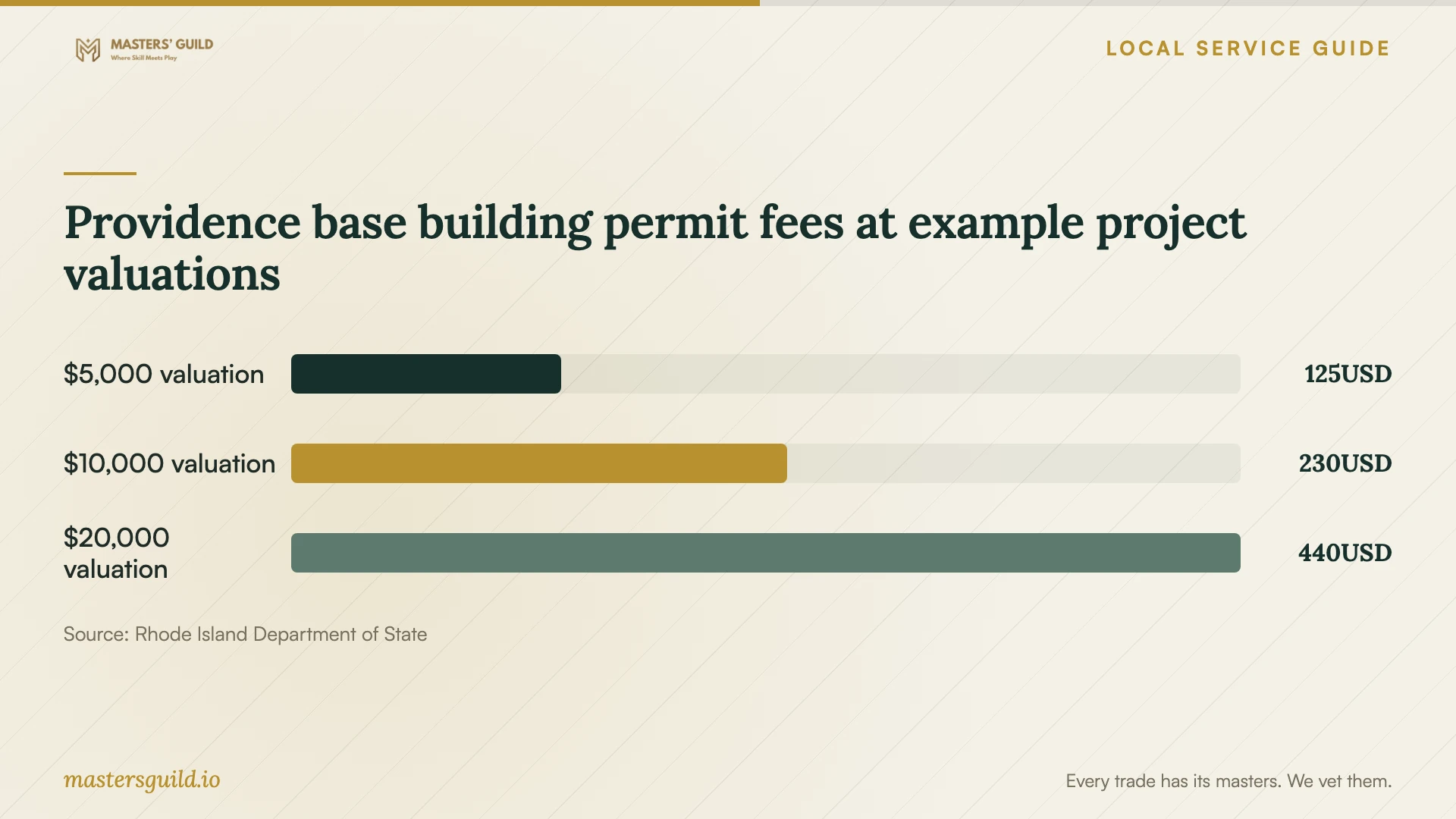
Providence base building permit fees at example project valuations
Local details that affect your job
Get a scope-specific answer from Providence
Contact Inspection and Standards at 401-680-5201 with your address and a description separating floor covering from work beneath it. The city’s FAQ lists finish-work exemptions but references older codes. If the city requires plans for a building permit review, it directs applicants to submit plans for all reviewing city departments to Inspection and Standards. Agree with your contractor on who handles the application and inspections. [1]
Budget permit fees only when a permit applies
The active Rhode Island fee regulation lists Providence’s building permit schedule with a $125 minimum. For project valuations up to $10,000, it specifies $23 per $1,000; the next tier uses $230 plus $21 per $1,000 above $10,000. The listed fees exclude the statutory levy. Ask the city to confirm the applicable valuation and total charge before adding a permit allowance to your flooring contract. [2]
Separate homeowner drop-off from contractor hauling
For removed flooring, decide whether your installer handles disposal or you handle drop-off. Resource Recovery’s Residential Recycling Area in Johnston accepts specific construction and demolition debris and charges individual residents commercial fees. Review its material acceptance and pricing before choosing homeowner drop-off; do not assume the service is free or that it accepts every flooring layer. [4]
Choose the next step for your flooring project
| Project situation | Next step | Resolve before booking |
|---|---|---|
| Damage in one area | Request a repair assessment and sample comparison. | Agree on the patch size and acceptable appearance. |
| Full room replacement | Request a written removal and preparation plan. | Identify included work and allowances for concealed conditions. |
| Tiling, carpeting or similar finish work | Check the scope against Providence’s published exemption guidance. | Confirm current requirements because the FAQ cites older code editions. |
| Work beneath the surface or a broader renovation | Describe the complete scope to Inspection and Standards. | Agree on permit, plan and inspection responsibilities. |
| Homeowner plans debris drop-off | Review Resource Recovery’s accepted materials and pricing. | Confirm acceptance and commercial fees before loading. |
Your hiring checklist
- Photograph the damage and list the rooms, approximate dimensions and desired result.
- Arrange an inspection of the floor and accessible areas beneath it.
- Give bidders the same product specification and removal scope.
- Request the contractor’s registration number and current insurance certificate.
- Confirm permit responsibilities for any work beyond surface finishes.
- Agree on delivery access, furniture moving, room access and return-to-use conditions.
- Identify who hauls debris and who pays disposal charges.
- Set a walkthrough and collect warranty, care and payment records.
Frequently Asked Questions
Do I need a permit to replace flooring?
Providence’s FAQ lists tiling, carpeting and similar finish work as permit-exempt, but references older code editions. Ask Inspection and Standards to confirm your scope if you plan repairs beneath the floor or other renovation work. A finish-work exemption does not waive other applicable requirements. [1]
How should I compare flooring quotes?
Ask bidders to use the same room list, flooring product and preparation scope. Compare removal, hauling, trim, transitions and furniture moving alongside installation. Ask each contractor to identify allowances and explain how you will approve additional work.
What contractor information should I request?
Request the legal business name, registration number and current insurance certificate. Rhode Island requires covered contractors to put their registration or license number on written proposals, contracts and invoices. Ask the Board about status, expiration, insurance information and recorded claims or violations. [3]
Can I take removed flooring to Resource Recovery?
Check the exact materials before arranging a trip. The Residential Recycling Area lists construction and demolition debris among its categories but accepts only specific items. Individual residents pay commercial fees. The area is at 3 Shun Pike in Johnston. [4]
Sources and scope
This guide combines the sources below with practical planning guidance. Figures apply to the stated geography and period; request a written quote for your property.