
Local service guide
Duct cleaning in Providence, RI: Plan the right job
Arrange duct cleaning in Providence after a provider shows you contamination that warrants the work, then compare written estimates for the same components. EPA recommends considering cleaning for substantial visible mold inside hard-surface ducts or on other heating and cooling components, vermin infestation, or excessive duct debris, including particles released through supply registers. Separate HVAC cleaning, dryer exhaust cleaning, and mechanical repairs in your request. Confirm city permit and inspection requirements before approving added mechanical work. [1] [2]
Establish what needs cleaning
Describe what you have observed: particles leaving supply registers, suspected growth inside ducts, or evidence of pests. Request photographs identifying the component and location. EPA advises homeowners to have providers show claimed mold and explains that an expert may need laboratory analysis to confirm it. Treat photographs as documentation of the inspection area, and request expert confirmation of suspected mold. [1]
For dust on return grilles alone, clean those accessible surfaces and review filter care before buying whole-system cleaning. EPA explains that these grilles collect dust as air passes through them. For unexplained symptoms you associate with indoor air, discuss them with your doctor instead of accepting a cleaner’s promised health benefit. [1]
Have the provider identify the underlying cause. EPA warns that contamination can recur unless you correct that cause. Wet or moldy duct insulation needs removal and replacement because cleaning cannot resolve it. Request a corrective-work proposal alongside the cleaning estimate. [1]
Compare components and methods before price
Request a written agreement naming the components, total cost, exclusions, and access work. EPA describes system cleaning as including supply and return ducts, registers, coils, drain pans, fans, and air-handler housing. It recommends cleaning all components of a contaminated system to avoid recontamination. Have each bidder identify the components its price includes. [1]
Discuss debris collection, protection of furnishings, and closure of access openings. EPA recommends equipment that exhausts outdoors or HEPA vacuuming equipment when exhaust remains indoors. It also recommends methods suited to the duct material and airtight sealing and re-insulation of access holes. Tell bidders where the equipment sits so they can assess access. [1]
Before approving chemical treatment, request the product label, intended use, and reason for applying it. EPA cautions homeowners to understand biocide risks and benefits; its guidance states that no biocides are registered for fiberglass duct board or fiberglass-lined ducts. Have the provider identify your duct materials first. [1]
Request itemized estimates for your system and scope. Include system count, components, optional services, and charges that need your approval. Compare the same work across bidders and decide how the contractor must obtain permission for additions.
Give dryer exhaust its own scope
Specify whether you want HVAC ducts cleaned, clothes dryer exhaust cleaned, or both. Request a separate description and price for the dryer work, including the route and termination the provider will inspect. Confirm inclusion before accepting a package.
USFA reports that failure to clean was the leading contributing ignition factor in home clothes dryer fires during 2018–2020, at 31%. This national historical figure supports attention to dryer cleaning. It does not measure your household’s risk or establish a service interval. Have the provider explain its recommendation using the condition it finds. [3]
Confirm city requirements for added repairs
Before approving replacement ductwork or other mechanical repairs, obtain a written description and contact Providence’s Mechanical Division about permit requirements. The division oversees code-regulated mechanical installation, enlargement, alteration, repair, removal, conversion, and replacement. Its page does not explicitly classify cleaning alone. [2]
Settle the applicant and inspection responsibilities before covered work begins. Providence lists licensed Master Pipefitters and Refrigeration contractors as mechanical-permit applicants. Its homeowner route covers single-family owner-occupants performing the work without outside assistance. Do not assume that route applies when you hire a crew. [2]
Address airborne smoke with an appropriate plan
Tell the provider if airborne smoke prompted your inquiry. EPA says duct cleaning has not been shown to prevent health problems and finds little evidence that cleaning ducts alone improves system efficiency. Request an inspection finding that supports cleaning before accepting promises about healthier air or lower bills. [1]
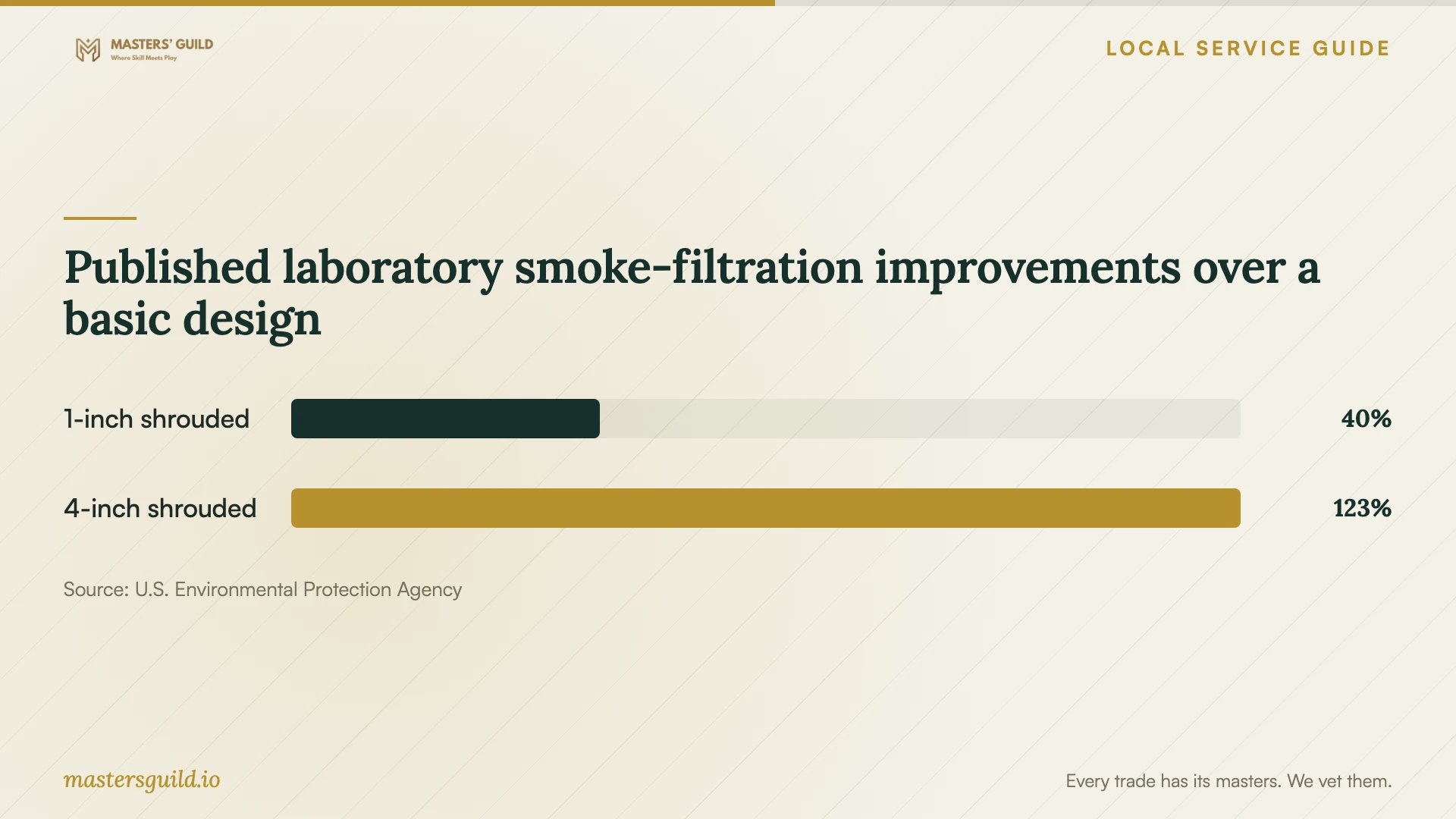
EPA’s separate filtration research tested DIY air cleaners against simulated wildfire smoke in a room-sized chamber in North Carolina. The chart shows published improvements in clean air delivery rate for two designs compared with a basic box fan using one 1-inch MERV 13 filter. These laboratory comparisons do not establish a need for duct cleaning or predict performance in your home. [4]
For a DIY air cleaner, follow EPA’s guidance to use a certified box fan from 2012 or later and replace dirty filters. EPA explains that portable air cleaners form part of an indoor-air strategy and do not replace ventilation. Keep the filtration decision separate from authorization to clean documented duct contamination. [4]
Published laboratory smoke-filtration improvements over a basic design
Local details that affect your job
Confirm the eligible permit applicant
Providence identifies licensed Master Pipefitters and Refrigeration contractors as mechanical-permit applicants. Its homeowner route requires a single-family owner-occupied property and work without outside assistance. If your quote expands into regulated repairs, confirm which applicant and permit apply to the written scope. Contact the Mechanical Division at 780 Allens Avenue or 401.680.5201. [2]
Assign the inspection call
Providence directs the applicant to arrange an inspection after rough mechanical, finish mechanical, or repair work is completed. The page specifies an inspection-call window of 8:30 a.m. to 4:30 p.m. and lists Monday through Friday office hours, with a 4:00 p.m. closing time in July and August. Call before 4:00 p.m. during those months and confirm current appointment availability with the Mechanical Division. Name the person responsible for the call in your repair plan and confirm which stage requires inspection. Arrange your review of cleaning results separately. [2]
Choose your next step from the observed condition
| Condition | Next step | Evidence to request |
|---|---|---|
| Dust on return grilles alone | Clean accessible grilles and review filter care. | Evidence of heavy contamination inside the system before authorizing duct cleaning. |
| Excessive duct debris or particles leaving supply registers | Consider cleaning and investigate the cause. | Identified locations and a written component-by-component scope. |
| Suspected mold or wet duct insulation | Confirm suspected growth and correct moisture; replace wet or moldy insulation. | Expert assessment and a corrective-work proposal. |
| Mechanical repair or replacement in the quote | Confirm permit, applicant, and inspection requirements with Providence. | Written repair scope and named inspection responsibility. |
| Concern about airborne wildfire smoke | Consider EPA filtration guidance and inspect any claimed duct contamination. | A specific contamination finding supporting the proposed cleaning. |
Your hiring checklist
- Describe the observed problem and request photographs identifying its location.
- Compare written scopes listing components, exclusions, access work, and total price.
- Request a separate description and price for dryer exhaust cleaning.
- Name who will investigate and correct moisture or pest problems.
- Discuss debris collection, duct materials, and protection of furnishings.
- Confirm the permit applicant and inspection responsibilities for added repairs.
- Agree on a completion walkthrough or photographs before work begins.
Frequently Asked Questions
Should I book duct cleaning before each heating season?
EPA recommends cleaning as needed. It separately recommends inspection and service of fuel-burning furnaces, stoves, and fireplaces before each heating season. Request those maintenance and cleaning scopes separately. [1]
Does cleaning alone require a Providence mechanical permit?
The city’s published page does not explicitly answer that question. It describes regulated mechanical installation, alteration, repair, and replacement. Give the Mechanical Division your proposed scope and confirm requirements, particularly if the cleaner adds repairs. [2]
How can I review the completed cleaning?
EPA recommends visual inspection and having the provider show each cleaned component. Agree on that review before work starts. Include reattached registers, sealed access openings, and proper system operation in the walkthrough. [1]
Can a cleaner claim EPA certification?
EPA does not certify, endorse, or approve duct-cleaning companies. Discuss experience with your duct materials, relevant credentials, references, and the procedures the crew will follow. [1]
Sources and scope
This guide combines the sources below with practical planning guidance. Figures apply to the stated geography and period; request a written quote for your property.