
Local service guide
Plan window cleaning for your Portland storefront
Arrange window cleaning for your Portland shop or office by agreeing on the panes, sides to clean, access method, and wash-water disposal before accepting a quote. Ask whether equipment needs public sidewalk space or reserved street parking, then assign responsibility for checking permits. Portland regulates building-cleaning runoff and provides temporary street-use permits, so settle these arrangements before confirming an appointment. [1] [2]
Get a quote for the exact glass you want cleaned
Send outside and inside photographs, including close-ups of marks you want removed. Identify upper-floor panes, glass above awnings, entrance doors, and windows behind displays. Ask each bidder to define what they count as a window or pane and list which sides they will clean.
Request separate quote lines for glass cleaning, screens and tracks, stain treatment, and access equipment. Ask who supplies water and who moves merchandise or furniture. For recurring service, agree on the surfaces and visit schedule. Request a separate price for any initial cleanup so you can compare ongoing visits on the same terms.
Set an approval point for extra work. Ask the cleaner to contact you before adding panes or using a treatment outside the agreed scope. Tell them about films, coatings, or existing damage and ask them to confirm a suitable method. Agree on how you will inspect the finished glass and report missed areas.
Agree on runoff handling before work starts
Portland Environmental Services prohibits building-cleaning wash water from entering the stormwater system. The city permits routine rinsing of exterior areas, including windows, when workers use no chemicals, soaps, detergents, steam, or heated water. Workers must first remove excess sediment and visible solids for proper disposal. [1]
Point out stormwater inlets near your frontage and ask the bidder where runoff will go. For detergent cleaning, request a collection and disposal plan. The city describes temporary inlet barriers and collection with a shop vacuum as pollution-prevention measures. Sanitary-sewer disposal may require authorization, including prior written authorization for large volumes or water that may contain pollutants. [1]
Put the disposal arrangements in the work order. Ask the provider to resolve any uncertainty with Environmental Services before arrival. The city's pollution-prevention contact number is 503-823-5600. [1]
Resolve sidewalk and parking access before booking
PBOT's Temporary Street Use Permitting program covers parking reservations and temporary use or closure of sidewalks, travel lanes, and streets. Property maintenance is an eligible use. If the cleaner proposes equipment or barriers in public space, ask them to confirm the required arrangements with PBOT and identify who will apply. [2]
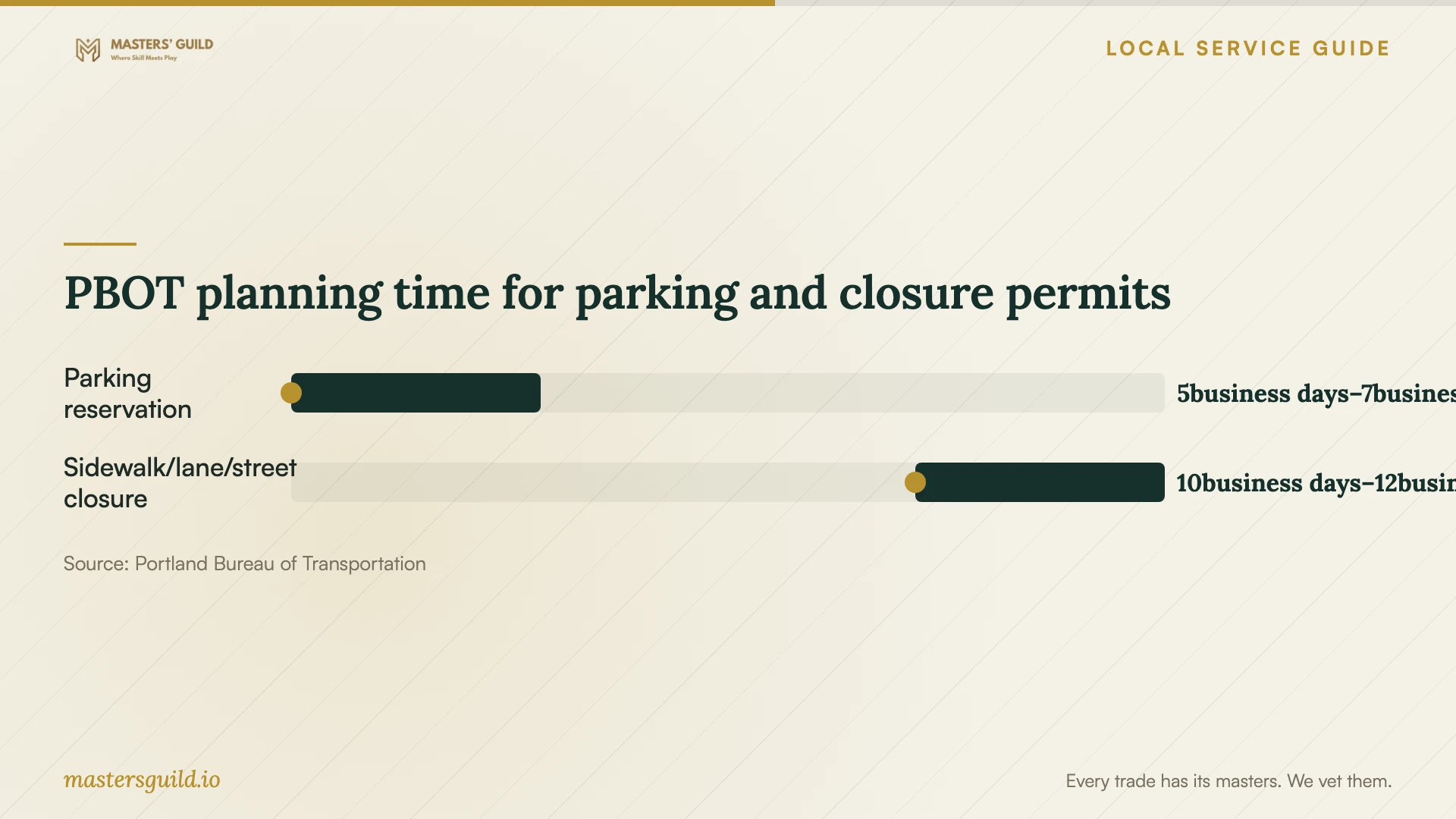
PBOT advises allowing 5–7 business days from application to permit start for parking reservations and 10–12 business days for sidewalk, lane, or street closures. These planning ranges include review and advance parking-sign requirements where applicable. An approved traffic-control plan may require additional coordination, so confirm the permit start date before committing to access-dependent cleaning. [2]
For temporary permits involving sidewalk, lane, or street use or closure, PBOT requires a traffic-control plan or workspace diagram. Before issuing those permits, PBOT also requires an insurance certificate naming the City of Portland as additionally insured. Ask the bidder to identify permit administration and applicable fees in the quote, and agree on how customers will reach your entrance. [2]
Check upper-floor access and prepare your premises
Ask how workers will reach each upper-floor or hard-to-reach pane. Request insurance documentation for the proposed work, identify the crew supervisor, and ask how the provider will separate pedestrians from equipment. Leave equipment selection and operation to the cleaner rather than offering a staff ladder or suggesting improvised access.
Oregon OSHA requires employers to assess workplace hazards, select suitable protective equipment, and train affected employees to use it. Its protective-equipment rules also address personal fall protection. Ask the provider to explain the site hazards they identified and the protection their chosen access method requires. [3]
Before arrival, move displays from the agreed interior work area and confirm entry, alarm arrangements, and an onsite contact. Photograph existing chips or scratches with the cleaner. Agree on weather-related rescheduling and return-visit terms. After the visit, inspect the agreed surfaces together and record any areas needing attention.
PBOT planning time for parking and closure permits
Local details that affect your job
Plan collection beside stormwater inlets
If your frontage drains toward a stormwater inlet, ask the cleaner to explain containment before approving detergent use. Portland allows only qualifying chemical-free routine rinsing into the stormwater system. Have the provider confirm any required sanitary-sewer authorization rather than assuming a nearby drain provides an acceptable disposal route. [1]
Assign the public-space application
For equipment needing sidewalk space or reserved street parking, name the permit applicant in your work order and confirm who handles signs and fees. Ask PBOT to clarify the proposed work area at 503-823-7365, option 1. Use its applicable planning range when choosing an appointment. [2]
Check late-year street restrictions
PBOT lists a holiday public-right-of-way moratorium on specified streets from November 19, 2026 through January 5, 2027. If your appointment requires public-space access during that period, ask PBOT whether your address and proposed work fall under the restrictions before accepting a date. [2]
Choose the next step for your premises
| Job situation | Next step | Confirm before booking |
|---|---|---|
| Ground-level glass with work on private property | Request a quote for the defined panes and sides. | Water supply, interior access, runoff handling, and inspection. |
| Detergent cleaning near a stormwater inlet | Request collection and appropriate disposal. | Prevention of stormwater discharge and any sanitary-sewer authorization. |
| Equipment needs reserved street parking | Assign responsibility for a PBOT parking reservation. | Permit start date, sign arrangements, and fees. |
| Work uses or closes public sidewalk space | Confirm the permit arrangements with PBOT. | Workspace diagram or traffic-control plan, required insurance, and customer access. |
| Upper-floor or hard-to-reach glass | Request a site assessment and proposed access method. | Equipment, worker protection, pedestrian separation, and insurance. |
Your hiring checklist
- Photograph the panes, entrance, upper-floor glass, and proposed equipment area.
- List pane counts, sides to clean, and requested extras.
- Request an itemized quote and approval terms for added work.
- Agree on detergent-runoff collection and disposal.
- Assign responsibility for checking public-space permits, signs, and fees.
- Request insurance documentation and an explanation of upper-floor access.
- Arrange customer access, interior preparation, and an onsite contact.
- Agree on inspection, missed-area reporting, and rescheduling.
Frequently Asked Questions
How much should I budget for storefront window cleaning?
Request a written quote for your premises. Give each bidder the same panes, sides, extras, and access requirements. Ask for equipment and permit charges as separate lines, then compare the total for the agreed work. For recurring service, request separate prices for the initial cleanup and later visits.
Can the cleaner rinse soapy water into the street?
Portland prohibits wash-water discharge into the stormwater system. Its routine-rinse allowance excludes chemicals, soaps, detergents, steam, and heated water, and requires removal of excess sediment and visible solids beforehand. Ask for collection and appropriate disposal when the cleaner uses detergent. [1]
Do I need a permit for the appointment?
Check the proposed use of public space with PBOT. Its temporary street-use program covers parking reservations and sidewalk, lane, or street use or closures, including property maintenance. Ask the cleaner to confirm the arrangements if equipment or barriers will occupy those areas. [2]
How far ahead should I arrange sidewalk access?
PBOT advises allowing 10–12 business days from application to permit start for sidewalk, lane, or street closures. Additional coordination and street restrictions can affect timing. Confirm the approved start date before booking cleaning that depends on that access. [2]
Sources and scope
This guide combines the sources below with practical planning guidance. Figures apply to the stated geography and period; request a written quote for your property.