
Local service guide
Car washing in Portland, OR: Plan a Mobile Visit
For car washing in Portland, choose a mobile provider who can explain how they will contain, collect, and dispose of wash water at your property. The City tells customers hiring mobile washers to check those practices and the provider's Discharge Authorization. If your site cannot accommodate collection, choose a commercial washing facility with an approved disposal system. Before booking, agree on the cleaning scope, total quote, access needs, and finish you expect. [1]
Choose the cleaning scope before comparing quotes
Describe the result you want: a clean exterior, wheels and glass, an interior vacuum and wipe-down, or specific attention to upholstery and stains. Ask each provider to list the work included in their package. If you want wax, sealant, upholstery extraction, or paint correction, request those tasks by name and ask for separate prices.
Send photos of the vehicle and the proposed work area. Include the vehicle model, visible dirt, pet hair, stains, and any surfaces you want the provider to avoid. Ask whether the quote covers your vehicle's condition and whether the provider needs your approval before adding work. Compare offers using the same task list.
Agree on an arrival window and the time you need the vehicle back. For interior work, ask whether the provider expects any surfaces to remain damp at handover. Put your scheduling needs in the booking message rather than relying on a package name.
Check whether your property can host a mobile wash
Portland's mobile-washing guidance calls for a paved washing area when the work uses soaps, detergents, hot water, or steam, so the washer can collect the water for sanitary-sewer discharge or recycling. The City also tells customers to ensure the washer collects all wash water, blocks nearby storm drains before cleaning, and prevents overspray outside the washing area. [1]
Walk through the proposed setup with the provider before the appointment. Show them the driveway slope, nearby drains, sidewalk, and available parking. Ask where they will place containment equipment and how they will recover rinse water. Portland prohibits directing water onto a City sidewalk, street, easement, or right-of-way without authorization or approval. [1]
If you share a driveway or park in a managed lot, obtain the property manager's permission and explain the proposed setup. Ask the washer to assess the site before you commit. If they cannot provide a workable collection plan, use the City's suggested alternative: a commercial vehicle washing facility with an approved disposal system. [1]
Verify disposal authorization and cleanup
Ask to see the provider's City Discharge Authorization and have them identify the disposal route for your job. Portland requires mobile washing businesses to apply before discharging to the sanitary sewer. Businesses holding that authorization must also submit annual certification of compliance with the City's best management practices. [2]
A drain cover addresses only part of the job. Portland tells customers to ensure the washer contains and collects wash water, collects rinse water for sanitary-sewer discharge, and removes debris and residual material after washing. Ask who will inspect the area before the equipment leaves. [1]
Do not accept biodegradable soap as the provider's entire runoff plan. The City explains that biodegradable cleaners can threaten surface waters and that many Portland storm drains flow to rivers and streams without treatment. Ask about collection and disposal regardless of the cleaner's label. [1]
Agree on water supply, drying, and handover
Ask whether the washer brings water or needs your outdoor tap, and whether they need electricity. Have them explain their rinse and drying method. If you have existing marks on the glass or paint, photograph them and ask whether the quoted service includes treatment.
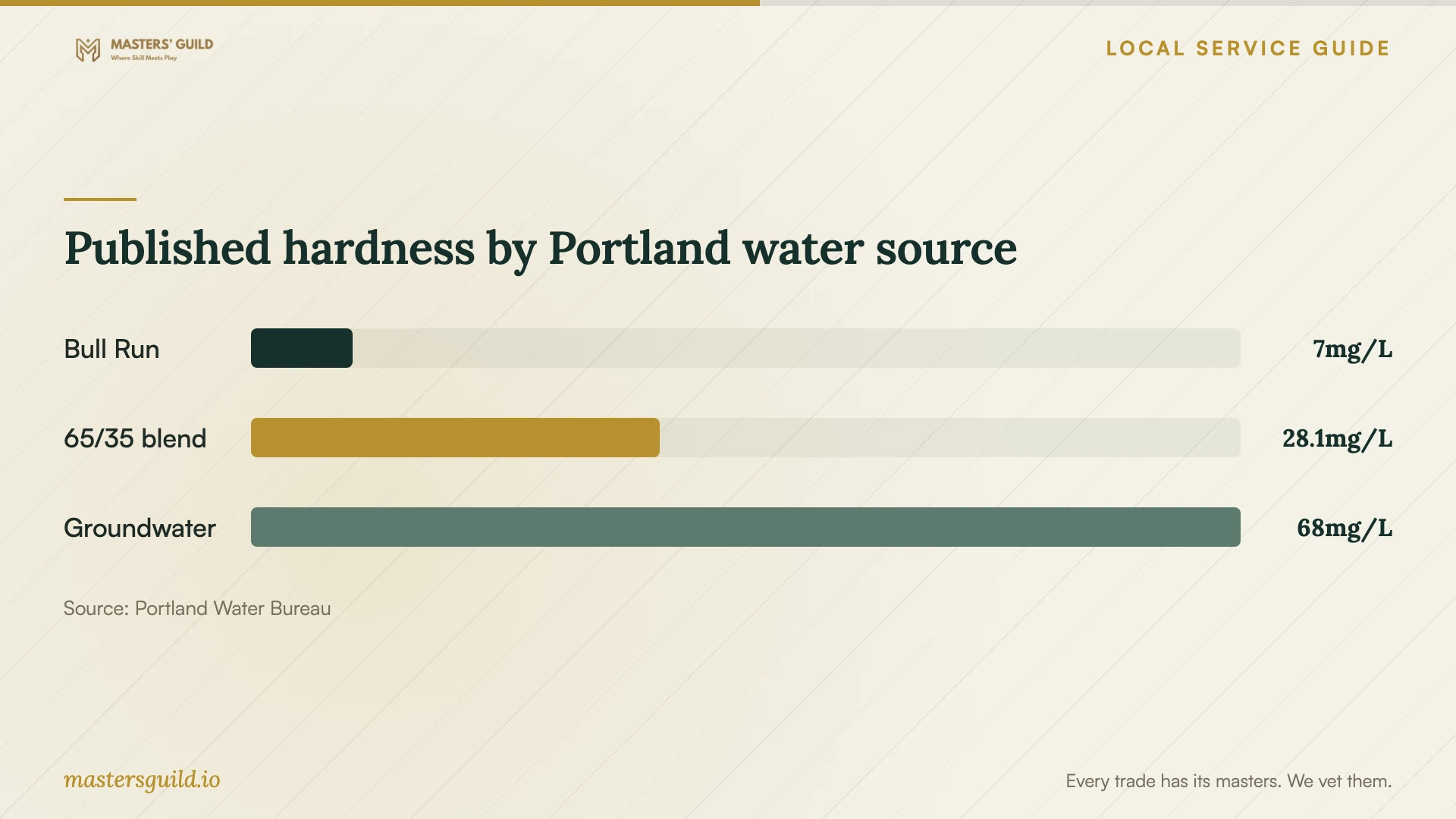
Portland Water Bureau's published comparison lists hardness of 7 mg/L for Bull Run water, 28.1 mg/L for a 65% Bull Run and 35% groundwater blend, and 68 mg/L for groundwater. The Bureau cautions that water quality changes with location, season, demand, and the wells in use. Use these figures to ask about the provider's actual water supply; they do not establish your tap's hardness or predict the finish on your car. [4]
Before work begins, remove valuables and identify existing damage with the provider. At handover, inspect the agreed surfaces together and check that the washer has removed equipment and cleaned the work area. Raise missed tasks while the provider is present.
Published hardness by Portland water source
Local details that affect your job
Sanitary-sewer disposal needs City authorization
For a mobile wash that will discharge to Portland's sanitary sewer, ask the business to show its Discharge Authorization. The City's application process accepts completed forms by email or mail, and authorized businesses must submit annual certification by January 31. If the provider cannot explain its authorization or disposal route, resolve that before booking. Environmental Services lists 503-823-5600 as its program contact. [2]
Home DIY guidance differs from paid mobile washing
Portland allows individual residential car washing under its stormwater permit. For household washing, the City recommends washing on lawn or gravel, trying no soap or phosphate-free soap, or going to a car wash. It tells residents never to wash oily parts such as engines, transmissions, or undercarriages, and never to use heated water or steam. A hired mobile business should follow the City's commercial collection and disposal guidance. [1] [3]
Choose where and how to arrange the wash
| Your situation | Suggested next step | Confirm before booking |
|---|---|---|
| You want service at home | Ask a mobile washer to assess the site | Paved washing area, containment, collection, and disposal plan |
| The provider cannot collect water at your site | Choose a commercial washing facility | The facility has an approved disposal system |
| You plan to wash the car yourself | Follow Portland's residential guidance | Suitable lawn or gravel area; avoid oily parts, heated water, and steam |
| You use shared parking | Discuss the proposed setup with the property manager | Permission, available space, access, and the provider's collection plan |
Your hiring checklist
- Send vehicle photos and name the exterior and interior tasks you want.
- Request a total quote, optional add-on prices, and approval before extra work.
- Show the provider the driveway slope, drains, sidewalk, and available space.
- Ask the provider to explain containment, water recovery, and the disposal route.
- Request the provider's City Discharge Authorization for sanitary-sewer disposal.
- Confirm water, electricity, arrival time, and your vehicle handover deadline.
- Remove valuables and photograph existing damage before the visit.
- Inspect the vehicle and work area with the provider before they leave.
Frequently Asked Questions
Can I hire someone to wash my car in my driveway?
Ask the provider to assess the driveway first. Portland tells customers hiring mobile washers to ensure they contain and collect wash water, protect storm drains, and hold a City Discharge Authorization. Choose a commercial washing facility with an approved disposal system if the site cannot support the proposed wash. [1]
Does biodegradable soap make storm-drain disposal acceptable?
Portland prohibits commercial vehicle wash water from entering the stormwater system, including wash water containing biodegradable cleaners. The City explains that those soaps can reduce oxygen as they break down. Ask the provider how they will collect the water. [1]
How should I compare car-washing prices?
Give each provider the same photos and task list. Request a total quote that identifies included surfaces, add-ons, access needs, and conditions requiring a revised price. Ask the provider to obtain your approval before doing extra work.
Can I wash my car at home myself?
Portland allows individual residential car washing under its stormwater permit. The City recommends lawn or gravel, no soap or phosphate-free soap, or a commercial car wash. Its household guidance excludes washing oily parts and using heated water or steam. [3]
Sources and scope
This guide combines the sources below with practical planning guidance. Figures apply to the stated geography and period; request a written quote for your property.