
Local service guide
Tile Setting in Portland, ME: Hiring and Preparation
For Tile Setting in Portland, ME, have installers inspect the existing surface and quote preparation, installation, and cleanup separately. Resolve suspect asbestos flooring before authorizing removal. Maine requires specified written contract protections for residential projects costing more than $3,000, subject to informed written exemptions. Choose an installer who explains the work beneath the tile and records how you will approve additional charges. [1] [2]
Define the installation before requesting bids
Describe the room, approximate dimensions, existing surface, and tile you want. Include photographs of doorways, corners, fixtures, and damaged areas. Specify whether you want a backsplash, floor, shower, or repair. Request a site visit before agreeing to a fixed price if the installer cannot assess the underlying surface from photographs.
Request separate amounts for tile and delivery, removal and disposal, surface preparation, setting materials, installation, grout, and edge finishing. Decide who purchases the tile and pays for shortages or damaged pieces. Have the installer describe transitions at adjoining floors and any proposed changes to door clearance.
For a shower, request the waterproofing system name and a description of treatment around the drain, corners, and penetrations. Obtain the manufacturer's installation and return-to-use instructions. Agree on responsibility for plumbing changes before signing; Maine licenses plumbers and electricians. [1]
Resolve existing flooring before demolition
Maine DEP lists vinyl floor tile and resilient floor covering, including linoleum, as suspect asbestos-containing materials. Before authorizing disturbance, contact DEP or a licensed asbestos consultant for guidance. Have the bidder identify which investigation and removal costs the proposal includes. [2]
Tell the contractor about the building's use history. DEP says a single-family dwelling with current or past commercial use requires inspection under its renovation guidance. That guidance also permits assuming suspect material contains asbestos and arranging compliant removal instead of a required inspection. Contact DEP to confirm the appropriate route for your property. [2]
For pre-1981 buildings with two to four dwelling or rental units, DEP describes investigation options: a licensed asbestos inspector, a person familiar with asbestos-containing materials, or assuming suspect material contains asbestos and arranging removal under state rules. Establish the route before accepting a flooring demolition allowance. [2]
Discuss retaining an existing layer as well as removing it. DEP says some asbestos-containing flooring in good condition can remain undisturbed or be covered. Owners must document covered material for disclosure at sale. Have the installer assess the proposed tile assembly and obtain asbestos guidance for any work that would disturb the existing layer. [4]
Compare installers through their proposed work
Request references from projects resembling yours. For a shower, ask for photographs of preparation and waterproofing alongside finished tile. For a floor, have the installer explain how they will assess the existing surface and address damage. Call references to discuss changes, cleanup, and follow-up.
The Maine Attorney General recommends checking references and researching contractor records because Maine does not license or regulate home contractors. You can ask its Consumer Protection Division whether a contractor has been the subject of a consumer complaint. Consider that information alongside references and the proposal. [3]
Compare responsibility as well as price. Identify who handles flooring investigation, demolition, plumbing coordination, and disposal. Request evidence of insurance. Keep the accepted proposal and record changes to its scope.
Set payment and change terms before work starts
For residential construction or repair costing more than $3,000, Maine requires a written contract covering the price, estimated start and end dates, work and materials, and an express workmanship warranty. Changes that affect the price require written change orders signed by both parties, showing the previous and revised totals. [1]
A contractor cannot require a down payment above one-third of the contract price unless you agree to an exemption. Maine permits informed written exemptions from contract requirements. You do not have to waive those rights to enter a contract. Review any proposed exemption before agreeing. [1] [3]
Agree on the procedure if removal exposes damage: who documents the condition, prices additional work, and obtains your approval. Specify payment milestones, room access, and cleanup. Request product-specific curing instructions and an agreed return-to-use date.
Inspect the result and document unresolved work
Walk through the job with the installer. Compare the result with the agreed layout, edge details, transitions, and scope. Photograph areas you want corrected and write a shared completion list. Keep the contract, change orders, material information, and payment records together.
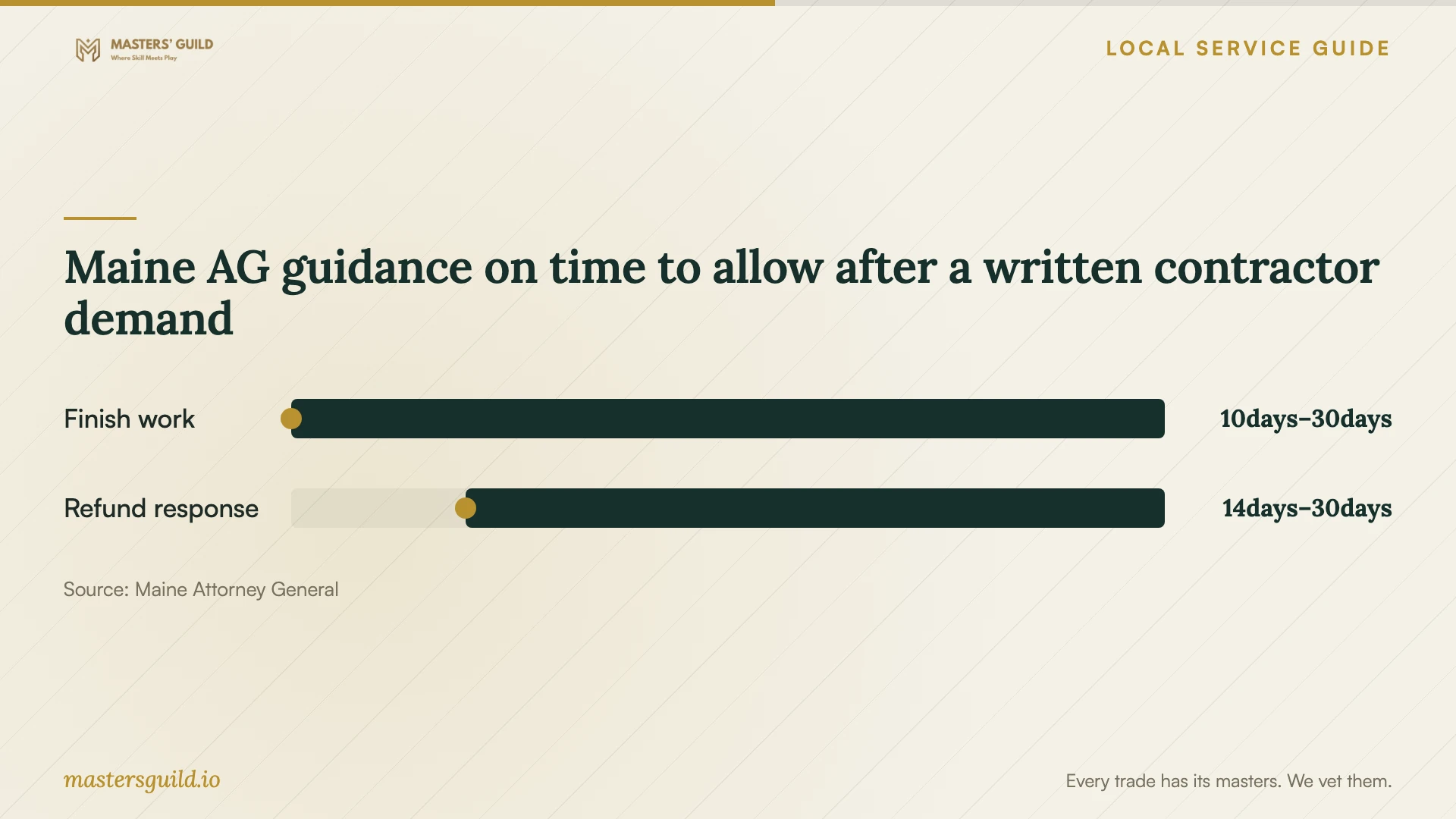
For satisfactory but incomplete or partly incorrect work, Maine's Attorney General recommends writing to the contractor, requesting a response within 10 days, and keeping a copy. For poor work throughout, obtain an independent contractor's written assessment of the work, its value, and correction costs. [1]
Maine AG guidance on time to allow after a written contractor demand
Local details that affect your job
Maine residential contract protections apply here
For your Portland home project over $3,000, compare proposals against Maine's residential contract requirements: work and materials, estimated dates, workmanship warranty, and signed price changes. Review any request to waive the deposit limit or other provisions. These protections apply statewide. [1] [3]
Past commercial use changes your flooring preparation
Disclose any former office, daycare, or other commercial use of your home. Maine DEP says single-family dwellings with that history require inspection under its asbestos guidance, while allowing owners to assume suspect material contains asbestos and arrange compliant removal in lieu of inspection. Confirm the appropriate route with DEP before authorizing flooring disturbance. [2]
Document asbestos flooring that you cover
Maine DEP says some flooring in good condition can remain undisturbed or be covered. If you pursue that option, have the installer assess the tile assembly and document where asbestos-containing material remains. DEP says real estate laws require disclosure of asbestos-containing materials at sale. [4]
Choose the next step for your tile project
| Situation | Next step | Ask before agreeing |
|---|---|---|
| Dry-area backsplash | Request a layout and itemized installation proposal. | Who handles wall preparation, edge finishing, and material purchases? |
| Shower project | Request a waterproofing scope and plumbing responsibilities. | Which products will you use, and who handles plumbing changes? |
| Suspect vinyl flooring | Resolve asbestos guidance before disturbance. | What investigation or compliant removal work does the bid include? |
| Home with past commercial use | Confirm with DEP the inspection route or the alternative of assuming suspect material contains asbestos and arranging compliant removal. | How will you document the chosen route and its cost? |
| Residential quote over $3,000 | Review required Maine contract provisions and proposed exemptions. | Does the agreement cover dates, warranty, deposit terms, and signed price changes? |
Your hiring checklist
- Send measurements, photographs, tile preferences, and the requested layout.
- Disclose known flooring layers, damage, and past commercial use.
- Confirm the suspect-material investigation or removal route before demolition.
- Compare itemized bids with matching preparation, installation, and disposal scope.
- Check references and request evidence of insurance.
- Review payment terms, warranty, dates, exemptions, and change procedures.
- Agree on access, cleanup, curing instructions, and a final walkthrough.
Frequently Asked Questions
How much should I budget for tile installation?
Obtain itemized, site-specific quotes. Compare the same tile, removal, preparation, waterproofing scope where relevant, and disposal terms. Have bidders identify allowances, exclusions, and how they will price concealed damage before you choose.
Does Maine license home contractors?
Maine does not license or regulate home contractors. Check references, research the contractor's record, and request evidence of insurance. Maine licenses plumbers and electricians, so identify who will handle those parts of your project. [1] [3]
Can an installer remove old vinyl flooring before checking it?
Resolve suspect material before authorizing disturbance. Maine DEP lists vinyl floor tile and resilient flooring as suspect asbestos materials. Its investigation guidance distinguishes building age, type, and use history, and permits assuming suspect material contains asbestos and arranging compliant removal instead of a required inspection. Confirm your route with DEP. [2]
Do I need a permit for tile work?
Confirm permit requirements with Portland's permitting office before work starts. Describe the full scope, including proposed plumbing, electrical, or building changes. Have the contractor record who will confirm requirements and arrange any necessary permits.
Sources and scope
This guide combines the sources below with practical planning guidance. Figures apply to the stated geography and period; request a written quote for your property.