
Local service guide
Data recovery and backup in Portland, ME
For data recovery and backup in Portland, ME, choose a provider around the work you need: retrieving missing files, restoring business systems, or responding to a suspected cyberattack. Ask for a written diagnostic scope, an approval limit, secure handling terms and a demonstration that you can open the restored files. For suspected ransomware, isolate affected devices from the network and engage incident-response help before arranging a routine restore. CISA recommends isolation, evidence preservation and recovery on clean systems. [1]
Choose the scope before handing over equipment
Write a short brief listing the device, the symptoms, the last time you accessed the files and any repair attempts. Identify the files you need first, such as the accounting database, current orders or shared project folders. Tell the provider whether you have a backup and whether anyone has tested it. Request a diagnosis before committing to recovery.
Ask who will perform the work and where they will hold the device. If the provider sends it to another lab, request that lab's name, transfer arrangements and data-handling terms. Record the device serial number at handover and ask for a receipt. Agree on how the provider will return the original equipment and recovered files.
For suspected ransomware, disconnect affected devices from Ethernet or Wi-Fi. CISA advises powering down only when network isolation is impossible because shutdown loses potential evidence in volatile memory. Ask an incident responder to coordinate evidence collection and restoration; CISA warns that an unresolved compromise can continue after rebuilding from backups. [1]
Compare written quotes by deliverables
Request separate amounts for diagnosis, recovery, replacement storage, return media, shipping and any urgent-work surcharge. Ask what you owe if the provider recovers nothing or only part of your priority list. Define success using named folders or business functions rather than a total file count. Obtain the cancellation terms before handing over equipment.
Agree on a date for the diagnostic update and ask the provider to distinguish that date from the expected recovery completion. Request approval before work exceeds your spending limit. For ongoing backup service, separate setup charges from recurring storage, monitoring and restore-support charges. Ask how you can export your data and end the service.
Use a handover test as an acceptance condition. Open representative documents, check the date of the restored accounting data and have the person who uses each application test it. Ask the provider to document missing or damaged files and record any remaining work before you accept the job.
Specify a backup plan you can restore
CISA recommends offline, encrypted backups of critical data and regular tests of their availability and integrity. It notes that ransomware actors may delete or encrypt accessible backups. Ask the provider to explain which copy remains offline, who controls encryption keys and how you will restore data if the main computer or account becomes unavailable. [1]
Set your own recovery requirements: how much recent work you can afford to lose and how long you can operate without each system. Ask the provider to propose a backup schedule and a restore procedure against those requirements. Identify dependencies such as application installers, licenses and account access. CISA recommends retaining software and related agreements alongside offline backups to support rebuilding. [1]
For managed backup service, put access permissions and security responsibilities in the contract. CISA recommends limiting third-party access to the devices and servers within their responsibilities. Ask who receives failed-backup alerts, who acts on them and how you will receive a record of restore tests. Keep an offline copy of the recovery instructions and contact list. [1]
Plan for power interruptions
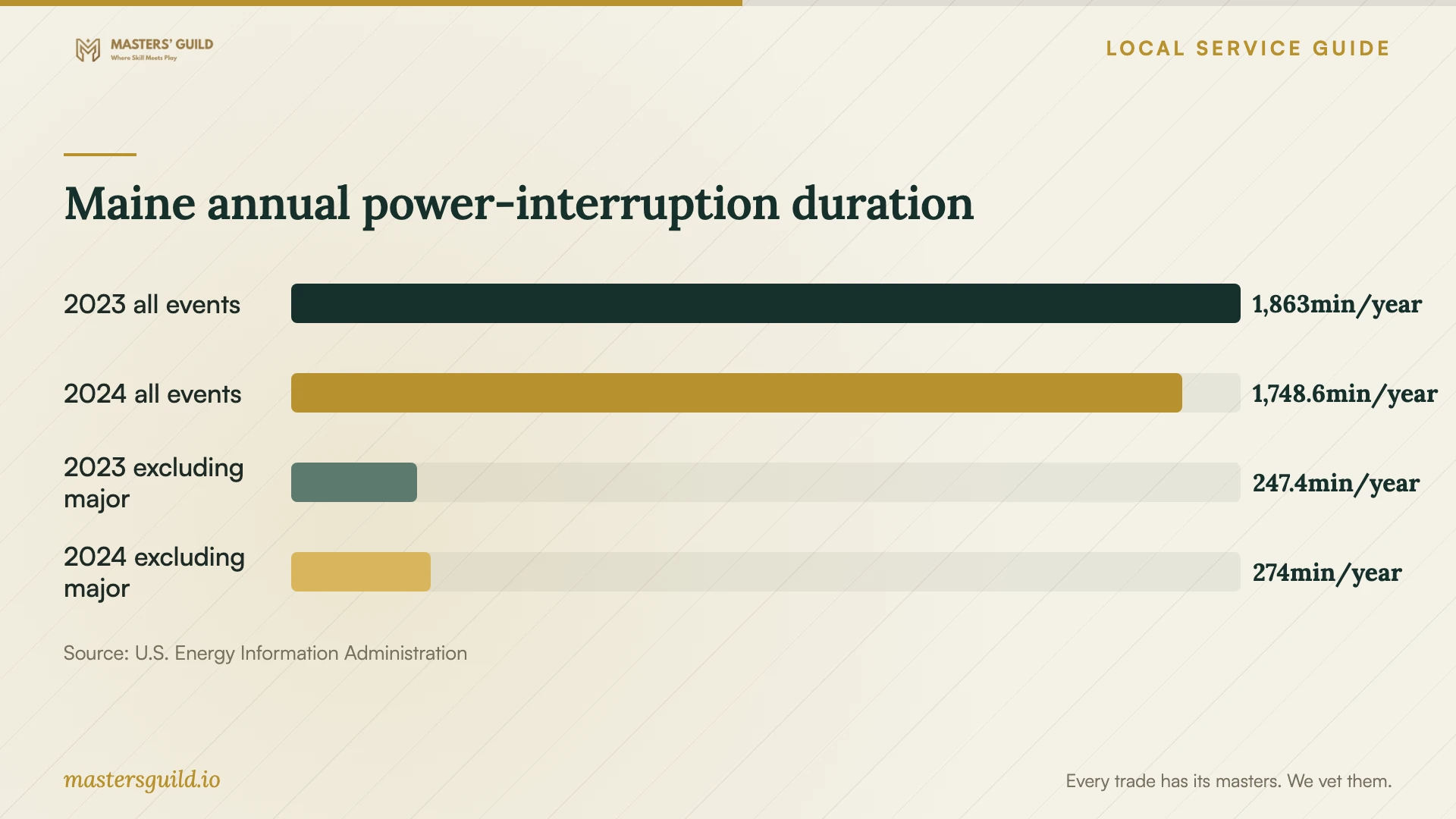
EIA reports Maine's average annual non-momentary interruption duration as 1,748.6 minutes in 2024 when including major events, compared with 274 minutes when excluding them. These statewide utility figures provide context for discussing power-loss planning; they do not describe the outage history of your Portland address or measure data loss. [4]
Ask the provider whether your equipment needs an uninterruptible power supply and a tested shutdown procedure. Have them specify the equipment it would support and demonstrate the intended shutdown. Include loss of internet access in the recovery exercise, and decide how staff will reach instructions and essential records during an interruption.
Close the job with privacy and disposal terms
Specify who may view recovered data, how the provider transfers it to you and when the provider deletes working copies. Ask for documented custody transfers and a written retention period. Keep original storage until you have accepted the restoration and resolved any incident-evidence needs. Authorize erasure or destruction as a separate step.
Maine's breach-notification law requires a prompt investigation when a person maintaining computerized personal information becomes aware of a security breach. Notification duties depend on the circumstances and the person's role. Ask legal counsel to assess suspected exposure, and require your recovery provider to preserve relevant records and escalate concerns to your named contact. [2]
Maine annual power-interruption duration
Local details that affect your job
Maine breach duties affect provider handover
Maine law requires a third party maintaining someone else's computerized personal information to notify that person immediately after discovering a breach involving actual or reasonably suspected unauthorized acquisition. For required resident notices, absent a law-enforcement delay, the law sets a maximum of 30 days after awareness of the breach and identification of its scope, while also requiring notice without unreasonable delay. Before handing over customer or employee records, name an incident contact and require prompt escalation. Ask counsel to determine the notices and regulator reporting your circumstances require. [2]
Check small-business recycling eligibility
Maine DEP includes businesses with 100 or fewer employees in its product-stewardship recycling program for covered electronics, at little to no cost. Coverage depends on the device, and collection sites may charge fees. Confirm eligibility and acceptance before approving a disposal charge. Arrange data erasure or destruction separately, and request documentation before releasing retired equipment. [5]
Use a Portland electronic-waste route
ecomaine lists electronic waste as unacceptable at its facilities and identifies Riverside Recycling in Portland among alternative destinations. Ask the destination about your specific equipment, business quantities and current fees before arranging transport. Keep the equipment available until the recovery work and any evidence-retention requirements are complete. [3]
Match the provider to the job
| Your situation | Work to request | Approval condition |
|---|---|---|
| Missing files without signs of an attack | Diagnostic assessment and recovery of named priority files | Written scope, spending limit and partial-recovery terms |
| You have a backup to restore | Restore to a separate destination and test the business applications | Demonstration that the required files and applications work |
| Ransomware or suspected unauthorized access | Incident response, isolation and evidence preservation | Coordinated recovery on clean systems, consistent with CISA guidance |
| You need ongoing backup management | Offline encrypted backup, restore testing and restricted provider access | Written responsibilities following CISA backup and third-party guidance |
| Retiring equipment after recovery | Documented storage handling and an accepted recycling route | Confirm device coverage, business eligibility and collection fees with the destination |
Your hiring checklist
- List priority files, applications and the last known usable backup.
- Record symptoms, repair attempts and device serial numbers.
- Get diagnostic charges, approval limits and partial-recovery terms in writing.
- Confirm the work location, subcontractors and custody receipts.
- Agree on access permissions, transfer methods and deletion of working copies.
- Require a restore demonstration using representative business files.
- Document backup alerts, restore responsibilities and account ownership.
- Approve storage erasure and recycling only after accepting the restored data.
Frequently Asked Questions
How should I compare recovery quotes?
Give each provider the same device symptoms and priority-file list. Compare diagnostic charges, approval limits, partial-recovery terms, return media and shipping. Ask each provider to define the deliverable and explain what you owe if it cannot recover the files you need.
Should I switch off a computer showing ransomware?
CISA recommends isolating affected systems from the network first. It recommends powering down when you cannot disconnect them, while warning that shutdown loses evidence in volatile memory. Contact incident-response help and avoid reconnecting backup storage during triage. [1]
What should a backup provider demonstrate?
Ask the provider to restore representative files and test a critical application with you. CISA recommends regular testing of backup availability and integrity. Agree on who holds encryption keys, receives failure alerts and performs recovery if your main system becomes unavailable. [1]
Can my business use Maine's electronics recycling program?
Maine DEP includes businesses with 100 or fewer employees for covered devices. Some sites charge collection fees, so confirm equipment acceptance and cost before drop-off. Request separate documentation for storage erasure or destruction. [5]
Sources and scope
This guide combines the sources below with practical planning guidance. Figures apply to the stated geography and period; request a written quote for your property.