
Local service guide
Wall Painting in Plano, TX: Compare and Plan
Arrange Wall Painting in Plano by asking painters to quote the same rooms, repairs and finish requirements. Get a written total that covers preparation, paint, protection and cleanup. Before booking, agree on room access, outdoor exhaust ventilation and responsibility for unwanted materials. For older homes, discuss lead-safe preparation before anyone sands or scrapes. [4]
Give each painter the same room scope
List each room and identify the surfaces you want painted. Separate walls from ceilings, doors, trim and closets. Send photographs of holes, stains, peeling paint and previous patches. During the estimate, ask the painter to mark included repairs and price any additional preparation before you sign.
Record the proposed manufacturer, product line, color and sheen. Ask for the primer and planned coats in writing, along with how the painter will price extra coverage. Approve a sample in the room's lighting before committing to the full quantity. If you supply paint, ask the painter to confirm the product and quantity before purchasing it.
Ask who moves furniture, removes decorations and protects floors. Request start and finish dates, daily access arrangements, payment milestones and written approval for extra work. Ask for proof of liability insurance and references from jobs with similar wall preparation or access needs.
Compare the full price and Texas tax treatment
Request a quote for your actual rooms and wall conditions. If a bidder charges by area, ask whether the measurement means wall surface area or floor area. Keep ceiling and trim options separate, and compare the final amount payable after agreed repairs, materials and any applicable tax.
The Texas Comptroller says residential repair and remodeling labor is nontaxable. For a lump-sum residential contract, the contractor pays tax on purchases and does not charge the customer tax. For a separated contract, the contractor collects applicable tax on incorporated materials and specified taxable services; construction labor remains nontaxable. [2]
Ask the painter to identify the contract type and explain any tax line. Tell each bidder how you use the property. For property with both residential and commercial uses, the Comptroller directs customers to contact its office for the applicable guidelines. [2]
Settle moisture and older-paint preparation first
Show the painter damp patches and recurring stains before accepting a preparation allowance. Arrange an investigation of the moisture source and agree on who will approve the wall for painting. EPA explains that moisture trapped in building cavities can contribute to premature paint failure. [4]
Check the home's construction year before agreeing to sanding or scraping. EPA advises treating existing paint in homes built before 1978 as lead-containing unless a lead-based paint inspection establishes otherwise. Ask the painter to describe containment, preparation and cleanup for your proposed work. [4]
EPA's RRP guidance requires contractor certification and lead-safe training for covered work in pre-1978 homes that disturbs more than six square feet of interior painted surfaces. Ask for the firm's certification and the certified renovator's details when that scope applies. Discuss precautions for smaller preparation areas too. [3] [4]
Agree on ventilation and room use
Choose work dates around the rooms your household needs. EPA recommends minimizing exposure to painting emissions and scheduling interior painting while occupants are away where possible. Select paint intended for indoor use and follow its label instructions. [4]
Confirm how your home's equipment brings in outdoor air. EPA says most home heating and cooling systems do not supply fresh air, while a window air conditioner with its vent control open can increase ventilation. Ask the painter to agree on outdoor exhaust rather than assuming the cooling system provides it. [4]
EPA recommends ventilation from the start of painting through two or three days after completion. Treat this as ventilation guidance, rather than a guaranteed safe return time. Discuss household needs, product instructions and room use with the painter. Ask for separate dates for finishing application, moving furniture back and washing the finish. [4]
Assign leftover materials and inspect together
Plano operates household chemical collection and a household chemical reuse center. Before assigning disposal to either party, contact the city to confirm whether it accepts your paint or cleanup material, whether you qualify, whether contractor-generated waste qualifies and how to arrange collection or delivery. Do not assume the household program covers waste from the contractor's job. [1]
Write down who will keep touch-up paint and who will remove unwanted containers and cleanup materials. Have the painter record the product, color and sheen on anything you retain. Agree on a fallback disposal responsibility if the city does not accept the material.
Walk through the finished rooms with the painter under the lighting you use at home. Compare the result with the agreed repairs, coverage and edges. Check floors and furniture for cleanup needs, record remaining touch-ups and set a completion date before closing out the job.
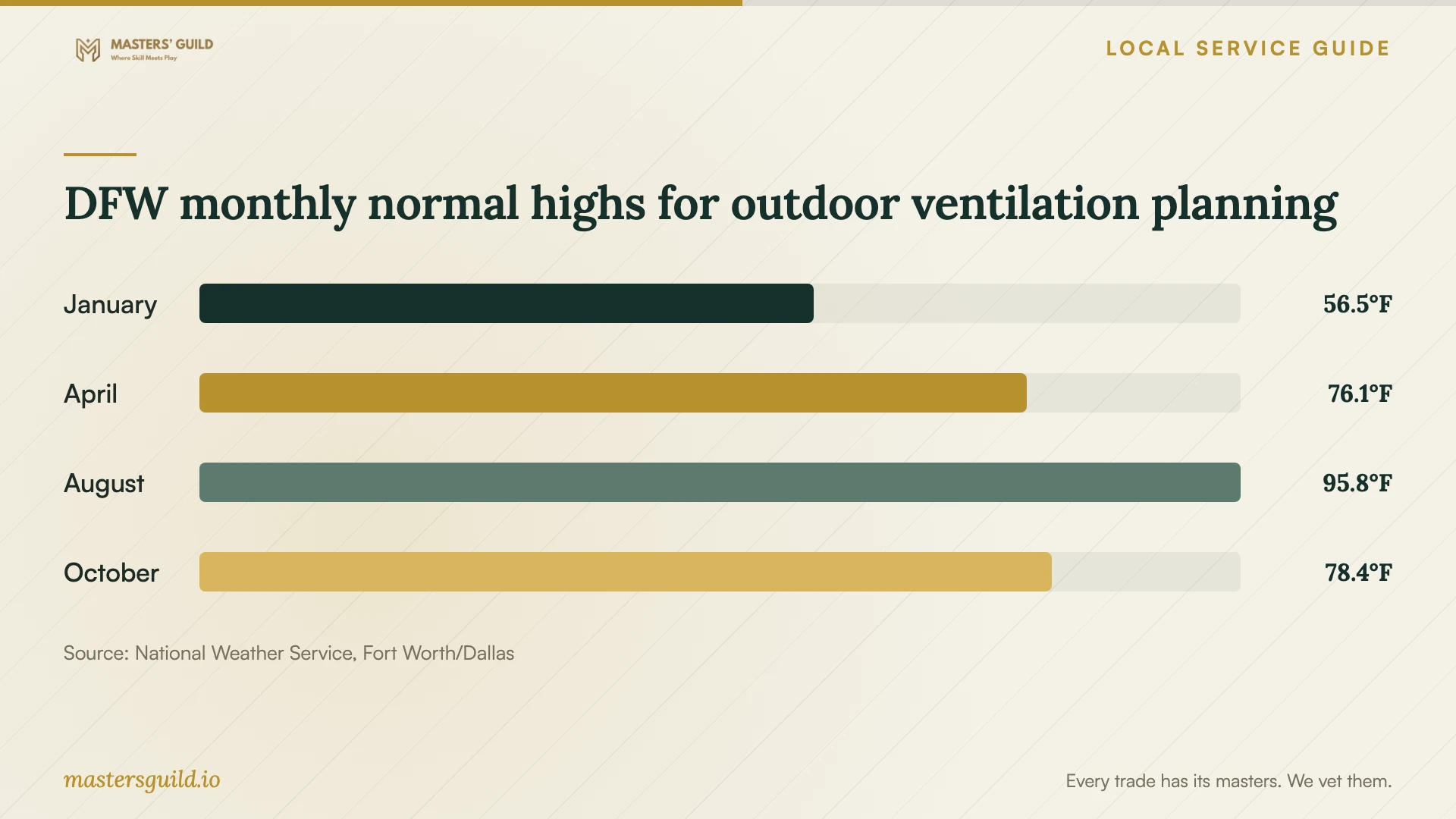
DFW monthly normal highs for outdoor ventilation planning
Local details that affect your job
Compare residential bids using Texas contract rules
For your Plano home, ask each painter to identify a lump-sum or separated residential repair contract. Texas exempts residential repair labor from tax but handles materials tax differently under those arrangements. Compare the complete amount you will pay and resolve any tax line before signing. [2]
Confirm Plano program requirements before leaving waste
The City of Plano provides household chemical collection and distributes donated chemicals to residents through its reuse center. Before the crew leaves unwanted paint with you, confirm material acceptance, resident eligibility, contractor-waste restrictions and collection arrangements with the city. Keep responsibility with an agreed party until you have that confirmation. [1]
Use DFW normals to discuss outdoor ventilation
DFW monthly climate normals used as regional context for Plano show an October normal high of 78.4°F and an August normal high of 95.8°F for 1991–2020. Discuss how outdoor exhaust and incoming air will affect household comfort, then check the forecast for the proposed work dates. [5]
Settle the next step before booking
| Your situation | Next step | Agreement to request |
|---|---|---|
| Sound walls and a color change | Request matching room-specific quotes | Paint product, preparation, coats and exclusions |
| Damp wall or recurring stain | Investigate moisture before covering the surface | Repair responsibility and surface-readiness decision |
| Pre-1978 home with planned sanding | Discuss lead-safe preparation and applicable certification | Disturbed area, containment and cleanup |
| Household using rooms during work | Plan occupant arrangements and outdoor exhaust | Room access and ventilation after completion |
| Unwanted paint or cleanup materials | Confirm Plano program requirements with the city | Acceptance, eligibility and disposal responsibility |
Your hiring checklist
- Send every bidder the same room list, wall photographs and excluded surfaces.
- Record paint product, color, sheen, primer and planned coats.
- Get written repair allowances and an approval process for extra work.
- Confirm property use, contract type and final amount payable.
- Agree on furniture handling, floor protection and daily access.
- Discuss older-paint precautions, outdoor exhaust and room-use arrangements.
- Confirm city program requirements before assigning unwanted-material disposal.
- Inspect together and record touch-ups with a completion date.
Frequently Asked Questions
How should I budget for wall painting?
Get written quotes for your rooms, wall conditions and chosen finish. Ask each painter to separate optional surfaces and repairs, identify the paint product and state the final amount payable. Use that shared scope to decide which work fits your budget.
Should a painter charge tax on residential labor?
Texas exempts residential repair and remodeling labor from tax. Under a separated contract, the contractor collects applicable tax on incorporated materials and specified taxable services. Under a lump-sum contract, the contractor pays purchase taxes and does not charge the customer tax. [2]
Can I stay home during painting?
Discuss room access and household needs before booking. EPA recommends minimizing exposure and providing ventilation during painting and for two or three days afterward. Agree on outdoor exhaust and follow product instructions; that ventilation period does not establish a guaranteed safe occupancy time. [4]
Can I give leftover paint to Plano's reuse center?
Confirm with the city whether your particular paint qualifies before transporting it. Plano operates a chemical reuse center, but you still need confirmation of material acceptance, eligibility and handling arrangements. Ask about contractor-generated waste before agreeing to take responsibility for it. [1]
Sources and scope
This guide combines the sources below with practical planning guidance. Figures apply to the stated geography and period; request a written quote for your property.