
Local service guide
Duct and Vent Cleaning in Plano, TX: Hiring Guide
For Duct and Vent Cleaning in Plano, have providers show the contamination, compare written estimates, and agree on the components they will clean before booking. EPA recommends cleaning as needed. For proposed duct alterations or remediation, review the provider's qualifications for the added work. Consult Plano Building Inspections about municipal requirements for proposed alterations before approving them. [1] [2] [3]
Decide whether cleaning addresses your problem
Describe the problem before requesting a cleaning package. Photograph particles leaving supply registers, note pest evidence, and tell the inspector about moisture or dusty renovation work. Have the provider distinguish dust on an accessible grille from contamination inside the ducts. EPA says dusty return registers are normal and do not establish heavy deposits deeper in the system. [1]
Have a provider who reports mold show you its location and explain the identification. EPA says an expert must identify mold and may need laboratory analysis. For wet or moldy duct insulation, EPA recommends removal and replacement because cleaning cannot address that material. Correct the moisture source before cleaning or replacement to prevent recurrence. [1]
Avoid choosing a cleaner based on promises to prevent illness or cut energy bills. EPA says duct cleaning has not been shown to prevent health problems, and little evidence supports efficiency gains from cleaning ducts alone. Discuss unexplained symptoms with your doctor and consider other indoor pollution sources alongside an HVAC inspection. [1]
Compare written scopes and totals
EPA recommends written estimates from at least three providers. Give each bidder the same description of your home, including the systems you want inspected and any access restrictions. Request a total for the agreed work, a component list, exclusions, and separate prices for optional services. Have each bidder explain the contamination that justifies the proposed cleaning. [1]
Review coverage for supply and return ducts, registers, grilles, plenums, blower, coils, drain pans, and air-handling housing. EPA describes cleaning across these system components and warns about recontamination when a provider leaves contaminated components untreated. Confirm who will handle each component and whether that person has the qualifications for the work. [1]
EPA's guidance includes a national cost reference in a publication identified as October 1997. It does not provide a current Plano pricing sample. Budget from written estimates for your home, and confirm whether each total includes access work, cleanup, and closure of openings. Request a separate dryer-exhaust scope if you want that service included. [1]
Review cleaning methods and chemical additions
Confirm where the crew will exhaust its vacuum. EPA recommends outdoor exhaust or HEPA vacuum equipment for indoor exhaust. Have the provider explain how the crew will protect furnishings, avoid duct damage, and seal and re-insulate access openings. EPA recommends soft-bristled brushes for fiberglass duct board and fiberglass-lined metal ducts. [1]
Require a separate explanation before approving a biocide or interior coating. EPA advises homeowners to understand treatment risks and benefits, inspect the product label, and verify the permitted use. Its guidance limits biocide application to appropriate uninsulated areas after cleaning under label directions and states that no biocides are registered for fiberglass duct board or fiberglass-lined ducts. [1]
Plan for occupants and pets to leave during biocide application as EPA recommends as a precaution. EPA identifies ozone as a lung irritant and describes unresolved questions about introducing it into ducts. Request the proposed product, reason for treatment, application instructions, and return arrangements before agreeing to chemical work. [1]
Prepare for the visit and check completion
Clear access to registers, equipment, and the attic entry if the crew needs it. Arrange a place for pets away from hoses and open doors. Confirm the expected work duration and cooling interruption. Name the person who can approve additions, and require a revised scope and price before the crew starts extra work.
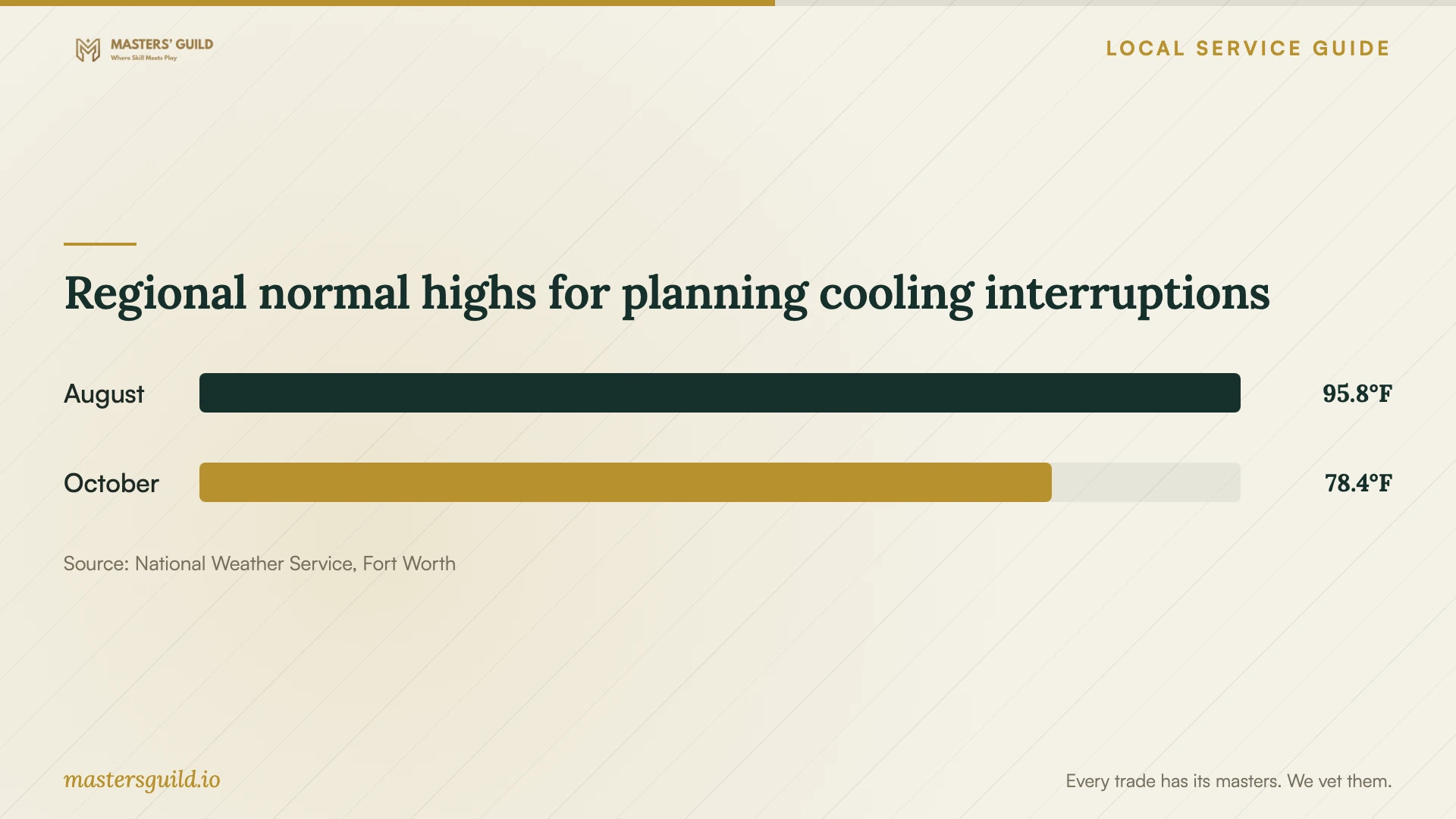
Use regional temperature context when discussing cooling downtime. National Weather Service Dallas/Fort Worth normals show monthly normal highs of 95.8°F in August and 78.4°F in October. Consider a morning arrival or a milder day if your household needs continuous cooling. These regional averages do not predict conditions at your address or establish a need for cleaning. [4]
Before accepting the job, have the provider demonstrate the cleaned components and show photographs of inaccessible areas. EPA recommends a visual inspection, checks of reattached registers and access closures, and confirmation that heating and cooling operate after cleaning. Review any unfinished components with the provider and request correction of deficiencies. [1]
Regional normal highs for planning cooling interruptions
Local details that affect your job
Texas credentials for added work
Pause approval when a cleaner proposes duct alterations or work described as biomedical remediation. TDLR lists non-exempt duct work and biomedical remediation without a license as violations. Have the company identify the responsible license holder and explain which tasks require those credentials. The penalties page does not define biomedical remediation or the cleaning exemption, so use it to flag a credentials question rather than classify the entire proposal. [2]
Plano contacts for proposed alterations
For proposed duct alterations or equipment replacement, consult Plano Building Inspections before approving the added scope. The city's Contact Building Inspections page lists Permit Technicians and Residential Plans Examiners. Use that page to locate the relevant department category. It does not state cleaning permit requirements, exemptions, fees, or submission instructions; confirm requirements for the actual work instead of assuming a cleaning quote covers them. [3]
Choose the next step from the inspection
| Finding | Next step | Question for the provider |
|---|---|---|
| Dusty return grille alone | Clean the accessible grille and assess evidence inside the ducts. | Can you show contamination beyond this grille? |
| Ducts clogged with excessive dust or debris, or particles leaving supply registers | Consider cleaning and correct the underlying cause. | Which components need cleaning and what caused the buildup? |
| Substantial visible suspected mold on hard-surface ducts or HVAC components | Request qualified identification and address moisture. | How did you identify the material and locate the moisture source? |
| Vermin infestation within ducts | Address the infestation and underlying cause before cleaning. | How will you prevent the infestation from recurring? |
| Wet or moldy fiberglass duct material | Discuss removal and replacement with a qualified HVAC contractor. | Which material needs replacement? |
| Proposed duct alterations or biomedical remediation | Review Texas credentials; consult Plano about requirements for alterations. | Who holds the relevant credentials, and which requirements apply? |
Your hiring checklist
- Describe the problem and request evidence of contamination inside the system.
- Give bidders the same system and access information.
- Compare written totals, component coverage, exclusions, and optional services.
- Confirm dust capture, brushing methods, and access-opening repairs.
- Review Texas credentials and Plano requirements for proposed alterations.
- Arrange access, cooling downtime, pets, and any approved biocide precautions.
- Require a revised scope and price before approving additions.
- Review cleaned components, completion photographs, and system operation.
Frequently Asked Questions
Should I book duct cleaning every year?
EPA recommends cleaning as needed rather than as routine yearly maintenance. Request evidence of the contamination that warrants cleaning. Continue filter changes and HVAC maintenance, and correct moisture problems before they contaminate the system. [1]
Does EPA certify duct cleaners?
EPA does not certify, endorse, or approve duct-cleaning companies. Check references, relevant credentials, proposed methods, and experience with your duct materials. Have the provider explain how the crew will protect your home and equipment. [1]
Do I need a Plano permit for cleaning?
Plano's Contact Building Inspections page does not establish a cleaning permit requirement or exemption. It lists Permit Technicians and Residential Plans Examiners. For proposed alterations or equipment replacement, consult Building Inspections about the actual scope before approving it. [3]
Can a cleaner treat mold with a spray?
EPA recommends confirming suspected mold and correcting moisture. Wet or moldy fiberglass duct material needs replacement. Before approving a biocide, review its label and permitted use; EPA recommends occupants and pets leave during application as a precaution. [1]
Sources and scope
This guide combines the sources below with practical planning guidance. Figures apply to the stated geography and period; request a written quote for your property.