
Local service guide
Plano carpet cleaning: quotes and preparation
For carpet cleaning in Plano, ask for a written quote naming the rooms, stairs, stain treatments, furniture handling and total including applicable tax. Agree on drying arrangements before booking. Texas generally taxes ordinary residential carpet-cleaning appointments, with an exemption for qualifying natural-disaster work. Describe soaked carpet, visible mold or a persistent musty smell before requesting routine cleaning so you can discuss the right scope. [1] [2]
Request a quote you can compare
Send each cleaner the same description: rooms, approximate carpeted area, stairs, stains, furniture you want moved and your preferred appointment. Include photographs of problem spots. Ask how the company defines a room, whether it charges a minimum visit fee, and which tasks require an extra charge.
Request a written scope with the cleaning method, proposed treatments and exclusions. Ask the technician to discuss uncertain stains before starting. For pet odor, request an explanation of what the treatment covers and how the company will handle odor that returns. Review the written terms of any removal guarantee before agreeing to it.
Use job-specific quotes to set your budget. Ask each company to confirm the total after inspection and obtain your agreement before adding treatments or expanding the work. Keep the agreed scope so you can compare it with the invoice and discuss any unfinished work.
Include applicable Texas tax in the budget
For ordinary taxable appointments, the Texas Comptroller classifies residential and nonresidential carpet cleaning as taxable. Its taxable services list also includes carpet protection chemicals and odor-control applications. Providers must collect 6.25 percent state sales tax plus applicable local sales tax on taxable charges. Ask the company to identify the applicable local tax and show the final total. [1]
Texas lists residential carpet repairs and residential water extraction as nontaxable services. Ordinary cleaning and deodorizing are taxable. If you need extraction, seam repair and cleaning in one visit, request distinct line items before work begins. The Comptroller presumes a combined lump-sum charge taxable when the taxable portion exceeds 5 percent, subject to its separate-billing and documentation rules. [1]
Qualifying natural-disaster work has a separate exemption. The Comptroller describes an exemption for carpet cleaning of property damaged in a natural disaster when the Governor of Texas or the President declares the area a disaster area. The provider must bill labor separately from materials, materials remain taxable, and the customer must complete an exemption certificate stating that the disaster damaged the property. Waste-removal charges remain taxable. If this applies to your job, ask the provider to confirm eligibility and invoice treatment before work starts. [1]
Agree on access and drying before the visit
Tell the cleaner where the vehicle can park, how equipment will reach the rooms and whether stairs or building access rules affect the visit. Confirm who will move furniture and which pieces will remain in place. Clear small belongings and fragile items, and ask whether the cleaner expects you to vacuum beforehand.
Ask for separate estimates for the working time and the time before you can use the carpet. Request instructions for indoor airflow, humidity control, furniture replacement and walking on cleaned areas. Explain any deadline, such as overnight guests or a move-out inspection, before choosing the appointment.
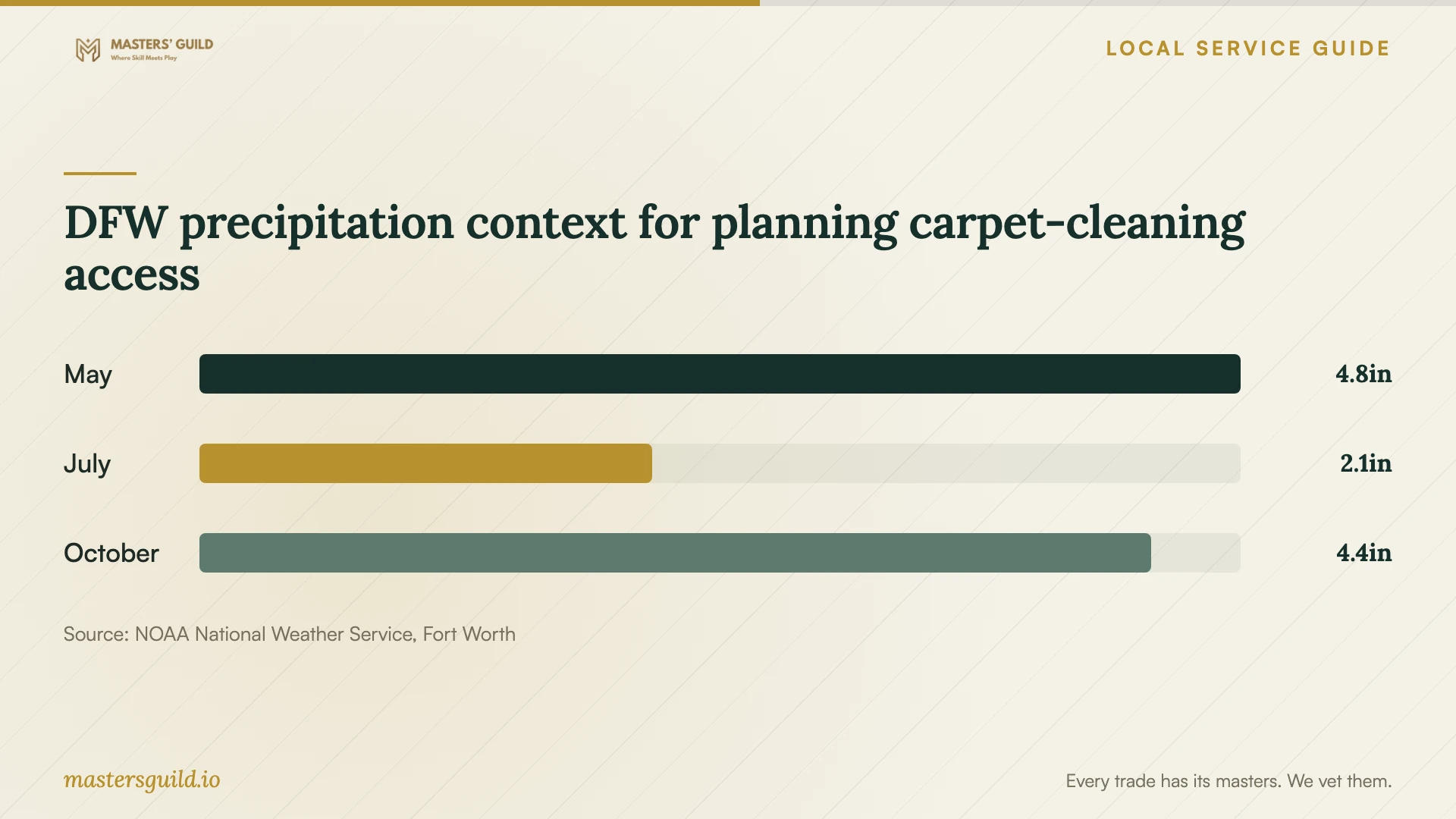
Use the regional precipitation chart to plan a protected entry route, then check the appointment-day forecast. The National Weather Service reports DFW monthly precipitation normals of 2.08 inches in July, 4.37 in October and 4.78 in May for 1991–2020. These regional averages do not predict your indoor drying time or the weather on your booking date. [3]
Separate cleaning from water-damage work
If a leak has soaked the carpet, tell the company the water source, when you discovered it and which areas remain wet. Ask whether it provides water-damage restoration and how it will check the backing and subfloor. EPA guidance for schools and commercial buildings calls for drying clean-water-damaged carpet and backing within 24–48 hours and cleaning and drying the subfloor. [4]
EPA describes that interval as a prevention guideline: mold can occur within it, and does not always occur after it. The table concerns water damage and does not establish a routine cleaning drying time. For suspected sewage or other contaminated water, consult an experienced restoration professional. EPA cautions against using fans before determining that the water is clean or sanitary. [4]
Investigate mold before buying an odor treatment
TDLR advises an inspection when you see mold or notice a musty odor. Its guidance calls for correcting the underlying moisture problem and removing mold growth. It also recommends removing and discarding moldy porous materials, including carpet. Ask the provider to explain whether it proposes cleaning, moisture investigation or mold remediation before accepting the quote. [2]
Texas regulates mold assessment and remediation, with exemptions for some small-area and property-owner work. TDLR says a licensed mold remediation contractor must follow the applicable mold rules even on a project below 25 contiguous square feet, including a work plan that follows a licensed mold assessment consultant's protocol. If a company proposes mold work, ask which license or exemption applies and who will prepare any required protocol. [2]
DFW precipitation context for planning carpet-cleaning access
Local details that affect your job
Itemize a combined job under Texas tax rules
For a combined extraction and cleaning appointment at your Plano home, ask the provider to separate residential water extraction from cleaning and deodorizing. Texas lists extraction as nontaxable and ordinary cleaning as taxable. If the property suffered qualifying natural-disaster damage in a declared disaster area, ask about the cleaning exemption and required certificate. Do not assume that any household leak qualifies. [1]
Check Texas mold credentials when the scope changes
If the technician proposes mold assessment or remediation, ask about Texas mold licensing and any claimed exemption. The small-area exemption does not waive the rules for a licensed contractor: TDLR says licensed mold remediators must follow those rules even below 25 contiguous square feet. Confirm who will develop the required protocol before authorizing that work. [2]
Choose the service that matches the carpet problem
| Situation | Next step | Confirm before authorizing |
|---|---|---|
| Dry carpet with traffic soil or isolated stains | Request a routine cleaning quote. | Rooms, stain treatment, furniture handling, drying instructions and applicable tax. |
| Carpet soaked by a known clean-water leak | Request water-damage restoration advice. | How the provider will dry carpet, backing and subfloor. EPA's schools and commercial buildings guidance gives a 24–48-hour prevention guideline. |
| Suspected sewage or contaminated water | Consult an experienced restoration professional. | The water source and appropriate precautions before anyone uses fans. |
| Visible mold or a musty smell | Request moisture investigation and an explanation of the proposed scope. | Applicable Texas mold licensing or exemptions and whether moldy carpet requires removal. |
| Residential extraction or repair combined with cleaning | Request itemized charges. | Nontaxable extraction or repairs, taxable ordinary cleaning, and any qualifying natural-disaster exemption. |
Your hiring checklist
- Photograph stains and describe any odor, leak or previous treatment.
- List the rooms, stairs and carpeted areas for each quote request.
- Confirm the cleaning method, treatments, exclusions and total including applicable tax.
- Agree on furniture handling, parking and equipment access.
- Request a drying estimate and written instructions for using the rooms.
- Ask the technician to obtain your approval before adding work.
- Keep the scope, invoice and photographs for any follow-up discussion.
Frequently Asked Questions
Does Texas charge sales tax on home carpet cleaning?
Texas generally taxes ordinary home carpet-cleaning appointments at 6.25 percent state sales tax plus applicable local tax. Qualifying cleaning of natural-disaster-damaged property in a declared disaster area can receive an exemption, with an exemption certificate and labor billed separately from taxable materials. Ask for the applicable tax treatment and complete total in your quote. [1]
How long should I allow for the carpet to dry?
Request an estimate for your carpet and the proposed method, then ask when you can walk on it and replace furniture. EPA's 24–48-hour guidance addresses clean-water damage in schools and commercial buildings; it does not establish a routine cleaning drying time. [4]
Can I book cleaning for carpet that smells musty?
Describe the smell and any moisture history before booking. TDLR advises inspection for a musty odor and correcting the underlying moisture problem. Ask whether the provider will investigate the cause or offer only a cleaning treatment. [2]
Should I add carpet protector to the appointment?
Ask why the cleaner recommends it for your carpet, what product it proposes and what the additional charge covers. Decide after reviewing that explanation. Texas lists carpet protection chemical applications as taxable services. [1]
Sources and scope
This guide combines the sources below with practical planning guidance. Figures apply to the stated geography and period; request a written quote for your property.