
Local service guide
Bricklaying and Masonry in Plano, TX: Hiring Guide
For Bricklaying and Masonry in Plano, choose a contractor who will assess the cause of damage before quoting a surface repair, explain the brick and mortar match, and identify any excavation or fence permit questions before setting a start date. The National Park Service advises completing structural repairs before cosmetic work. For fence work, ask Plano Building Inspections to confirm requirements for your scope; for digging, allow the Texas811 notice period before excavation. [1] [2] [4]
Arrange an assessment before choosing the repair
Ask each contractor to identify what they intend to repair: mortar joints, individual bricks, a section around an opening, a freestanding column, or an entire wall. The National Park Service distinguishes loadbearing masonry, cavity walls and nonstructural veneer during inspection. Ask the assessor to explain which construction you have and whether their proposed work addresses its support. [4]
A stair-step crack alone does not establish the cause. The National Park Service describes several possible causes of masonry cracking, including foundation settlement, temperature and moisture changes, and improper support over openings. Photograph the whole wall and close views of the damage. Record when you first noticed it and whether its appearance has changed, then share that history during the visit. [4]
For bowing, leaning, displacement around windows or doors, or cracks through bricks, request an assessment before approving cosmetic pointing. Ask whether a structural engineer should examine the area and who will arrange that visit. The National Park Service advises determining the source of cracks and completing structural repairs before minor or cosmetic repairs. [4]
Specify the mortar and brick match
For older masonry, ask the contractor how they will match mortar hardness, permeability and color. The National Park Service warns that hard mortar with high concentrations of portland cement can contribute to deterioration of surrounding historic masonry. Its guidance concerns historic construction; ask the contractor to explain the material choice for your particular wall. [4]
Request a sample repair in an agreed location before approving a larger visible area. Compare the joint width, shape and finish with the surrounding work. The National Park Service advises matching joint width and tooling on historic masonry and keeping mortar off brick faces during application and cleanup. [4]
For replacement bricks, ask to see the proposed units beside the existing wall. Put the approved sample, repair boundaries and cleanup method in the written scope. If a contractor proposes paint or a waterproof coating for deteriorated older brick, ask them to assess the moisture problem first. The National Park Service warns that nonpermeable coatings can trap moisture and accelerate decay in historic masonry. [4]
Compare quotes using the same scope
Give bidders the same photographs and repair boundaries, then request an onsite visit before agreeing to a final scope. Ask them to separate investigation, removal, replacement materials, access equipment, cleanup and any permit handling. Compare the total for the same work, including exclusions, rather than comparing a headline price with another contractor's complete proposal.
Ask each bidder to explain what would trigger extra work after removal exposes the underlying construction. Agree on a written change process before work starts: the contractor describes the finding, proposes the added work and price, and obtains your approval. Request proof of insurance, examples of comparable repairs and written warranty terms.
Separate the time crews spend working from the time you must protect or avoid the repaired area. Ask for instructions covering access, weather protection and reopening gates or nearby paths. Choose a contractor who can explain those instructions for the materials they propose, and include responsibility for protection in the agreement.
Prepare the site and agree on completion
Show the contractor the route for materials, the location of gates, nearby landscaping and the space available for equipment. Agree on where they may stage supplies and collect debris. For shared fences, discuss access with the neighboring owner before scheduling work and identify who will communicate about disruption.
Before final payment, walk through the agreed repair area with the contractor. Compare the work with the approved sample and written scope, review cleanup, and collect any inspection documentation that applies. Keep dated photographs, material information and the warranty with your home records so a future assessor can see what the contractor repaired.
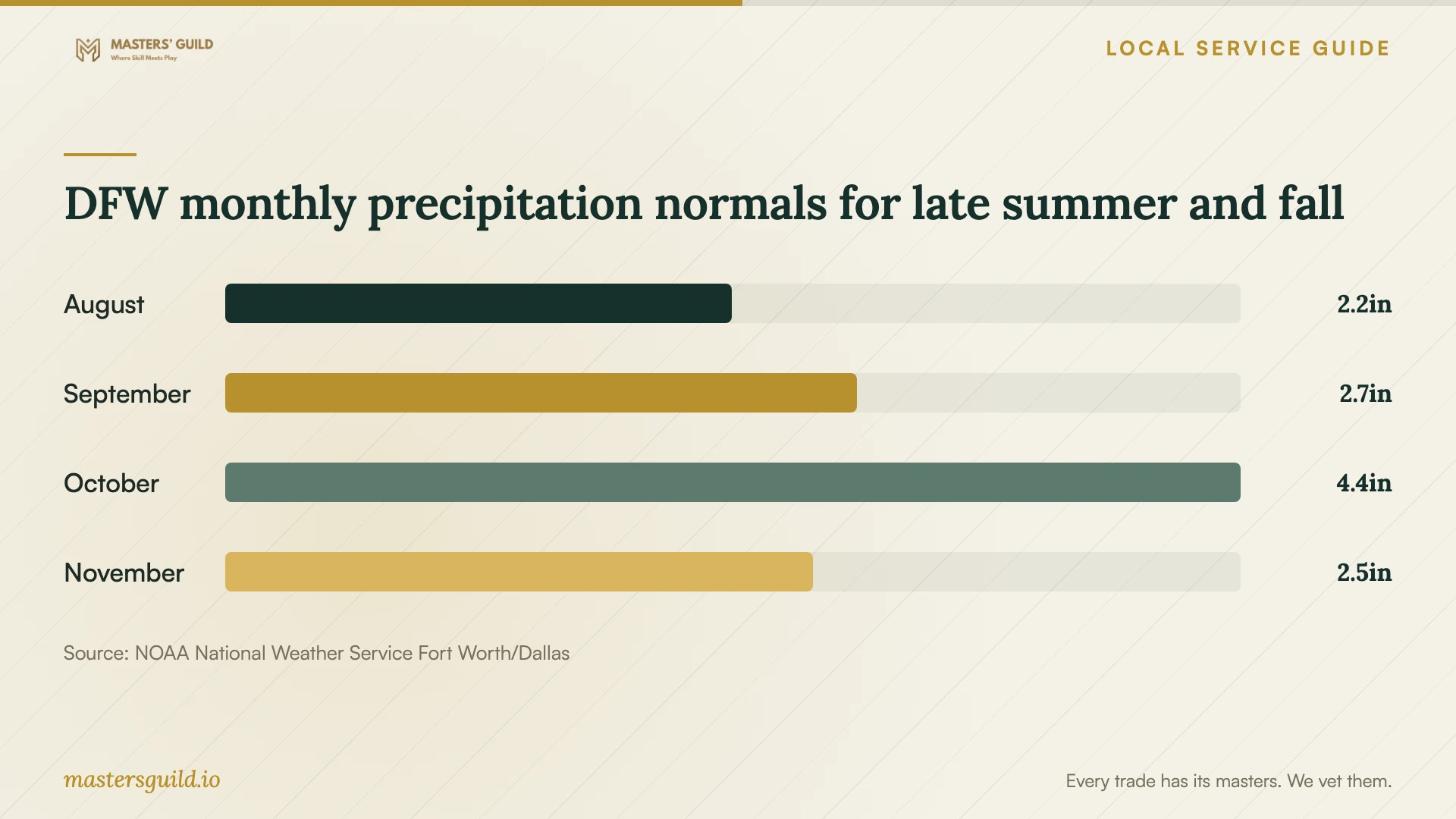
DFW monthly precipitation normals for late summer and fall
Local details that affect your job
Confirm the masonry fence scope under Plano's amended rules
Plano's June 9, 2025 council memo records adoption of Ordinance 2025-6-5, amending fence permitting and maintenance provisions in Sections 6-179 and 6-186. Before hiring for a masonry fence or column repair, give Building Inspections photographs and a description of any proposed changes to height, alignment or construction. Ask for the requirements that apply to that work. The memo does not establish a repair exemption, height threshold or fee, so obtain that answer before agreeing who will handle permits. [1]
Build utility notification into the excavation schedule
Texas811 says homeowners and excavators must contact 811 two business days before digging, excluding weekends and holidays. It names building or repairing a fence among activities requiring notification when digging is involved. For masonry footings or excavated fence repairs, identify who will submit the request and ask the contractor to explain how they will confirm utility responses before excavation. Use the notice period when discussing a start date. [2]
Ask for an October rain plan
The National Weather Service's DFW regional normals report 4.37 inches of October precipitation, compared with 2.18 inches in August. These 1991–2020 averages describe DFW, rather than rainfall measured at your Plano property. For an autumn repair, ask the contractor how they will cover exposed work and materials, which forecast conditions would postpone work, and how a delay affects access and payment milestones. [3]
Choose the next step for your masonry project
| What you see or plan | Next step | Question to ask |
|---|---|---|
| Deteriorated mortar in older brickwork | Request a repointing assessment and material sample. | How will you match mortar hardness, permeability and joint finish? |
| Cracks or displacement around an opening | Request assessment of the opening's support before cosmetic repair. | Does the lintel or arch need repair before you rebuild the masonry? |
| Masonry fence or column work | Confirm the proposed scope with Plano Building Inspections. | Who will obtain the city's permit determination and handle any required application? |
| New footings or other digging | Include Texas811 notification in the schedule. | Who will submit the request and check utility responses before excavation? |
Your hiring checklist
- Photograph the full wall, damaged joints, nearby openings and previous repairs.
- Request an onsite assessment and a written explanation of the proposed repair.
- Confirm fence permit responsibilities with the city for your exact scope.
- Assign utility notification and response checks before any excavation.
- Approve a brick and mortar sample before larger visible repairs.
- Compare removal, access, materials, cleanup and exclusions across quotes.
- Agree on weather protection, change approvals and completion documents.
Frequently Asked Questions
Do I need a permit to repair a masonry fence in Plano?
Confirm your exact scope with Building Inspections. Plano amended its fence permitting and maintenance provisions in June 2025, but the council memo does not specify which repairs qualify for an exemption. Describe whether you will patch existing work, rebuild a section or change the fence. [1]
Can a mason repoint a stair-step crack?
Ask them to determine the cause first. The National Park Service describes several causes of masonry cracking and advises monitoring thermal cracks for activity. It recommends structural repairs before cosmetic work; the crack pattern alone does not establish the appropriate repair. [4]
How much notice does Texas811 require before digging?
Texas811 states two business days, excluding weekends and holidays, for both homeowners and excavators. Agree on who will make the request before scheduling excavation for footings or fence repairs. [2]
What should I include when requesting a masonry quote?
Provide photographs, approximate repair boundaries, access information and any history of changes in the damage. Ask for an onsite assessment, a material sample, itemized inclusions and exclusions, weather protection instructions and a written process for approving added work.
Sources and scope
This guide combines the sources below with practical planning guidance. Figures apply to the stated geography and period; request a written quote for your property.