
Local service guide
Gardening in Pittsburgh: Plan and Compare Quotes
Arrange Gardening in Pittsburgh by requesting a written quote that separates bed cleanup, planting, materials, waste removal, and pesticide treatment. Consider Penn State’s soil fertility test before approving lime or fertilizer purchases. For proposed pesticide work, verify the business’s Pennsylvania license and relevant application category, then ask who will perform the treatment and what authorization they hold. [1] [2] [3]
Define the work before requesting quotes
Start with the result you want: clear an overgrown bed, maintain established planting, replace struggling plants, or prepare an area for new planting. Identify the beds and mark plants you want to keep. Ask the gardener to check with you before removing anything they cannot identify.
Describe access through your property. Include steps, gate openings, the route from the unloading point to the beds, and places where you want the gardener to avoid moving equipment. Send photographs of those routes. Ask whether the proposal includes carrying plants, mulch, and tools to the work area.
Specify your preference for hand weeding and whether you will consider pesticide treatment. Decide who will remove debris. For hedge or shrub work, identify the plants and describe the intended size or shape. Ask the gardener to explain their proposed work before you approve it.
Use soil testing before buying amendments
Penn State’s Agricultural Analytical Services Laboratory offers soil fertility testing for homeowners and landscape contractors. Its standard analysis covers pH, lime requirement, phosphorus, potassium, magnesium, and calcium. The laboratory includes lime and fertilizer recommendations for the crop specified on the submission. [1]
Discuss whether testing would help answer your planting question before approving an amendment package. Identify the intended planting on the submission form. Ask the gardener to explain how their proposed products and quantities follow the laboratory’s recommendations, and keep plant replacement costs separate from amendment costs. [1]
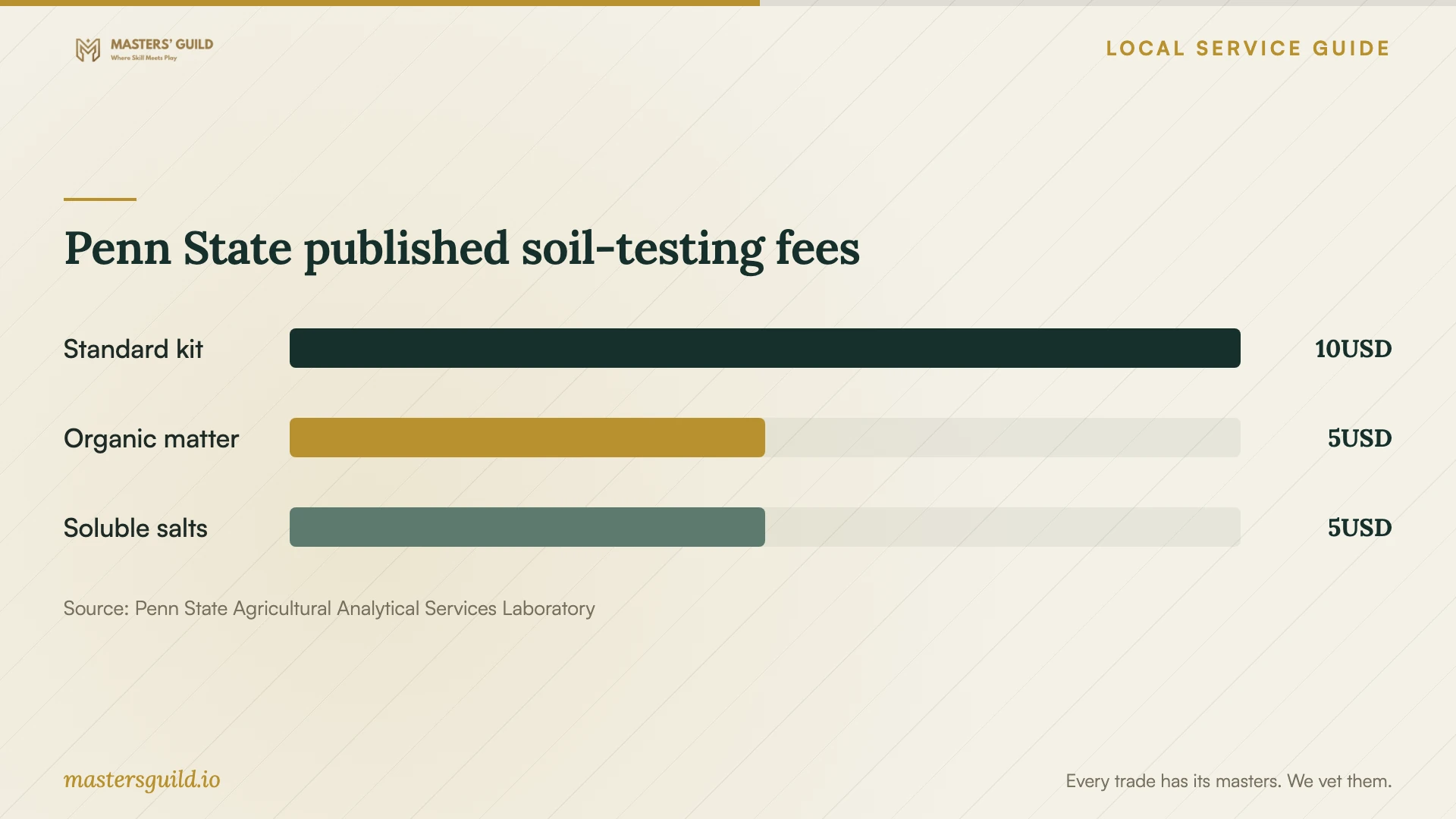
Penn State lists organic matter and soluble salts as optional analyses, each at $5. Ask which additional analysis would answer a specific question about your bed. The laboratory’s listed standard fertility analysis does not include lead testing. Do not treat a fertility report as clearance for soil contamination. [1]
Verify the business and worker before pesticide treatment
Pennsylvania’s Department of Agriculture states that pesticide use on another person’s property requires commercial or public applicator licensing. Businesses required to have these applicators must hold a pesticide application business license, employ at least one certified applicator, and meet insurance requirements. Registered technicians provide another authorized application route, subject to the state’s requirements and product-label restrictions. [2] [3]
Ask for the business’s name and license details. The Department’s business page links to a licensed-business search and says readers can search by application category, county, or PDA region. Verify the proposed business directly and confirm its category for the treatment you are considering. Ask the business to confirm that it will serve your address; do not treat a county-filtered search as a complete service-area list. [2]
Ask who will apply the product. Pennsylvania permits registered technicians to perform the same applications as certified applicators unless the pesticide label reserves application for a certified applicator. A business using the technician training route must employ a certified applicator who has held certification for at least one year. Request the attending worker’s status and the responsible applicator’s name. [3]
Before accepting treatment, ask the gardener to identify the target weed or pest, the proposed product, and the label instructions you will need to follow afterward. Write down whether they must contact you before changing the product or treating another area. If you prefer hand weeding, include that instruction in the agreed scope.
Compare the full scope and arrange aftercare
Request an itemized proposal covering labor, plant quantities, mulch or other materials, delivery, and debris disposal. For hourly work, ask how many workers will attend and how the business records their time. Set a spending limit that requires your approval. For a fixed quote, identify the beds and tasks the price covers.
Separate the first cleanup from continuing maintenance. Ask the gardener to describe the tasks for each return visit and how you will approve extra work. Compare proposals using the same responsibilities: who buys the plants, who supplies materials, who removes waste, and who waters after planting.
Before the gardener leaves, walk through the beds together. Confirm the completed tasks and inspect the plants you asked them to preserve. Collect any soil report or treatment information, then request written care instructions. Assign watering between visits and agree on the next visit’s scope.
Penn State published soil-testing fees
Local details that affect your job
Penn State’s statewide soil-sample submission options
Pittsburgh homeowners can use Penn State’s soil fertility service for homeowners and landscape contractors. The laboratory does not require a purchased kit: you can print its submission form and send a sample with payment in your own container. County Extension offices and participating commercial firms or garden centers also sell kits. Decide whether you or the gardener will collect and mail the sample before approving a sampling charge. [1]
Pennsylvania pesticide credentials apply to the proposed treatment
For pesticide work at your home, use Pennsylvania’s business-licensing guidance as a separate hiring check. The Department provides a search with application-category, county, and regional filters. Verify the named business and relevant category directly, and ask it to confirm service at your address. Use geographic filters to investigate candidates rather than assuming they identify every business that can serve the property. [2]
Confirm who will arrive to apply the product
Pennsylvania recognizes registered technicians as well as certified applicators. A technician may perform applications unless the product label requires a certified applicator. Ask the business to identify the attending worker and confirm their authorization for the chosen product. Check this separately from the business license. [2] [3]
Choose the next step for your garden
| Your situation | Suggested next step | Ask before booking |
|---|---|---|
| You want existing beds weeded | Request a defined cleanup scope | Which plants stay, which weeds go, and who removes the debris? |
| The gardener proposes lime or fertilizer | Consider Penn State fertility testing for crop-specific recommendations | How will the proposed amendments follow the laboratory report? |
| The proposal includes pesticide treatment | Verify the Pennsylvania business license, relevant category, and worker authorization | Who will apply the product, and does their authorization cover its label requirements? |
| You want continuing maintenance | Request a separate follow-up proposal | Which tasks, materials, and aftercare responsibilities does each visit include? |
Your hiring checklist
- Photograph each bed and mark plants to preserve or remove.
- Describe steps, gates, unloading access, and the material-carrying route.
- Request separate labor, materials, delivery, and disposal prices.
- Decide who will collect and submit a soil sample if testing is part of the job.
- State your preferences for hand weeding and approval of proposed pesticide treatment.
- Request pesticide business details, the application category, and the attending worker’s authorization for verification.
- Agree on a spending limit and approval process for extra work.
- Assign watering and follow-up tasks before the planting visit.
Frequently Asked Questions
How much should I budget for a gardener?
Request a quote for your beds, access, materials, and disposal needs. Penn State’s fees below concern laboratory testing and optional analyses; they do not establish a Pittsburgh gardening labor rate. Compare the initial cleanup and ongoing visits as separate pieces of work. [1]
Do I need to buy a Penn State soil test kit?
No. Penn State says you can print its submission form and send your sample with payment in your own container. Follow its sampling instructions and identify the intended crop so the laboratory can provide recommendations for that planting. [1]
Can a registered technician apply pesticides at my home?
Pennsylvania permits registered technicians to perform the same applications as certified applicators unless the pesticide label requires a certified applicator. Ask the business to identify the worker’s status and confirm that their authorization covers the proposed product. [3]
How should I use the state’s pesticide business search?
The Department says its linked search supports application-category, county, and regional filters. Verify the business named in your proposal and confirm the relevant category. Ask it to confirm service at your address, and check who will perform the application rather than relying on a geographic search alone. [2] [3]
Sources and scope
This guide combines the sources below with practical planning guidance. Figures apply to the stated geography and period; request a written quote for your property.