
Local service guide
Flooring installation and repair in Pittsburgh
For flooring installation and repair in Pittsburgh, arrange an inspection before accepting a quote. Ask the contractor to separate surface repair, removal, subfloor preparation, and installation, then document who handles each task. Check applicable home-improvement registration and insurance. If removal raises an asbestos question, have the contractor resolve the handling requirements before scheduling demolition; Pennsylvania DEP excludes Allegheny County projects from its online asbestos notification system. [2] [4]
Choose the scope before choosing the floor
Start the inspection with the problem you want solved: a damaged board, an uneven walking surface, a worn finish, or a room you want to change. Point out where you notice movement or noise, and describe any leak or spill history. Ask the contractor to distinguish the visible damage from any work they propose beneath the floor.
Request separate repair and replacement proposals when you have not decided between them. For a repair, ask how the contractor will select replacement pieces and how much surrounding flooring they plan to disturb. For replacement, ask which existing layers they plan to remove or retain. Have them write down any inspection they need before committing to that approach.
Compare complete quotes
Give each bidder the same room list and requested finish. Ask them to itemize flooring, removal, disposal, subfloor work, installation, transitions, and trim. Include furniture moving and any appliance handling you need. Request the product name and installation method so you can compare the proposed work rather than treating all square-foot totals as equivalent.
Agree on how the contractor will handle conditions they discover after removal. Ask for a written allowance or a process for pricing extra work, with your approval before they proceed. Identify who orders materials, checks deliveries, and keeps spare pieces. Request a payment schedule tied to defined work and a written explanation of the contractor’s workmanship coverage.
Pennsylvania has no licensure or certification requirement for most construction contractors, but it requires most home-improvement contractors to register with the Attorney General. Those contractors must maintain minimum insurance coverage and use contracts that meet consumer-protection requirements. Ask for their registration information, insurance documentation, and proposed contract; ask the municipality about any additional local requirements. [4]
Set moisture conditions before installing wood
Oregon State University Extension explains that solid wood shrinks and swells as it loses or gains moisture. Heating indoor air lowers its relative humidity when the amount of water in the air remains unchanged. For a wood-floor project, ask the installer how they will assess the room, flooring, and wood subfloor before deciding that installation can begin. [1]
Request recorded readings, the meter type, and the acceptance criteria for your chosen product. OSU notes that species, density, moisture distribution, thickness, and temperature affect meter readings. Ask the contractor how they account for those factors. Agree on who maintains the indoor conditions during material storage and installation, and have the installer explain any required waiting period. [1]
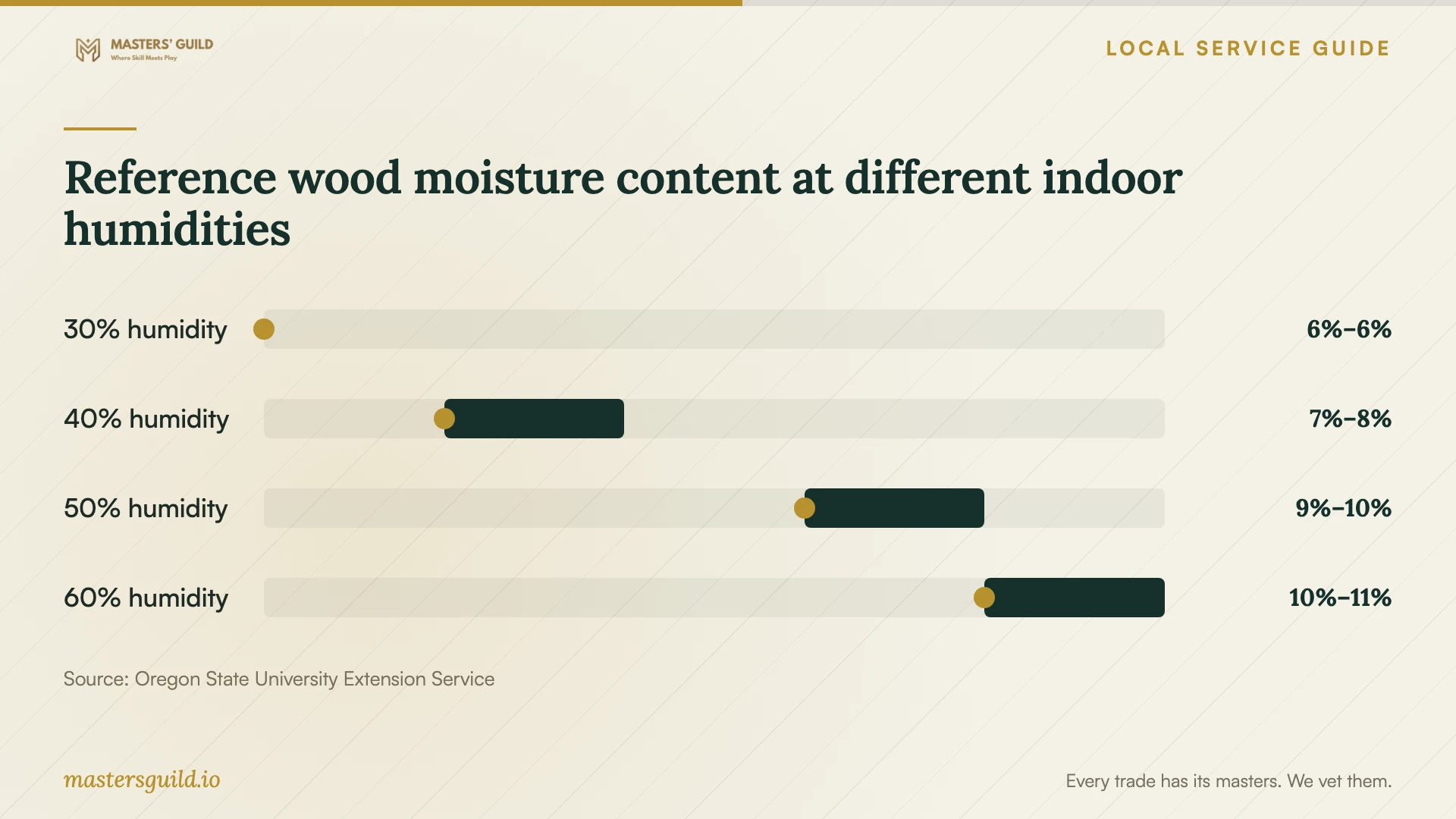
Use the humidity chart as background for that conversation. Do not treat it as a floor-installation specification. Ask the installer to provide the product’s instructions and explain how the measurements at your home satisfy them.
Resolve old-floor removal before booking demolition
Ask the bidder whether they need an asbestos assessment before disturbing the existing flooring or adhesive. If they raise a concern, request a separate assessment and handling plan before authorizing removal. Keep the removal scope distinct from installation so you can identify the responsible contractor and any prerequisite approvals.
DEP says it does not regulate asbestos-containing material removal from private residences unless the residence is an apartment with five or more units, and it advises checking local regulations. Pennsylvania Labor and Industry separately requires individual and company credentials for asbestos abatement. Do not interpret DEP’s residential exception as permission for an ordinary flooring crew to undertake asbestos abatement without the required credentials. [2] [3]
Ask the specialist to identify which notification requirements apply to your building and work. DEP’s online asbestos notification system does not serve Allegheny County projects. Have the contractor confirm the applicable county and state steps before you agree to a demolition date. [2]
Arrange access and room handover
Ask for a schedule that distinguishes inspection, delivery, preparation, installation, and return of the room to use. Confirm where the crew will store materials, how they will carry them into the home, and which rooms you must clear. Discuss access to entrances, bathrooms, and stairs while the work proceeds.
Before work starts, agree on dust control, cleanup, and disposal responsibilities. At handover, walk the room with the contractor and inspect the agreed repair areas, edges, transitions, and trim. Record unresolved items, retain the product and care instructions, and ask the contractor to identify any restrictions before you move furniture back.
Reference wood moisture content at different indoor humidities
Local details that affect your job
Allegheny County uses a different asbestos notification route
DEP explicitly excludes Allegheny County asbestos abatement and demolition or renovation projects from its online notification system. For this project, ask the removal specialist to confirm the applicable county procedure before submitting notices or setting the start date. The fetched DEP guidance does not establish the county’s forms, fees, or deadlines. [2]
Pennsylvania credentials apply to asbestos specialists here
Pennsylvania Labor and Industry requires an individual Pennsylvania asbestos certification photo ID license and company Asbestos Contractor certification to conduct asbestos abatement. It does not accept another state’s license as authorization to work in Pennsylvania. If your flooring project requires abatement, request Pennsylvania credentials from both the company and the people assigned to your home. [3]
Choose the next step for your floor
| Situation | Next step | Ask before committing |
|---|---|---|
| Damage in a limited area | Request a repair proposal alongside replacement | Which pieces will you keep, and how will you address the appearance of the repair? |
| Unevenness or movement | Request an inspection and a separate preparation scope | What work beneath the finish do you propose, and what remains uncertain? |
| New wood flooring | Request moisture measurements and installation criteria | How will you account for the factors that affect meter readings? |
| Removal requires asbestos abatement | Use a Pennsylvania-certified company and credentialed individuals | Who confirms the Allegheny County notification route before scheduling? |
Your hiring checklist
- Show the contractor the damage and describe any leak or spill history.
- Request repair and replacement scopes if you have not chosen an approach.
- Ask for registration information, insurance documentation, and a written contract.
- Separate removal, disposal, subfloor preparation, installation, and trim in the quote.
- Agree on written approval and pricing for work discovered after removal.
- Ask who resolves any asbestos assessment, credentials, and notification requirements.
- Request moisture readings and product installation criteria for a wood-floor project.
- Confirm room access, furniture moving, cleanup, and handover restrictions.
Frequently Asked Questions
Does a flooring contractor need a Pennsylvania license?
Pennsylvania has no licensure or certification requirement for most construction contractors. Most home-improvement contractors must register with the Attorney General, maintain minimum insurance coverage, and use compliant contracts. Some municipalities impose additional requirements, so ask the municipality where the work will occur. [4]
How long should wood flooring acclimate?
Ask the installer to set the waiting period using your chosen product’s instructions and measurements at your home. OSU explains that wood reaches equilibrium moisture content in relation to surrounding humidity. Its guidance supports checking conditions but does not establish a universal flooring acclimation period. [1]
Can the flooring installer handle asbestos removal?
For asbestos abatement, Pennsylvania requires company Asbestos Contractor certification and individual Pennsylvania asbestos credentials. Ask for those documents. For an Allegheny County project, also ask who confirms the applicable notification process, since DEP’s online system excludes the county. [2] [3]
What should I ask about permit requirements?
Give the municipality the proposed scope, including any work beneath the flooring, and ask whether it requires permits or additional contractor credentials. Request a written assignment of responsibility in your contract. The supplied sources do not establish a Pittsburgh flooring permit exemption. [4]
Sources and scope
This guide combines the sources below with practical planning guidance. Figures apply to the stated geography and period; request a written quote for your property.