
Local service guide
House cleaning in Phoenix: scope and booking guide
Arrange house cleaning in Phoenix by giving cleaners the same room checklist, photos of buildup, and your deadline before comparing written quotes. Specify appliance interiors, shower deposits, and move-out requirements. If you also need to remove old chemicals, check Phoenix’s household hazardous waste program and arrange disposal separately from the cleaning visit. [1]
Choose the work before choosing the cleaner
Write a room-by-room request rather than relying on the labels standard, deep, or move-out. For maintenance, ask for the surfaces you want dusted, bathroom fixtures, kitchen counters, and floors. For a more detailed visit, name the baseboards, door frames, cabinet fronts, and reachable areas behind furniture you want included. Have the cleaner confirm each task.
List oven and refrigerator interiors, interior windows, blinds, and heavy furniture movement as separate questions. Tell the cleaner whether appliances will be empty and whether you expect them to move anything. For a move-out, share the landlord’s cleaning checklist and schedule a walkthrough before handing over the keys.
Get a quote you can compare
Send each cleaner the same photos, room count, floor materials, pet information, and access instructions. Ask for the total charge, included tasks, exclusions, supplies, and any parking or access charges. These sources do not establish Phoenix cleaning prices, so use written offers for your home rather than treating a general price range as a local quote.
For an hourly offer, ask how many cleaners will attend and whether the charge applies per worker or to the team. Agree on a spending limit and priority order. For a fixed quote, ask which conditions could change the price and require your approval before extra work. Request proof of current liability coverage and ask how the cleaner handles damage reports, missed tasks, cancellation, and return visits.
Discuss bathroom deposits and surface care
USGS explains that calcium and magnesium contribute to water hardness and that soap can react with calcium to form soap scum. If you see deposits on shower glass or fixtures, send close-up photos and identify the materials. Ask the cleaner to explain the proposed product and check the surface manufacturer’s care instructions before treatment. [4]
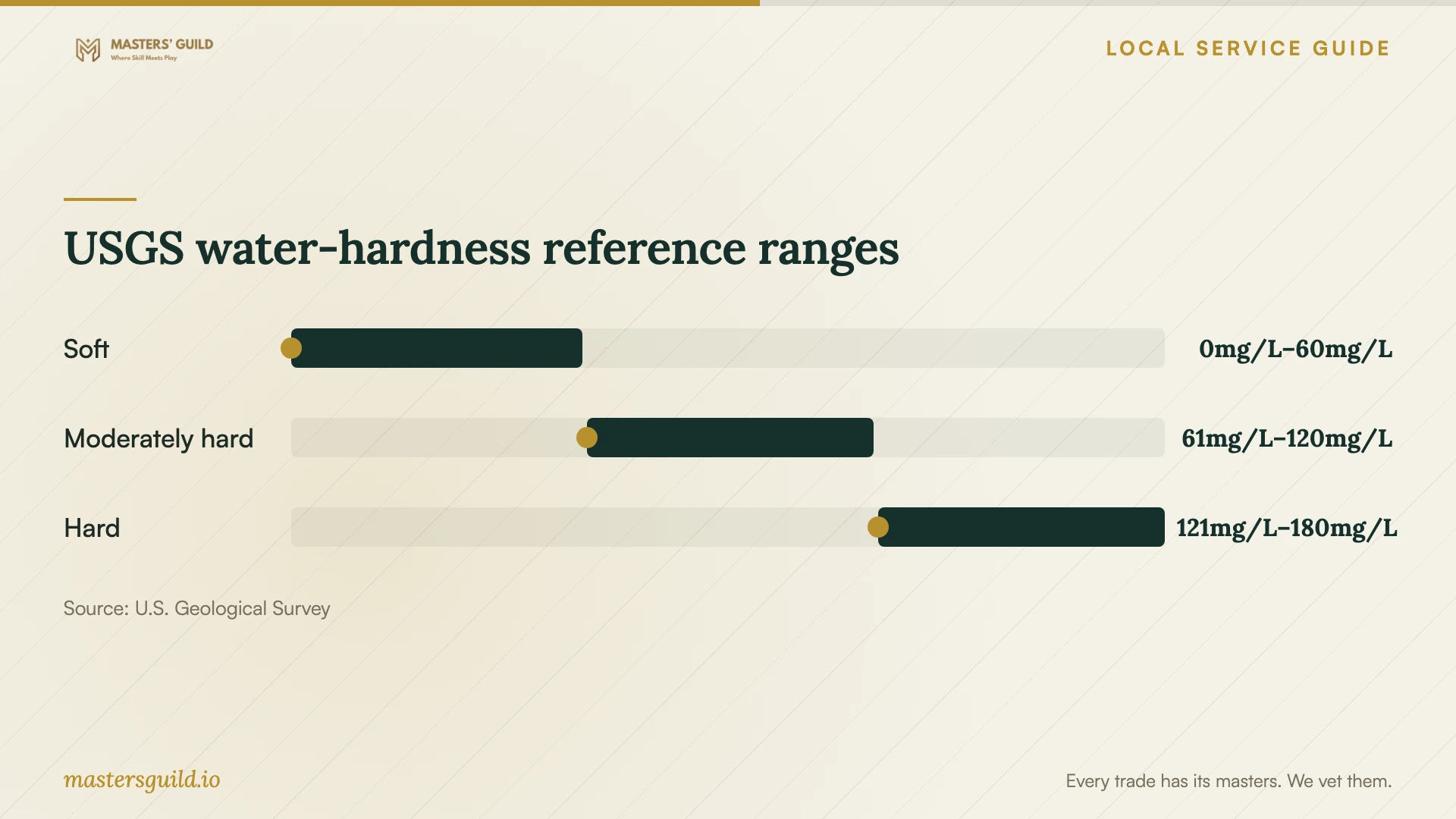
Use the hardness chart as a reference for interpreting a water test, not as a measurement of your home. USGS cautions against using its national hardness map for individual property decisions. For a home-specific water question, contact your water utility rather than assuming that your address falls into a particular hardness category. [4]
Phoenix Water Services discusses hardness buildup on evaporative-cooler pads and sediment that can reach faucet screens from water heaters. If deposits keep returning, ask an equipment service provider about the cause. Keep water-heater flushing and cooler maintenance outside the house-cleaning request unless you arrange that work with a suitable provider. [3]
Prepare access and review the finished work
Clear loose belongings from the surfaces you want cleaned, secure valuables, and agree on a plan for pets. Share parking directions, gate or building access, and an arrival contact. Tell the cleaner about fragrance preferences and surfaces needing special care. Decide who supplies products and equipment before the appointment.
At the end of the visit, review the agreed tasks with the cleaner. Check the areas you identified as priorities and photograph any unresolved issue. Ask for an itemized receipt and follow the agreed process for corrections. Before setting up recurring visits, confirm whether the same checklist applies and how you can change the frequency or cancel.
USGS water-hardness reference ranges
Local details that affect your job
Arrange Phoenix chemical disposal before clearing cupboards
Phoenix limits its household hazardous waste home collection program to customers with a residential solid waste account. The city offers one free collection per customer per calendar year and displays available appointments within the next 30 days. Check the accepted-materials list, then schedule with your City Services account number. If no dates appear, contact the HHW team through the city page. For collection, follow the city’s sealed, leakproof container and labeled-box instructions; set the box beside the garage or front door by 7 a.m., away from the curb, street, and sidewalk. Ask the cleaner to leave chemicals you have reserved for this collection untouched. [1]
Agree on a dust-storm rescheduling plan
Maricopa County’s regional guidance applies to planning a Phoenix visit: residents should close doors and windows before a dust storm and should not drive into or through one. Agree with the cleaner on how you will communicate a delay and handle any cancellation charge. After a storm, inspect the home before adding work; if you find dust indoors, send photos and request attention to the affected surfaces. That cleaning recommendation is practical planning advice, not a county-prescribed cleaning schedule. [2]
Separate utility maintenance from visible cleaning
Phoenix Water Services says hardness can build up on evaporative-cooler pads and reduce effectiveness. It also notes that water-heater sediment can appear on faucet screens. Show a cleaner the visible deposits you want addressed, but arrange equipment maintenance separately. For a water-quality question, use the Environmental Services contact on the city’s Monitoring Programs page. [3]
Match your cleaning request to the next step
| Your situation | Request or arrange | Confirm before booking |
|---|---|---|
| Routine upkeep | A room-by-room maintenance checklist | Surfaces, floors, supplies, and recurring terms |
| Shower residue or scale | Assessment of visible deposits and a surface-specific method | Material compatibility and limits on removal |
| Move-out deadline | Cleaning against your landlord’s checklist | Appliance interiors, empty rooms, and time for review |
| Old household chemicals | Check Phoenix HHW eligibility and accepted materials | Residential solid waste account, annual collection limit, and appointment |
| Cooler-pad buildup or recurring faucet sediment | Equipment maintenance alongside the cleaning request | Who will investigate the cause and service the equipment |
Your hiring checklist
- Write the room list, priority tasks, exclusions, and completion deadline.
- Send photos of shower deposits, kitchen buildup, and any areas needing special attention.
- Confirm the total charge, worker count, supplies, and approval process for extras.
- Ask for liability coverage information and the damage or missed-task reporting process.
- Check disposal arrangements before asking anyone to clear old household chemicals.
- Clear surfaces, secure valuables, and agree on pets, parking, and entry.
- Confirm how you will communicate a weather delay.
- Review the agreed tasks before accepting the finished visit.
Frequently Asked Questions
How much should I budget for a cleaning visit?
Get written quotes for the same room list and condition. The supplied official sources do not establish local cleaning prices. Compare the total charge, included work, and rules for extras; ask an hourly provider to explain team size and billing before agreeing to a spending limit.
Should I request a deep clean for shower scale?
Describe the deposits rather than relying on a package name. USGS explains that hard water can cause soap scum and mineral buildup. Ask the cleaner whether deposit treatment is included and how they will protect your glass, stone, tile, and fixture finishes. [4]
Can I put unwanted chemicals in the trash before the cleaner arrives?
Phoenix directs residents to keep household hazardous waste out of trash and recycling containers. Check the city’s accepted-materials list and collection eligibility. Do not assume a cleaning booking includes chemical removal; agree with the cleaner on what they should leave untouched. [1]
Should the cleaner travel during a dust storm?
Agree on a delay or rescheduling plan. Maricopa County advises against driving into or through a dust storm and recommends closing doors and windows. Contact the cleaner about the appointment rather than expecting them to meet the original arrival time. [2]
Sources and scope
This guide combines the sources below with practical planning guidance. Figures apply to the stated geography and period; request a written quote for your property.