
Local service guide
Philadelphia lawn mowing: plan and hire
For lawn mowing in Philadelphia, ask for a written quote that names the cutting height, visit schedule, trimming, cleanup, and clipping disposal. Choose a provider who will adjust visits to grass growth and explain where hauled material will go. Penn State recommends growth-based mowing; Philadelphia excludes commercial contractors and commercial loads from its resident sanitation convenience centers. [1] [3]
Get comparable quotes for the same work
Send each provider the same photos and description. Include the front and rear lawn, access route, gate opening, steps, slopes, and areas around beds or fences. Ask the provider to inspect access before you accept a quote if you cannot describe it with confidence.
Separate the first visit from recurring care. Describe any tall grass or accumulated debris and request a distinct price for that initial work. For each recurring visit, specify mowing, trimming around obstacles, edging if desired, and cleanup of paths. Ask whether bagging, hauling, and leaf removal require separate approval.
Ask for the amount due per visit, any minimum charge, payment timing, and cancellation terms. Request an explanation of any taxes or additional charges before accepting. Compare written quotes for your property rather than treating an advertised starting price as your expected bill.
Agree on height before the first cut
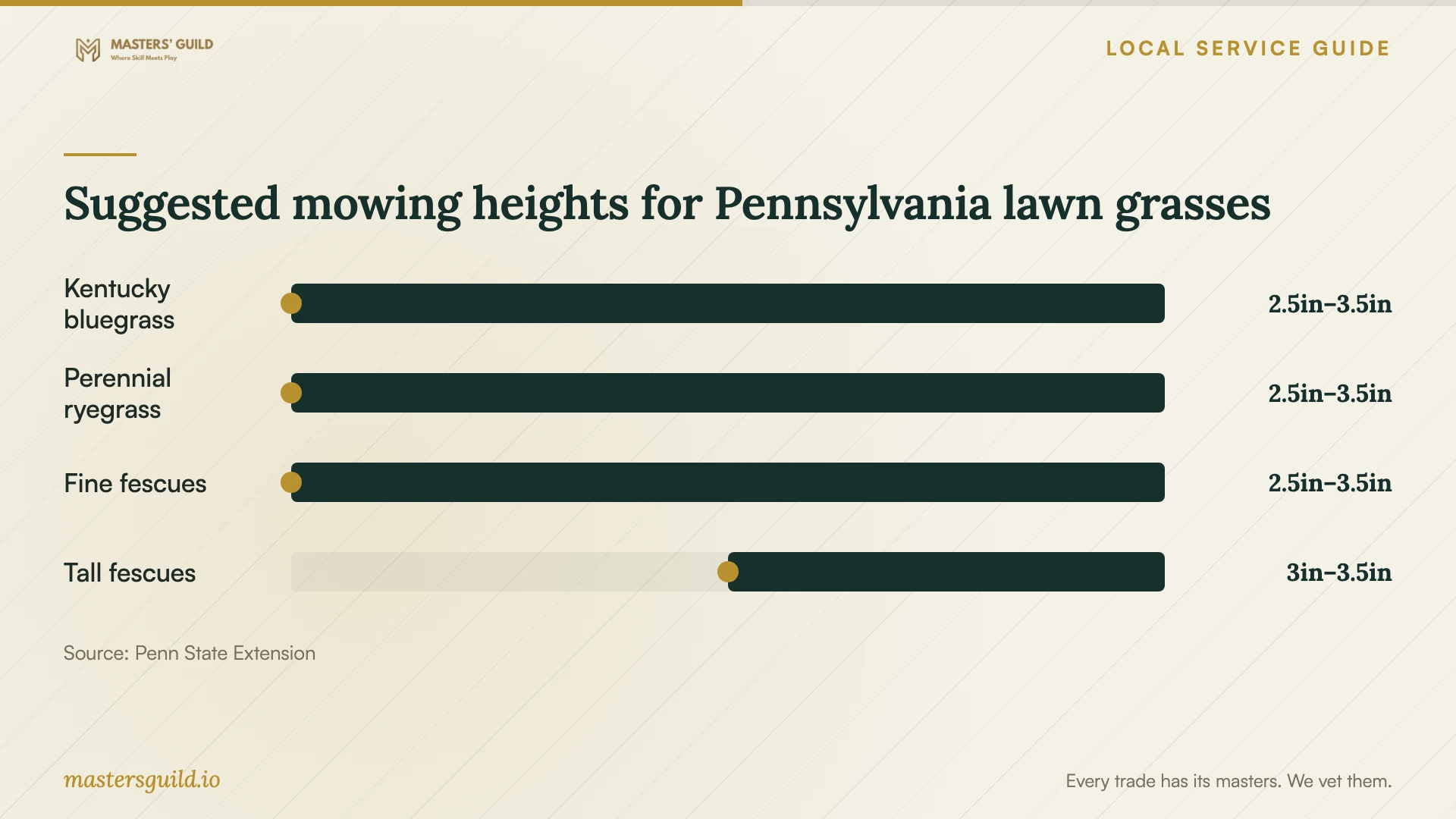
Penn State Extension recommends 2.5 to 3.5 inches for Kentucky bluegrass, perennial ryegrass, and fine fescues in Pennsylvania lawns, and 3.0 to 3.5 inches for tall fescues. These are regional turf recommendations, not measurements of your lawn. Ask the provider to identify the predominant grass before choosing a setting. [2]
Put the agreed height in the work description and ask the crew to discuss changes with you. If you do not know the grass type, send close-up photos and ask how the provider will choose a height. Penn State also advises keeping mowing equipment sharp and in proper adjustment; ask how the provider maintains its blades. [3]
Plan visits around growth and weather
Penn State’s seasonal guidance bases mowing frequency on grass growth. During peak spring growth, a lawn may need cutting more than once a week. During drought, it may need no mowing until growth resumes after rainfall. For a recurring agreement, ask how the provider handles extra visits, skipped cuts, and charges during a pause. [3]
Agree on how the crew will contact you after rain and who approves a rescheduled visit. Penn State notes that prolonged rainfall can prevent mowing and leave overgrown turf with large clipping clumps after the next cut. Ask the provider to describe its cleanup plan before that catch-up visit. [2]
For an autumn booking, ask the provider to assess current growth before promising a fixed number of remaining visits. Set a review point for ending recurring service and keep leaf cleanup as a named item. This lets you approve the work you want without assuming that each scheduled date requires another cut.
Choose clipping handling and disposal
Penn State says you can leave clippings on the lawn when mowing frequency is adequate. Its guidance explains that leaf clippings decompose rapidly and do not contribute to thatch. Ask for clipping return as the default, with a separate agreement for removing heavy clumps or material you want hauled away. [2] [3]
After prolonged rain, Penn State recommends handling large clumps once they dry so they can disperse, or composting them or using air-dried clippings as mulch. It cautions against placing clippings around trees, shrubs, or garden plants if the turf received broadleaf herbicides before mowing. Tell the provider about recent treatments before agreeing to reuse the clippings. [2]
For paid hauling, ask where the contractor will take the material and whether disposal is included in the quote. Philadelphia’s sanitation convenience centers prohibit commercial contractors and commercial loads. Do not accept a hauling plan that assumes your resident access lets the contractor use those facilities. [1]
Suggested mowing heights for Pennsylvania lawn grasses
Local details that affect your job
Resident yard-waste drop-off has conditions
If you plan to handle disposal yourself, Philadelphia requires proof of city residency and accepts uncontaminated yard waste in paper bags only at sanitation convenience centers. Residents must use a vehicle with a total weight below 6,000 pounds. The centers operate Monday through Saturday, 8 a.m. to 6 p.m., except City holidays. Decide before booking whether you will handle eligible resident waste or pay for the contractor’s separate disposal arrangement; commercial contractors and commercial loads cannot use the centers. [1]
Use Pennsylvania guidance for the cutting specification
Penn State’s recommendations cover cool-season grasses used in Pennsylvania lawns, so they provide a regional starting point for your cutting specification here. Tall fescue has a published lower limit of 3.0 inches, compared with 2.5 inches for the other listed grasses. Ask the provider to identify your grass and record the intended height rather than requesting the shortest possible cut. [2]
Match the mowing agreement to your lawn
| Situation | Service decision | Question to ask |
|---|---|---|
| Active spring growth | Allow a growth-based schedule; Penn State says more than one cut per week may be needed. | How do you approve and charge for extra visits? |
| Drought with no active growth | Discuss pausing cuts until growth resumes, consistent with Penn State guidance. | Will you notify me before skipping or billing a visit? |
| Heavy clumps after rain | Agree on clump handling; Penn State describes dispersal after drying or collection for suitable reuse. | Does the catch-up quote include handling the clumps? |
| You want clippings hauled | Require a disposal arrangement outside the City’s resident facilities for commercial contractor loads. | Where will you take the material, and is disposal included? |
Your hiring checklist
- Send photos of the lawn and the full equipment access route.
- Describe tall grass, debris, slopes, steps, and gate restrictions.
- Request separate prices for the initial visit and recurring mowing.
- Record the intended cutting height and who approves changes.
- Name trimming, edging, path cleanup, bagging, and hauling in the scope.
- Agree on rain rescheduling, growth-based pauses, and any extra-visit charges.
- Ask for proof of insurance and a contact for damage or missed work.
Frequently Asked Questions
Should I choose weekly or biweekly mowing?
Choose a schedule the provider can adjust to growth. Penn State says peak spring growth may require more than one cut per week, while drought may warrant a pause. Ask how the provider decides whether to change the interval and how that affects your bill. [3]
Do I need the crew to bag grass clippings?
Penn State says clipping removal is unnecessary when mowing frequency is adequate. Ask the crew to return clippings without leaving heavy residue and agree on separate handling for large clumps. Disclose recent broadleaf herbicide treatments before anyone reuses clippings around garden plants. [2] [3]
Can my contractor take clippings to a City convenience center?
Philadelphia prohibits commercial contractors and vehicles carrying commercial loads from using sanitation convenience centers. Ask the contractor to name its disposal destination. Residents handling their own eligible yard waste must meet the City’s residency, vehicle, and paper-bag requirements. [1]
What should I confirm before accepting an offer?
Confirm the exact areas to mow, equipment access, cutting height, trimming, cleanup, and clipping handling. Ask for the total charge and written terms for rain delays, skipped visits, extra work, cancellation, and property damage. Keep the agreed scope with the quote.
Sources and scope
This guide combines the sources below with practical planning guidance. Figures apply to the stated geography and period; request a written quote for your property.