
Local service guide
Bathroom Remodeling in Philadelphia: Hiring and Permits
For Bathroom Remodeling in Philadelphia, compare bids for the same layout and fixtures, then confirm the contractor arrangement and permits for the complete scope. For building-permitted work, the City limits the registered home-improvement contractor alternative to qualifying projects without plumbing or electrical permit requirements. Identify the active licensed master plumber overseeing plumbing and the licensed electrical contractor performing electrical work before committing. [1] [3] [4]
Define the bathroom before requesting bids
Describe whether you want new finishes, replacement fixtures in their current positions, or a different layout. List the tub, toilet, vanity, and lighting you want to retain. Give each bidder the same description and product allowances so you can compare the work they propose.
For shower work, ask the contractor to name the waterproofing system, explain surface preparation, and describe how they will document installation before covering it with tile. Include niches, benches, shower doors, and grab-bar backing in the scope. Ask who will handle ventilation and where they propose to route any new duct.
Tell the contractor whether this is your only bathroom. Request a plan for toilet access, water shutoffs, dust protection, and shower downtime. For a condominium, ask the building manager about access, deliveries, shutoff coordination, and approvals before booking work.
Match permits to each part of the work
Philadelphia requires plumbing permits for installation, alteration, replacement, and repair, with specified exceptions. Those exceptions include minor repairs using the same material, such as replacing faucets, valves, and parts. The City also exempts removing and reinstalling a toilet when no pipes or fixtures will be replaced or moved. Have the master plumber distinguish those tasks from replacing a toilet or changing piping. [1]
An EZ permit lets applicants omit plans for eligible work; they still need the permit. Philadelphia includes replacement of fixtures with fixtures of the same kind among eligible plumbing tasks. Ask which application route applies and who will file it. [1]
The City's building guidance lists painting, cabinets, countertops, and certain floor coverings among finish work that often needs no building permit, provided the property is not on the Philadelphia Historic Registry. Review any plumbing and electrical work against the separate trade requirements. Break a vanity replacement into cabinet, plumbing, and electrical tasks when discussing permits. [4] [1] [3]
Verify contractors against the complete scope
Start with the City's project-specific building permit requirements. For building-permitted work, Philadelphia requires a licensed Philadelphia contractor, with an exception for an existing one-or-two-family home when the project does not require an electrical or plumbing permit. Under that exception, a registered Pennsylvania Home Improvement Contractor must also hold a Philadelphia Commercial Activity License; an owner residing in the building may perform the work too. [4]
The City's general contractor page explains registration for non-trade contractors who work only on existing one-or-two-family dwellings. That general summary does not remove the building permit page's narrower conditions. If your remodel requires plumbing or electrical permits, confirm the complete contractor and subcontractor arrangement with L&I before accepting registration alone as sufficient. [2] [4]
For plumbing, identify the licensed master plumber who will oversee the work and verify an active license. The City also requires that master plumber to have current insurance on file with L&I and be current on City taxes. For electrical work, identify the licensed electrical contractor who will perform it; the City imposes active-license, insurance, and tax requirements on that contractor too. [1] [3]
Use the City's contractor information page to reach the active-license and licensing-violation lookup and the Pennsylvania registration search. Match business names to your bid. Philadelphia recommends checking references and obtaining more than one bid. Ask references about communication, unexpected repairs, and completion of unfinished items on a comparable bathroom project. [2]
Compare quotes and agree on changes
Request an itemized quote covering demolition, surface preparation, waterproofing, fixtures, tile, shower glass, trade work, disposal, and finish repairs. Identify products you must buy and who will check their dimensions before delivery. Ask each bidder to state exclusions and explain how they will price work outside the original scope.
Agree on a process for concealed damage before demolition. Ask the contractor to photograph the problem and provide the proposed repair, price, and schedule effect for your approval. Set aside a reserve you can afford. Keep optional upgrades separate from repairs you authorize after opening the room.
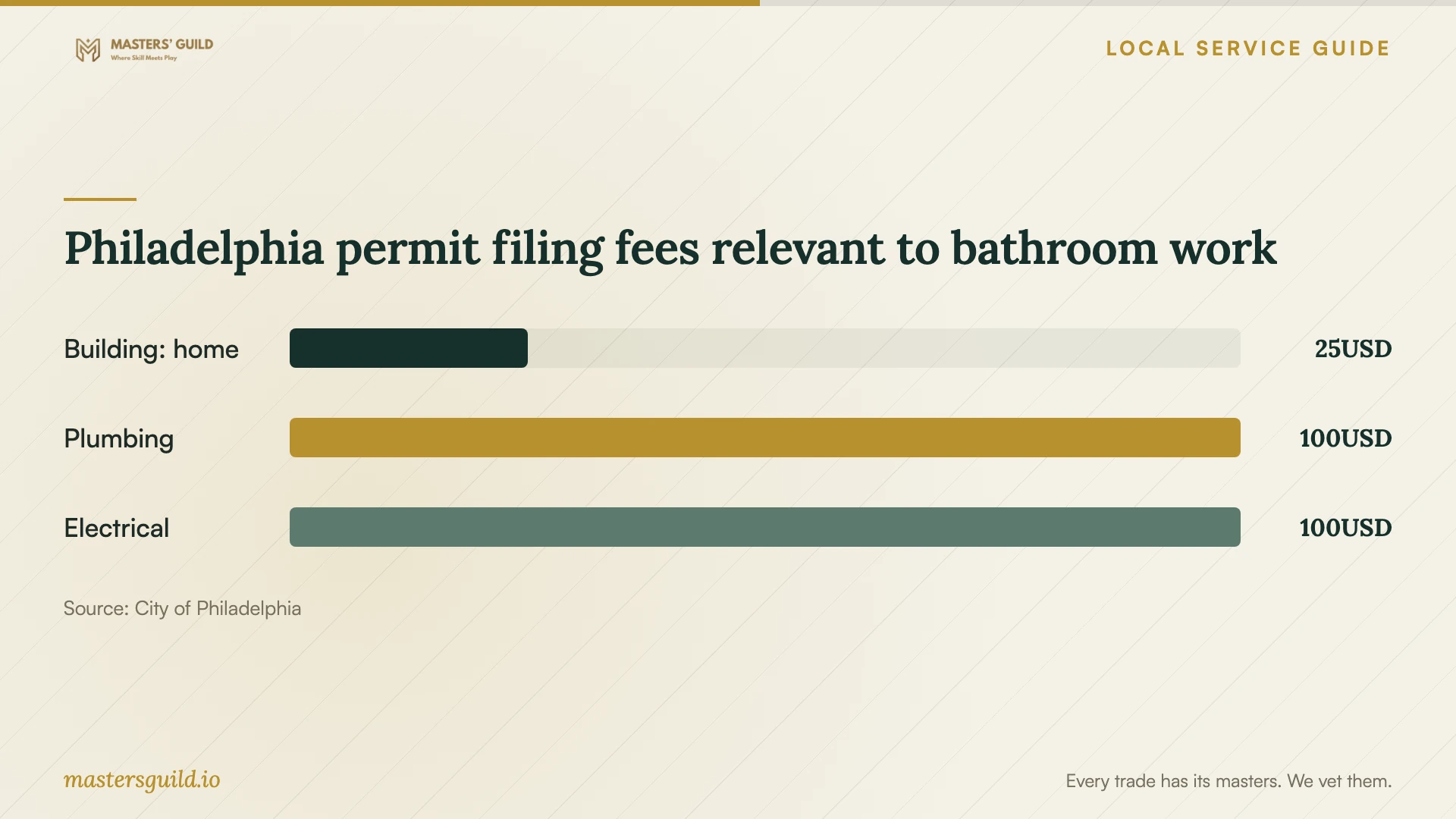
Philadelphia credits the nonrefundable filing fees shown in the chart toward final permit fees. Ask bidders to separate those filing charges from the final permit balance, other City charges, and electrical inspection agency costs. Use room-specific bids to plan the construction budget. [1] [3] [4]
Arrange inspections and handover
For permitted electrical work, the owner or owner's agent must hire a licensed electrical inspection agency. Agree on who will hire and pay the agency and coordinate visits. The electrical application must identify the associated building permit when required, and the City will not issue the electrical permit until that building permit has issued. [3]
For plumbing and building permits, arrange the required inspections with L&I using the permit's contact information. The City issues approval documents after successful completion of required inspections. Ask for those documents at handover, together with warranties, product information, and a list of remaining work. [1] [4]
Walk through the completed bathroom with the contractor. Run fixtures, inspect visible connections, and test the fan and lighting. Record corrections and agree on completion dates. Retain the contract, approved changes, receipts, and permit records.
Philadelphia permit filing fees relevant to bathroom work
Local details that affect your job
Electrical inspections require a separate appointment
Philadelphia assigns the owner or owner's agent responsibility for hiring a licensed electrical inspection agency. Ask whether your remodeler will act as your agent and identify the agency in the work plan. Naming the electrician alone does not identify the inspector. [3]
Verify permits at your property address
The City provides a contractor permit lookup and directs owners to Atlas for address-specific permits and violations. It tells owners to ensure contractors obtain and post required permits before work starts. Check issuance before authorizing demolition. [2]
Historic status changes the finish-work check
The City's common finish-work exemptions depend on the property not being on the Philadelphia Historic Registry. Its building permit guidance requires Historical Commission approval for historic properties. Confirm your property's status and applicable review before relying on an exemption. [4]
Match planned work to the next hiring step
| Planned work | Local requirement or distinction | Next step |
|---|---|---|
| Paint, cabinets, or countertops | Building permit exemptions often apply when the property is not on the Historic Registry. | Check historic status and separate trade work. |
| Minor faucet repair | The plumbing exemption includes minor repairs using the same material. | Have the master plumber define the repair. |
| Replace a toilet | Same-kind fixture replacement can qualify for an EZ plumbing permit. | Identify the supervising master plumber and permit applicant. |
| Add or alter wiring | Electrical permits cover installation and alteration; a licensed electrical contractor must perform the work. | Identify the electrician and hire a licensed inspection agency. |
| Building-permitted remodel | The registered-HIC alternative requires an existing one-or-two-family home, no plumbing or electrical permit requirement, and a Philadelphia Commercial Activity License. | Confirm the complete contractor arrangement with L&I. |
Your hiring checklist
- Describe layout changes, retained fixtures, and shower or tub work.
- Give bidders matching product specifications and finish allowances.
- Ask L&I to confirm the contractor arrangement for the complete scope.
- Identify the supervising master plumber and electrical contractor.
- Assign permit applications and inspection appointments in writing.
- Agree on bathroom access, shutoffs, dust protection, and deliveries.
- Require your written approval for price or scope changes.
- Collect approval documents, warranties, and the remaining-work list.
Frequently Asked Questions
Does keeping fixtures in the same location avoid a plumbing permit?
The City lists same-kind fixture replacement as eligible for an EZ plumbing permit. Exemptions cover narrower tasks, including specified minor repairs and removing and reinstalling a toilet without replacing or moving pipes or fixtures. Ask the supervising master plumber to classify your scope. [1]
Is Pennsylvania home-improvement registration enough for my remodeler?
For building-permitted work, the registered-HIC alternative applies to existing one-or-two-family homes when the project needs no electrical or plumbing permit, and the HIC must hold a Philadelphia Commercial Activity License. When trade permits are involved, confirm the complete contractor arrangement with L&I. Identify the active licensed master plumber overseeing plumbing and the licensed electrical contractor performing electrical work. [1] [3] [4]
How should I budget for the whole remodel?
Obtain itemized bids based on your room and specifications. Ask contractors to price demolition, waterproofing, fixtures, trade work, permits, inspections, and finish repairs. Agree on how they will quote concealed damage and reserve money you can afford for approved changes.
Can demolition start while permits are under review?
Philadelphia tells owners to ensure contractors obtain and post required permits before starting work. Agree on the start date after confirming issuance and assigning required inspection arrangements. [2]
Sources and scope
This guide combines the sources below with practical planning guidance. Figures apply to the stated geography and period; request a written quote for your property.