
Local service guide
Pressure Washing in Orlando: Plan a Business Cleanup
Arrange Pressure Washing in Orlando by requesting an itemized quote for each surface, a wash-water collection and disposal plan, and written access and rescheduling terms. Describe food residue, oil and any cleaning chemicals before the contractor proposes a method. Orlando prohibits pollutant discharges into its stormwater system. If you receive a city asphalt-treatment notice, confirm when washing can resume before booking. [1] [2]
Compare quotes for the same cleanup
Send photos and approximate dimensions for your entrance, walkways, patio and parking spaces. Identify the surface materials and mark the stains you want addressed. Ask each contractor to separate routine cleaning from stain treatment and explain which marks they expect to remain.
Obtain itemized quotes for your property's surfaces, stains and runoff requirements. Include furniture moving, water recovery, disposal and any return visit. Ask who supplies water, who moves equipment and whether the total includes those tasks. Compare the written scope before choosing an offer.
Request a cleaning method for each material and a test area before the crew proceeds. Point out loose finishes, damaged joints, doors and equipment that need protection. Ask for evidence of insurance and written responsibility for damage. Photograph existing defects before work starts.
Settle wash-water disposal before work starts
Orlando's business guidance prohibits pollutant discharges into lakes and its stormwater system, including streets, sidewalks, parking lots and retention or detention ponds. Its pressure-washing instructions appear within special-event best practices. Use that guidance to discuss containment with the contractor, and ask city stormwater staff about unresolved disposal questions for your premises. [1]
The city tells operators to collect litter and absorb liquid waste before washing, locate storm drains and identify where water will pool for collection. It lists berms, drain covers, pumps and holding tanks among containment equipment, and recommends wet vacuums near drains and ditches. Ask the contractor which equipment they will bring for your layout. [1]
The city's guidance allows collected wash water to enter a sanitary sewer drain at the job site or the contractor's premises after the property owner gives permission. It excludes septic systems. Have the contractor identify the disposal point and obtain permission before the crew arrives. [1]
Coordinate cleaning with street treatment
If you receive an asphalt rejuvenation notice, confirm your cleaning date with the project contact. Orlando asks residents to delay pressure washing during remediation because water can stain newly treated asphalt. The project page also describes possible temporary driveway and entrance restrictions. [2]
Confirm the schedule for your address rather than assuming the project page establishes current work on your street. Use your notice and the city's general project contact to check access and when washing can resume. Avoid relying on the page's conflicting contractor names or its incomplete superintendent telephone listing. [2]
For rejuvenating material tracked onto a driveway or sidewalk from this treatment, the city says it will dissipate in two to three weeks without leaving a stain. Confirm the mark's origin with the project contact before paying for stain removal. [2]
Choose a date and protect customer access
Discuss an earlier summer appointment and the contractor's lightning shutdown policy. NWS explains that sea-breeze collisions can produce afternoon storms with frequent lightning and heavy rainfall in east-central Florida. Treat an earlier start as a scheduling preference, and agree on a backup date. [3]
For October work, check the appointment forecast. NWS reports October 15 as Orlando's historical median dry-season start, but describes variable transitions and tropical rainfall into October and November. Its account uses historical observations and does not predict conditions for your booking. [3]
Tell the contractor which entrance customers must use and when deliveries arrive. Agree on hose routing, barriers and who can approve access changes. Before reopening the work area, walk through it with the crew and check that they have removed equipment and addressed the agreed cleanup.
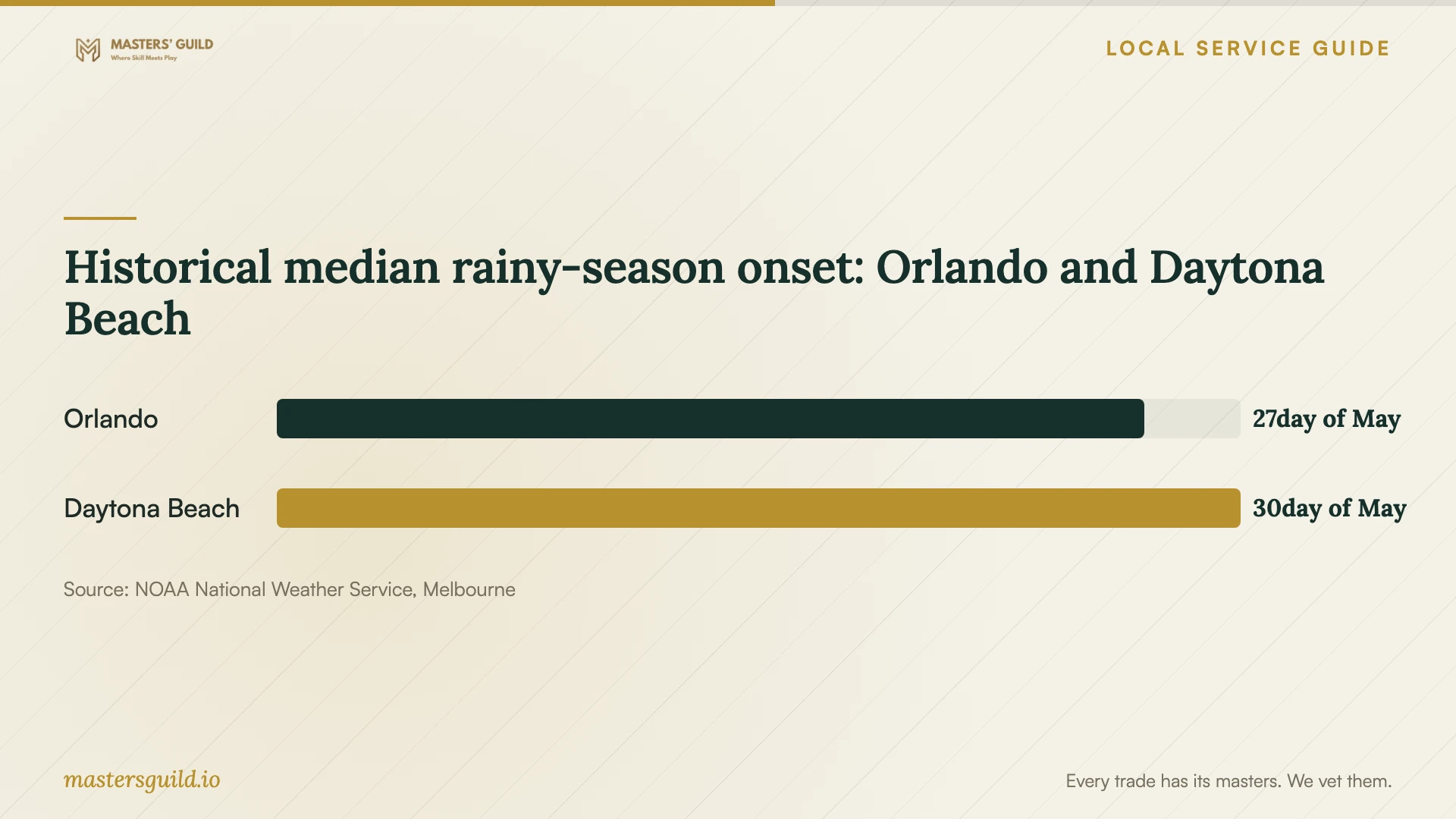
Historical median rainy-season onset: Orlando and Daytona Beach
Local details that affect your job
Biodegradable soap still requires runoff planning
Orlando lists soaps, including biodegradable soaps, as stormwater pollutants. Its special-event pressure-washing guidance permits landscape disposal or onsite containment and evaporation only for ambient dirt or dust without detergents or chemicals; it excludes food residue and oils. Describe your contamination before accepting that approach. Ask the City of Orlando Stormwater Hotline at 407.246.2370 about unresolved disposal questions. [1]
Asphalt treatment can change the booking date
Orlando asks residents to postpone pressure washing during asphalt rejuvenation because water can stain the treated roadway. If you receive a notice affecting your frontage, confirm washing restrictions and entrance access before booking. The city lists Streets and Stormwater at 407.246.2370 for general project questions. The page does not establish a current address-specific schedule. [2]
Choose the plan that fits your premises
| Site condition | Action before booking | Include in the quote |
|---|---|---|
| Ambient dirt or dust without chemicals, food residue or oil | Ask whether landscape disposal or onsite containment and evaporation fits city guidance. | Contamination assessment and water destination. |
| Food residue, grease, oil or detergent | Request dry cleanup and a wash-water collection and disposal plan. | Recovery equipment and disposal arrangements. |
| Storm drain near the work | Have the contractor locate drains and collection points. | Drain protection, containment and recovery. |
| Asphalt treatment affecting the frontage | Confirm when washing can resume and how the crew will enter. | A date coordinated with the project. |
| Summer outdoor appointment | Discuss afternoon storm interruptions and an earlier start. | Lightning shutdown and rescheduling terms. |
Your hiring checklist
- Photograph each surface and identify food residue, grease, oil and other stains.
- Give each contractor the same dimensions and cleanup scope.
- Request a material-specific method, test area and evidence of insurance.
- Ask the contractor to locate drains and identify containment and collection points.
- Confirm the wash-water disposal destination and obtain the required property-owner permission.
- Check any asphalt-treatment notice and confirm entrance access.
- Agree on weather rescheduling, customer routes and a final walkthrough.
Frequently Asked Questions
Can a contractor rinse wash water into the street?
Orlando prohibits pollutant discharges into its stormwater system, including streets and parking lots. Its pressure-washing guidance tells operators to keep wash water off paved surfaces and out of storm drains. Ask for a containment and disposal plan before authorizing work. [1]
Does biodegradable detergent allow landscape disposal?
Orlando lists biodegradable soaps as stormwater pollutants. Its landscape-disposal option covers ambient dirt or dust without detergents or chemicals and excludes food residue and oils. Ask the contractor to identify the contamination and disposal route. [1]
Should I wash away marks from city asphalt treatment?
Confirm that the marks came from the treatment. For tracked rejuvenating material, the city says it will dissipate in two to three weeks without leaving a stain. The city asks residents to delay pressure washing during remediation. [2]
Does the historical dry-season date guarantee an October appointment?
Check the forecast and agree on a backup date. NWS gives October 15 as Orlando's historical median dry-season start, while describing variable transitions and possible tropical rainfall into November. That date does not predict appointment-day conditions. [3]
Sources and scope
This guide combines the sources below with practical planning guidance. Figures apply to the stated geography and period; request a written quote for your property.