
Local service guide
Plan mold removal in Orlando, FL
For mold removal in Orlando, hire for a scope that includes investigating and correcting the moisture source, cleaning or removing affected materials, and coordinating repairs. Florida health guidance says homeowners can handle many patches smaller than about 10 square feet themselves. Larger areas, extensive water damage, suspected air-conditioning contamination, and contaminated water require further guidance or experienced help. Before signing, identify who will handle each part of the work. [2]
Decide whether a small cleanup is appropriate
Measure the visible growth and describe the water damage when requesting help. Florida's Department of Health says homeowners can handle areas smaller than about 10 square feet in most cases. For larger areas or extensive water damage, the department directs readers to detailed remediation guidance. Treat the area threshold as a starting point alongside the material, water source, and household health concerns. [2]
For small areas, the department recommends detergent or soapy water, gloves and goggles, and drying after cleaning. It advises that people doing the cleanup should have no symptoms or allergies. Consult your doctor before starting if you have health concerns. If sewage or other contaminated water caused the damage, call a professional experienced in cleaning and repairing that type of damage. [2]
Describe musty odors, previous leaks, and growth that returns after cleaning. Florida health guidance says returning or spreading growth may indicate an underlying problem, such as a leak. Request an explanation of how the contractor will investigate the moisture source and what findings would require a revised estimate. [2]
Assign responsibility for moisture and air conditioning
Include moisture correction in the job discussion. Florida health guidance identifies roof leaks, plumbing leaks, overflowing air-conditioner drain pans, condensation, and poor bathroom or kitchen venting as possible sources. The department recommends checking around air-handling units for standing water and inspecting evaporator coils, liner surfaces, drain pans, and drain lines. [2]
If you suspect mold contamination in the air-conditioning system, Florida's Department of Health recommends consulting the EPA air-duct guidance it links before taking further action. If someone finds mold in the system, the department recommends shutting it down during cleaning or removal. Discuss household arrangements, the cleaning scope, and responsibility for restarting the equipment before work begins. [2]
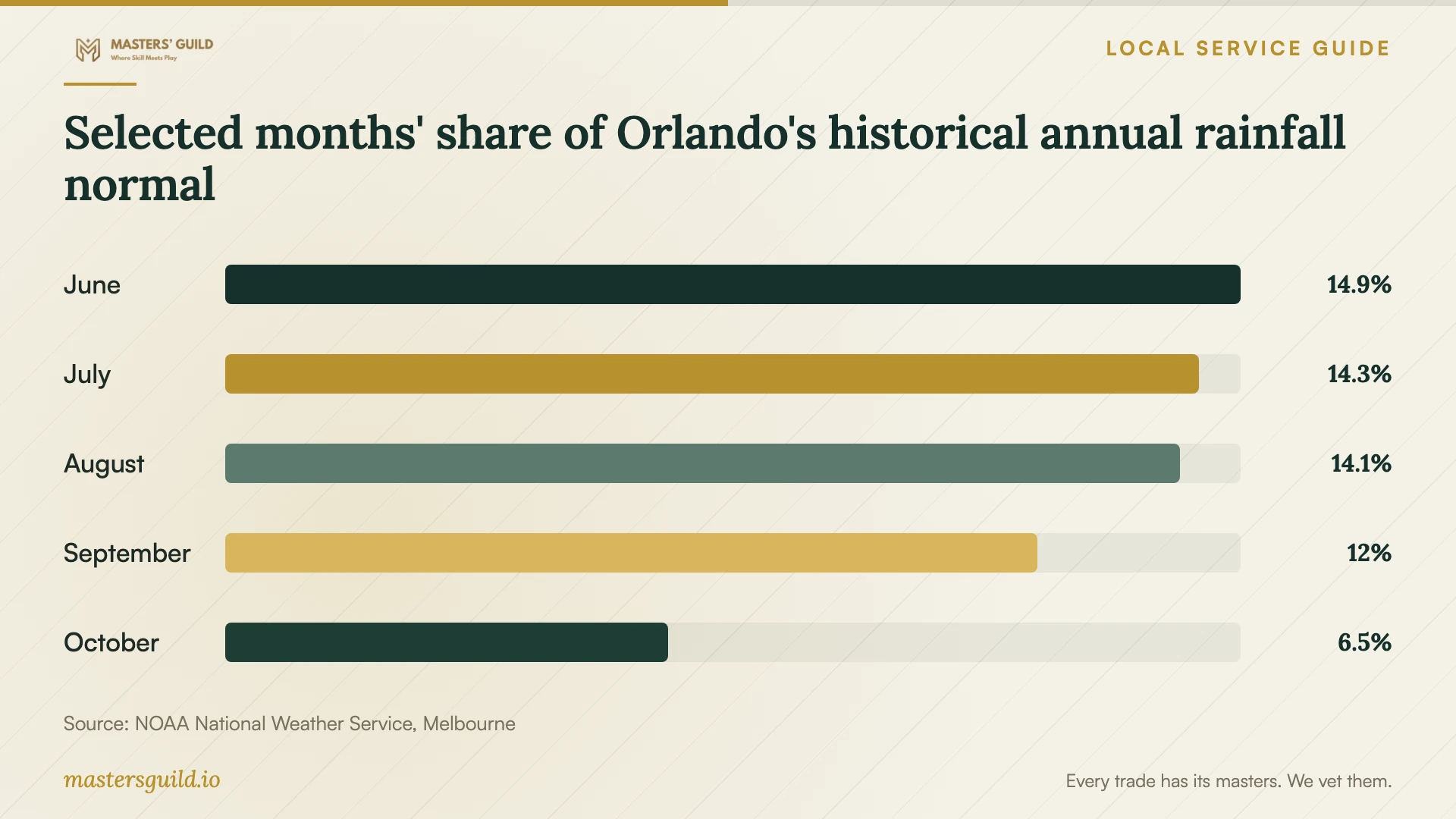
Use the historical rainfall chart to discuss inspection after rain. The National Weather Service's Orlando table reports higher monthly rainfall normals for June through September than for October. Ask the contractor to examine the actual water-entry path or damp material in your home. These historical averages cannot establish the cause of your mold problem. [3]
Compare cleanup and rebuilding estimates
Request separate descriptions and charges for investigation, drying, cleaning, removal, disposal, moisture-source repairs, and reconstruction. Have each contractor identify included rooms, affected materials, exclusions, and how you will approve extra work. If one quote covers cleanup and another includes rebuilding, ask for matching scopes before choosing.
Florida health guidance says workers may need to remove and replace materials they cannot clean, including drywall, carpet padding, and insulation. Ask which materials the contractor proposes to retain and how they will make that decision. Include replacement work in the budget discussion before accepting a cleanup-only estimate. [2]
Request references for similar cleanup work and ask which remediation guidelines the crew will follow. Florida's Department of Health identifies the Department of Business and Professional Regulation as the agency responsible for licensing mold assessors and remediators. Request credential details and verify the requirements for your proposed work with that agency. [2]
Agree on completion documentation before signing. Request photographs, a list of removed materials, moisture-repair records, and the contractor's proposed checks before closing walls. Identify who will review the finished work, what that review includes, and whether the estimate covers it.
Prepare your home and coordinate construction
Photograph visible growth without opening walls or disturbing damaged materials. Florida health guidance says disturbing moldy materials can release spores and mold particles into the air. Have the contractor explain which belongings you should move, which spaces you should avoid, and how the crew will protect remaining contents. [2]
For associated construction under Orlando's permit process, identify who will submit the application and plans, arrange inspections, and confirm closure. The city accepts digital plans through ProjectDox after application processing. Its guide says review times vary by project scope. Ask for separate schedules for cleanup and permitted reconstruction. [1]
Compare the completed work with the contract before final payment. Collect cleanup and repair records, review unfinished items, and request instructions for checking the affected area after rain or air-conditioning use. Keep those records with any applicable permit documents.
Selected months' share of Orlando's historical annual rainfall normal
Local details that affect your job
Orlando paperwork for construction above $5,000
For projects covered by its permit process, the City of Orlando says a project value exceeding $5,000 requires filing a Notice of Commencement with the Orange County Comptroller's Office before work begins. You must post a certified copy at the job site and provide a copy to the city. If cleanup includes reconstruction, confirm the applicable scope and paperwork with Permitting Services at 407.246.2271 before setting the construction start date. [1]
Florida humidity guidance affects the inspection plan
Florida's Department of Health recommends keeping indoor humidity below 60%. If you have central air conditioning and need a dehumidifier to reduce humidity below that level, the department recommends having the air-conditioning system examined for problems. Apply that statewide guidance to your home by arranging an equipment examination alongside cleanup when those conditions apply. Identify who will authorize and complete any resulting repairs. [2]
Choose your next step
| What you find | Next step | Question to resolve |
|---|---|---|
| A patch smaller than about 10 square feet | Consider Florida's small-area cleanup guidance if health concerns and conditions allow. | Can you clean and dry the material and correct the moisture source? |
| More than 10 square feet or extensive water damage | Consult detailed remediation guidance and discuss the work with an experienced contractor. | Which materials need investigation, cleaning, or removal? |
| Growth returns after cleaning | Investigate the underlying moisture problem. | Who will fix the leak or other moisture source? |
| Suspected air-conditioning contamination | Consult the EPA air-duct guidance linked by Florida's Department of Health before further action. | Who will evaluate the equipment and define the next steps? |
| Sewage or other contaminated-water damage | Call a professional experienced with contaminated-water cleanup and repair. | Does the crew have experience with this type of damage? |
Your hiring checklist
- Photograph visible growth without disturbing affected materials.
- List previous leaks, odors, water entry, and cleanup attempts.
- Identify who will investigate and correct the moisture source.
- Request credential details, relevant references, and a written scope.
- Separate cleanup, material removal, repairs, and rebuilding in the estimate.
- Agree on access, belongings, household arrangements, and any equipment shutdown.
- Confirm responsibility for applicable construction paperwork and inspections.
- Collect completion records and compare finished work with the contract.
Frequently Asked Questions
Do I need testing before hiring?
Florida's Department of Health says sampling is unnecessary in most cases when you can see mold. It also says no health or exposure-based standards exist for evaluating sampling results. Ask the provider to explain the purpose of any proposed test and how the result would affect the work. [2]
Does black mold need a different cleanup?
Florida health guidance says you do not need to identify the mold type to address a household problem. It recommends treating all indoor mold growth the same for removal and health-risk purposes. Describe the affected materials and moisture conditions when requesting help. [2]
Can bleach or ozone solve the problem?
Florida's Department of Health says bleach or other chemicals are unnecessary in most cases and recommends cleaning away growth or removing affected materials. It advises against ozone generators because ozone irritates lungs and is unlikely to address an indoor mold problem. Request a plan for moisture correction and removal. [2]
Does mold cleanup require an Orlando permit?
The City of Orlando guide describes construction and renovation permitting but does not establish a rule for mold cleanup alone. If your scope includes rebuilding or moisture-source repairs, ask Permitting Services which permits apply. For permitted work, the city directs owners to complete required inspections and confirm that the permit reaches final status. [1]
Sources and scope
This guide combines the sources below with practical planning guidance. Figures apply to the stated geography and period; request a written quote for your property.