
Local service guide
Duct and Vent Cleaning in Orlando: Hiring Guide
Arrange Duct and Vent Cleaning in Orlando by asking a contractor to inspect your system and show you the contamination before you approve work. EPA recommends cleaning as needed for substantial visible mold on hard-surface ducts or other system components, pests, or excessive debris. Get a written whole-system scope and address moisture or damaged duct material before approving cleaning. [1]
Decide whether cleaning addresses your problem
Describe what you have noticed: particles blowing from supply registers, evidence of pests, water stains or suspected growth inside the system. EPA identifies substantial visible mold on hard-surface ducts or other system components, vermin and excessive dust or debris as reasons to consider cleaning. Ask the inspector to show you the affected area and explain the cause before recommending treatment. [1]
For dust limited to a return grille, clean the accessible grille and check the filter first. EPA says dusty return registers do not demonstrate heavy deposits inside the ducts. Use the filter efficiency your equipment manufacturer recommends and check that air cannot bypass the filter through gaps. [1]
For uneven cooling or concerns about energy use, request an assessment of equipment condition and duct leaks. EPA finds little evidence that cleaning ducts alone improves system efficiency. OUC advises customers to assess leaks before deciding whether to repair or replace ducts. [1] [2]
Compare the scope before the total price
EPA recommends written estimates from at least three providers. Give each the same description of your problem, system count and access arrangements. Request a total price, a list of included components and a process for approving additional charges before work begins. [1]
Ask the provider to address supply and return ducts, registers, grilles, coils, drain pans, blower and air-handler housing in the scope. EPA warns that an uncleaned contaminated component can contaminate the system again. Have the provider identify exclusions and explain who will handle components outside their proposed work. [1]
Have the contractor identify sheet metal, flexible duct and fiberglass sections before choosing tools. EPA recommends soft-bristled brushes for fiberglass duct board and fiberglass-lined ducts. It also recommends outdoor vacuum exhaust or HEPA vacuum equipment for indoor exhaust. Ask how workers will protect furnishings and seal and reinsulate access openings. [1]
Resolve moisture before approving mold treatment
For a musty odor or water near the air handler, include evaporator coils, liner surfaces, drain pans and drain lines in the inspection. Florida's Department of Health directs homeowners to inspect these components. EPA advises checking insulation near cooling coils for wet spots and correcting the conditions behind mold growth to prevent recurrence. [1] [3]
Do not approve treatment based on a petri-dish demonstration. EPA explains that normal household air contains microorganisms, so growth on a settling plate does not establish duct contamination. Florida health guidance discourages routine mold sampling to determine whether a home has a mold problem. Ask the provider to show evidence from the affected component and explain the purpose of any proposed testing. [1] [3]
Request a replacement assessment for wet or moldy fiberglass duct material, following EPA guidance. For a separate mold assessment or remediation service, Florida's Department of Health identifies the Department of Business and Professional Regulation as the licensing regulator. Ask the provider to identify the proposed service and explain how you can verify their credentials. [1] [3]
Keep chemical treatments separate from physical cleaning in the quote. Ask for the product label and an explanation of its approved uses for your duct material. EPA reports no registered biocides for fiberglass duct board or fiberglass-lined ducts and advises against routine coatings that encapsulate contaminants. EPA also says duct cleaning has not demonstrated preventive health benefits. [1]
Prepare for the visit and inspect the result
Ask how long the crew expects to work and how long your household must go without cooling. Describe access to the air handler, attic entrance and rooms with registers. Choose a time when someone can review inspection findings and approve changes to the written scope.
For mold cleanup in a contaminated air-conditioning system, Florida's Department of Health recommends shutting the system down during cleaning or removal. Discuss the shutdown window before booking and arrange somewhere else to spend that period if your household needs it. [3]
Before paying, ask the crew to show you the cleaned components or photographs of inaccessible areas. EPA recommends visual inspection to verify cleanliness. Review the agreed scope, ask the contractor to demonstrate system operation and check that workers have sealed and insulated access openings. [1]
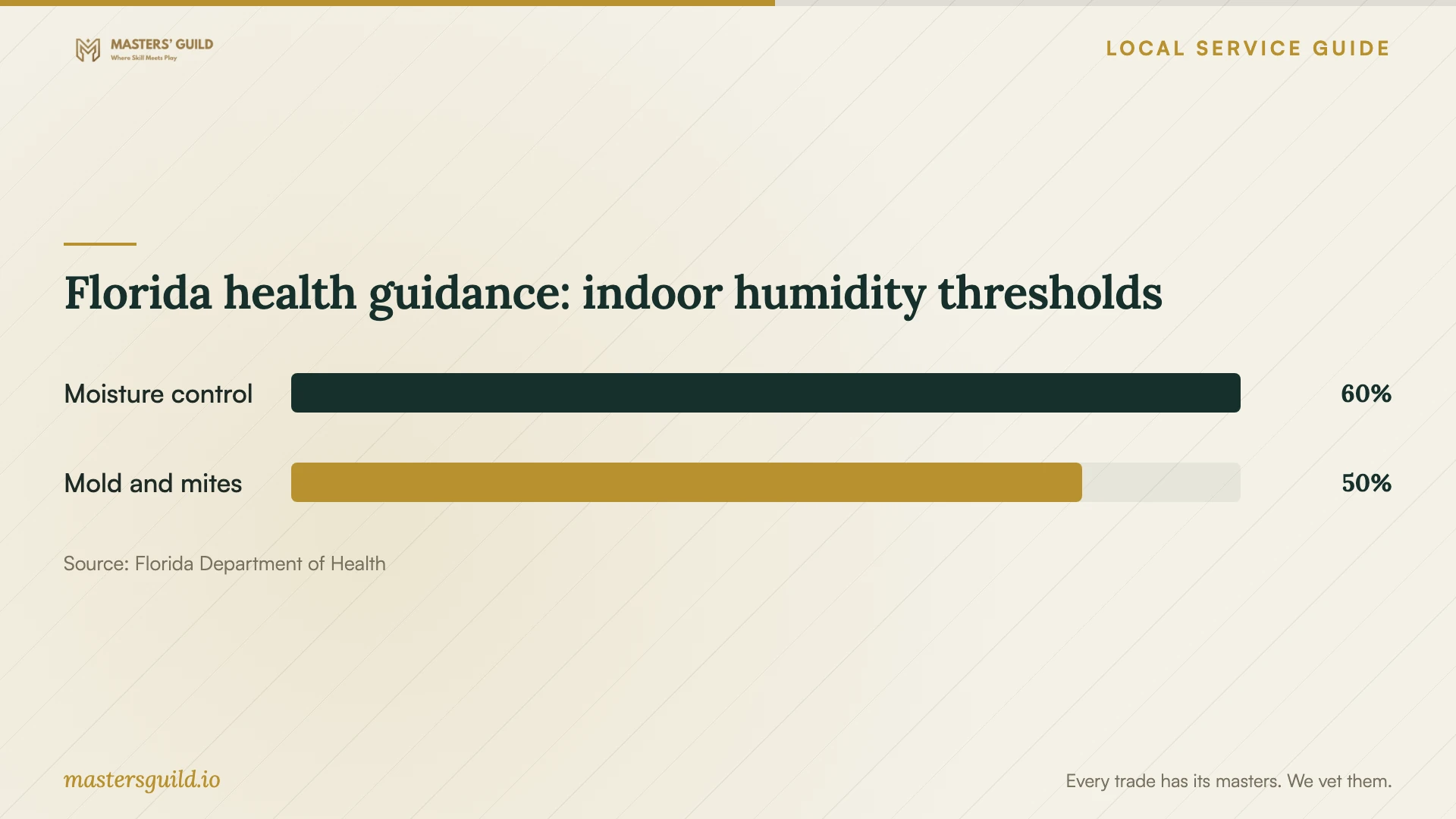
Florida health guidance: indoor humidity thresholds
Local details that affect your job
Arrange OUC repair documentation before work starts
OUC's duct repair or replacement rebate covers 100% of cost up to $100 for eligible residential and business electric customers; water-only customers do not qualify. For repairs, the invoice must separately itemize the amount for each system repair and state the repair method. For replacement, it must separately itemize the new duct system and identify the system type and sealing method. OUC requires mastic, or mastic with embedded UL-approved duct tape, on accessible boots, joints and seams in the attic and accessible air-handler closet, plus proper draft stop seals at ceiling penetrations. Submit dated receipts or invoices through myOUC within six months of purchase. OUC pays approved rebates as a bill credit. Ask for these details before authorizing repairs alongside cleaning. [2]
Use Florida humidity guidance to choose an AC assessment
Florida's Department of Health recommends indoor humidity below 60% and identifies below 50% as best for controlling mold growth and dust mites. If you have central air conditioning and need a dehumidifier to get below 60%, the department recommends examining the AC system for problems. Apply this statewide guidance at your home by recording humidity readings and requesting an equipment and drainage assessment when dampness persists. The chart compares those published thresholds; it does not measure your home's humidity or establish a need for duct cleaning. [3]
Choose the next step from the inspection findings
| Finding | Next step | Supporting guidance |
|---|---|---|
| Dust on return grille alone | Clean the accessible grille and check filter fit | EPA says dusty return registers alone do not establish heavy duct contamination. |
| Excessive debris or particles leaving registers | Request inspection and a whole-system cleaning scope | EPA identifies these conditions as reasons to consider cleaning. |
| Musty odor or standing water near the air handler | Request moisture, coil and drainage checks | Florida health guidance directs homeowners to inspect air-handler components and water sources. |
| Wet or moldy fiberglass duct material | Request a replacement assessment | EPA recommends removal and replacement of this material. |
| Leaking ducts | Compare repair and replacement and check OUC eligibility | OUC advises assessing leaks before deciding whether repair or replacement is necessary. It offers a rebate for qualifying repair or replacement. |
Your hiring checklist
- Describe your observations and ask the inspector to show you the affected components.
- Give each bidder the same system count, equipment locations and access constraints.
- Request a written component list, total price and approval process for additional work.
- Ask the provider to identify duct materials and explain the cleaning method.
- Separate cleaning, moisture repairs, duct replacement and chemical treatments in the quote.
- Agree on the cooling shutdown window and clear access to registers and equipment.
- Ask the contractor to prepare itemized repair documentation if you plan to apply for a rebate.
- Review before-and-after documentation and system operation before payment.
Frequently Asked Questions
How often should I arrange duct cleaning?
EPA recommends cleaning as needed rather than on a fixed schedule. Ask for evidence of substantial visible mold on hard-surface ducts or other system components, pests or excessive debris before approving work. Dust on a return grille alone does not establish a need for whole-system cleaning. [1]
Does OUC reimburse a cleaning-only job?
OUC's published program covers qualifying duct repair or replacement and does not list cleaning as eligible work. If your project includes repairs, request an invoice that separately itemizes each system repair amount and states the repair method. [2]
Should I approve a sanitizer for suspected mold?
Ask for evidence from the affected area, identification of the duct material and the proposed product label. EPA reports no registered biocides for fiberglass duct board or fiberglass-lined ducts. Discuss moisture correction and removal or replacement of affected materials before approving treatment. [1]
Will duct cleaning solve high humidity?
Do not assume cleaning will resolve the moisture source. Florida health guidance recommends examining central AC for problems if you need a dehumidifier to reduce indoor humidity below 60%. Ask for checks of equipment, condensate drainage and water sources alongside the contamination inspection. [3]
Sources and scope
This guide combines the sources below with practical planning guidance. Figures apply to the stated geography and period; request a written quote for your property.