
Local service guide
Arrange house cleaning in Omaha: Quotes and Preparation
Arrange house cleaning in Omaha by sending each cleaner the same room list, condition photos and priorities, then requesting a written total with applicable sales tax and extras. Ask the cleaner to assess shower-glass and faucet deposits: M.U.D. reports water hardness of about 170 milligrams per liter and describes calcium carbonate deposits on fixtures. Agree on the cleaning method and expected result before booking. [1] [2]
Choose the work before choosing the visit
Describe the result you want instead of relying on a package name. For maintenance, request a list covering the kitchen, bathrooms, accessible surfaces and floors. For a detailed visit, identify the extra work you want, such as baseboards, cabinet fronts, shower buildup or appliance interiors. Have the cleaner confirm each item.
Send the number of rooms and bathrooms, the areas you want excluded, and photos of the toughest spots. Mention pet hair, clutter and delicate finishes. If you have a firm budget, rank the tasks and ask what the cleaner can complete within it. Agree on whether they should stop at the budget limit or contact you for approval to continue.
Include mineral deposits in the bathroom estimate
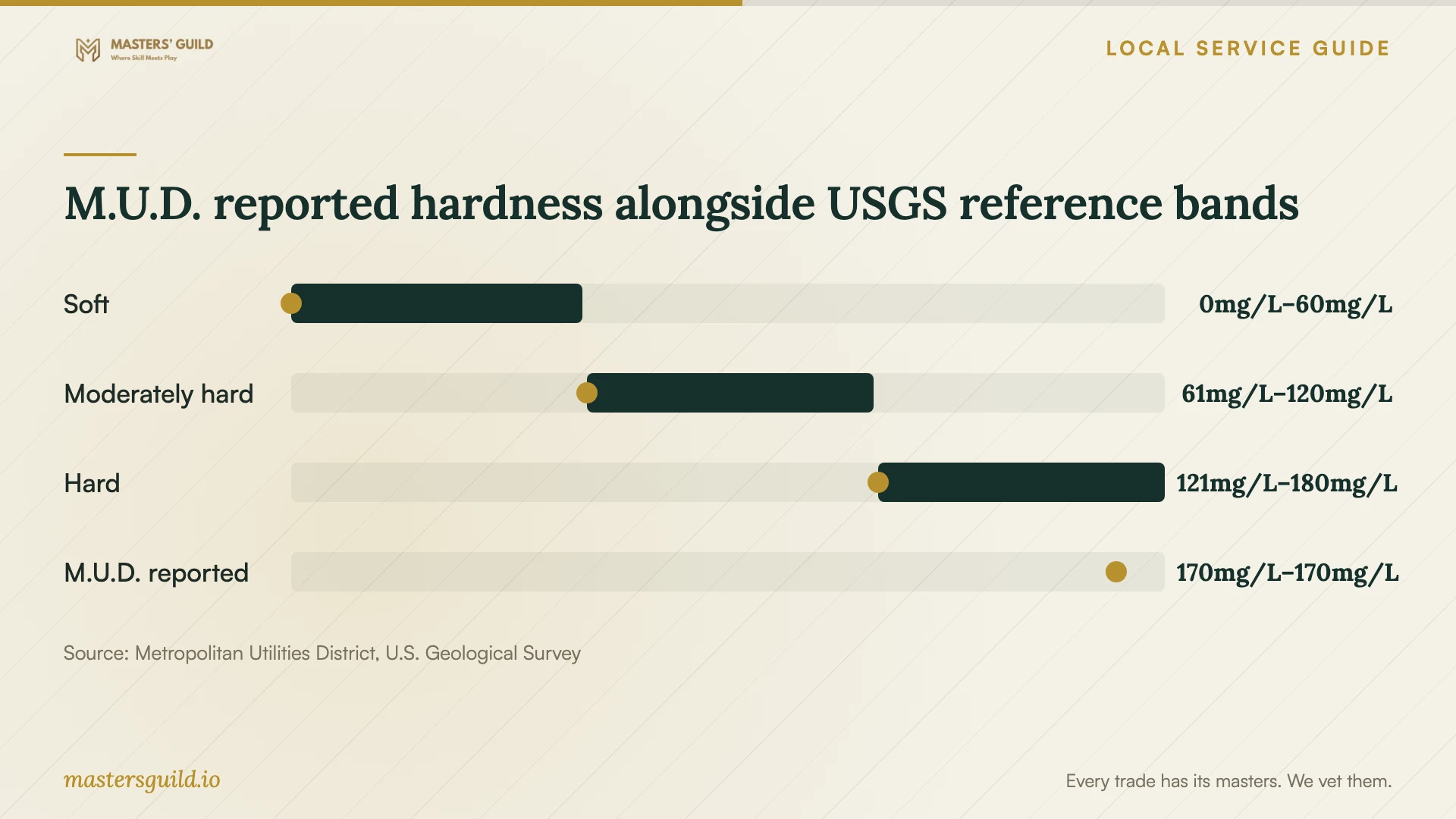
M.U.D. says it lime-softens its water to about 170 milligrams per liter, equivalent to 10 grains per gallon of hardness. The utility also describes small, tan calcium carbonate deposits on pipes and fixtures. USGS places 121 to 180 milligrams per liter in its hard-water reference category and connects hardness with soap residue and scale. [1] [3]
Photograph cloudy shower glass and deposits around faucets before requesting a quote. Ask whether the cleaner includes deposit removal, which products they propose, and whether your surface manufacturer permits that method. Identify natural stone, coated glass and plated fixtures so the cleaner can check compatibility. Request approval before scraping or using a different product.
Use the hardness chart as context for that conversation. M.U.D. reports a utility-level figure, rather than a measurement from your home after any treatment device. Ask the cleaner to assess the affected surfaces and explain the result they expect before agreeing to deposit removal. [1]
Compare the final payable amount
Nebraska’s sales-tax regulations include gross revenue from providing building-cleaning services in taxable gross receipts. Ask each cleaner whether the quoted amount includes applicable sales tax, and request a breakdown of the service charge, agreed extras and tax. [2]
Ask whether the offer uses a fixed price or an hourly rate. For hourly work, confirm the number of cleaners and whether the rate applies to each person or the whole team. Request an estimated total and a spending limit. For a fixed price, ask what conditions would trigger a change and require approval before extra work.
Request written estimates for your room list, the condition shown in your photos and the tasks you want completed. Include extras and applicable tax in the comparison. For recurring service, request separate first-visit and maintenance quotes, plus cancellation terms and any conditions attached to the recurring price. Keep the scope beside each total so you can see what you would receive.
Set access, supplies and accountability
Ask who will enter your home, whether the cleaner brings supplies and equipment, and how they handle accidental damage. Request evidence of current liability coverage and clarify whom you should contact about a missed task. Agree on the deadline for reporting concerns and the proposed remedy before the visit.
Provide parking and entry instructions, an arrival window and a contact number. Arrange pets, secure valuables and clear the surfaces you want cleaned. Point out rooms the cleaner should leave alone. Tell them about fragrance preferences and list any products you want them to avoid. Keep your instructions in the written booking record.
Plan a move-out clean around the inspection
Send the cleaner the landlord’s or buyer’s checklist before booking. Name the requested interiors, including oven, refrigerator, cabinets and closets, and confirm whether you will empty them. Arrange the visit after you remove belongings, with utilities available and enough time for a walkthrough before the inspection or key handover.
At the walkthrough, check the agreed tasks and photograph unresolved areas. Ask the cleaner to explain marks they could not remove without risking damage. Keep the invoice and written scope with your handover records. Avoid asking a cleaner to guarantee a deposit refund or inspection outcome that another person controls.
M.U.D. reported hardness alongside USGS reference bands
Local details that affect your job
M.U.D. water changes the bathroom scope
For a home supplied by M.U.D., flag tan fixture deposits and shower buildup during the estimate. The utility reports about 170 milligrams per liter of hardness after lime-softening and describes calcium carbonate deposits on fixtures. Ask for a surface-specific assessment and a separate price if deposit removal falls outside the agreed maintenance tasks. [1]
Nebraska tax changes quote comparison
Nebraska includes revenue from building-cleaning services in taxable gross receipts. Compare the final payable amounts and ask each cleaner to identify applicable sales tax. Use the service address when discussing the tax calculation; the state regulations generally locate a sale where the purchaser takes delivery of the service. [2]
Choose a cleaning scope for your goal
| Your goal | Scope to request | Confirm before booking |
|---|---|---|
| Maintain an occupied home | Kitchen, bathrooms, accessible surfaces and floors | Written task list, excluded rooms and recurring terms |
| Address accumulated buildup | Detailed cleaning of the specific areas in your photos | Methods, finish compatibility and spending limit |
| Remove shower or faucet deposits | Assessment and agreed treatment of affected surfaces | Whether deposit removal costs extra and what result the cleaner expects |
| Prepare an empty home for handover | Cleaning matched to your inspection checklist | Appliance and cabinet interiors, walkthrough time and access |
Your hiring checklist
- Send the same room list, priorities and condition photos to each cleaner.
- Identify shower deposits, delicate finishes and products you want avoided.
- Confirm included tasks, exclusions and appliance-interior charges.
- Request the total with applicable tax and approval terms for extra work.
- Ask about liability coverage, damage reporting and missed-task remedies.
- Arrange entry, parking, pets and access to the surfaces you want cleaned.
- Review the completed task list before a move-out inspection or key handover.
Frequently Asked Questions
How much should I budget for a cleaning visit?
Request written estimates for the same room list, condition photos and tasks, including extras and applicable tax. Ask for separate first-visit and recurring totals. For hourly work, confirm how the cleaner counts team hours and agree on a spending limit before booking.
Does Nebraska tax house-cleaning services?
Nebraska’s regulations list revenue from building-cleaning services as taxable gross receipts. Ask the cleaner to identify applicable sales tax and give you the final payable amount before booking. [2]
Should I request extra work for shower deposits?
Send photos and ask the cleaner to assess them. M.U.D. describes calcium carbonate deposits on fixtures and reports about 170 milligrams per liter of water hardness. Confirm whether removal forms part of the quote and which methods suit your finishes. [1]
What should I do before the cleaner arrives?
Clear the surfaces you want cleaned, secure valuables and arrange pets. Provide entry instructions and identify delicate materials. For move-out work, empty the agreed cabinets and appliances and share the inspection checklist.
Sources and scope
This guide combines the sources below with practical planning guidance. Figures apply to the stated geography and period; request a written quote for your property.