
Local service guide
Tile Setting in Norfolk, VA: Hiring and Permit Guide
For Tile Setting in Norfolk, choose a contractor whose credentials cover your planned work and request a quote that separates tile installation, surface preparation and any plumbing or electrical changes. Norfolk exempts floor coverings in one- and two-family homes from building permits, but requires a building permit for alterations that expose framing, including drywall removal. Establish the demolition scope and permit responsibility before booking a floor replacement or shower renovation. [1] [3]
Define the work before requesting quotes
Tell each bidder whether you want a dry-area backsplash, a floor replacement, a repair or a shower renovation. Include room measurements, photographs, your preferred tile size and pattern, and whether you will supply the tile. Ask the installer to inspect the existing surface before you accept a final price.
For a floor, ask the contractor to describe removal, subfloor work, leveling, transitions and changes to finished floor height. For a shower, request a written description of the backing and waterproofing system, drain work, niches and edge finishes. Have the contractor identify the products and installation instructions they plan to follow.
Agree on a procedure for concealed damage: the contractor should photograph the condition, explain the proposed repair and obtain your approval for the price before continuing. Ask who will assess any framing damage. Virginia's FLR flooring specialty includes subflooring and leveling materials but excludes floor joists and other structural flooring components. [3]
Match the contractor's credentials to the scope
Virginia's TMC specialty covers tile, marble, ceramic and terrazzo contracting, including preparation and installation. The state also permits this work under residential and commercial building classifications and home and commercial improvement specialties. Ask the bidder which credential covers your work rather than assuming that a tile installer needs only a general business license. [3]
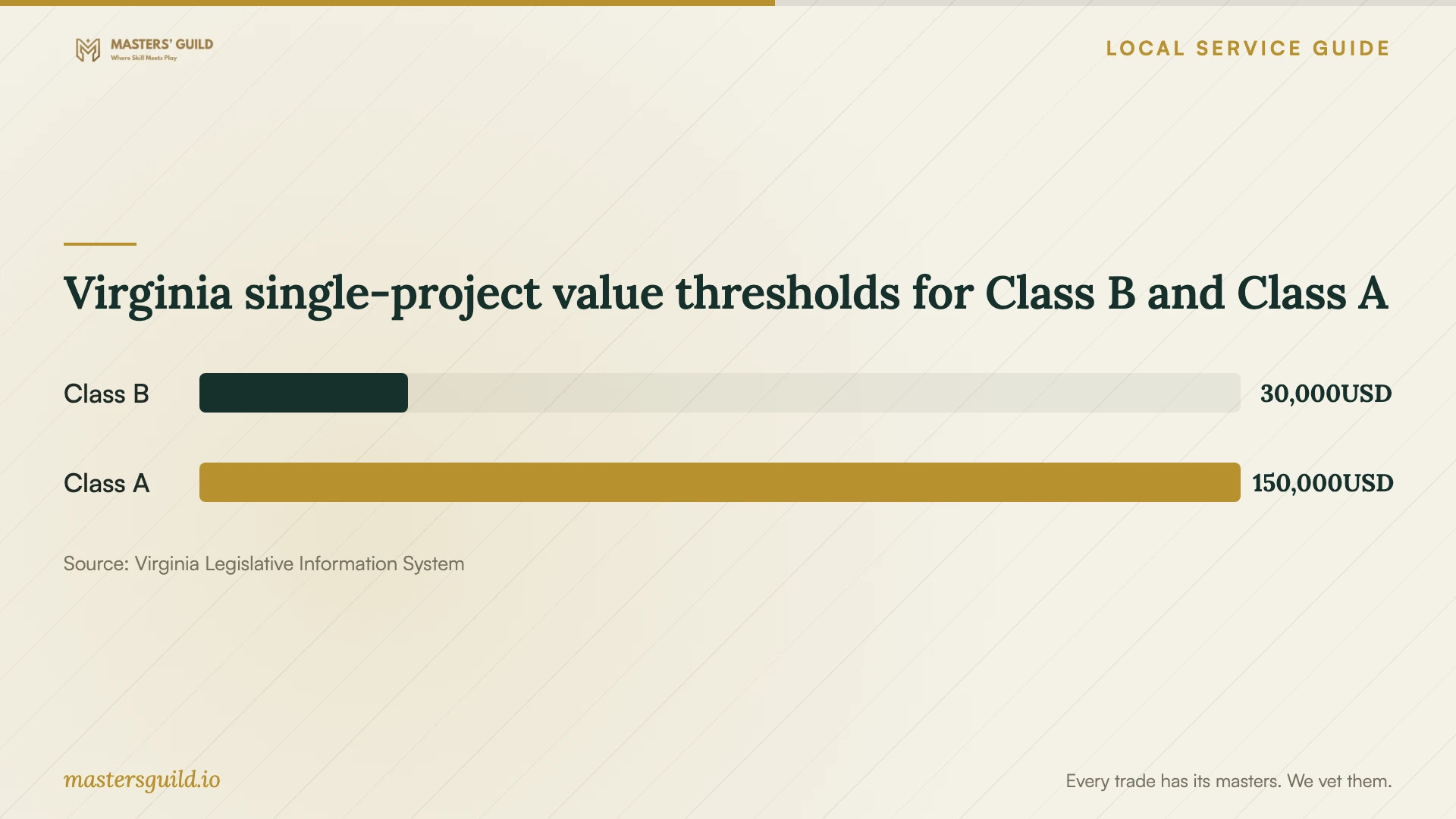
Virginia defines Class C project value as over $1,000 and below $30,000, Class B as $30,000 to below $150,000, and Class A as $150,000 or more. Annual business volume also affects the required class, and the law contains exemptions. Ask for the contracting business's license number, class and specialty; if the bidder claims an exemption, ask them to identify its basis. [4]
Request proof of current liability insurance and examples of completed work with a similar layout. For a shower, ask for photographs taken before the installer covered the backing and waterproofing. Contact a reference about communication, cleanup and how the contractor handled changes to the agreed scope.
Resolve permits before demolition
Norfolk lists floor coverings among building-permit exemptions for one- and two-family residences. Its permit guidance requires a building permit for residential or commercial alterations that require new framing or expose existing framing, and it names drywall removal as a permit-triggering activity. Do not treat a shower tear-out as a floor-covering replacement. [1]
Send the city a description of the planned removal and rebuilding if the scope falls between those examples. Include whether the contractor will remove drywall, expose framing, repair structural components or change plumbing. Norfolk's Building Permits and Reviews team accepts questions at 757-664-6565. Assign responsibility for applications and inspection scheduling in your agreement. [1]
Compare complete quotes and plan room access
Ask each contractor to price the same scope. Request separate entries for tile supply, removal and disposal, preparation, installation, grout, trim, waterproofing and any trade work. Identify allowances and exclusions. For owner-supplied tile, agree who calculates the order quantity and who handles damaged pieces or shortages.
These sources do not establish a Norfolk tile installation price range. Use written site-specific quotes to set your budget. The chart shows Virginia contractor license thresholds, which help you check credentials as the project grows; those figures are not installation prices. [4]
Before work starts, agree on material storage, dust protection, debris removal and access through the home. Ask for separate dates for demolition, installation and return to use, including the product-specific waiting periods. If this is your only bathroom, arrange an alternative before accepting the schedule. At handover, request care instructions, warranty terms and spare tile.
Virginia single-project value thresholds for Class B and Class A
Local details that affect your job
Norfolk separates floor coverings from framing exposure
For a one- or two-family home, Norfolk exempts floor coverings from building permits. The city requires a permit for alterations that expose framing and includes drywall removal in its examples. Before approving shower demolition, confirm the building-permit scope with Building Permits and Reviews at 757-664-6565. [1]
Trade applications require matching credentials
Norfolk takes electrical, mechanical and plumbing permit applications through its online E-Permitting Portal. Applicants enter contractor license information as it appears in DPOR. The city allows Virginia Class A, B or C contractors to obtain permits within their respective trade; master-license holders may obtain permits within their trade for projects not exceeding $1,000 in scope. Ask who will apply when your tile project includes plumbing changes or electrical work. [2]
Choose the next step for your tile project
| Planned work | Scope or permit distinction | Next step |
|---|---|---|
| Floor covering in a one- or two-family home | Norfolk lists floor coverings as building-permit exempt. | Confirm whether removal or repairs will also expose framing. |
| Shower renovation with drywall removal | Norfolk names drywall removal as work requiring a building permit. | Assign permit responsibility before demolition. |
| Subfloor replacement or leveling | Virginia's FLR specialty includes this preparation but excludes structural floor components. | Ask who will handle any joist repair discovered during removal. |
| Plumbing changes or electrical work | Norfolk restricts trade permit applicants to their respective trade. | Identify the qualified trade contractor and application plan. |
Your hiring checklist
- Photograph the room and list the tile areas, layout and fixtures you want to retain.
- Arrange a site inspection and ask for a written preparation and demolition scope.
- Request the contracting business's license number, class, specialty and insurance documentation.
- Confirm the permit plan before authorizing drywall removal or framing work.
- Name the plumbing or electrical contractor and assign application and inspection responsibilities.
- Compare quotes with the same materials, allowances, disposal and finishing work.
- Agree on written approval for concealed-damage repairs and other price changes.
- Confirm room access, return-to-use instructions, cleanup and warranty documents.
Frequently Asked Questions
Do I need a building permit to replace a tile floor?
Norfolk exempts floor coverings in one- and two-family residences. If the project includes framing exposure or new framing, the city requires a building permit. Describe the removal and repair scope to the city before work starts if you are unsure which rule applies. [1]
Does Virginia recognize a tile contractor specialty?
Yes. Virginia defines the TMC tile, marble, ceramic and terrazzo specialty. Residential and commercial building classifications and home and commercial improvement specialties can also cover this work. Ask which credential covers the proposed project and check the business's license class. [3] [4]
Can the flooring contractor repair damaged floor joists?
The FLR flooring specialty excludes floor joists and other structural components, although it includes subfloor replacement and leveling. Ask the contractor to identify the credential and person responsible for structural repairs before you approve additional work. [3]
How should I budget for a shower tile project?
Request a site-specific quote covering demolition, backing, waterproofing, tile, finishing and any plumbing work. Ask for allowances for concealed repairs and a written change approval process. Keep the tile-setting price distinct from the price for other renovation work.
Sources and scope
This guide combines the sources below with practical planning guidance. Figures apply to the stated geography and period; request a written quote for your property.