
Local service guide
Lawn Mowing in Norfolk, VA: Plan Your Service
Arrange Lawn Mowing in Norfolk, VA by having each provider quote the same mowing area, identify your grass, agree on a cutting height, and explain clipping cleanup. Include protection for drainage features and removal of collected yard waste. Norfolk assigns lawn services responsibility for removing the yard waste they generate, so settle disposal before booking. [1]
Define the job before comparing quotes
Send each provider photos of the front and back lawn, gate openings, slopes, and areas around beds or fences. Identify the areas you want mowed and the edges you want trimmed. Have the provider list mowing, edging, trimming, pavement cleanup, and waste removal as included work or separate charges.
Request a separate first-visit quote for tall grass, fallen branches, or accumulated leaves. Get the recurring visit price after that cleanup, plus any charge for bagging or haul-away. Request property-specific written quotes to set your budget, and compare the total for the same scope of work.
Before accepting an offer, agree on payment timing, cancellation terms, and who will approve extra work. Request evidence of insurance and a contact for reporting damage. Choose a provider who explains the proposed work and puts the scope in writing.
Match the schedule to your grass
Have the provider identify your turf before recommending a recurring schedule. Virginia Cooperative Extension lists tall fescue and tall fescue with Kentucky bluegrass among adapted Coastal Plain choices, alongside warm-season grasses. Use that regional guidance to discuss your lawn's species and maintenance needs. [4]
Extension says cool-season grasses perform best during Virginia's spring and fall, while warm-season grasses thrive from mid-spring through mid-fall. It describes high mowing requirements for tall fescue during active growth and bermudagrass during summer, and lower mowing requirements for zoysiagrass than bermudagrass. Discuss how the provider will adjust visits as growth changes. [4]
For an October booking, decide whether you want ongoing mowing, leaf work, or both. Extension says repeated frost events lead to winter dormancy in warm-season grasses. Agree on how you will pause or reduce mowing visits when your lawn stops growing, and keep leaf removal separate from the mowing commitment. [4]
Choose clipping and fall-leaf handling
Norfolk recommends mulch mowing and leaving grass clippings on the lawn. The city explains that mulching mowers cut clippings into smaller pieces to reduce clumping. Discuss whether the crew's equipment suits this approach and how it will clean clippings from walkways and drainage areas. [3]
For fall leaves, Norfolk suggests mulching them into the lawn, using them in flower beds, or composting them. Have the crew quote your chosen treatment. The city warns that street sweepers cannot handle large amounts of leaves that residents rake or blow into the street, and that leaves can clog stormwater pipes. [3]
Include removal in the agreement when the provider collects clippings or leaves. Norfolk gives residents curbside collection instructions and assigns lawn services and contractors responsibility for removing the yard waste they generate. Confirm where the crew will take collected material and whether the price includes that trip. [1]
Walk the drainage areas with the crew
Norfolk distinguishes grass channels, dry swales, infiltration trenches, and planted rain gardens in its stormwater guidance. For grass channels and dry swales, the city directs owners to mow no shorter than 3 inches and remove clippings. Show these areas to the provider and record their cutting height apart from the main lawn. [2]
Mark rain-garden plants and stone-filled infiltration trenches for separate care. Norfolk describes rain-garden maintenance as watering, pruning, weeding, and replacing mulch. The city cautions against regularly driving over infiltration trenches because doing so can compact the area or crush the perforated pipe. As a practical precaution, agree on a mower route that avoids the trench altogether. [2]
Before approving work that would fill, flatten, or remove a designated stormwater facility, contact the city. Norfolk requires permission from its Storm Water Engineer or designee before an owner removes or modifies a stormwater best management practice. Confirm the feature's status before expanding the mowing job into landscape alteration. [2]
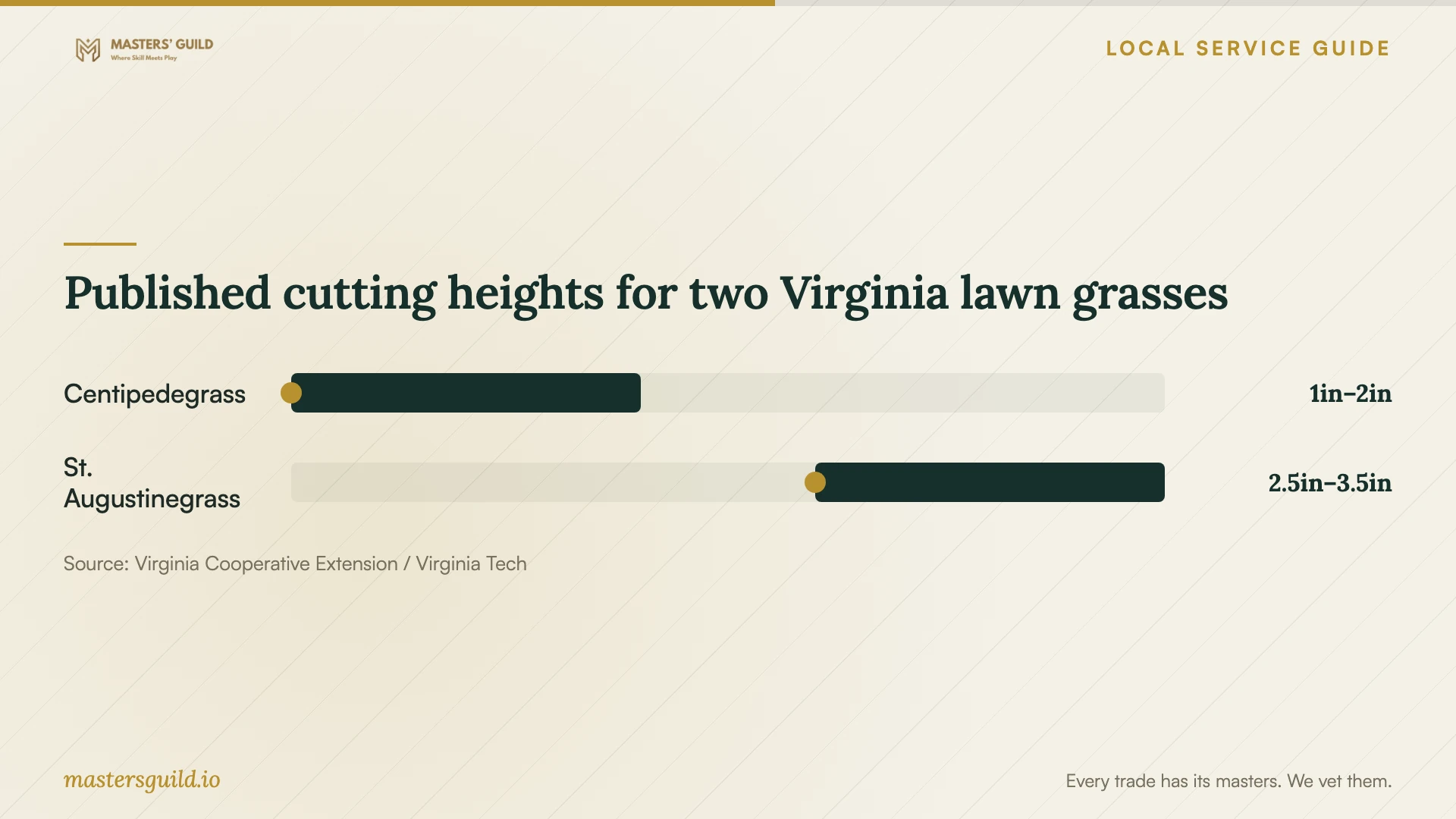
Published cutting heights for two Virginia lawn grasses
Local details that affect your job
Contractor waste needs contractor removal
Norfolk states that lawn services and contractors must remove yard waste they generate. Put haul-away in the scope when you request bagging, leaf collection, or branch cleanup. For yard waste you handle yourself, the city collects it on regular trash day and specifies clear bags or properly cut, tied, and bundled material. [1]
Drainage turf needs a separate cutting instruction
Norfolk directs property owners to keep grass channels and dry swales mowed no shorter than 3 inches and remove clippings. Label those areas during the walkthrough so the crew keeps their cutting height separate from the main lawn. Include clipping removal from these features in the visit instructions. [2]
Get permission before changing stormwater facilities
Norfolk requires permission from its Storm Water Engineer or designee before removing or modifying a stormwater best management practice. If a provider proposes changing a swale or rain garden to ease mowing, confirm its status and the permission needed before approving the change. [2]
Choose the service scope for your lawn
| Your situation | Service to discuss | Detail to confirm |
|---|---|---|
| Tall fescue during active growth | A schedule that accommodates its high mowing requirement | Grass identification and adjustments as growth changes |
| Bermudagrass during summer | Recurring mowing and edging | Visit frequency and control of growth into beds |
| Routine clipping handling | Mulch mowing, which Norfolk encourages | Cleanup from pavement and drainage features |
| Collected leaves or clippings | Collection with contractor removal | Haul-away included in the quote |
| Grass channel or dry swale | Separate drainage-area mowing instructions | At least 3 inches of grass height and clipping removal |
Your hiring checklist
- Photograph the lawn, gates, slopes, beds, and drainage features for each quote.
- Have the provider identify the grass and write down the proposed cutting height.
- Separate first-visit cleanup from the recurring mowing price.
- Specify edging, trimming, pavement cleanup, and clipping treatment.
- Include haul-away when the crew will collect yard waste.
- Agree on access, pet arrangements, and a wet-ground rescheduling plan.
- Mark drainage turf, rain-garden plants, and equipment routes before work starts.
- Confirm payment, cancellation, extra-work approval, and damage-reporting terms.
Frequently Asked Questions
Should I book weekly or biweekly mowing?
Have the provider base the interval on your grass and current growth. Extension describes different seasonal growth patterns and mowing demands among Virginia turfgrasses. Agree on a starting interval and a way to change it after reviewing the lawn. [4]
Can the crew leave bagged waste for city pickup?
Norfolk states that lawn services and contractors must remove the yard waste they generate. Include disposal in the quote when the crew collects material, and confirm the removal arrangements before the visit. [1]
Should I ask the provider to bag grass clippings?
Norfolk encourages mulch mowing and returning clippings to the lawn. Discuss whether the provider's equipment suits that approach. For grass channels and dry swales, the city's separate maintenance guidance calls for removing clippings. [2] [3]
Can the provider mow my rain garden with the lawn?
Mark the rain garden and agree on separate care before work starts. Norfolk describes rain-garden maintenance as watering, pruning, weeding, and mulch replacement. The city requires permission before removing or modifying a designated stormwater best management practice. [2]
Sources and scope
This guide combines the sources below with practical planning guidance. Figures apply to the stated geography and period; request a written quote for your property.