
Local service guide
Appliance installation in Norfolk, VA
For appliance installation in Norfolk, arrange an installer after you confirm the model, available hookups and removal plan. Ask the installer to separate appliance connection from any new plumbing, wiring or fuel-system work. Virginia requires permits for alterations to those systems, with specified replacement exemptions; confirm your scope with Norfolk before work starts. Send photos and the installation manual when requesting a quote, and identify who will handle permits, testing and the old appliance. [1] [2]
Match the installer to the hookup work
Send the appliance model number, installation instructions and photos of the existing connections before booking. Include the space behind the appliance, the shutoff valve, receptacle and any dryer vent. Ask the installer to identify which parts of the job they accept and which need a separate trade contractor.
Virginia’s permit rules cover alterations to water supply, drainage, vents, electric wiring and fuel-supply systems. A purchase described as a replacement can still involve this work. Ask for a written scope that distinguishes connecting the appliance from relocating a drain, installing a circuit or changing a gas supply. [2]
For work requiring a Norfolk trade permit, ask for the applicant’s license information and trade. The city states that Virginia Class A, B and C contractors may obtain permits within their respective trades. It also allows people holding a Virginia master’s license to obtain permits within their trade for projects not exceeding $1,000 in scope. [1]
Resolve permit questions before delivery
Ask Norfolk to assess the work description rather than relying on a blanket statement that appliance replacements need no permit. Virginia exempts certain ordinary repairs, including replacement of non-gas, non-oil mechanical appliances in the residential occupancy groups specified in the regulation. The exemption does not establish that every kitchen or laundry appliance installation qualifies. [2]
The regulation also permits the building official to require permits for otherwise exempt items in a special flood hazard area. If that applies to your property, include it in your inquiry. For a gas appliance, confirm the permit requirement instead of relying on the exemption for non-gas mechanical replacements. [2]
Agree on who will apply and how required inspections will fit the installation schedule. Norfolk directs trade applicants to its online E-Permitting Portal, where the account requires contractor license information matching DPOR records. Applicants select the trade application, provide the requested information and attachments, and submit it for review. [1]
Prepare a quote that covers the whole visit
Request separate prices for delivery, installation, connection parts, trade work, permits and removal. Ask whether the installer will return if the delivery arrives late or the appliance does not fit, and what that return visit would cost. Compare quotes against the same written scope.
Measure the appliance opening and the delivery route, including doorways, stair turns and elevator access. Compare your measurements with the model’s installation instructions. Tell the installer about parking restrictions, building delivery hours and any landlord or association approval you need.
Before the installer leaves, request a demonstration of the checks required by the manufacturer. Ask them to show you the water shutoff where relevant, explain user maintenance and record any unfinished work. Keep the invoice, model details and any permit or inspection records together.
Consider ventless drying before changing the laundry space
EPA’s ENERGY STAR guidance explains that heat-pump dryers remove moisture through a condenser and do not need an exterior dryer vent. The condensed water must drain or collect in a tank that the user empties after each load. Ask the installer to check the proposed drainage arrangement and the selected model’s instructions before ordering. [5]
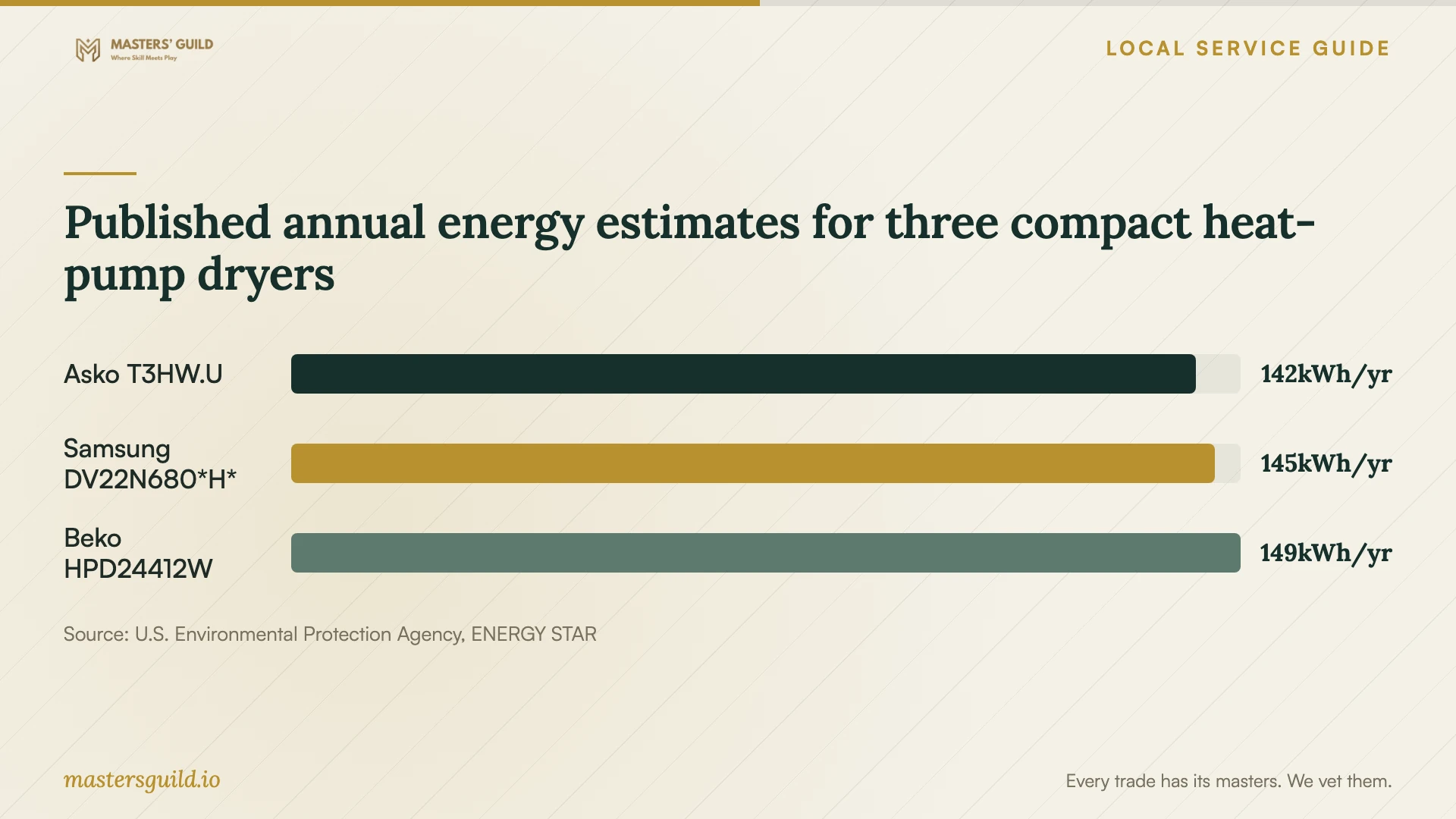
The chart compares three compact ventless 240V heat-pump dryer listings from the national ENERGY STAR product finder. EPA lists capacities of 4.2 cubic feet for Asko T3HW.U, 4.0 for Samsung DV22N680*H* and 4.1 for Beko HPD24412W. Use these as examples when discussing space and electrical compatibility, then verify the exact model you plan to buy. [5]
Published annual energy estimates for three compact heat-pump dryers
Local details that affect your job
Book Norfolk bulk pickup before setting out the old appliance
Norfolk treats household appliances as bulk waste and requires requests by 3 p.m. the day before scheduled collection. You can request pickup through MyNorfolk or call 757-664-6510. Choose this option only after arranging who will disconnect and move the appliance to the curb; otherwise, ask the installer to price haul-away. [4]
Plan storage around the city’s collection rules
Norfolk allows bulk set-out from 5 p.m. the day before collection until 7 a.m. on collection day. Appliances must be free of trash and debris, with access clear of obstructions. The city limits regular bulk service to 12 collections per year and three cubic yards per collection, and warns that pickup can be delayed. Check your remaining allowance and arrange somewhere to keep the appliance if collection slips. [3]
Choose the next step for your installation
| Job situation | Next step | Reason |
|---|---|---|
| Replacement using existing hookups | Send the model and connection photos; confirm the applicable exemption with Norfolk. | Virginia provides specific ordinary-repair exemptions rather than a blanket appliance exemption. |
| New wiring, water supply or drain work | Arrange the relevant trade work and establish permit responsibility. | Virginia requires permits for alterations to these systems. |
| Gas appliance replacement | Confirm the scope and permit requirement before booking. | The cited mechanical-appliance replacement exemption excludes gas and oil equipment. |
| Laundry location without an exterior vent | Compare a heat-pump dryer and confirm drainage and electrical compatibility. | ENERGY STAR explains that heat-pump dryers need no exterior vent but produce condensed water. |
| Old appliance remaining after delivery | Price haul-away or request Norfolk bulk collection before its booking deadline. | The city includes appliances in bulk waste and requires requests by 3 p.m. the day before collection. |
Your hiring checklist
- Send the model number, installation manual and photos of existing hookups.
- Measure the appliance opening and the route from the delivery entrance.
- Ask the installer to identify connection work and any plumbing, wiring or fuel-system alterations.
- Confirm permit responsibility and inspection arrangements before work starts.
- Request itemized installation, parts, trade-work and removal prices.
- Choose haul-away or arrange city pickup and a plan for moving the old appliance.
- Request manufacturer-required testing and keep the completion records.
Frequently Asked Questions
Does an appliance replacement require a permit?
The answer depends on the equipment and work. Virginia exempts specified ordinary replacements but requires permits for alterations to wiring, plumbing and fuel systems. Ask Norfolk to review your exact scope, including any new connections and whether the property lies in a special flood hazard area. [2]
Who can obtain a Norfolk trade permit?
Norfolk states that Virginia Class A, B and C contractors may obtain permits within their licensed trades. Virginia master’s license holders may obtain permits within their trade for projects not exceeding $1,000 in scope. Ask your installer to identify the applicant before booking work that requires a permit. [1]
Can I leave the old appliance at the curb after delivery?
Coordinate delivery with a scheduled bulk pickup. Norfolk permits set-out beginning at 5 p.m. the day before collection and requires appliances to be free of trash and debris. Submit the pickup request by 3 p.m. the day before collection, and allow for possible delays. [3] [4]
What should I check before choosing a heat-pump dryer?
Confirm the model’s dimensions, electrical requirements and method of handling condensed water. ENERGY STAR explains that heat-pump dryers need no exterior vent; they drain the water or collect it in a tank for emptying after each load. Ask the installer to review your proposed location before purchase. [5]
Sources and scope
This guide combines the sources below with practical planning guidance. Figures apply to the stated geography and period; request a written quote for your property.