
Local service guide
Mold removal in Newark, NJ: Hiring and Cleanup
For mold removal in Newark, choose a contractor who can explain the moisture source, the affected materials and the cleanup plan before you approve work. Arrange the leak or moisture repair alongside remediation. EPA says homeowners can handle many patches under about 10 square feet, but contaminated water, suspected HVAC contamination and hidden growth call for additional precautions or professional help. New Jersey does not have a state certification program for mold-service companies, so check experience and references rather than accepting a claim of state certification. [1] [2]
Decide whether to clean or hire
Measure the visible patch without opening walls or pulling up flooring. EPA says that in most cases, you can handle an area under about 10 square feet yourself. That guideline does not settle every case: consider water damage, the water's source and your health concerns before starting. [2]
For a small hard-surface patch, EPA recommends detergent and water followed by complete drying. Wear gloves, goggles without ventilation holes and a properly fitting N-95 respirator to limit exposure. Consult a health professional before cleanup if you have health concerns. [2]
Hire someone experienced with contaminated-water damage if sewage or other contaminated water caused the problem. If you know or suspect that mold has contaminated the HVAC system, EPA says not to run it because it could spread mold through the building. Discuss that concern before booking a routine cleaning. [2]
Find the moisture source before approving work
Ask the inspector to explain how water reaches the affected area. New Jersey Department of Health recommends a building inspection when you cannot trace mold to a leak. Its guidance calls for identifying and correcting excess water before remediation. [1]
Describe the sequence: when you noticed the odor, whether it followed rain or a plumbing leak, and whether it returns after cleaning. Give the contractor photographs and a list of previous repairs. Ask who will handle moisture repairs and how the remediation contractor will coordinate with that person.
If you smell mold but cannot see its source, ask for an investigation plan before authorizing demolition. EPA identifies possible hidden locations behind drywall, under carpets and around leaking or condensing pipes. Disturbing hidden growth can release spores; EPA recommends considering an experienced professional. [2]
Compare written scopes before comparing totals
Request separate descriptions for investigation, moisture correction, cleanup, material removal and rebuilding. Ask the contractor to name the rooms and surfaces included, describe how workers will protect adjoining spaces, and state what happens if they discover more damage. Keep optional testing separate so you can discuss its purpose.
EPA advises checking references and hiring a contractor with mold-cleanup experience. Ask which government or professional remediation guidance the contractor follows. For references, ask about a similar moisture source and material type rather than a general cleaning job. [2]
Clarify whether the contractor intends to clean or discard affected materials. EPA says porous materials such as carpet and ceiling tiles may need disposal because complete removal can be difficult or impossible. It also advises against painting or caulking moldy surfaces before cleaning and drying them. [2]
Agree on testing and completion
Ask what a sample would establish. EPA says sampling is unnecessary in most cases with visible mold and that no federal mold or spore limits exist for checking compliance. If sampling serves a defined purpose, EPA recommends professionals with experience in designing sampling protocols and interpreting results. [2]
Agree on completion criteria before work begins. EPA's guidance includes correcting the moisture problem, removing visible mold and moldy odors, and revisiting the area for signs of water damage or renewed growth. Request photographs of the cleaned area and a record of the moisture repair. [2]
For ongoing prevention, EPA recommends indoor relative humidity below 60 percent, ideally between 30 and 50 percent. Use a humidity meter and discuss ventilation or dehumidification if you find persistent dampness. Do not treat a humidity reading as proof that hidden materials are dry. [2]
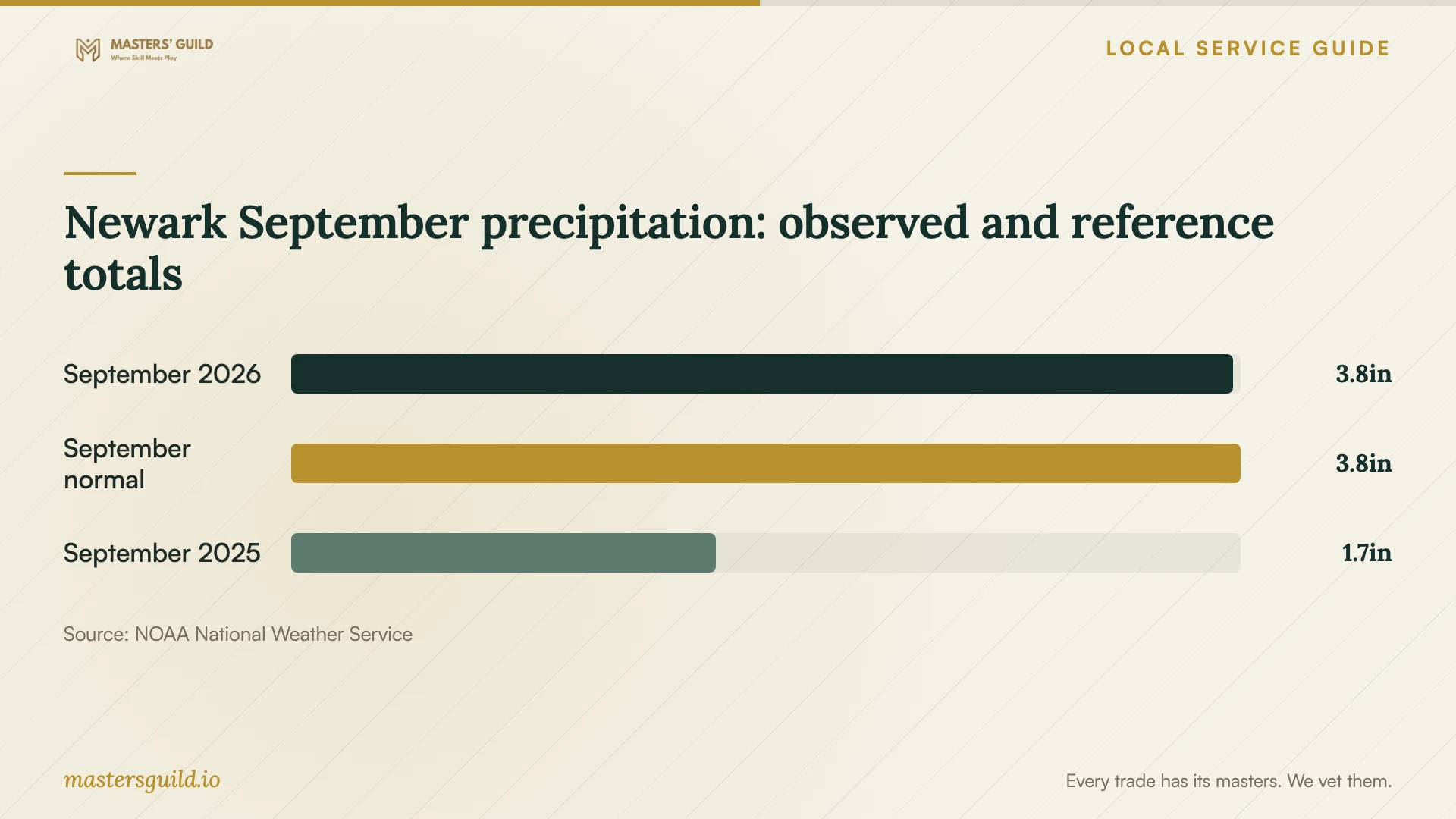
Newark September precipitation: observed and reference totals
Local details that affect your job
New Jersey credentials need an issuer check
New Jersey Department of Health states that the state has no certification programs for companies performing mold or general indoor environmental health services. It also says it neither endorses nor qualifies companies on its lists. For a Newark job, ask anyone claiming certification to name the issuing organization and provide a credential you can check. Treat a state-directory appearance as a lead for your own reference checks. [1]
Rental leak complaints should identify the building defect
New Jersey health guidance directs renters with unrepaired building leaks to their local building code office. It cautions that those offices generally lack mold regulations and can address structural deficiencies such as leaks or plumbing issues. If you rent in Newark, report the moisture problem to your owner or manager, keep dated photographs, and describe the unrepaired leak when contacting the local code office. The supplied guidance does not establish a Newark mold-specific enforcement process. [1] [2]
Choose the next step for your mold problem
| Situation | Next step | Reason |
|---|---|---|
| Small visible patch under about 10 square feet | Consider EPA-guided cleanup after reviewing water and health concerns | EPA says homeowners can handle many problems of this size |
| Large water damage or growth over 10 square feet | Consult EPA's broader remediation guidance and discuss a professional scope | EPA directs these cases to its remediation guidance for larger buildings |
| Sewage or contaminated-water damage | Hire a professional experienced with contaminated-water cleanup | EPA calls for professional help in these circumstances |
| Suspected mold in HVAC | Do not run the system; arrange an assessment | EPA warns that operating it could spread mold |
| Musty odor without a visible source | Consider an experienced professional for hidden-mold investigation | Opening affected materials can release spores |
Your hiring checklist
- Photograph the affected surfaces and record when you first noticed moisture or odor.
- Describe whether the water came from rain, plumbing, sewage or an unknown source.
- Ask who will investigate and repair the moisture source.
- Request references for comparable mold-remediation work and check credential issuers.
- Compare written scopes for cleanup, disposal, repairs and rebuilding.
- Ask what decision any proposed sampling will support.
- Agree on completion documentation and a follow-up inspection of the affected area.
Frequently Asked Questions
Do I need mold testing before hiring someone?
EPA says sampling is unnecessary in most cases when you can see mold. Ask the contractor to explain the purpose of a proposed test and how its result would change the work. EPA does not set federal mold or spore limits for compliance testing. [2]
Does New Jersey certify mold-removal companies?
New Jersey Department of Health says there are no state certification programs for companies performing mold or general indoor environmental health services. Ask who issued a claimed credential and check references. A listing on the department's website does not establish endorsement. [1]
Can the contractor paint over the affected area?
EPA advises cleaning mold and drying the surface before painting or caulking. Paint over moldy surfaces is likely to peel. Ask the written scope to distinguish cleanup, drying and finish repairs. [2]
What should I do about mold in a rental?
Report leaks and moisture problems to the owner or manager. New Jersey health guidance recommends contacting your local building code office about unrepaired leaks and cautions that its authority generally concerns building deficiencies rather than mold contamination. Keep a record of reports and photographs. [1] [2]
Sources and scope
This guide combines the sources below with practical planning guidance. Figures apply to the stated geography and period; request a written quote for your property.