
Local service guide
Arrange lawn mowing in Newark: scheduling and hiring
For lawn mowing in Newark, ask for a written quote that covers cutting height, trimming, cleanup, clipping disposal, and the total including tax. Agree on a schedule that follows grass growth and a plan for rain delays. Rutgers recommends removing no more than one-third of the grass height per cut; New Jersey taxes lawn mowing, and Newark assigns yard-waste collection by zone. Settle those details before booking recurring visits. [1] [3] [4]
Compare the same work in each quote
Send each provider the same description: the areas to mow, current grass height, gate width, steps or slopes, and obstacles around beds or trees. Include photos of the lawn and access route. Ask the provider to confirm whether their equipment can reach the rear yard before you accept a price.
Have the provider itemize mowing, edge trimming, clearing paved surfaces, and any bagging or hauling. Ask for a separate first-visit price if the grass needs extra work. For a recurring agreement, confirm how the provider charges for skipped visits, rescheduling, and an early end to the season.
New Jersey’s Division of Taxation lists lawn mowing as taxable repair and maintenance and gives a sales-tax rate of 6.625%. Compare the total you will pay, including tax and agreed extras. Ask the provider to identify tax on the invoice rather than leaving you to interpret a base price. [3]
Request property-specific quotes. Ask for proof of liability insurance and the name of the person you should contact if the crew damages a gate, sprinkler, or parked vehicle.
Set cutting height before visit frequency
Rutgers recommends a mowing height of 2.5 to 3.5 inches, particularly during summer, and warns that continuous cutting at 2 inches or lower weakens turf. Specify the agreed height in your service instructions rather than asking the crew to cut as short as possible. [4]
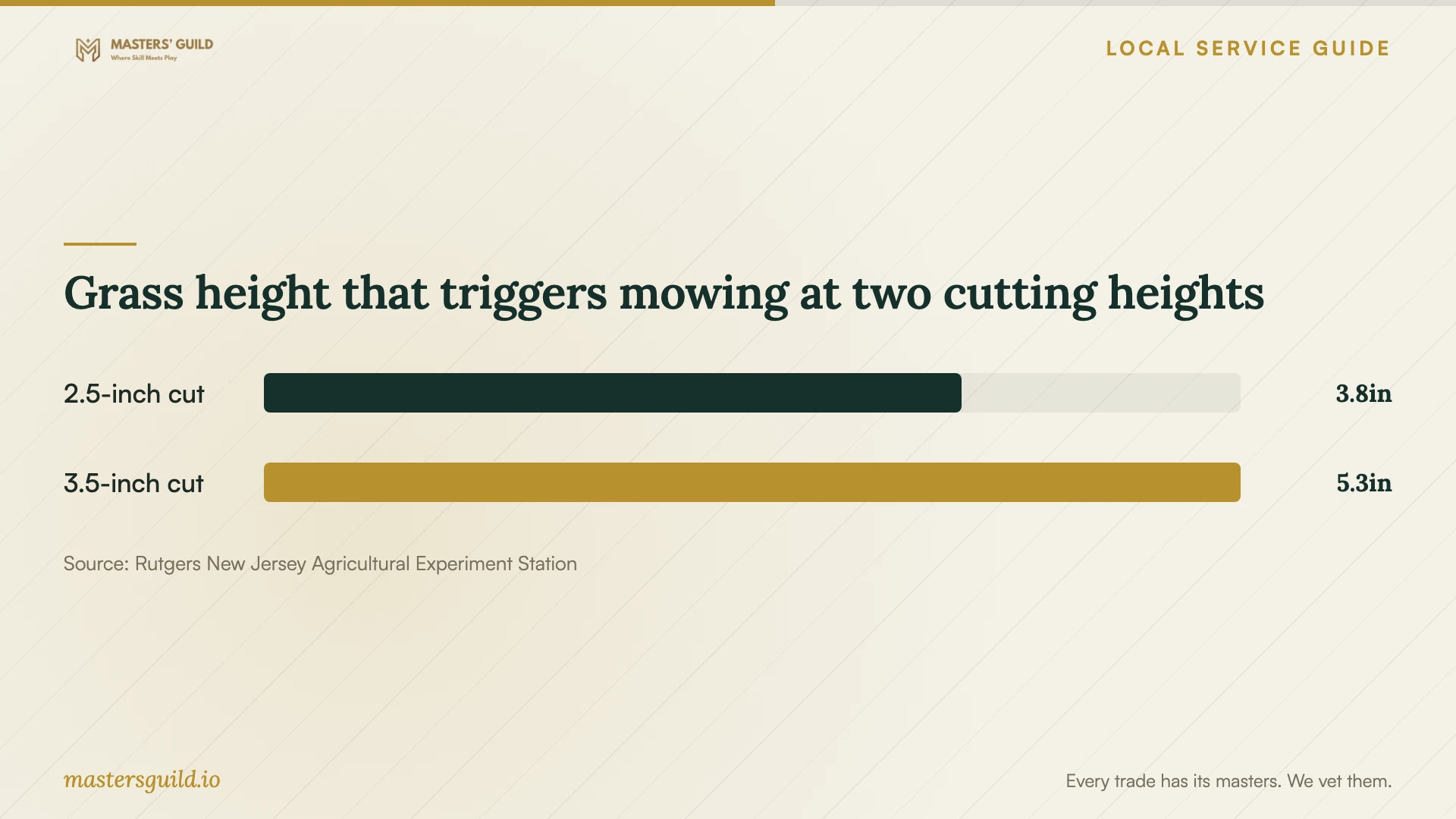
Use growth to decide whether the next visit is due. Rutgers advises removing no more than one-third of leaf height in a single mowing. Its examples call for mowing at 3.75 inches when cutting to 2.5 inches, or at 5.25 inches when cutting to 3.5 inches. Weekly service is a starting point, with adjustments when growth changes. [4]
Before accepting a biweekly plan, ask how the provider will respond if the lawn reaches its mowing threshold sooner. Include permission and pricing for an extra visit, or agree that the provider will contact you first. For a missed visit or overgrown lawn, ask how the crew will avoid taking too much height off in one cut. [4]
Choose how the crew handles clippings
Rutgers says homeowners usually do not need to remove grass clippings. Returning them recycles nutrients and reduces waste. Heavy clumps after delayed mowing may require removal or dispersal because they can smother grass. Ask the provider to describe their approach to clippings and inspect the lawn after the first visit. [4]
If you want bagging, specify whether the provider leaves prepared bags on your property or takes them away. Newark’s current collection page instructs residents to use brown bags or tied bundles for yard waste. Its older yard-waste notice includes grass trimmings among accepted materials. [1] [2]
Do not let the crew assume municipal pickup coincides with mowing day. Confirm your zone, the next collection date, and where you will store bags until pickup. For a cleanup that produces more material than you want to keep on site, request a hauling option in the quote. [1]
Arrange fall visits and access
Keep the final mowing date flexible. Rutgers advises stopping in fall when grass growth has essentially ceased because of cold weather. Ask the provider to check growth before continuing a fixed weekly schedule, and confirm whether leaf collection costs extra. [4]
Newark’s yard-waste notice tells residents not to sweep or blow leaves into the street. Include collection and containment in the fall cleanup instructions. If the crew combines mowing with leaf removal, agree who supplies paper bags and who moves them to the collection point. [2]
Before each visit, remove toys and loose objects, secure pets, and identify sprinkler heads or other features the crew should avoid. Provide gate instructions and agree how the crew will notify you after a rain delay. Ask them to contact you before adding work beyond the agreed scope.
Grass height that triggers mowing at two cutting heights
Local details that affect your job
Match waste handling to your Newark collection zone
Newark DPW’s current collection page lists yard-waste pickup on the third Wednesday of each month for Zone A and the fourth Wednesday for Zone B. It requires brown bags or tied bundles. Confirm your zone with DPW before choosing a bag-and-leave service; ask for hauling if you do not want to store bags until collection. DPW lists 973-733-4311 for municipal collection questions. [1]
Keep leaves out of the street
Newark’s older yard-waste notice includes grass trimmings, leaves, and small branches, excludes soil and large branches, and warns residents against blowing leaves into the street. Give the provider separate instructions for leaf collection and any excluded material. Confirm acceptance with DPW before arranging disposal of a mixed cleanup load. [2]
Compare tax-inclusive New Jersey quotes
State tax guidance applies to mowing here: New Jersey lists lawn mowing as taxable maintenance and requires contractors performing taxable landscaping services for end users to collect 6.625% sales tax. Ask each provider for a tax-inclusive total so you can compare the same scope and final payable amount. [3]
Choose a mowing arrangement
| Your situation | Arrangement to discuss | Detail to confirm |
|---|---|---|
| Grass reaches its cutting threshold between visits | Increase frequency to respect Rutgers’ one-third removal limit | Approval and price for extra visits |
| You want to return clippings | Discuss mulching; Rutgers says clipping removal is usually unnecessary | Crew will disperse or remove heavy clumps |
| You want bagged clippings left on site | Coordinate with Newark’s monthly zone pickup | Brown bags, storage location, and collection zone |
| You need fall leaf cleanup | Include collection rather than blowing leaves into the street | Separate cleanup price and disposal responsibility |
| Grass growth has stopped in fall | End mowing in line with Rutgers’ growth-based guidance | How the provider cancels remaining visits |
Your hiring checklist
- Send lawn photos, access details, and the areas you want included to each provider.
- Agree on cutting height and how the provider will adjust visit frequency as growth changes.
- Separate mowing, trimming, leaf cleanup, bagging, and hauling in the quote.
- Confirm your collection zone and storage location before choosing bag-and-leave service.
- Request the total including tax and any first-visit or overgrowth charge.
- Check insurance and agree how to report damage or incomplete work.
- Record rain-delay, skipped-visit, and end-of-season arrangements.
Frequently Asked Questions
Should I choose weekly or biweekly mowing?
Rutgers says weekly mowing generally works at cutting heights of 2.5 to 3.5 inches. Choose a schedule that removes no more than one-third of grass height per visit. Discuss biweekly service alongside a plan to adjust when growth requires an earlier cut. [4]
Does Newark collect grass clippings?
Newark’s older yard-waste notice includes grass trimmings. The current collection page requires brown bags or tied bundles and lists Zone A pickup on the third Wednesday and Zone B on the fourth Wednesday. Confirm your zone and preparation details with DPW before leaving bags for collection. [1] [2]
Is lawn mowing subject to sales tax?
Yes. New Jersey’s Division of Taxation lists lawn mowing as taxable maintenance and gives a rate of 6.625%. Ask whether the provider’s quoted total includes that tax. [3]
When should mowing stop for the season?
Rutgers advises stopping when cold weather has caused lawn growth to cease. Agree on a growth check with your provider rather than setting the final visit by a fixed calendar date. [4]
Sources and scope
This guide combines the sources below with practical planning guidance. Figures apply to the stated geography and period; request a written quote for your property.