
Local service guide
Flooring Installation and Repair in Newark, NJ
For Flooring Installation and Repair in Newark, NJ, book an inspection and compare written repair and replacement proposals before authorizing work. Have bidders separate preparation, installation and disposal costs. Arrange professional assessment before disturbing suspect tiles or adhesive: New Jersey health guidance identifies these as possible asbestos-containing materials. For wood flooring, request moisture measurements and the selected product’s installation requirements before agreeing to a start date. [1] [3]
Define the repair before choosing replacement
Start the inspection with the damaged areas. Show the installer loose boards, raised edges, gaps, stains and movement underfoot, and explain when you noticed each problem. Have them describe how they will investigate the flooring and the supporting surface beneath it before opening anything.
If you want to retain the floor, request a repair proposal that identifies the pieces to replace, the surrounding area to disturb and the expected finish match. For replacement, specify rooms, closets, thresholds and stairs. Review a sample and agree on its appearance before authorizing the full job.
Use the inspection to set boundaries for extra work. Require the contractor to explain any concealed damage, proposed remedy, added price and schedule change before you approve it. Keep that approval process in the written scope.
Resolve suspect tiles and adhesive before demolition
The New Jersey Department of Health identifies vinyl floor tiles, some linoleum and tile adhesive called mastic among materials that may contain asbestos. An accredited laboratory must analyze a sample to establish asbestos content. Tile size, color and photographs cannot settle that question. [1]
Arrange professional assessment and sampling before anyone scrapes unidentified adhesive, sands suspect tiles or disturbs an unknown flooring layer. The department recommends professional sampling and warns that sanding, cutting or breaking asbestos-containing materials can release fibers. Include a stop-and-approval provision for unexpected layers beneath the visible floor. [1]
If testing confirms asbestos, discuss removal or management with a qualified consultant. State health guidance says homeowners do not have to remove asbestos solely because it exists in the home. If renovation would disturb it, plan the work with the consultant before installation. Get a recommendation for the proposed flooring assembly rather than assuming you can remove or cover the material. [1]
Document moisture conditions for wood flooring
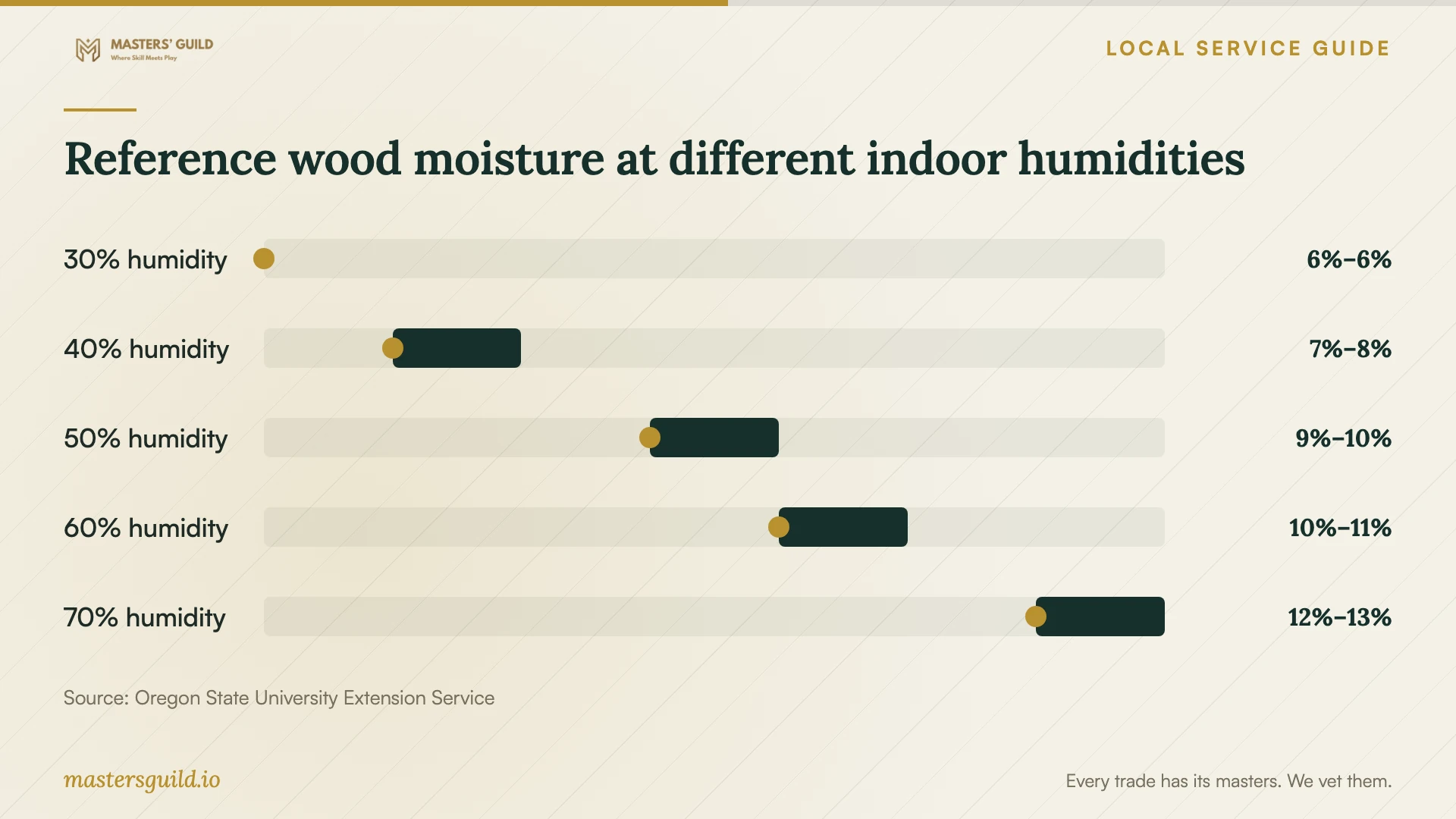
Oregon State University Extension explains that solid wood shrinks and swells as it loses and gains moisture. Indoor heating reduces relative humidity, and wood exchanges moisture with surrounding air. Have the installer record room conditions and wood-moisture readings before deciding how to address gaps or raised boards. [3]
For new flooring, have the bidder identify the measurements they will take, the locations they will test and the product instructions they will follow. Include proposed drying, acclimation and moisture-control work in the quote. For a concrete subfloor, request the selected manufacturer’s testing procedure and acceptance limits.
The reference chart shows how equilibrium wood moisture changes with air humidity. It helps explain why an installer needs measurements of your room and materials. Use the selected product’s instructions to approve installation; the chart provides no installation threshold or diagnosis for your floor. [3]
Compare complete quotes and contractor documents
Use written quotes based on an inspection of your rooms to set your budget. Give each bidder the same scope: measured area, exact flooring product, removal, disposal, subfloor preparation, installation, trim and transitions. Separate furniture moving and any work the contractor cannot price until they open the floor.
For a residential project, collect the business’s current home improvement contractor registration documentation and insurance certificate. New Jersey’s licensing instructions require home improvement contractor businesses to carry at least $500,000 in commercial general liability coverage per occurrence and workers’ compensation insurance unless exempt by law. Have the bidder explain any claimed exemption. [2]
Compare the totals alongside exclusions and allowances. If one contractor includes preparation and another leaves it undecided, have both clarify that work before choosing. Confirm who will install the floor, who will supervise subcontractors and whom you should contact about unfinished items or warranty service.
Arrange access and inspect the finished work
Describe stairs, delivery access, furniture and rooms you need to keep usable before booking. In a shared building, check with the owner or association about work hours, floor-covering rules and protection of common areas. Assign responsibility for clearing rooms and moving appliances in writing.
Get a schedule that separates delivery, preparation and installation, with instructions for walking on the floor and returning furniture. At handover, walk through the rooms with the installer, inspect transitions and trim, and record unfinished items. Keep product details, care instructions, warranty terms and leftover matching material together.
Reference wood moisture at different indoor humidities
Local details that affect your job
New Jersey insurance checks for residential bidders
For a Newark home project, review the bidder’s documents against New Jersey’s home improvement contractor business requirements. Request a current certificate showing commercial general liability coverage of at least $500,000 per occurrence. Collect workers’ compensation documentation or an explanation of a lawful exemption. These statewide requirements apply here; assess flooring skill through examples of comparable work as a separate hiring step. [2]
Separate New Jersey qualifications for asbestos removal
Resolve testing and removal qualifications before approving demolition of suspect flooring in your Newark home. The New Jersey Department of Health says contractors normally need a state asbestos contractor license to remove asbestos floor tile or sheet vinyl, with provisions for an exemption. If a bidder claims an exemption, request the applicable documentation and removal plan before authorizing disturbance. Include this specialist work as a separate part of the project scope. [1]
Choose the next step before booking installation
| Situation | Next step | Question for the bidder |
|---|---|---|
| Damage in a limited area | Request a repair proposal alongside replacement | How will you match the existing material and finish? |
| Unidentified tile or adhesive | Arrange professional assessment before disturbance | Who will arrange accredited laboratory analysis? |
| Confirmed asbestos flooring | Discuss removal or management with a qualified consultant | What license or applicable exemption covers the proposed removal? |
| Wood flooring project | Request room-condition and wood-moisture measurements | Which product requirements will you use to approve installation? |
| Residential contractor selection | Review registration documentation and insurance | Can you provide a current insurance certificate and explain any workers’ compensation exemption? |
Your hiring checklist
- Photograph damage and list the rooms, closets, stairs and thresholds in scope.
- Arrange an inspection and request separate repair and replacement proposals.
- Resolve professional assessment of suspect tiles and adhesive before authorizing disturbance.
- Collect moisture measurements and the selected product’s installation requirements.
- Review registration documentation and current insurance documents.
- Separate preparation, removal, disposal, trim and furniture-moving costs.
- Agree on written approval for concealed damage and extra work.
- Confirm access arrangements, return-to-use instructions and handover documents.
Frequently Asked Questions
Can an installer identify asbestos floor tiles by looking?
Appearance cannot establish asbestos content. New Jersey health guidance says an accredited laboratory must analyze the material. Arrange professional inspection and sampling before the installer disturbs suspect tiles or adhesive. [1]
Must I remove a floor that contains asbestos?
New Jersey health guidance says no state or federal law requires removal from your home solely to get rid of asbestos. If your renovation would disturb it, discuss management or abatement with a qualified consultant before installation. [1]
What insurance should I request from a residential flooring bidder?
Collect a current commercial general liability certificate. New Jersey requires home improvement contractor businesses to maintain at least $500,000 per occurrence. The state also requires workers’ compensation insurance unless exempt by law; request documentation or an explanation of the exemption. [2]
How should I compare flooring quotes?
Give bidders the same room measurements and material specification, then compare written totals, exclusions and allowances. Separate installation from removal, preparation, disposal and trim. Agree on a written approval process for concealed damage before work starts.
Sources and scope
This guide combines the sources below with practical planning guidance. Figures apply to the stated geography and period; request a written quote for your property.