
Local service guide
Arrange senior care in New York City
To arrange senior care in New York City, list the help your relative needs, check the appropriate funding route, and request a written care plan before agreeing to a schedule. NYC Aging offers neighborhood case-management assessments for residents ages 60 and older; HRA administers Medicaid-funded home-care options with separate eligibility requirements. Start with the relevant intake service, then compare providers against the same tasks, hours and backup arrangements. [1] [2]
Write down the help you need
Prepare a task list with the older adult’s input. Separate companionship, meals, shopping and laundry from bathing, dressing and help moving around the home. Describe each task in concrete terms: help getting dressed before breakfast, an escort to an appointment, or meal preparation before the family leaves for work.
For medication, wound care or other medical needs, ask the treating clinician to describe the required care and who should provide it. Give that description to prospective providers and ask them to identify the person responsible for each task. Avoid agreeing to a broad promise of full care without a written scope.
Prepare a schedule that distinguishes the hours you want help from the hours relatives can cover. Include the person’s preferred language, routines and wishes about personal care. Ask providers to explain how they would handle the proposed schedule before comparing their prices.
Choose the local funding route
NYC Aging funds local case-management agencies for residents ages 60 and older. The agency serving the older adult’s neighborhood conducts a phone intake, then a case manager visits the home to determine eligibility and coordinate services. Eligible residents can receive help with benefits, community resources, home-delivered meals, personal care and housekeeping. [1]
NYC Aging excludes Medicaid recipients from its funded home-care service. HRA’s home-care programs require Medicaid eligibility and have additional requirements that vary by program. HRA describes personal care for people who qualify and are exempt from Managed Long-Term Care or Managed Care, as well as managed long-term care and consumer-directed assistance options. [1] [2]
Tell the intake worker about existing coverage and the help you need. Ask which program should assess the person, what documents to prepare and whether a proposed provider can work through that route. Before signing a private agreement, confirm which charges your household would have to pay.
Compare providers using one care brief
Send each provider the same task list and proposed schedule. Request a written response covering accepted tasks, excluded tasks, the start date, supervision and the person you would contact with a concern. Ask how the provider checks caregiver qualifications and whether you can meet the proposed caregiver before making a commitment.
Ask who arranges a replacement if the caregiver misses a shift and how much notice you would receive. For evening or overnight help, describe the assistance you expect during those hours and request a staffing plan. Ask how the provider would respond if the older adult’s needs changed.
Discuss access to the home: entrance instructions, stairs, elevator use, keys and where supplies belong. Explain which relatives may receive updates, with the older adult’s agreement. Request a sample visit record so you can decide whether its level of detail meets your needs.
Build a budget from written quotes
Ask for the hourly or visit charge, minimum booking, assessment fee, cancellation terms and any separate charges for weekends, holidays or overnight work. Request a total for your proposed weekly schedule. If providers suggest different schedules, ask them to explain the care tasks behind the difference.
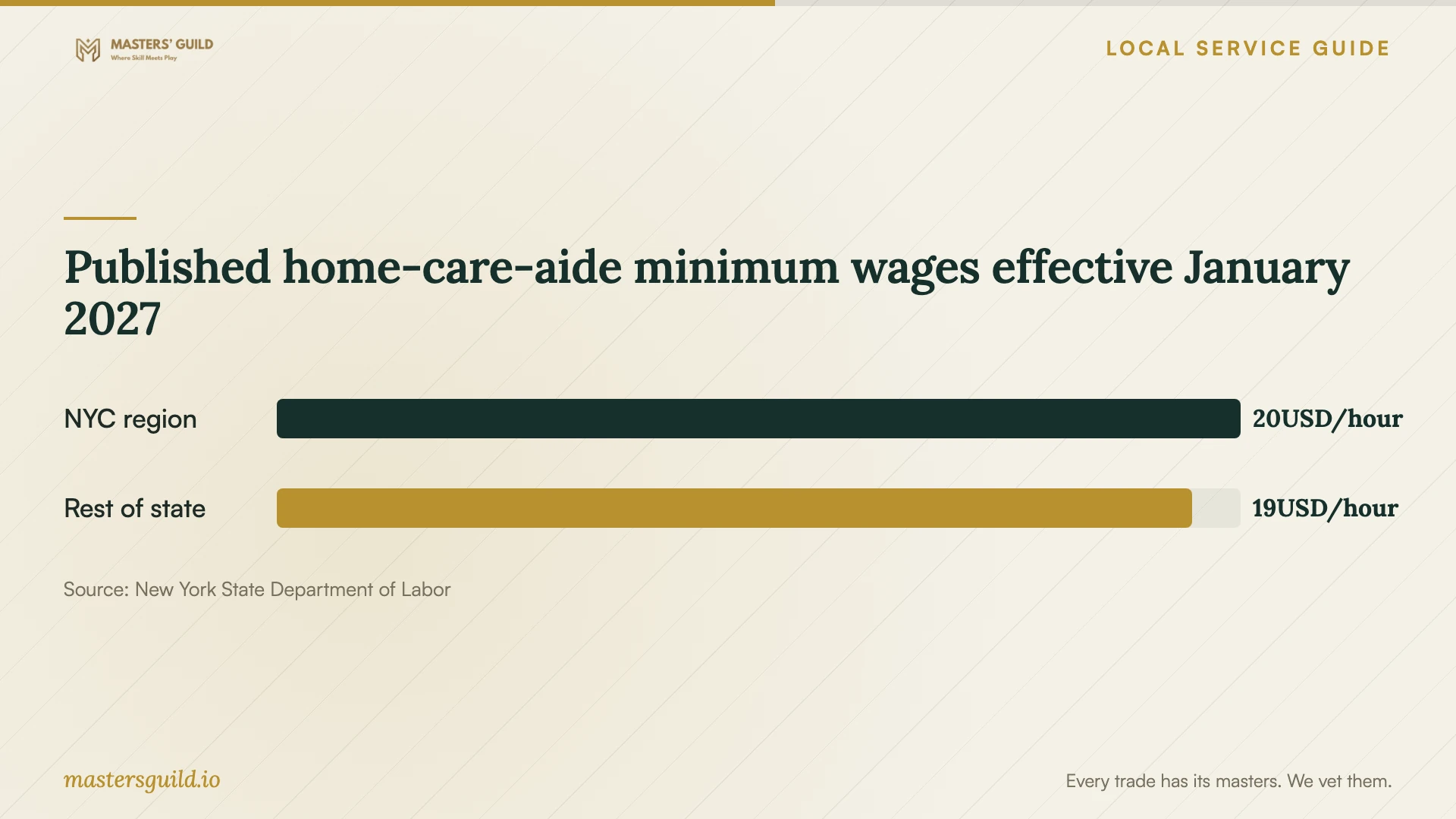
The New York State Department of Labor publishes a home-care-aide minimum wage of $20 per hour for work in New York City, Long Island and Westchester County, and $19 elsewhere in the state, effective January 1, 2027. These January 2027 worker wage floors are not household service prices. [3]
If your arrangement extends into 2027, ask the provider whether its quoted rate will change and request the effective date in writing. Use the wage chart to frame that conversation; use the provider’s itemized quote to plan your household spending.
Prepare for the first visit and review the plan
Agree on the first visit’s tasks, arrival window and family contact. Walk through the home with the caregiver and older adult, identify supplies, and explain preferences about meals and personal care. Keep the care brief and contact details where the people providing care can find them.
Set a review date with the older adult and provider. Discuss unfinished tasks, comfort with the caregiver and any gaps in coverage. Ask the provider to document agreed changes, including new hours and costs, before the revised schedule begins.
Published home-care-aide minimum wages effective January 2027
Local details that affect your job
Use the neighborhood case-management intake
For NYC Aging in-home services, call Aging Connect at 212-244-6469 to find the case-management agency serving the older adult’s neighborhood. That agency conducts the phone intake and an in-home eligibility visit. Case managers do not charge for their time; depending on income, some services involve a fee or suggested contribution. Ask about those costs during the assessment. [1]
Take Medicaid home-care questions to HRA
NYC Aging-funded home care excludes Medicaid recipients. HRA’s Home Care Services Program offers Medicaid-funded routes with program-specific requirements. For assistance, HRA directs residents to the DSS OneNumber at 718-557-1399 or a local Home Care CASA Office. Describe the person’s daily-care needs and ask which assessment and application route applies. [1] [2]
Choose your first call
| Situation | Starting route | What to ask |
|---|---|---|
| Resident age 60 or older seeking help at home | NYC Aging neighborhood case-management agency | Request phone intake and an in-home eligibility assessment. |
| Medicaid recipient seeking funded home care | HRA Home Care Services Program | Ask which Medicaid home-care route and assessment apply. |
| Considering managed long-term care | HRA guidance on Managed Long-Term Care | Ask about Medicaid and medical eligibility and the services needed. |
| Preparing care after a hospital stay | Hospital discharge planner | Ask whether HRA’s described Long Term Home Health Care Program is an appropriate route. |
Your hiring checklist
- Write a task list with the older adult, including preferences about personal care and communication.
- Ask the treating clinician to specify any medical care needed at home.
- Contact the relevant city intake service and ask about eligibility, documents and possible household charges.
- Give prospective providers the same care brief and proposed schedule.
- Request an itemized weekly total, minimum booking and cancellation terms.
- Ask who supervises care and who arranges replacement coverage.
- Agree on home access, visit records and family communication.
- Set a review date and require written confirmation of changes to hours or charges.
Frequently Asked Questions
Can a Medicaid recipient use NYC Aging-funded home care?
NYC Aging excludes Medicaid recipients from its funded home-care service. Ask HRA about Medicaid-funded options and their separate eligibility requirements. Do not assume that exclusion applies to every other NYC Aging service. [1] [2]
Does NYC Aging charge for the assessment?
NYC Aging says case managers do not charge for their time. Depending on income, residents may pay a fee or make a suggested contribution for some services. Ask the case manager to explain the proposed arrangement’s costs. [1]
How much should I budget for private care?
Obtain an itemized provider quote for your task list and schedule, including minimum bookings, assessment fees and additional charges. Ask for a weekly total and written terms for rate changes. The state wage figures describe worker pay floors beginning in January 2027, rather than household service prices. [3]
What should I ask about a missed shift?
Ask who arranges replacement care, how you will receive notice, and whom to contact outside office hours. Request those arrangements in writing and agree on a family backup plan before the first visit.
Sources and scope
This guide combines the sources below with practical planning guidance. Figures apply to the stated geography and period; request a written quote for your property.