
Local service guide
Errand services in New York City: Plan and Hire
Errand services in New York City should start with a written stop list, a spending limit, and an agreed handoff. Ask the runner to separate labor, travel, waiting time, and purchase reimbursements in the quote. Confirm parking and loading arrangements for vehicle pickups. For an older adult who needs recurring shopping help, consider an NYC Aging neighborhood assessment before choosing a private schedule. [1] [2] [3]
Define the work before requesting quotes
Write a brief the runner can follow at each stop. Include the collection address, order number, contact person, pickup window, destination, and delivery instructions. For shopping, specify acceptable substitutions and a spending cap. Prepare packaging and return authorization before booking a return.
Ask whether the runner proposes walking, transit, or a vehicle. Confirm what they can carry and provide dimensions or photos for bulky items. Describe stairs, elevator access, and whether you want delivery to your apartment door or a lobby handoff. Agree who will receive the goods if you cannot be present.
For a pharmacy pickup, contact the pharmacy to confirm authorization and identification requirements for your order. Give the runner those instructions. If you need medication advice or personal care, arrange that help separately from the shopping task.
Agree on payment, receipts, and access
Request a quote for your specific stops. Ask for an hourly rate or fixed job price, any booking minimum, and charges for travel and queues. Confirm when paid time starts and ends. Set an approval limit for extra time, another stop, or an unexpected expense.
Separate the service charge from purchase money. Agree on a payment method, spending cap, itemized receipts, and handling of change or refunds. Tell the runner whether to substitute, skip an unavailable item, or contact you. Use a retailer-approved collection method rather than sharing account passwords.
Before granting home access, confirm who will perform the job and how you will identify them on arrival. Ask for references for recurring work and ask what insurance covers the agreed activity, including driving. Consider a first handoff while you are present before arranging unattended entry.
Budget parking by stop and meter zone
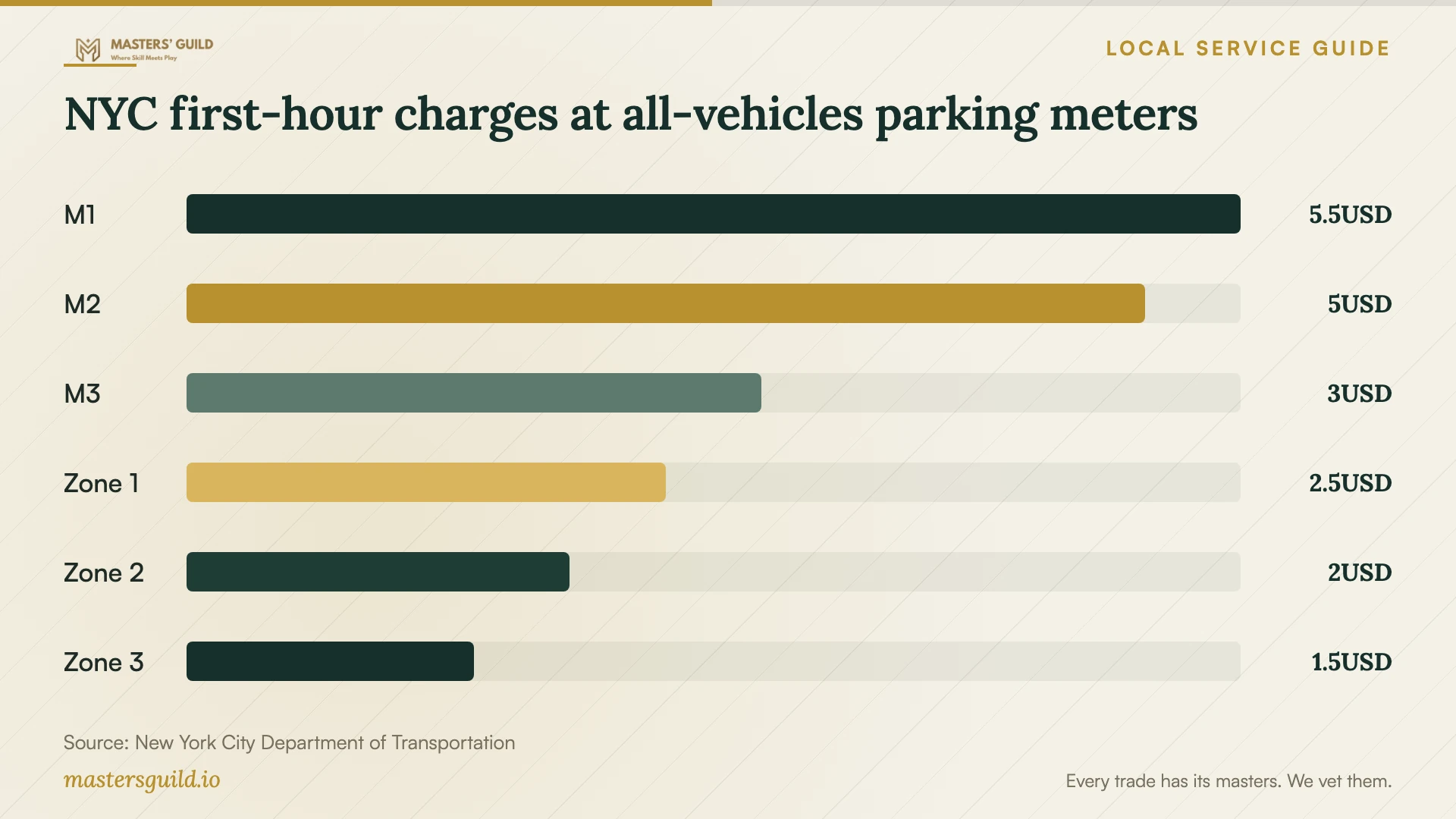
NYC DOT lists first-hour all-vehicles meter charges of $5.50 in M1 and $5.00 in M2. M1 covers Midtown Core and Lower Manhattan; DOT names M2 Manhattan South of 96th Street, with boundary exceptions. Use the zone at the actual parking space when discussing reimbursement. [1]
DOT names M3 Manhattan 96th Street to 110th Street. Portions of Madison Avenue and Fifth Avenue north of East 96th Street, and Columbus Avenue and Broadway north of West 96th Street, fall within M2. Consult DOT’s parking rate map or the meter rather than assigning a rate from the street number alone. [1]
Drivers must start a new parking transaction when moving to another block or parking facility. Commercial-only meters have separate restrictions and separate rates in M1 and M2. Ask the runner to check signs and meters, document each reimbursable expense, and contact you before exceeding the agreed cap. [1]
Prepare a legal loading handoff
NYC DOT permits active loading and unloading of personal vehicles in Neighborhood Loading Zones. Commercial metered spaces serve commercial vehicles, while Truck Loading Zones provide space for commercial loading and unloading during peak delivery times. Confirm the runner’s vehicle and the posted restrictions before choosing curb access. [3]
Have the purchases and recipient ready before the driver arrives. Ask the store where the runner should collect bulky goods and whether staff will help carry them. DOT warns that its loading-zone map may not reflect all current posted regulations; the driver must follow the signs and meter rules at the location. [3]
Consider assessed support for recurring shopping
NYC Aging funds neighborhood case-management agencies for residents ages 60 and older who need assistance continuing to live at home. An agency performs a phone intake, then a case manager visits the home to determine eligibility and coordinate services. Call Aging Connect at 212-244-6469 for a neighborhood contact. [2]
Eligible residents can receive housekeeping help such as shopping and laundry through NYC Aging-funded home care. Case managers do not charge for their time, but some services involve an income-dependent fee or suggested contribution. Medicaid recipients are ineligible for this particular NYC Aging-funded home-care service. Ask the case manager which options apply before committing to recurring private help. [2]
NYC first-hour charges at all-vehicles parking meters
Local details that affect your job
Check the zone near the 96th Street boundary
Parts of Madison Avenue and Fifth Avenue north of East 96th Street, and Columbus Avenue and Broadway north of West 96th Street, fall within M2’s rate area. Check DOT’s rate map or the actual meter before approving parking reimbursement for pickups near this boundary. [1]
Match curb access to the runner’s vehicle
Neighborhood Loading Zones allow active loading and unloading of personal vehicles. Commercial metered spaces serve commercial vehicles. Tell the runner what they will carry and arrange a collection point that matches the vehicle and posted restrictions. [3]
Request an older-adult assessment
Residents ages 60 and older can request a phone intake and home eligibility assessment through NYC Aging’s contracted neighborhood agencies. Shopping and laundry assistance may be available through eligible home care. Call 212-244-6469 and ask about eligibility, contributions, and the Medicaid restriction for that home-care service. [2]
Choose an arrangement for your errand
| Your situation | Arrangement to consider | Confirm before booking |
|---|---|---|
| A prepaid nearby pickup | Quote collection and a defined handoff. | Pickup authorization, carrying capacity, and collection window. |
| Shopping with substitutions | Prepare a written shopping brief. | Spending cap, acceptable alternatives, and receipts. |
| Bulky goods requiring a vehicle | Prepare transport and a loading handoff. | Item dimensions, vehicle suitability, and posted curb restrictions. |
| Vehicle stops on separate blocks | Agree on parking reimbursement by stop. | Purchased meter time cannot transfer between blocks or parking facilities. |
| Recurring help for a resident age 60 or older | Consider an NYC Aging neighborhood assessment. | Eligibility, possible contributions, and the Medicaid restriction for NYC Aging-funded home care. |
Your hiring checklist
- List each address, collection window, order reference, destination, and deadline.
- Describe item sizes, carrying needs, stairs, elevator access, and the handoff point.
- Confirm transport, labor pricing, paid travel and waiting time, minimums, and cancellation terms.
- Set purchase and expense caps with an approval process for overruns.
- Write substitution instructions and require itemized receipts.
- Prepare pickup authorizations and a contact method for changes.
- Confirm the runner’s identity, access arrangements, and insurance for the agreed work.
- Check delivered items and reconcile receipts at handoff.
Frequently Asked Questions
How much should I budget for an errand runner?
Request a quote for your specific stops. Separate labor, travel, waiting time, purchases, and parking. Confirm any minimum charge and set an approval limit for added time or expenses. Use the meter charges shown here to discuss parking reimbursement; they do not establish a runner’s labor rate. [1]
Can a runner use a loading zone in a personal car?
NYC DOT allows active loading and unloading of personal vehicles in Neighborhood Loading Zones. Other loading spaces have different restrictions. Ask the driver to check the posted signs and have the goods ready for collection. [3]
Does one meter payment cover several pickup stops?
Drivers cannot transfer purchased meter time between blocks or parking facilities. Moving to another block requires a new transaction. Agree on receipts and a parking reimbursement cap before approving the route. [1]
Can an older adult get city-supported shopping help?
Residents ages 60 and older can request NYC Aging neighborhood case management. Eligible home-care help includes shopping and laundry. Some services involve fees or suggested contributions; Medicaid recipients are ineligible for this particular home-care service. Call 212-244-6469 to ask about an assessment. [2]
Sources and scope
This guide combines the sources below with practical planning guidance. Figures apply to the stated geography and period; request a written quote for your property.