
Local service guide
Lawn mowing in New Haven, CT: hiring and planning
For lawn mowing in New Haven, ask providers to quote the same lawn area, cutting height, trimming, cleanup and clipping handling before you choose a recurring plan. Agree on how they will reschedule wet-weather visits and adjust visits to grass growth. UConn Extension recommends maintaining grass at least 3 inches tall and removing no more than one-third of the blade per mowing. If you add weed-control treatments, check Connecticut pesticide credentials as a separate hiring step. [1] [4]
Get a quote for the work you need
Send each provider photos of the front and back lawn, the access route and any areas you want excluded. Give the approximate mowable area rather than the total property size. Point out slopes, exposed roots, garden borders and narrow gates. Ask the provider to confirm that their equipment can reach the work area before you accept an offer.
Request separate prices for recurring mowing, the first cut of an overgrown lawn, trimming, edging and clipping removal. Define cleanup: ask the crew to clear cut grass from paths and the driveway and leave gates as agreed. Specify whether leaf removal belongs in the visit or needs a separate quote.
Compare the total for the same scope. Ask about minimum charges, extra passes, missed visits, cancellation notice and approval for additional work. For a seasonal agreement, request the included work and the billing arrangement for weeks when the crew does not mow. The sources here do not establish a New Haven mowing-price range, so use written quotes for your property to set your budget.
Agree on cutting height and flexible visits
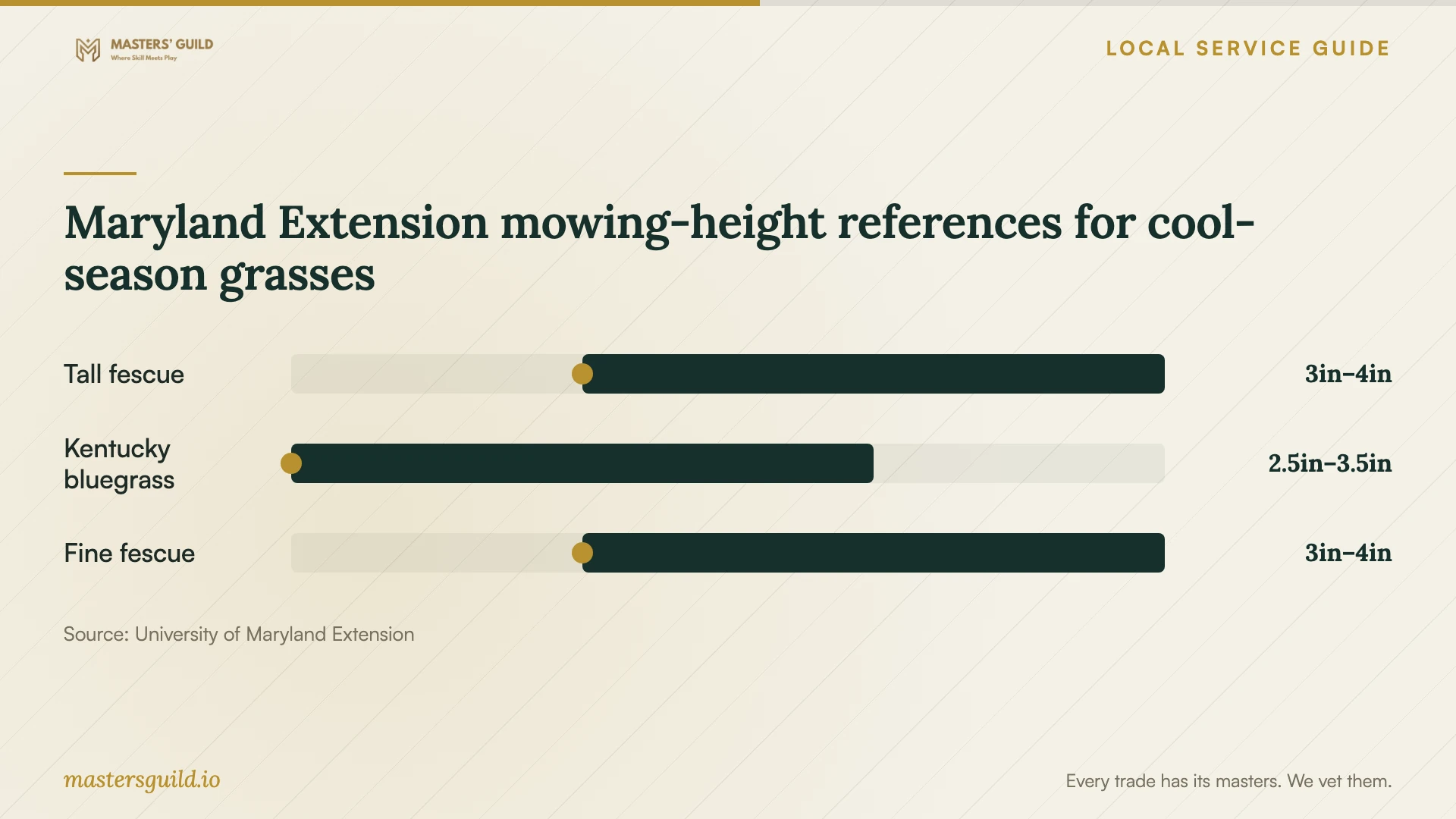
Ask the provider to identify your grass type and agree on a cutting height. UConn Extension advises keeping grass at least 3 inches tall, removing no more than one-third of the leaf blade and using sharp mower blades. Treat the height ranges below as Maryland Extension reference guidance for named grasses, rather than a prescription for every Connecticut lawn. [1] [5]
Use weekly or biweekly service as a proposed starting arrangement, then agree on a way to change it. University of Maryland Extension advises mowing as growth requires and avoiding mowing when the lawn is wet or has stopped growing because of drought or heat dormancy. Ask who will assess the lawn, contact you and approve a skipped or additional visit. [5]
For an overgrown lawn, ask for a staged cut. Connecticut DEEP recommends raising the mower height first and lowering it over several mowings after excessive growth. Have the provider quote that recovery work before folding the lawn into routine service. [2]
Choose how the crew handles clippings
Start by discussing returning clippings to the turf. UConn Extension recommends this practice because decomposing clippings return nutrients to the lawn. Ask the provider to explain any proposed bagging and to include the removal charge in the quote. [1]
If you want clippings removed, agree on who supplies bags, who hauls them and who pays disposal charges. New Haven Solid Waste and Recycling Authority publishes separate access arrangements for residents and commercial haulers, plus a commercial yard-waste fee. Ask the contractor to confirm the appropriate disposal route; do not assume your resident drop-off access covers a contractor's load. [3]
Include equipment cleanup in your instructions. UConn Extension cautions against rinsing mower clippings where runoff can carry them into stormwater drains. Ask the crew to collect debris from equipment without washing it toward a drain. [1]
Keep mowing and pesticide treatments separate
Ask whether the offer includes herbicides or other pesticides. Connecticut DEEP requires a pesticide application business to register in addition to individual applicator certification. The requirement also covers businesses that subcontract pesticide applications. Request the business registration and applicator credentials before accepting treatment work. [4]
DEEP requires registered pesticide businesses to display their registration number on written pesticide-service contracts. Check the treatment contract for that number and ask which company will perform the application. Request the product information and instructions for pets, children and access to the treated area before you approve the work. [4]
For the mowing crew, request proof of insurance and a contact for damage or missed-service reports. Agree on how the crew will protect irrigation heads, garden beds and outdoor belongings. Keep treatment approval separate from mowing approval so you can accept recurring cuts without committing to chemical applications.
Maryland Extension mowing-height references for cool-season grasses
Local details that affect your job
Confirm the contractor's disposal access
New Haven's transfer station is at 260 Middletown Avenue. NHSWRA lists resident drop-off with a New Haven driver's license Monday through Saturday, 9 a.m. to noon, and commercial licensed-hauler access Monday through Friday, 6 a.m. to 3 p.m. It lists commercial yard waste at $53 per ton effective July 1, 2026. These are facility arrangements and a disposal fee, not a mowing or homeowner hauling price. Ask a contractor who removes clippings to confirm their access and include disposal in the quote; check current hours before making a trip. [3]
Check Connecticut treatment credentials
Connecticut DEEP requires pesticide-business registration in addition to individual applicator certification, including when a business subcontracts applications. Registration runs September 1 through August 31 and requires annual renewal. For a mowing package with weed-control treatments, request current credentials for the contracting business and the people doing the application, and check for the business registration number on the treatment contract. [4]
Choose the service arrangement for your lawn
| Your situation | Arrangement to discuss | Question before booking |
|---|---|---|
| Grass grows between visits | Adjust visits to growth while respecting the one-third removal limit | Who approves an extra visit and its charge? |
| Lawn is wet or dormant from heat or drought | Delay or skip mowing, consistent with Maryland Extension guidance | How will you notify me and bill the week? |
| Grass has become overgrown | A higher first cut followed by staged lowering | Does the first-cut quote include the required passes? |
| You want clippings hauled away | Removal with a confirmed New Haven disposal route | Are hauling and disposal included? |
| The package includes pesticides | Treatment work with Connecticut business and applicator credential checks | Which company applies the treatment, and what is its registration number? |
Your hiring checklist
- Photograph the lawn, access route, gate openings and areas to exclude.
- Mark irrigation heads, exposed roots and belongings before the first visit.
- Request matching scopes from providers, including trimming, edging and cleanup.
- Agree on cutting height and how the provider will adjust visits to growth.
- Write down rain-delay, skipped-visit, billing and cancellation terms.
- Choose clipping return or removal and confirm any hauling charge.
- Request insurance documentation and a contact for service problems.
- For pesticide add-ons, request current business and applicator credentials.
Frequently Asked Questions
Should I book weekly or biweekly mowing?
Ask the provider to base the interval on grass growth and the agreed cutting height. Maryland Extension advises mowing as needed and avoiding wet or heat- or drought-dormant lawns. Agree on how to change visits and charges instead of committing to the same interval under all conditions. [5]
Should the provider bag the grass clippings?
UConn Extension recommends returning clippings to the turf to recycle nutrients. Ask for that approach unless you have a reason to request removal. If you choose bagging, get the hauling and disposal terms in writing. [1]
Can the crew cut an overgrown lawn short in one visit?
Ask for a staged plan. Connecticut DEEP recommends raising the mower height after excessive growth and lowering it over several mowings. Have the provider explain the first cut, follow-up visits and charges before work begins. [2]
What should I check before accepting weed-control add-ons?
Request current Connecticut pesticide-business registration and individual applicator certification. DEEP also requires registration for businesses that subcontract applications and requires the business registration number on written pesticide-service contracts. Ask who will perform the treatment. [4]
Sources and scope
This guide combines the sources below with practical planning guidance. Figures apply to the stated geography and period; request a written quote for your property.