
Local service guide
Carpet Cleaning in Nashville: Hiring and Preparation
Arrange Carpet Cleaning in Nashville by requesting a written scope, an inspection of problem areas, and instructions for returning to normal room use. Describe stains, pet accidents, furniture handling, and access before accepting a quote. For soaked carpet, request a water-damage assessment first. Tennessee health guidance distinguishes clean-water drying from contaminated-water remediation and recommends replacing moldy carpet. [2]
Define the work before comparing quotes
Give each cleaner the same room list, approximate dimensions, stair count, and photographs of stains. Identify the carpet material if you know it, and share manufacturer care instructions. Explain whether you want open traffic areas cleaned or furniture moved so the crew can reach more of the floor.
Request a total that separates cleaning from optional treatments. Ask about minimum charges, room-size limits, stairs, parking or access charges, and any applicable tax. Agree on how the cleaner will obtain your approval if an inspection changes the scope. Use those written quotes to set your budget.
For pet odor or a persistent stain, ask the cleaner to describe the proposed treatment and its limits. Discuss whether they need to inspect beneath the carpet before recommending work. Get follow-up terms in writing, including whom to contact if the result differs from the agreed expectations.
Check the person and products
Ask who will perform the work, what training they have for your carpet material, and whether they carry liability insurance. Request their process for reporting damage concerns. Share previous spot treatments so the technician can consider them during the inspection.
Discuss asthma or fragrance sensitivity before choosing products. The Tennessee Department of Health identifies strong odors and chemical irritants, including cleaners, as possible asthma triggers. Ask for product names and discuss whether the cleaner can omit fragrance treatments. [2]
Ask for care instructions you can follow after the appointment. For ongoing household upkeep, Tennessee health guidance recommends weekly vacuuming of carpets and furniture in its dust-mite advice. [2]
Arrange access and a disposal plan
Describe parking, stairs, entry codes, and the route to the rooms. If you live in a managed building, check elevator reservations, hose routes, and work hours with management. Ask whether the crew needs your water supply or electrical outlets. Check the appointment-day forecast before agreeing on outdoor equipment access.
Ask the cleaner how they will capture and dispose of extraction wastewater. Metro's commercial page includes exterior pressure-washing disposal guidance and a link to a mobile carpet-washing resource. Confirm carpet-extraction-specific conditions with the utility before offering a sink or drain; the pressure-washing passage alone does not establish permission for that use. [1]
In that exterior pressure-washing guidance, Metro describes sanitary-sewer disposal of most wash water after solids removal and with owner permission. It requires an oil/water separator for visible oil beyond a shiny or glossy appearance, and an environmental waste company for heavily contaminated water, including hazardous chemical cleaners. Ask Metro which requirements apply to the wastewater from your job. [1]
Plan room use and recognize water damage
Get separate estimates for time on site and time before normal room use. Ask when you can walk on the carpet, return furniture, and let children or pets into the rooms. Discuss airflow and moisture control with the cleaner, and leave room in your schedule before furniture delivery or guests arrive.
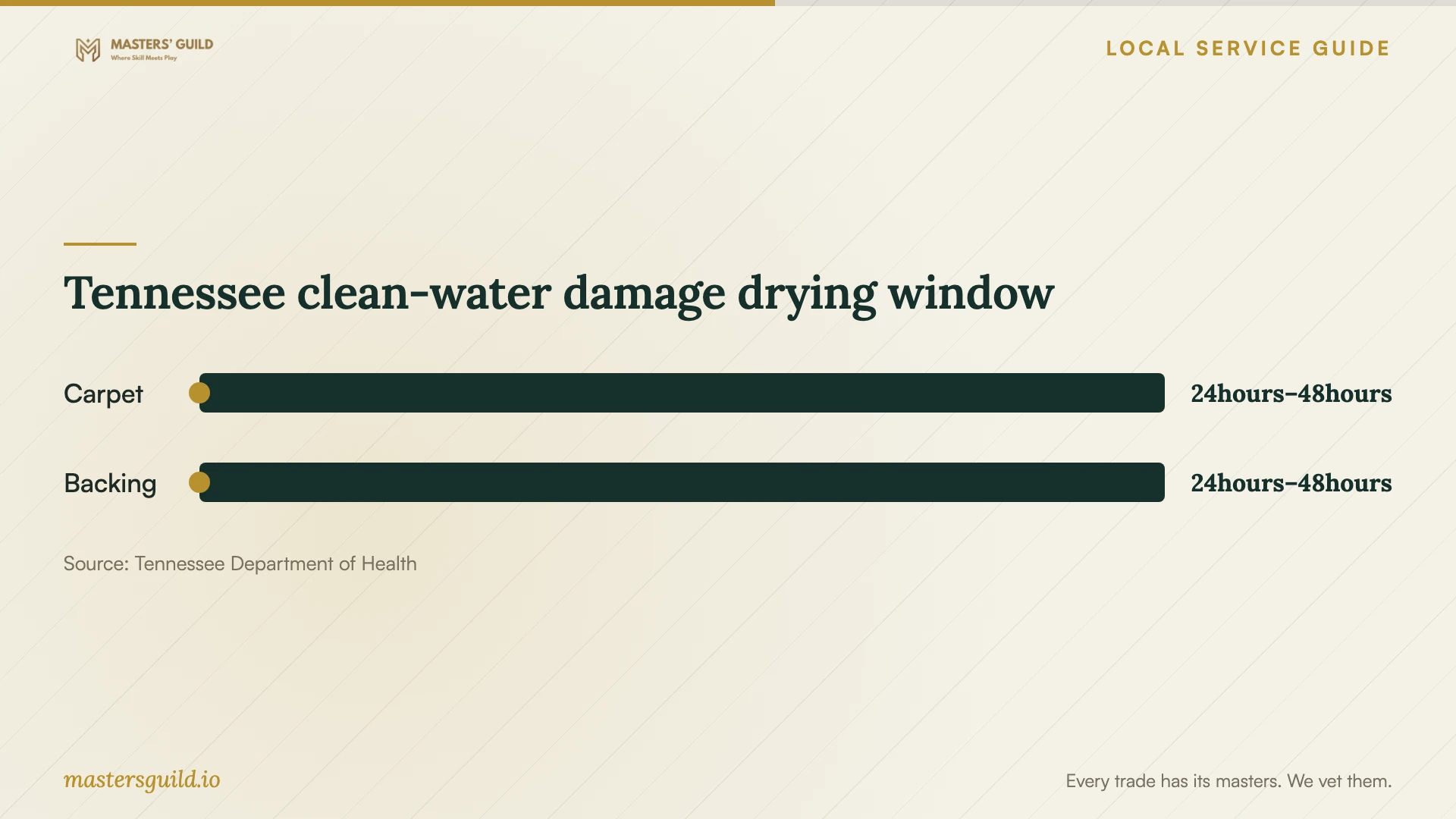
For a leak or flood, tell the provider the water source and when the carpet became wet. Tennessee's clean-water-damage guidance calls for water extraction, dehumidification, fans, and drying carpet and backing within 24 to 48 hours. It also directs homeowners to clean and dry the subfloor. That window concerns water damage, not the drying time after a cleaning appointment. [2]
For sewage or water containing chemical or biological pollutants, the state recommends a qualified remediation professional experienced in contaminated-water cleanup. It cautions against using fans until you know the water is clean. For moldy carpet, its guidance recommends removal and replacement of porous materials and correction of the moisture source. [2]
Tennessee clean-water damage drying window
Local details that affect your job
Resolve wastewater questions with Nashville's utility
For an uncertain disposal plan, Metro Water Services lists the Stormwater Division at 615-880-2420. Give staff the property location, proposed collection method, cleaning products, and intended disposal point. Ask for carpet-extraction-specific conditions. Metro's general commercial and exterior pressure-washing guidance provides a starting point, rather than carpet-specific approval. [1]
Use Tennessee's guidance to choose restoration help
For a Nashville home with water-damaged carpet, use the state's clean-water and contaminated-water distinction when requesting service. Ask a restoration provider to assess the backing and subfloor, rather than booking a surface-cleaning visit. Tennessee health guidance calls for drying the subfloor and recommends experienced remediation help for contaminated water. [2]
Check the forecast rather than relying on October averages
The National Weather Service lists Nashville's normal October high as 73.5°F and low as 49.9°F. Check conditions for your appointment when arranging equipment access or discussing open-window ventilation. These outdoor monthly averages do not establish indoor humidity or carpet drying time. [3]
Choose service by carpet condition
| Condition | Service to request | Scope to discuss |
|---|---|---|
| Dry carpet with traffic soil | Routine cleaning assessment | Rooms, furniture handling, and aftercare |
| Dry carpet with stains or pet odor | Inspection and treatment proposal | Expected result, treatment limits, and follow-up |
| Clean-water leak | Water-damage assessment | Extraction and drying of carpet, backing, and subfloor |
| Sewage or suspected contaminated water | Experienced remediation professional | Water source, precautions, and containment |
| Moldy carpet | Removal and replacement assessment | Moisture correction and inspection beneath the carpet |
Your hiring checklist
- List rooms, approximate dimensions, stairs, and furniture handling.
- Photograph problem areas and share carpet care instructions.
- Confirm the total, exclusions, and approval process for added work.
- Arrange parking, entry, and any building-management requirements.
- Clear small belongings and identify a separate space for children and pets.
- Save the cleaner's aftercare instructions and follow-up contact.
Frequently Asked Questions
How should I compare a room offer with a whole-home quote?
Ask both cleaners to price your actual room list. Clarify room-size limits, hallways, stairs, furniture handling, and optional treatments. Compare the final written totals and exclusions before choosing.
Can a cleaner use an outside drain for wastewater?
Have the cleaner identify the drain and confirm carpet-extraction-specific disposal conditions with Metro Water Services. Metro's exterior pressure-washing guidance prohibits dirty pressure-washing water from entering storm drains; it does not establish carpet-specific disposal permission. [1]
Should I request a deodorizer if someone has asthma?
Discuss the household's sensitivities and ask for product details before agreeing to a deodorizer. Tennessee health guidance identifies strong odors and chemical irritants as possible asthma triggers. Ask whether the cleaner can omit added fragrance. [2]
Sources and scope
This guide combines the sources below with practical planning guidance. Figures apply to the stated geography and period; request a written quote for your property.