
Local service guide
Mold Removal in Mobile, AL: Hiring and Repair Plans
Arrange Mold Removal in Mobile, AL by choosing a contractor who will investigate the moisture source, describe the cleanup and material removal, and explain how you will confirm completion. EPA recommends checking mold-cleanup experience and references. For flood-damaged homes, the City of Mobile advises contacting Build Mobile about permits before repairs. Ask for a written scope that separates remediation, water-source repairs, and rebuilding so you can compare offers and assign responsibility for each part. [2] [4]
Choose the right scope before requesting quotes
Describe where you see growth, whether you smell a musty odor, and what happened before the problem appeared. Include any roof leak, plumbing leak, overflow, or flood exposure you know about. ADPH identifies these as possible moisture sources and advises correcting the source as the first cleanup step. Ask the contractor to investigate the cause rather than quote surface treatment from photographs alone. [3]
EPA's roughly 10-square-foot guidance helps distinguish a small cleanup from work needing further assessment. It does not override other concerns. EPA advises using a professional experienced with contaminated-water damage when sewage or other contaminated water caused the problem. If you suspect mold in the HVAC system, EPA says to avoid running that system because it could spread mold through the building. [4]
For a musty room with no visible source, ask how the contractor will investigate concealed areas and obtain your approval before opening walls or removing finishes. EPA warns that disturbing hidden growth can release spores and recommends considering an experienced professional. Agree on who will protect the surrounding rooms and who will repair inspection openings. [4]
Check credentials and the proposed cleanup method
ADPH states that Alabama has no building mold standards or testing requirements and no contractor accreditation or certification for mold testing or remediation. Ask anyone advertising an Alabama mold credential to name its issuing organization and explain its scope. ADPH points homeowners toward IICRC-certified cleaners for advice; that professional credential differs from state mold accreditation. [1] [3]
Ask for references from work involving the same problem: flood-contaminated materials, recurring bathroom growth, or concealed water damage. EPA recommends checking experience and references and asking contractors to follow government or professional cleanup guidelines. Request the names of the people who will supervise and perform your work, plus current insurance documentation. [4]
Ask how the crew will remove contamination and protect occupied areas. ADPH describes separating the work area with plastic sheeting and enclosing moldy materials before carrying them through a home. EPA says killing mold alone does not remove the exposure concern, and it does not recommend routine biocide use. A proposal should explain cleaning and removal rather than rely on spraying as its completion standard. [3] [4]
Compare complete quotes without guessing a local price
Request separate amounts for inspection, containment, removal, disposal, drying, moisture-source repairs, and replacement finishes. Ask each bidder to identify excluded work and the conditions that would trigger an added charge. Compare proposals against the same rooms and materials, and require approval before the crew expands demolition.
Ask which porous materials the contractor intends to discard and which surfaces they intend to clean. ADPH advises removing mold-contaminated porous materials and porous materials that contacted sewage. EPA explains that carpet and ceiling tiles may require disposal because mold can be difficult or impossible to remove from their pores. Replacing drywall or flooring should appear as a separate rebuilding responsibility. [3] [4]
Before accepting sampling charges, ask for the purpose, sampling locations, interpretation, and action tied to the result. EPA says sampling is unnecessary in most cases with visible growth and notes that no federal mold limits exist. ADPH says testing may help locate or assess difficult hidden contamination, but it should not consume resources needed for moisture correction and removal. [3] [4]
Prepare access and agree on completion
Give the contractor photographs, a timeline of water entry, and records of earlier repairs. Agree on access hours, movement of belongings, protection of unaffected rooms, and whether you should stay elsewhere during the work. Ask the contractor to explain those arrangements before the crew arrives.
For flood cleanup, follow the city's return-home guidance and wait for authorities to say it is safe. The city advises people with asthma, other lung conditions, or immune suppression to avoid buildings with indoor leaks or mold that they can see or smell. Consult a health professional about personal exposure concerns before participating in cleanup. [2] [4]
Define completion before signing. EPA says the contractor must fix the moisture problem and remove visible mold and moldy odors; a follow-up visit should show no renewed water damage or growth. ADPH says to wait for complete drying before rebuilding. Request photographs of concealed areas, drying records, and a written explanation of how the contractor assessed readiness for replacement materials. [3] [4]
After cleanup, measure indoor humidity and inspect the repaired area for returning moisture. EPA recommends keeping relative humidity below 60 percent, ideally between 30 and 50 percent, and maintaining air-conditioning drain lines and drip pans. Ask the contractor which maintenance steps apply to the moisture source they found in your home. [4]
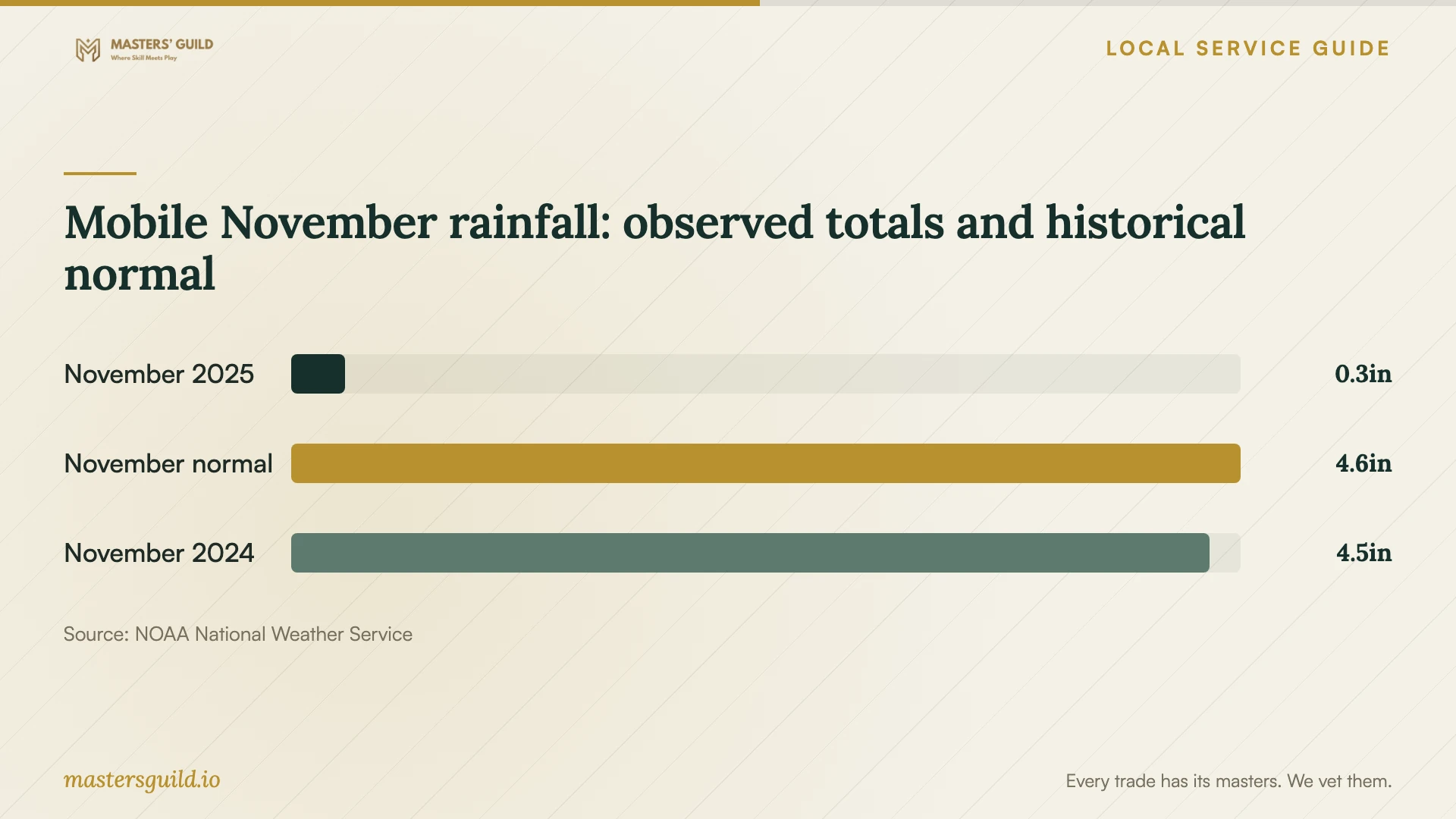
Mobile November rainfall: observed totals and historical normal
Local details that affect your job
Mobile flood repairs need a permit check
The City of Mobile advises contacting Build Mobile because home repairs after flooding may require a permit. Before authorizing replacement walls or other repairs, describe the proposed work to Build Mobile and establish who will handle any required permit. The city also directs residents to discard drywall and insulation contaminated by floodwater or sewage, so ask bidders to distinguish that removal from cleaning salvageable surfaces. [2]
Alabama mold credentials require closer questioning
Statewide ADPH guidance applies to hiring here: Alabama has no contractor accreditation or certification for mold testing or remediation and no residential or commercial building mold standards or testing requirements. Request the issuer and details of any advertised certification. Ask for documented training and relevant references, and make the written cleanup and moisture-repair plan part of your selection. [1]
Document flood damage before disposal
Mobile's flood guidance tells homeowners to contact their insurance agent, photograph damaged rooms and destroyed items, and retain samples of materials whose type or quality could affect a claim. Ask your insurer what documentation they need before the contractor discards carpet or finishes. Coordinate that documentation with prompt cleanup rather than postponing the moisture response. [2]
Choose the next step for the problem you have
| Situation | Next step | What to clarify |
|---|---|---|
| Small visible patch under about 10 square feet | Consider EPA's homeowner cleanup guidance if no complicating conditions apply. | Check the moisture source and consider health concerns before cleanup. |
| Musty odor with no visible source | Consider an experienced professional to investigate hidden growth. | Agree on investigation openings, protection, and repair responsibility. |
| Sewage or contaminated-water damage | Hire a professional experienced in contaminated-water restoration. | Identify materials for disposal and the separate rebuilding scope. |
| Suspected HVAC contamination | Avoid running the system and seek assessment before further action. | Explain why you suspect contamination and ask who will assess the system. |
| Flood-damaged walls needing replacement | Document damage and contact Build Mobile about repair permits. | Assign disposal, drying, permit handling, and reconstruction responsibilities. |
Your hiring checklist
- Photograph affected rooms and write down the water-damage timeline.
- Ask each bidder to identify the moisture source and assign responsibility for its repair.
- Request training details, relevant references, and current insurance documentation.
- Compare itemized quotes using the same affected rooms and materials.
- Require approval before added demolition or work outside the agreed scope.
- Ask the contractor who will confirm permit requirements and arrange any needed permits.
- Agree on access, belongings, room protection, and occupancy arrangements.
- Request drying records, completion photographs, and a follow-up plan.
Frequently Asked Questions
Do I need a mold test before hiring a contractor?
EPA says sampling is unnecessary in most cases when you can see mold. ADPH also prioritizes inspection and moisture correction, while allowing that sampling may help investigate difficult hidden contamination. Ask what the result would change in the proposed work. [3] [4]
Does Alabama issue a mold-remediation certification?
ADPH says Alabama has no contractor accreditation or certification for mold testing or remediation. Ask contractors to identify the organization behind any credential they advertise, then check their experience, references, and written methods. [1] [4]
Can the contractor paint over the affected area?
EPA advises cleaning mold and drying surfaces before painting or caulking. Paint over mold can peel. Ask the contractor to show how they removed contamination and corrected moisture before you approve replacement finishes. [4]
How soon can I rebuild after cleanup?
ADPH says to wait until affected materials have dried completely. EPA also requires correction of the moisture problem before considering cleanup complete. Ask for drying records and the contractor's explanation of readiness rather than accepting a calendar date alone. [3] [4]
Sources and scope
This guide combines the sources below with practical planning guidance. Figures apply to the stated geography and period; request a written quote for your property.