
Local service guide
Special Item Transport in Minneapolis: Plan Your Move
For Special Item Transport in Minneapolis, choose a mover who can explain how they will handle your piano, safe, pool table or other large possession. Send item measurements and access photos before requesting a written quote. Minnesota requires household-goods carriers to receive a household goods mover permit before operating. Check the transporting company's credentials and agree on loading access before booking. [1]
Choose a mover for the item and the route
Describe the item before discussing the date. Include its make or model, dimensions, known weight and destination room. If you do not know the weight, ask the mover how they will establish it. Photograph existing damage and identify loose parts or components that need separate handling.
For a piano, ask who will prepare and protect it for transport. For a pool table, ask whether the quote includes disassembly, reassembly and leveling. For a safe, explain any anchoring and ask who will release and restore it. Have the mover list the setup work included in the quote.
Show the route at each property: doorway openings, stairs, landings, turns, elevator entrances and the distance from the proposed truck position. Request an access assessment if the mover cannot confirm the route from your measurements and photos. Agree on what happens if the crew finds an obstacle on arrival.
Check Minnesota household-goods credentials
MnDOT defines household-goods movers as people or businesses transporting personal effects and property used, or intended for use, in the owner's dwelling. Its application process includes business registration, a USDOT number and a household goods mover permit. MnDOT states that a motor carrier cannot operate before receiving that permit. [1]
Ask for the company's legal business name, permit and USDOT number, then confirm the permit with MnDOT. Identify the transporting company if your booking contact uses another carrier. Include a credential check when arranging transport for one possession. [1]
MnDOT requires the insurance underwriter to file liability and cargo insurance certificates before transportation. Its published minimum cargo insurance limit is $50,000. Ask the mover to explain your item's coverage, exclusions, deductible and claim process. Request the terms that would determine payment for damage to your item. [1]
Arrange loading access before choosing the time
Minneapolis requires an obstruction permit when you block any part of a City street, lane or sidewalk. The City also lists alleys and parking lanes, meter hooding and parking vehicles in the blocked area. Ask the mover where the truck, ramp and handling equipment will sit. Confirm the proposed arrangement with Public Works if it occupies public space. [2]
Apply through the City's Right of Way Permitting System, called ROWay. The City lists no charge for the permit itself, but fees may apply for lane closures, meter hooding, lost meter revenue or traffic control agents. Assign responsibility for applications and related charges in the agreement. [2]
Keep the notice rules separate. The City's general permit page requires 24 hours' notice for meter hooding and 48 hours' notice for posting no-parking signs. ROWay specifies a minimum application lead time of seven business days for temporary no-parking-sign applications. That deadline concerns sign applications; it does not establish a seven-business-day deadline for meter hooding or all obstruction permits. [2] [3]
For your move, ROWay's move-specific restriction matters: the City will not post temporary no-parking signs for residential or commercial moves. ROWay assigns parking arrangements to the resident or moving company. Ask the permitting team about an acceptable loading arrangement before relying on reserved curb space. [3]
Compare quotes with the same scope
Request quotes using the same item description and access information. Ask each mover to separate transport, preparation, setup, coverage and access charges. Confirm minimum charges, waiting charges, cancellation terms and conditions that could change the total. Choose after the mover has addressed your stairs, turns and truck position.
For a metered loading location, ROWay lists hooding at $25 per meter per day. It allows hooding for moving trucks and loading or unloading. Ask how many meters the truck needs and which calendar days the City will bill before accepting an access allowance in a quote. [3]
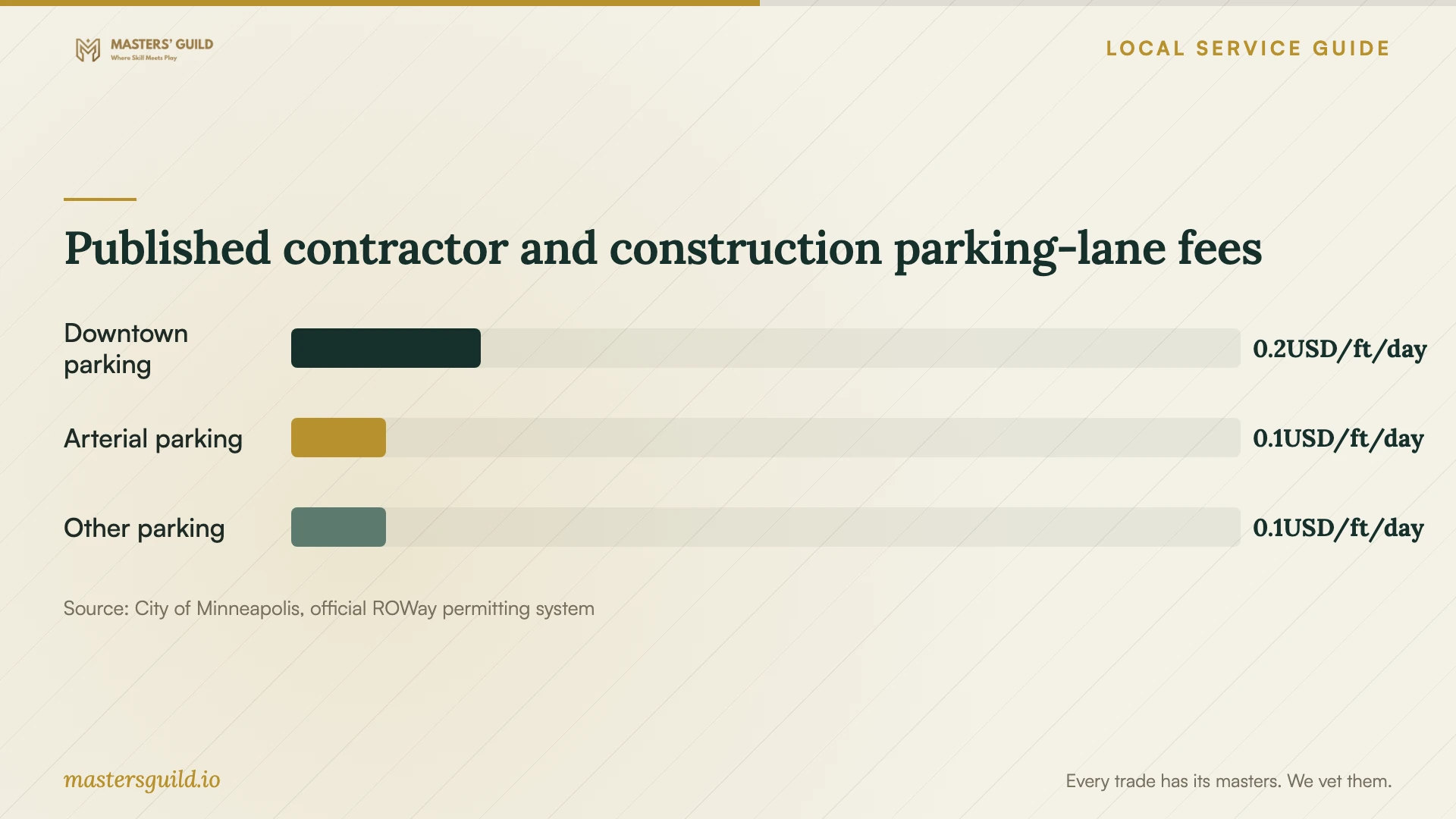
The chart uses parking-lane rates from ROWay's contractor and construction fee table, measured in US dollars per linear foot per day. Ask the permitting team whether that schedule applies to your arrangement. These figures describe lane-use fees, not a household transport price or a complete access bill. [3]
Prepare both properties for arrival
Coordinate building access with the owner or manager. Ask about elevator bookings, loading entrances and floor protection. Give the mover a contact at each address and agree on who will clear the route before the crew arrives.
Walk the route with the crew before they lift the item. Confirm its destination position and any setup work. After delivery, inspect the item and the route together, photograph damage and record unfinished work before signing completion paperwork.
Published contractor and construction parking-lane fees
Local details that affect your job
An early Monday move can require a paid Sunday start
The City's general page requires 24 hours' notice for meter hooding. ROWay says crews hood meters on Mondays between 7:30 and 9 a.m. For an earlier Monday start, it instructs applicants to select Sunday as the start date and pay for Sunday. Confirm the hooding schedule before agreeing to an early truck arrival. [2] [3]
Saturday hooding can include Sunday charges
ROWay says the City does not hood or unhood meters on Sundays or its listed holidays. Saturday hoodings incur Sunday charges unless the application specifies removal on Saturday after noon. Ask whether your loading window allows that removal instruction, and confirm the billed dates with the permitting team. [3]
Resolve these details before booking
| Your situation | Next step | Confirm in writing |
|---|---|---|
| A household possession needs road transport | Ask for the carrier's Minnesota household goods mover permit and USDOT number | The legal name of the transporting company |
| The item needs dismantling or setup | Ask the mover to describe each task and who performs it | Included work and separate charges |
| The ramp or truck would block public space | Confirm the obstruction permit arrangement with the mover and City | Who applies and pays related fees |
| You need a metered loading space | Ask about hooding availability and billed dates | Meter count, dates and access charges |
| You expect City-posted moving signs | Arrange parking with the mover under ROWay's restriction on City-posted residential and commercial moving signs | The loading arrangement you or the mover will secure |
Your hiring checklist
- Record the item's dimensions, make or model, known weight and existing damage.
- Photograph the route and proposed loading position at both properties.
- Ask the carrier for its legal name, household goods mover permit and USDOT number.
- Request the handling plan, item coverage terms and damage claim procedure.
- Agree on disassembly, reassembly, placement and setup work.
- Assign responsibility for checking loading access and arranging any obstruction permit or meter hooding.
- Confirm building access, arrival contacts and the procedure for documenting delivery.
Frequently Asked Questions
Does a mover need a Minnesota permit for one household item?
MnDOT's definition covers transporting personal effects and property used or intended for use in the owner's dwelling. Its page states no minimum item count. Ask the carrier for its household goods mover permit and confirm its status with MnDOT. [1]
Can Minneapolis post no-parking signs for my move?
ROWay's move-specific terms say the City will not post temporary no-parking signs for residential or commercial moves. The resident or moving company must secure parking. The seven-business-day sign-application deadline does not override that moving restriction. [3]
How much does meter hooding cost?
ROWay lists $25 per meter per day. Saturday hoodings can incur Sunday charges, and an early Monday start can require a paid Sunday start date. Confirm meter count and billed dates with the permitting team. [3]
What should I send to get a useful transport quote?
Send item measurements, known weight, photos, both addresses and the intended destination room. Include stairs, turns, elevator access and proposed truck positions. Request separate amounts for transport, preparation, setup and access.
Sources and scope
This guide combines the sources below with practical planning guidance. Figures apply to the stated geography and period; request a written quote for your property.