
Local service guide
Duct and Vent Cleaning in Minneapolis: Hiring Guide
Arrange Duct and Vent Cleaning in Minneapolis by identifying the system before requesting quotes. For commercial kitchen exhaust, choose a licensed contractor who will arrange the cleaning permit. The city requires inspections twice a year and cleaning if necessary. For office or shop heating and cooling ducts, request an equipment-specific inspection and written scope. Agree on access, shutdown arrangements, and the total charge before booking. [2]
Identify the system before choosing a cleaner
Tell bidders whether you need commercial kitchen exhaust cleaning, heating and cooling duct cleaning, or another exhaust service. Send equipment photos and describe the areas the crew can access. Ask each bidder to name the components they will inspect and clean, including any exclusions.
Minneapolis requires a licensed contractor to inspect commercial kitchen exhaust systems twice a year and clean them if necessary. Keep that requirement attached to your kitchen exhaust scope. The city's kitchen exhaust instructions do not establish a cleaning schedule for office heating and cooling ducts. [2]
EPA's residential guidance recommends considering cleaning when substantial visible mold appears inside hard-surface ducts or on heating and cooling components, when vermin infest ducts, or when ducts clog with excessive dust and debris or release particles through supply registers. EPA recommends residential cleaning as needed rather than on a routine schedule. If a bidder cites this homeowner guidance for your business, ask them to document the condition and explain why their method suits your equipment. [1]
Arrange the kitchen permit before confirming the work date
Put permit responsibility in the kitchen exhaust agreement. The city requires the contractor to apply and pay the fee before cleaning each system and asks applicants to allow 15 business days for processing. Leave room for that process when choosing a proposed service date. [2]
The city accepts an online application or a fillable PDF. After processing the application, city staff email instructions for uploading plans to ProjectDox. Applicants must address requested revisions; after approval, they can download their plans. Ask the contractor to confirm permit approval and fee payment before finalizing your shutdown. [2]
Agree on a shutdown window with your kitchen manager. Assign responsibility for moving equipment, protecting nearby surfaces, and providing access to the roof or mechanical room. Name the person who will approve restarting the system, and share the plan with staff before the crew arrives.
Assess suspect insulation before disturbing it
Minnesota Department of Health's homeowner guidance lists ductwork insulation and furnace insulation among materials that can contain asbestos. It advises leaving intact, undisturbed asbestos material alone, identifies Minnesota-certified asbestos inspectors for sampling or inspection, and strongly recommends Minnesota-licensed asbestos contractors for removal. This guidance addresses homes and does not establish commercial-building compliance obligations. [3]
As a practical precaution at your business, share existing asbestos reports with the cleaner and flag suspect insulation along the proposed access path. Pause work that would disturb that material until you arrange an assessment appropriate to your premises. Ask the assessor to review the crew's planned cutting, brushing, or removal work.
Keep assessment and any removal work separate from the cleaning quote. Ask who will authorize the cleaning crew to proceed and what documentation you will receive. Do not authorize disturbance based on a cleaner's visual guess.
Compare quotes and check the completed work
Request an itemized quote for your commercial equipment and access conditions. Have bidders include the named system, access work, cleanup, permit charges where applicable, taxes, and exclusions. List optional treatments separately. Ask for an explanation of any scope difference before comparing totals.
For commercial kitchen exhaust cleaning, the contractor must submit before-and-after photos to ProjectDox within five business days of completion. The city requires date stamps and clear identification of the system shown. Request copies for your maintenance records and confirmation of submission. [2]
Walk through the agreed scope with the contractor before accepting the work. Review photos of inaccessible areas and ask about remaining deposits or damage. Record unresolved items and the agreed correction date. Confirm that the crew has reattached covers and completed the operational check you specified before staff resume use.
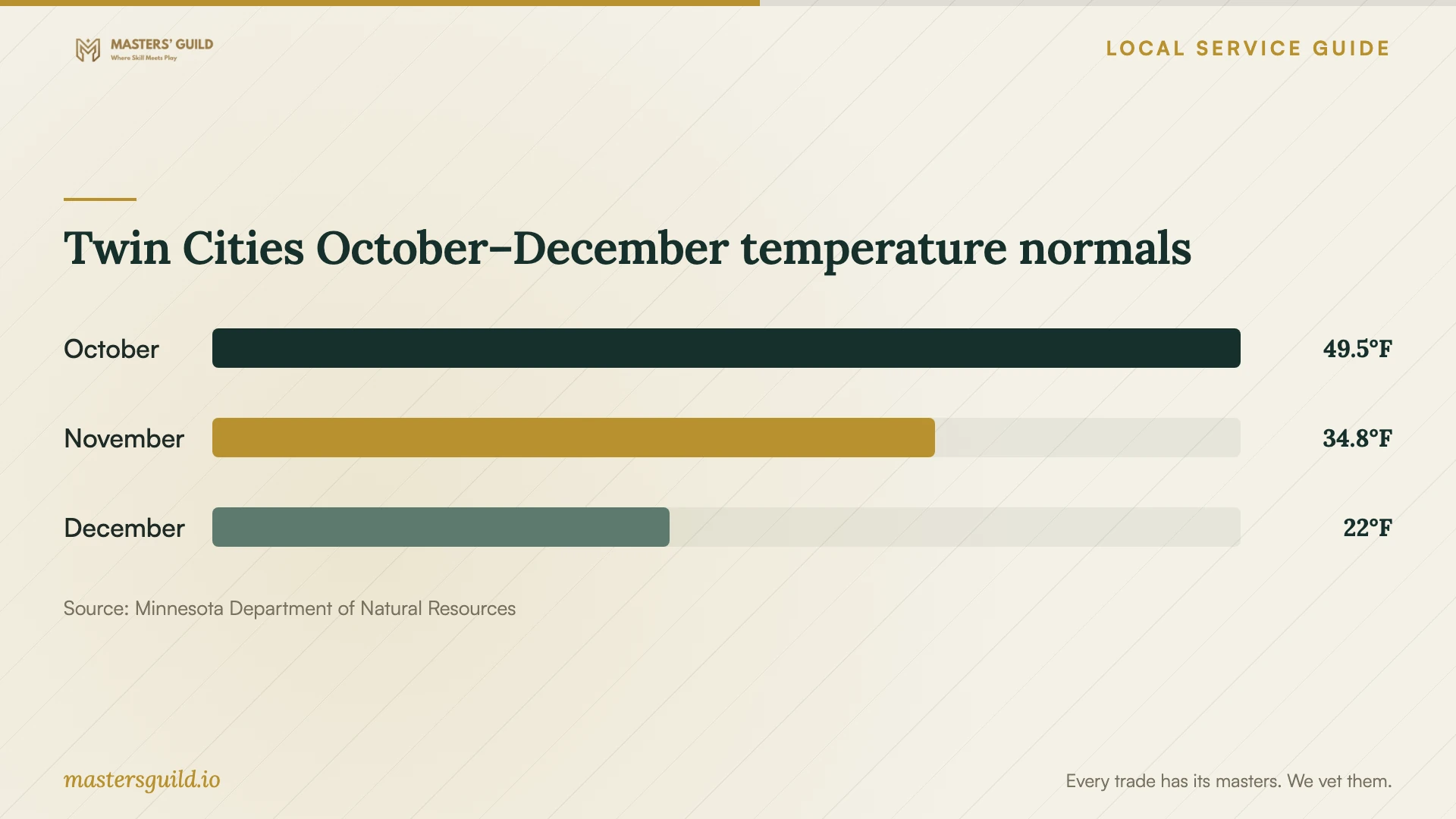
If the work requires a heating shutdown, discuss its length and any temporary arrangements before booking. Use the regional temperature chart as planning context, then check the forecast for your work date. Ask the contractor how they will handle an interruption that lasts longer than planned.
Twin Cities October–December temperature normals
Local details that affect your job
Minneapolis kitchen exhaust inspection and permit process
A licensed contractor must inspect commercial kitchen exhaust systems twice a year and clean them if necessary. Before each cleaning, the contractor must apply for a permit and pay the fee. Allow 15 business days for processing, and request permit confirmation before fixing the shutdown date. For questions about the city's process, contact Minneapolis Inspections Services at 612-673-3000. [2]
Minnesota asbestos guidance and your access plan
Minnesota Department of Health's homeowner guidance identifies ductwork and furnace insulation as possible asbestos-containing materials and identifies Minnesota-certified inspectors for sampling or inspection. It strongly recommends Minnesota-licensed contractors for asbestos removal. At business premises, use this material information as a practical reason to arrange assessment before the cleaning crew disturbs suspect insulation. Ask the assessor to determine the requirements for your commercial premises; the homeowner page does not establish those obligations or show that your building contains asbestos. [3]
Choose the next step for your premises
| Situation | Next step | Before authorizing work |
|---|---|---|
| Commercial kitchen exhaust needs inspection | Arrange inspection with a licensed contractor | The city requires inspection twice a year and cleaning if necessary |
| Contractor proposes kitchen exhaust cleaning | Assign permit application and payment to the contractor | Allow 15 business days for processing and confirm the permit before cleaning |
| Suspect insulation lies in the access path | Pause disturbance and arrange assessment | Use Minnesota homeowner material guidance as a precaution; ask about requirements for your business premises |
| Office or shop ventilation needs attention | Request an equipment-specific inspection and written scope | Ask the bidder to document the condition and explain the proposed work |
| Kitchen exhaust cleaning is complete | Review dated photos and keep copies | Confirm contractor submission to ProjectDox within five business days |
Your hiring checklist
- Photograph the equipment and identify each system you want quoted.
- Ask bidders to separate kitchen exhaust work from heating and cooling duct work.
- Assign kitchen exhaust permit responsibility and request confirmation before finalizing the date.
- Share existing asbestos reports and flag suspect insulation along the access path.
- Agree on equipment movement, surface protection, staff access, and a shutdown window.
- Request an itemized total with exclusions and optional treatments listed separately.
- Review completion photos, record deficiencies, and request kitchen exhaust photo-submission confirmation.
Frequently Asked Questions
Does Minneapolis require a permit for commercial kitchen exhaust cleaning?
Yes. The contractor must apply for a permit and pay the fee before cleaning each system. The city asks applicants to allow 15 business days for processing. Ask the contractor to confirm approval and payment before the crew starts. [2]
Must commercial kitchen exhaust systems be cleaned twice a year?
The city requires a licensed contractor to inspect them twice a year and clean them if necessary. Ask for the inspection findings and the proposed cleaning scope so you understand what the contractor recommends. [2]
Can I use residential duct-cleaning prices for my business budget?
Request an itemized quote for your commercial equipment and access conditions. EPA's cited guidance addresses home heating and cooling systems. Ask bidders to price the same components and list permit charges, cleanup, taxes, and exclusions. [1]
How should I handle suspect insulation around ducts?
Pause work that would disturb it and arrange an assessment appropriate to your premises. Minnesota's homeowner guidance identifies ductwork insulation as a possible asbestos-containing material and describes certified inspectors for sampling or inspection. Ask the assessor about commercial requirements for your building. [3]
Sources and scope
This guide combines the sources below with practical planning guidance. Figures apply to the stated geography and period; request a written quote for your property.