
Local service guide
TV mounting in Milwaukee: Plan the job and quote
Arrange TV mounting in Milwaukee by asking for a written quote that separates the bracket installation, cable routing, any new electrical work and old-TV removal. Send the installer your TV and mount model numbers, wall photos and a photo of the nearest outlet. Before booking, agree on the mounting position, who supplies hardware, who repairs wall openings and who handles any electrical permit. For a pre-1978 home, ask the contractor to assess painted-surface disturbance before drilling or cutting. [1]
Give the installer enough information to quote
Send a wide photo of the wall and close-ups of the proposed mounting area, nearby outlets and existing cable connections. Include the TV model, the bracket model if you own one, and the devices you want connected. Ask the installer to check compatibility against the TV and bracket instructions before accepting the job.
Describe the wall material if you know it. If you do not, ask the installer to assess it before choosing anchors or cutting openings. For a fireplace location, request a separate assessment of the attachment surface, cable route and the TV manufacturer’s placement instructions. Agree on an alternative position if the installer cannot approve your first choice.
Ask the installer to state what happens if the wall differs from your description. Require your approval before added work or charges. Put hardware supply, lifting help, equipment connections, packaging removal and wall repair in the written scope so you can compare offers without guessing.
Choose the cable and power plan before booking
Ask for separate options for a visible cable route and a route through the wall. Have the installer identify which cables they plan to conceal, the products they plan to use, the openings they need and the person responsible for patching and painting. Avoid approving a vague line item such as cord concealment without those details.
If you want a new outlet behind the screen, ask who will perform the electrical work and obtain the electrical contractor’s credential details. Wisconsin DSPS identifies Electrical Contractor as an organization credential and provides a public LicensE lookup for checking credential status. Match the business name on the quote to the credential you check. [2]
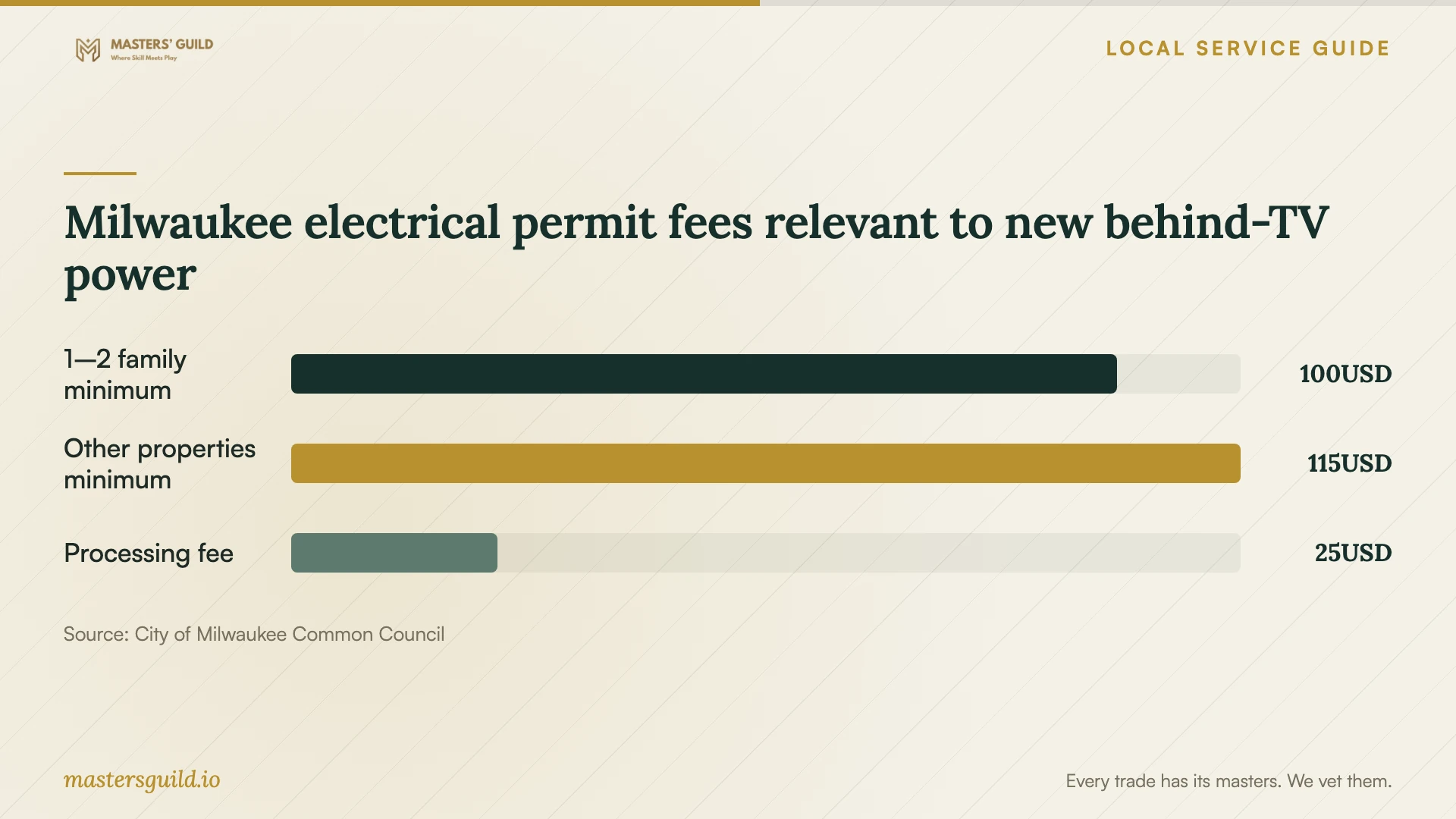
Milwaukee’s adopted electrical fee schedule, effective January 1, 2026, lists minimum permit fees of $100 for installations and repairs in one- and two-family dwellings and $115 in other property types. The city also lists a $25 processing fee for each electrical installation or repair permit. Ask the contractor to confirm whether your proposed work requires a permit, which property category applies and what fees they include in the quote. [4]
Discuss painted walls in an older home
Wisconsin’s Lead-Safe Renovation Rule regulates paid renovation, repair and painting in homes and child care centers built before 1978. DHS includes drilling and cutting among paint-disturbing activities and identifies disturbance of 6 square feet of painted or varnished surface in a single room as a regulated renovation threshold. Ask the contractor to assess the full planned work, including cable openings and any surface removal. [1]
Do not assume that a few bracket holes require the same qualifications as a larger wall-opening project. DHS describes thresholds and exceptions, including specified assessments that find the work will not disturb lead-based paint. Ask the contractor to explain how the rule applies to your scope and, where it applies, identify the certified lead company and assigned lead-safe renovator. [1]
Before work starts, agree on how the installer will protect furnishings, contain drilling debris and clean the area. For work covered by the rule, DHS requires lead-safe work practices, cleaning verification and project records. Keep the contractor’s explanation with your written scope, especially if you later add cable concealment or wall repairs. [1]
Include old-TV removal in the replacement plan
Wisconsin DNR lists TVs among electronics that cannot go in the trash or to state landfills and incinerators. If your installer offers haul-away, ask where they will take the screen and whether their price includes collection-site charges. DNR advises checking accepted items, fees and pickup options before choosing a recycler. [3]
Before handing over a connected TV, follow the manufacturer’s instructions for disconnecting online accounts and erasing personal information. DNR notes that TVs can store personal data and recommends disconnecting devices from online services and removing sensitive information before recycling, giving away or selling them. Ask the recycler about data handling if you cannot operate the old screen. [3]
Approve the position and test the finished setup
Ask the installer to mark the proposed screen position before drilling. Sit in your usual viewing seat and check the height, nearby furniture and room lighting. If you rent or live in a condominium, obtain any required owner or association approval before authorizing holes or wall openings.
At handover, test the inputs, streaming device, soundbar and remote controls you included in the scope. Ask the installer to demonstrate bracket adjustments and access to connections. Inspect the wall repairs and cleanup, record any unfinished items, and keep the hardware instructions and invoice for future removal or adjustment.
Milwaukee electrical permit fees relevant to new behind-TV power
Local details that affect your job
City electrical fees depend on property type
For electrical work at an address inside the City of Milwaukee, ask the contractor to identify your building’s fee category. The adopted schedule lists a $100 minimum permit fee for one- and two-family dwellings, a $115 minimum for other property types and a separate $25 processing charge. A condo or apartment owner should request confirmation of the category before comparing an electrical allowance with a detached-home quote. [4]
Wisconsin lead rules can change the concealed-cable scope
In a pre-1978 home, ask the contractor to assess the painted surface they will disturb before approving cable openings. Wisconsin DHS includes drilling and cutting in paint-disturbing work and identifies a 6-square-foot interior threshold in a single room, subject to its stated exceptions. Ask for an updated lead-safe work assessment if you expand the job beyond bracket attachment. [1]
Use Wisconsin’s electronics collection options
DNR provides a list of registered E-Cycle Wisconsin collection sites and mail-back programs for household electronics. Before arranging old-TV removal, check acceptance, transport or pickup, and charges with the chosen collector. Wisconsin’s TV disposal ban makes a recycling destination part of the replacement plan. [3]
Match the installer’s scope to your project
| Your project | Ask before booking | Put in the quote |
|---|---|---|
| Bracket attachment with an existing outlet | How will you assess the wall and check the TV and bracket instructions? | Hardware, lifting, position approval and connection testing |
| Cables through a painted wall | What openings will you make, and how will you assess lead-rule applicability in a pre-1978 home? | Cable products, paint-disturbance assessment, cleanup and wall repairs |
| New outlet behind the screen | Which electrical contractor will do the work, and what permit arrangements apply? | Credential details, electrical scope and confirmed city fees |
| Fireplace location | Will you assess the attachment surface and manufacturer placement instructions before accepting this location? | Approved position, cable route and an alternative if needed |
| Replacement with old-TV removal | Which recycler will receive the TV, and what fees or pickup conditions apply? | Removal, transport, recycling charges and data preparation |
Your hiring checklist
- Send TV and bracket model numbers with wall, outlet and connection photos.
- Ask the installer to assess the attachment surface and confirm hardware compatibility.
- Approve the screen position from your usual viewing seat before drilling.
- Specify the cable route, planned openings and responsibility for patching and painting.
- For new power, request credential details and written confirmation of permit handling and fees.
- For a pre-1978 home, ask the contractor to assess paint disturbance and applicable lead-safe work requirements.
- Agree on old-TV removal, the recycling destination and all related charges.
- Test your devices and inspect cleanup before signing off on the completed scope.
Frequently Asked Questions
How much should I budget for the installation?
Request an itemized quote for your wall, TV, bracket and cable plan. The verified figures here cover city electrical permit charges, rather than mounting labor: $100 minimum for one- and two-family dwellings or $115 for other property types, plus a separate $25 processing fee. Ask the contractor to confirm the charges applicable to your electrical scope. [4]
Does attaching a bracket require an electrical permit?
The cited city ordinance provides electrical fees but does not determine permit requirements for bracket-only work. Ask the contractor to confirm requirements for your exact scope. If you add a new outlet, request a separate electrical plan and written permit arrangements. [4]
Does drilling in an older home require a lead-safe contractor?
Ask the contractor to assess the planned paint disturbance. Wisconsin DHS includes drilling among paint-disturbing activities, but its rule also describes thresholds and exceptions. It identifies 6 square feet of painted or varnished surface in a single room as an interior threshold for regulated renovation activities in covered pre-1978 buildings. [1]
Can the installer put my old TV out with the trash?
Wisconsin prohibits trash disposal of TVs. Ask the installer to name the recycling destination and confirm charges before removal. Disconnect online accounts and follow the manufacturer’s data-erasure instructions before handing over a connected TV. [3]
Sources and scope
This guide combines the sources below with practical planning guidance. Figures apply to the stated geography and period; request a written quote for your property.